
Please note: a valid prescription is required for all prescription medication.
Lupin-Tiotropium
Buy Lupin-Tiotropium Online
Secure Encrypted Payments
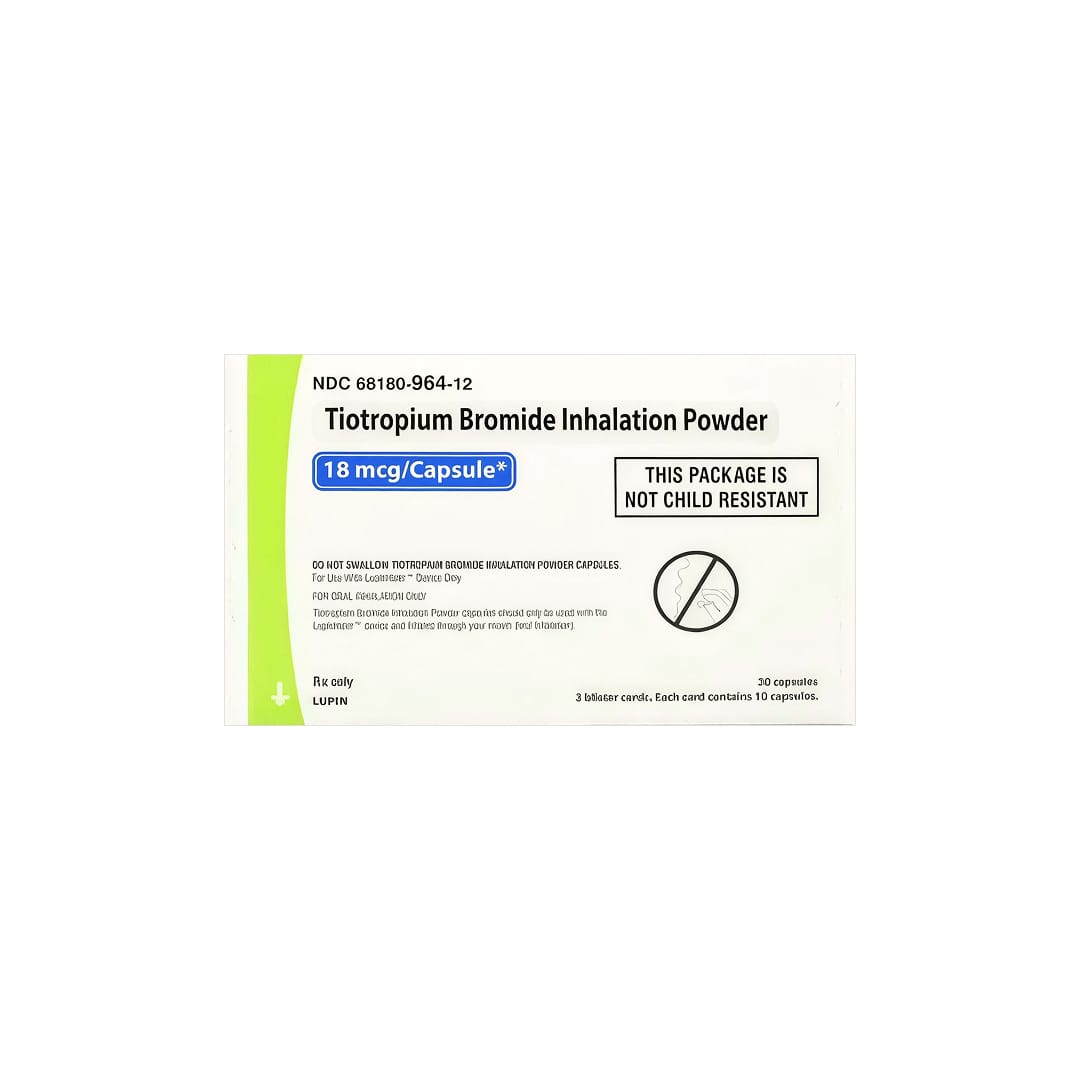
Lupin-Tiotropium is a tiotropium bromide inhalation powder used as once-daily maintenance treatment for adults with chronic obstructive pulmonary disease, or COPD. You can buy Lupin-Tiotropium online and choose the strength and quantity shown during ordering, matching the medicine and device instructions to your clinician’s directions. Capsules are made for inhalation through a compatible device and must not be swallowed.
Tiotropium belongs to a group of bronchodilators called long-acting muscarinic antagonists, often shortened to LAMAs. It helps relax airway muscles so breathing passages stay more open over the day. It is not a rescue medicine for sudden wheezing, acute bronchospasm, or fast-worsening shortness of breath.
Lupin-Tiotropium Price, Strength, and Quantity
The Lupin-Tiotropium price should be judged by the exact strength, capsule count, and device format shown during ordering. A common presentation is Lupin-Tiotropium 18 mcg capsules containing tiotropium bromide inhalation powder. The practical total can differ when a pack includes a compatible inhaler device versus refill capsules alone.
Cost comparisons work best when the same type of tiotropium product is being compared. Dry powder capsules are different from soft-mist inhalers, and device requirements can affect both use and value. If you are paying cash or looking at tiotropium without insurance, keep the form, strength, quantity, and device needs together when discussing alternatives with your clinician.
Quick tip: Compare capsule count and device inclusion before comparing totals.
| Ordering Detail | What to Confirm |
|---|---|
| Active ingredient | Tiotropium bromide should match the medicine your clinician recommended. |
| Strength | Lupin-Tiotropium 18 mcg should match your current directions when that strength is chosen. |
| Form | Capsules contain inhalation powder and are not oral capsules. |
| Device | The capsule must be used with the compatible inhaler device. |
| Quantity | The capsule count affects how many days the supply may cover. |
How to Order Lupin-Tiotropium Online
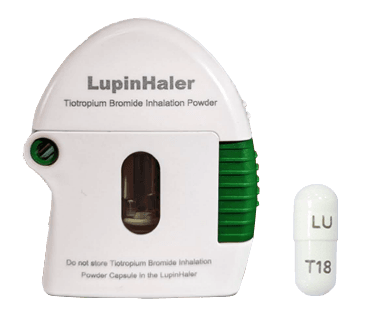
To order Lupin-Tiotropium online, choose the strength and quantity that fit your current treatment directions, then make sure the capsule-and-device format is the one you can use correctly. BorderFreeHealth helps customers access regulated pharmacy products with US delivery from Canada, and order details may be reviewed before release when clarification is needed. If your routine uses a specific LupinHaler tiotropium device or another compatible inhaler, keep that device information available.
Do not switch between capsule inhalers, soft-mist inhalers, or other tiotropium products by name alone. The active ingredient may be similar, but the device steps, strength expression, and inhalation technique can differ. For broader breathing-treatment browsing, the Respiratory category can help you view related inhaler and airway medication types.
When an order is ready for handling, shipping choices may include prompt, express shipping depending on the order and carrier conditions. Plan refills early enough to allow for order processing, product handling, and any information that must be clarified before the medicine is released.
What Lupin-Tiotropium Is Used For
Lupin-Tiotropium is used for long-term maintenance treatment of bronchospasm associated with COPD, including chronic bronchitis and emphysema. COPD can cause narrowed airways, trapped air, cough, mucus, wheezing, and shortness of breath. Maintenance treatment is intended to be used regularly, not only when symptoms suddenly flare.
Tiotropium for COPD works by blocking muscarinic receptors in airway smooth muscle. This anticholinergic action helps relax the airways and can support easier breathing over the day. It does not treat a sudden attack quickly enough to replace a quick-relief inhaler if one has been prescribed for emergencies.
People browsing by condition can review Chronic Obstructive Pulmonary Disease COPD for condition-focused product browsing. Asthma and COPD can overlap in symptoms, but they are not the same condition; the Asthma section is useful only for separate clinician-directed treatment discussions.
Form, Device, and Inhalation Basics
Lupin-Tiotropium inhalation powder is supplied in hard capsules designed to be loaded into a compatible inhaler device. The device pierces the capsule and allows the powder to be inhaled into the lungs. Swallowing the capsule will not deliver the medicine to the lungs and can leave COPD symptoms untreated.
Many tiotropium bromide capsule labels describe one capsule used once daily through the inhaler device. Some device instructions require two inhalations from the same capsule to receive the full contents. Follow the leaflet that comes with the device, because small differences in opening, piercing, inhaling, and cleaning can affect delivery.
- Open the capsule blister only when ready to use it.
- Place one capsule into the device chamber as directed.
- Pierce the capsule using the device button or mechanism.
- Breathe out away from the mouthpiece before inhaling.
- Seal your lips around the mouthpiece and inhale deeply.
- Repeat from the same capsule only if the instructions say so.
- Remove and discard the empty capsule after use.
Dry powder inhalers rely on a steady, deep breath through the mouthpiece. Exhaling into the device can add moisture and interfere with powder movement. If you do not hear or feel the capsule move, do not add another capsule; pause and follow the troubleshooting steps in the device instructions.
Is Tiotropium a Steroid Inhaler?
Tiotropium is not a steroid inhaler. It is an anticholinergic bronchodilator, also called a LAMA, and it relaxes airway muscles through a different pathway than inhaled corticosteroids. That difference matters when comparing COPD maintenance plans, because some people use one medication class while others use combination therapy.
Inhaled corticosteroids are used in selected COPD or asthma-related plans when inflammation control is part of the treatment goal. A LAMA such as tiotropium mainly helps keep airways open. If your clinician has recommended more than one inhaler, ask which is for daily maintenance, which is for quick relief, and what order to use them in when timing matters.
Why it matters: The device and medication class both affect whether the product fits your COPD plan.
Storage, Handling, and Travel
Keep tiotropium bromide capsules in the original blister until immediately before use. The blister protects the dry powder from moisture, which can affect how well it moves through the device. Store the capsules at room temperature in a dry place away from sinks, bathrooms, direct heat, and hot vehicles.
Do not use a capsule if the blister is torn, the capsule looks damaged, or the powder has been exposed before use. Keep the inhaler device clean and dry according to its instructions. Avoid washing device parts unless the leaflet specifically allows it, because trapped water can interfere with dry powder delivery.
For travel, pack the capsules, device, and medication information in carry-on luggage when possible. A small protective case can help prevent cracks, accidental opening, or moisture exposure. If time zones change, ask your clinician how to keep the once-daily schedule consistent without doubling doses.
Side Effects, Warnings, and Monitoring
Common side effects with tiotropium bromide inhalation powder can include dry mouth, throat irritation, cough, hoarseness, constipation, headache, dizziness, sinus discomfort, or upper respiratory symptoms. Dry mouth is often manageable with water, sugar-free gum, or oral-hygiene steps, but persistent or bothersome symptoms should be discussed with a clinician. Track when side effects started, especially after a device or product change.
Serious reactions need prompt medical attention. Stop use and seek help if breathing gets worse right after inhalation, or if swelling of the face or throat, hives, severe rash, or other signs of an allergic reaction occur. Eye pain, halos around lights, sudden blurred vision, or red eyes may signal narrow-angle glaucoma symptoms and should be treated urgently.
Tell your healthcare professional about a history of narrow-angle glaucoma, urinary retention, bladder obstruction, prostate enlargement, or kidney problems. Anticholinergic medicines may worsen urinary difficulty or raise eye-pressure concerns in susceptible people. Avoid getting powder in the eyes, and wash hands after handling capsules if powder contacts your fingers.
Interactions are most important when other anticholinergic medicines are used. These may include some drugs for bladder symptoms, motion sickness, gastrointestinal cramping, Parkinson’s symptoms, or certain eye conditions. Combining anticholinergic effects can increase dry mouth, constipation, blurred vision, dizziness, or urinary retention.
Monitoring is practical rather than complicated. Keep a note of daily breathlessness, cough, activity tolerance, nighttime symptoms, and quick-relief inhaler use if you have one. Bring the device to appointments when possible, since technique problems can look like treatment failure even when the medication is appropriate.
When Symptoms Change or Technique Feels Difficult
Do not increase capsule use on your own if COPD symptoms worsen. More frequent use may raise side-effect risk without solving the reason for the flare. Sudden severe shortness of breath, chest tightness, blue lips, confusion, fainting, or symptoms that do not respond to your emergency plan require urgent care.
Technique issues are common with capsule inhalers. Trouble loading capsules, pressing the piercing mechanism, inhaling strongly enough, or keeping the device dry can reduce delivery. A pharmacist, respiratory therapist, or clinician can watch a demonstration and correct small steps that make a large difference.
People who have difficulty with hand strength, vision, tremor, or coordination should mention it before changing devices. A soft-mist inhaler or a different maintenance inhaler may be easier for some users, but the decision should account for lung function, symptoms, other medicines, and ability to follow the device steps.
Compare Tiotropium and Related Respiratory Choices
Lupin-Tiotropium is one capsule-based tiotropium bromide inhalation powder option. Other tiotropium products may use different inhaler designs or strength expressions, so comparison should focus on active ingredient, device type, capsule or cartridge format, and daily routine. Do not assume two products are interchangeable without clinician or pharmacist guidance.
Some COPD plans use a single long-acting bronchodilator, while others use two long-acting bronchodilators or add an inhaled corticosteroid. The best match depends on symptoms, exacerbation history, inhaler technique, and other health conditions. Category browsing under respiratory articles may help you prepare questions about airway medicines and device routines.
Country of origin may also matter to customers arranging cross-border supply. The Canada-origin product filter can support browsing by origin when that information is available for a product. Always keep the medication name, strength, form, and device instructions together when comparing respiratory treatments.
Questions to Ask Before Using a Capsule Inhaler
Before starting or refilling Lupin-Tiotropium, ask which inhaler device should be used, whether a device is included, and how many inhalations are needed from each capsule. Ask what to do if a capsule breaks, if the device does not rattle, or if powder is accidentally released. Clear answers can prevent wasted doses and reduce anxiety during daily use.
Ask how often your COPD plan should be reviewed and what symptom changes should trigger a call. It is also useful to clarify whether any current bladder, eye, kidney, or anticholinergic medicines increase safety concerns. If the medicine is difficult to afford, bring the capsule count and device format to the discussion so alternatives are compared fairly.
Authoritative Sources
Official labeling for tiotropium bromide inhalation powder capsules is available from DailyMed tiotropium bromide capsule labeling.
Canadian product monograph information for Lupin-Tiotropium is available from Health Canada Lupin-Tiotropium product details.
This content is for informational purposes only and is not a substitute for professional medical advice.
Peak Flow Zone Calculator
Calculate asthma peak-flow zones from personal best and current peak flow.
Current % best-current / personal best
Zone-green >=80%, yellow 50-79%, red <50%
Zone cutoffs-80% and 50% of best
These calculations are for education only and do not replace clinical advice, diagnosis, or treatment. Always confirm medical decisions with a qualified healthcare professional.
Pack-Years Calculator
Estimate smoking exposure from cigarettes per day and years smoked.
Pack-years
-
packs/day x years
These calculations are for education only and do not replace clinical advice, diagnosis, or treatment. Always confirm medical decisions with a qualified healthcare professional.
Smoking Quit Savings Calculator
Estimate money saved after quitting from cigarettes per day and pack cost.
Daily saving
-
packs/day x pack cost
Saved so far
-
daily saving x days
Annual saving
-
365-day estimate
These calculations are for education only and do not replace clinical advice, diagnosis, or treatment. Always confirm medical decisions with a qualified healthcare professional.
Express Shipping - from $29.99
Shipping with this method takes 3-5 days
Prices:
- Dry-Packed Products $29.99
- Cold-Packed Products $39.99
Shipping Countries:
- United States (all contiguous states**)
- Worldwide (excludes some countries***)
Standard Shipping - $19.99
Shipping with this method takes 5-10 days
Prices:
- Dry-Packed Products $19.99
- Not available for Cold-Packed products
Shipping Countries:
- United States (all contiguous states**)
- Worldwide (excludes some countries***)
What is Lupin-Tiotropium?
Lupin-Tiotropium is tiotropium bromide inhalation powder supplied as capsules for use with a compatible inhaler device. It is used as long-term maintenance treatment for COPD and is not a rescue medicine for sudden breathing problems.
How is Lupin-Tiotropium used?
The capsule is placed into the compatible inhaler device, pierced, and inhaled as dry powder. The capsule must not be swallowed. Follow the device leaflet, because some instructions require more than one inhalation from the same capsule.
Is tiotropium a steroid inhaler?
No. Tiotropium is a long-acting muscarinic antagonist, or LAMA. It is an anticholinergic bronchodilator that helps relax airway muscles, while steroid inhalers work through anti-inflammatory effects.
What side effects can Lupin-Tiotropium cause?
Common side effects can include dry mouth, cough, throat irritation, hoarseness, constipation, headache, dizziness, or sinus discomfort. Seek medical help for worsening breathing after inhalation, severe allergy symptoms, eye pain, halos, or sudden blurred vision.
How should Lupin-Tiotropium capsules be stored?
Keep capsules in the original blister until immediately before use and store them at room temperature in a dry place. Do not use capsules from torn blisters or capsules that appear damaged or exposed to moisture.
Can Lupin-Tiotropium be compared with Spiriva?
Both may involve tiotropium, but device type, strength expression, instructions, and product format can differ. Compare the active ingredient, capsule or inhaler system, quantity, and your ability to use the device correctly with clinician guidance.
Rewards Program
Earn points on birthdays, product orders, reviews, friend referrals, and more! Enjoy your medication at unparalleled discounts while reaping rewards for every step you take with us.
You can read more about rewards here.
POINT VALUE
How to earn points
- 1Create an account and start earning.
- 2Earn points every time you shop or perform certain actions.
- 3Redeem points for exclusive discounts.
You Might Also Like
Select options
This product has multiple variants. The options may be chosen on the product page
Select options
This product has multiple variants. The options may be chosen on the product page
Select options
This product has multiple variants. The options may be chosen on the product page
Select options
This product has multiple variants. The options may be chosen on the product page