
Please note: a valid prescription is required for all prescription medication.
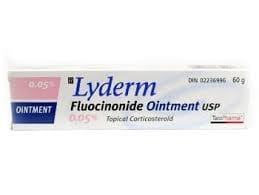
Lyderm Ointment
Buy Lyderm Ointment Online
Secure Encrypted Payments
Lyderm Ointment is a fluocinonide 0.05% topical corticosteroid used on inflamed, itchy skin conditions that respond to steroid treatment. Lyderm Ointment can be ordered online, with current price details shown during ordering and the available strength selected to match your clinician’s directions. The ointment base is often chosen for dry, thickened, or scaly areas because it stays on the skin longer than many lighter creams.
Fluocinonide ointment 0.05 is a high-potency topical steroid, so the treatment area, length of use, and skin sensitivity matter. It is not a general rash cream, a moisturizer, or a first choice for every red patch. Using it carefully helps reduce inflammation while lowering the chance of avoidable side effects.
Price, Strength, and Ordering Lyderm 0.05 Ointment
When buying Lyderm Ointment, match the product strength and form to the directions provided for your skin condition. The product is Lyderm fluocinonide ointment 0.05%, also described as fluocinonide ointment USP 0.05. Current pricing can vary with the product selected, quantity, sourcing, and whether a generic fluocinonide ointment is used instead of a brand name.
Before placing an order, check that the directions name the ointment form and not a cream, gel, or another vehicle. A cream and an ointment may contain the same active ingredient, but they can feel different, absorb differently, and suit different body areas. If the directions are unclear, ask the treating clinician or pharmacist to clarify the intended form, body site, and planned treatment length.
- Confirm the form: ointment is greasier and more occlusive than cream.
- Confirm the strength: Lyderm Ointment is fluocinonide 0.05%.
- Confirm the body area: face, folds, and groin need extra caution.
- Confirm the course length: high-potency steroids are usually not for open-ended use.
BorderFreeHealth works with licensed pharmacies to supply regulated medications through a structured ordering process. Some customers use US delivery from Canada for cash-pay dermatology medicines, and logistics may include prompt, express shipping when the order is ready to send.
What Lyderm Ointment Is Used For
Lyderm Ointment is used for corticosteroid-responsive dermatoses, meaning inflammatory skin disorders that improve when a topical steroid reduces redness, itching, swelling, and irritation. In everyday terms, this may include certain eczema flares, allergic contact dermatitis, irritant dermatitis, and some thick or scaly plaques when a clinician considers a potent ointment appropriate.
The medicine is not meant for every rash. It may be a poor fit for acne, rosacea, unexplained facial redness, diaper-area irritation, or suspected fungal, bacterial, or viral infections. A steroid can calm redness temporarily while allowing an infection or acne-like condition to worsen underneath.
For broader skin-treatment browsing, the Dermatology Products category can help place Lyderm Ointment among other dermatology medicines. For background reading about skin conditions and treatment decisions, the Dermatology Guides section offers related educational content.
If the rash is painful, oozing, blistered, rapidly spreading, or paired with fever, seek timely medical evaluation. Those signs may point to infection, an allergic reaction, or another condition that needs a different treatment plan.
How to Use Fluocinonide Ointment 0.05 Safely
Use Lyderm Ointment only on the affected skin and only for the area directed. A thin film is usually enough for topical corticosteroids, and applying more does not necessarily improve the result. Too much medicine, frequent application, or use over large areas can raise the chance of local and whole-body steroid effects.
- Apply to clean, dry skin unless directed otherwise.
- Use a thin layer on the affected area only.
- Avoid spreading onto normal skin around the rash.
- Wash your hands after applying, unless your hands are being treated.
- Do not cover with airtight bandages unless specifically instructed.
Quick tip: Keep the tube in its labeled packaging so the strength and directions remain easy to identify.
Body location changes the safety calculation. Skin on the face, eyelids, groin, underarms, and skin folds absorbs more medicine and is more prone to thinning or irritation. Even when Lyderm Ointment is appropriate elsewhere, those delicate areas may need a lower-potency product or a shorter course.
Children can absorb proportionally more topical steroid because of body size and skin surface area. Diapers, wraps, and tight dressings can act like occlusive coverings and increase absorption. Ask for clear instructions before using a potent steroid on a child or under any covering.
Ointment, Cream, Gel, and Related Fluocinonide Choices
Lyderm Ointment contains fluocinonide in an ointment base. Ointments usually feel greasy, protect the skin surface, and hold moisture in. That texture can help dry, thick, or scaly patches, but it may feel heavy on moist areas, hairy skin, or skin folds.
| Form | How it feels | Why it may be chosen |
|---|---|---|
| Ointment | Greasier, more protective, more occlusive | Often considered for dry or thickened patches |
| Cream | Lighter and less greasy | May suit areas where residue affects comfort |
| Gel | Different spread and drying feel | May suit certain body areas or preferences |
Related fluocinonide products may appear under different brand names or forms depending on the market. Lidex ointment is a brand name some people recognize for fluocinonide, but names, inactive ingredients, and product presentations can differ. Do not assume a cream, gel, and ointment can be swapped without confirming the intended vehicle.
If your skin reacts easily to topical products, ask a pharmacist to look at inactive ingredients. Burning, stinging, or allergy-like irritation can sometimes relate to the base, preservatives, or other inactive components rather than the active corticosteroid itself.
Side Effects, Warnings, and When to Get Help
Lyderm Ointment side effects are often local. Burning, stinging, dryness, itching, irritation, acne-like bumps, folliculitis, and changes in skin color can occur. These effects become more likely when a potent steroid is used too often, for too long, on thin skin, or under occlusive coverings.
Longer or heavier use can cause more serious skin changes, including thinning, stretch marks, easy bruising, visible small blood vessels, delayed healing, or worsening redness. Potent topical steroids can also be absorbed into the bloodstream, especially when applied to large areas, damaged skin, or covered skin. Systemic absorption is uncommon with careful use but becomes more concerning when use is extended or intensive.
Avoid getting the ointment in the eyes, eyelids, mouth, or other mucous membranes unless a clinician has given specific instructions. Repeated use around the eyes may raise concern for eye complications, so eyelid or near-eye treatment should be handled with particular care.
Why it matters: A steroid that helps an elbow plaque may be too strong for facial skin.
Stop and seek medical advice if the treated area develops pus, severe pain, rapidly spreading redness, fever, blistering, or a sharply worse rash. Those changes may signal infection, allergy, or a diagnosis that needs reassessment instead of more steroid.
Interactions and Special Precautions
Topical corticosteroids usually have fewer whole-body interactions than oral steroid medicines, but the skin can still become overtreated when multiple products are layered together. Tell a clinician or pharmacist about antifungal creams, antibiotic ointments, acne medicines, psoriasis treatments, retinoids, exfoliating acids, medicated washes, and any other steroid products used on the same area.
Some combinations are intentional, especially when a clinician treats more than one skin problem. Others can increase burning, peeling, dryness, or irritation. Avoid building a routine around several active products unless each one has a clear purpose and timing.
Pregnancy, breastfeeding, large treatment areas, and repeated courses deserve extra caution with potent topical steroids. The smallest effective amount is generally preferred. If breast skin is being treated, the ointment should not remain where an infant could contact it during feeding.
Lyderm Ointment should not be treated like a routine moisturizer. If the original rash has changed, spread, become infected-looking, or stopped responding, reassessment is safer than continuing repeated courses on your own.
Storage and Travel Basics
Store Lyderm Ointment at room temperature unless the carton or label gives different instructions. Keep the cap tightly closed, and protect the tube from excess heat, moisture, and direct contamination. Store it out of reach of children and pets.
Do not share the tube with another person, even if a rash looks similar. Shared topical products can spread germs, and similar-looking skin conditions may need different treatments. Keeping each tube for the intended user also helps the pharmacist or clinician evaluate whether the treatment is working as expected.
When traveling, carry the ointment in its original labeled packaging. The label helps identify the active ingredient, strength, and directions if questions come up during travel or during a medical visit away from home. If the ointment changes color, separates, smells unusual, or is past its expiry date, ask a pharmacist before using more.
Comparing Lyderm Ointment With Nearby Options
The most common comparisons are generic fluocinonide ointment 0.05, Lyderm cream 0.05, fluocinonide gel, and lower-potency topical steroids. The right choice depends on the diagnosis, skin thickness, body location, dryness, and how well the product fits daily use.
| Option | What may differ | Why it may come up |
|---|---|---|
| Generic fluocinonide ointment 0.05 | Same active drug, different manufacturer or base ingredients | Often discussed when brand selection or cost matters |
| Lyderm cream 0.05 | Lighter vehicle than ointment | May be preferred when a greasy feel reduces adherence |
| Lower-potency steroid | Less corticosteroid strength | May be considered for milder flares or sensitive body areas |
| Non-steroid anti-inflammatory ointment | Different active ingredient and safety profile | May be considered for certain sensitive areas or longer-term plans |
For related dermatology choices, Lyderm Gel may be relevant when a gel vehicle is preferred. Protopic Ointment is a non-steroid topical option used in some inflammatory skin conditions, while Zoryve and Hanzema may come up in broader conversations about dermatitis or plaque-related treatment plans. Patients with psoriasis treatment needs may also encounter oral options such as Acitretin, depending on the diagnosis and severity.
Cosmetic or acne-focused creams are not the same category as a high-potency steroid. If you are weighing products for skin texture, wrinkles, or acne, Renova Cream information may help separate retinoid use from steroid treatment. Avoid using Lyderm Ointment for acne-like bumps unless a clinician has specifically identified a steroid-responsive condition.
Questions to Ask Before Starting
A short conversation can prevent many topical steroid problems. Ask what diagnosis is being treated, which exact body areas should receive the ointment, how many days the course should last, and what improvement should look like. Also ask what to do if the rash returns soon after stopping.
If you have used topical steroids before, mention past side effects such as thinning skin, stretch marks, burning, acne-like breakouts, or poor response. Mention any current skin infections, immune-system concerns, pregnancy, breastfeeding, or use on a child. These factors can change how cautious the plan should be.
It is also worth asking whether moisturizers, barrier repair, trigger avoidance, or a non-steroid medicine should be part of the plan. Many inflammatory skin conditions need more than a flare medicine, especially when dryness, irritants, or repeated exposure keep the rash active.
Authoritative Sources
For label-level and patient drug information about fluocinonide topical products, these sources provide useful safety and use context:
- Health Canada product monograph
- Mayo Clinic fluocinonide topical information
- MedlinePlus fluocinonide topical medicine guide
This content is for informational purposes only and is not a substitute for professional medical advice.
Affected Body Surface Area Calculator
Estimate affected body surface area using palm units and optional entered body-region percentages.
Estimated affected BSA-one palm approximates 1%
Check-screening estimate only
These calculations are for education only and do not replace clinical advice, diagnosis, or treatment. Always confirm medical decisions with a qualified healthcare professional.
Express Shipping - from $29.99
Shipping with this method takes 3-5 days
Prices:
- Dry-Packed Products $29.99
- Cold-Packed Products $39.99
Shipping Countries:
- United States (all contiguous states**)
- Worldwide (excludes some countries***)
Standard Shipping - $19.99
Shipping with this method takes 5-10 days
Prices:
- Dry-Packed Products $19.99
- Not available for Cold-Packed products
Shipping Countries:
- United States (all contiguous states**)
- Worldwide (excludes some countries***)
What is Lyderm Ointment used for?
Lyderm Ointment is used for inflammatory, itchy skin conditions that respond to topical corticosteroids. Examples may include certain eczema flares, dermatitis, or thick scaly plaques when a clinician decides fluocinonide 0.05% ointment is appropriate.
Is Lyderm Ointment the same as fluocinonide ointment 0.05?
Lyderm Ointment contains fluocinonide 0.05% in an ointment base. Generic fluocinonide ointment may contain the same active drug, but manufacturer, inactive ingredients, and vehicle feel can differ.
How should Lyderm Ointment be applied?
Apply a thin layer only to the affected skin area as directed. Avoid normal skin, eyes, mouth, and delicate areas unless specifically instructed, and do not cover the area tightly unless told to do so.
What side effects can Lyderm Ointment cause?
Possible side effects include burning, stinging, dryness, irritation, acne-like bumps, folliculitis, skin color changes, thinning skin, stretch marks, and delayed healing. Risk rises with prolonged use, large areas, thin skin, or occlusion.
Can Lyderm Ointment be used on the face?
Strong topical steroids are used cautiously on the face because facial skin absorbs more medicine and is more prone to thinning, irritation, and visible changes. Use near the eyes needs particular medical guidance.
How is Lyderm Ointment different from Lyderm cream?
The active corticosteroid may be the same, but the vehicle is different. Ointment is greasier and more occlusive, while cream usually feels lighter. The best form depends on the body area, dryness, and treatment plan.
How should Lyderm Ointment be stored?
Store the tube at room temperature unless the label says otherwise. Keep it tightly closed, away from excess heat and moisture, and out of reach of children and pets.
Rewards Program
Earn points on birthdays, product orders, reviews, friend referrals, and more! Enjoy your medication at unparalleled discounts while reaping rewards for every step you take with us.
You can read more about rewards here.
POINT VALUE
How to earn points
- 1Create an account and start earning.
- 2Earn points every time you shop or perform certain actions.
- 3Redeem points for exclusive discounts.
You Might Also Like
Select options
This product has multiple variants. The options may be chosen on the product page
Select options
This product has multiple variants. The options may be chosen on the product page
Select options
This product has multiple variants. The options may be chosen on the product page
Select options
This product has multiple variants. The options may be chosen on the product page