
Please note: a valid prescription is required for all prescription medication.
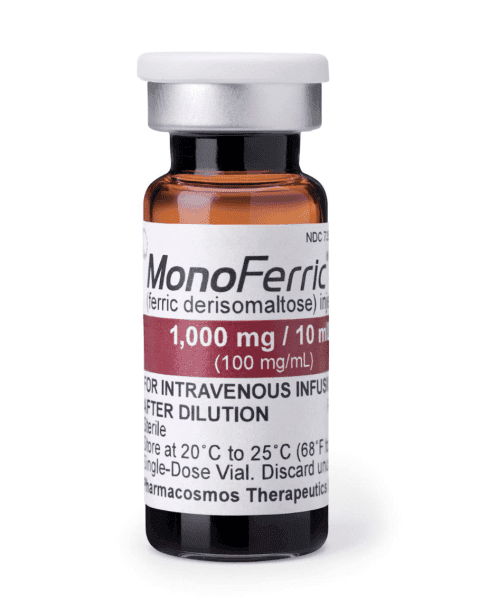
Monoferric
Buy Monoferric Online
Secure Encrypted Payments
Monoferric is an intravenous iron medicine used in adults with iron deficiency anemia when a clinician recommends iron repletion by infusion. You can buy Monoferric online, view the current price, and choose the vial strength and quantity shown during ordering to match clinic directions. Because Monoferric is administered by healthcare staff, the vial details should align with the infusion plan before payment and scheduling.
Monoferric contains ferric derisomaltose, an iron-carbohydrate complex supplied for IV use. It is not a self-injection product and should not be opened, mixed, diluted, or administered outside a supervised clinical setting. BorderFreeHealth supports US delivery from Canada for applicable cross-border orders, so clinic timing and handling instructions should be planned before the infusion date.
Monoferric Price and Vial Details
Monoferric price depends on the vial presentation, quantity, and current pharmacy sourcing. For an injectable iron product, the most important ordering details are the medicine name, active ingredient, concentration, total vial contents, and number of vials. A lower line-item amount is not useful if the vial does not match the clinic’s preparation plan.
Published labeling commonly describes Monoferric 1000 mg as ferric derisomaltose injection at 100 mg/mL in a 10 mL single-dose vial. Availability may vary by market and batch, so match the vial label information during checkout with the clinic order. The infusion site may also have its own requirements for receiving, storing, and preparing IV iron.
When estimating Monoferric cost without insurance, separate the medication charge from the infusion appointment. Clinics may bill for nursing time, supplies, observation, facility use, lab work, or other services. If you are evaluating Monoferric cash pay cost, ask the infusion center which fees are included and which are billed separately.
Quick tip: Match the vial label, total contents, and quantity with the clinic’s written instructions before finalizing the purchase.
| Detail to match | Why it matters |
|---|---|
| Brand and active ingredient | Confirms the order is for ferric derisomaltose rather than another IV iron. |
| Concentration | Helps staff verify how much iron is supplied per mL. |
| Total vial contents | Shows whether the vial aligns with the planned infusion dose. |
| Quantity | Affects the total medication charge and what arrives for the appointment. |
| Clinic administration fees | May be billed separately from the medication purchase. |
How to Order Monoferric from Canada
To order Monoferric from Canada, choose the vial presentation and quantity that match the infusion order. Keep the clinic’s instructions available while placing the order, especially if the infusion site specifies a vial size or total iron amount. Our team may review order information to help ensure the medicine and quantity are appropriate for the request.
Confirm who should receive the sealed vial before scheduling the appointment. Some infusion centers prefer direct coordination, while others give patients transport instructions for bringing the unopened carton to the clinic. The clinic should make the final decision about whether the product has been stored and handled correctly before use.
Customers often compare Monoferric price from Canada when oral iron has not worked well, caused troublesome side effects, or is not the clinician’s preferred option. If the medication Ships from Canada to US, leave enough time for ordering, receipt, clinic intake, and appointment scheduling. Prompt, express shipping may be available, but the infusion date should still account for clinic availability and any required paperwork.
What Monoferric Is Used For
Monoferric is used to treat iron deficiency anemia in adults. Iron deficiency anemia occurs when the body does not have enough usable iron to support healthy red blood cell production. Low iron can contribute to fatigue, weakness, dizziness, shortness of breath, reduced exercise tolerance, and other symptoms, but blood tests are needed to confirm the cause.
Ferric derisomaltose helps replenish iron stores through intravenous administration. Clinicians may recommend IV iron when oral iron is not tolerated, has not improved iron levels adequately, or when faster supervised repletion is clinically preferred. The choice depends on hemoglobin, ferritin, transferrin saturation, symptoms, medical history, and the reason iron deficiency developed.
The Iron Deficiency Anemia collection can help you browse related anemia treatment context. Monoferric should be considered part of a broader care plan that may include lab follow-up, evaluation for blood loss, nutrition assessment, kidney-related anemia management, or treatment of another underlying condition.
Infusion Timing and Clinic Administration
A Monoferric infusion is given by trained healthcare staff in a supervised setting. The clinic prepares the vial according to official instructions and the clinician’s order. Staff may assess vital signs before, during, and after administration because IV iron can cause blood pressure changes or allergic-type reactions.
Many adults receive Monoferric in a single infusion session, but the plan can differ by weight, lab results, and clinical goals. The official prescribing information describes dosing approaches that the care team uses when writing the infusion order. Do not schedule additional IV iron, change the plan, or add iron supplements unless a clinician advises it.
People often ask how long a Monoferric IV infusion lasts. U.S. labeling describes administration over at least 20 minutes for certain adult dosing scenarios, but the appointment can take longer. Check-in, medication preparation, observation, and discharge instructions may extend the clinic visit beyond the infusion time itself.
Why it matters: The appointment length includes monitoring time, not only the minutes the medicine is running.
Strengths, Single-Dose Vials, and Handling
Monoferric injection is supplied as a sterile solution for intravenous use. Labeling commonly describes ferric derisomaltose at 100 mg/mL in single-dose vial presentations, including a vial containing 1000 mg in 10 mL. During ordering, use the strength, volume, and quantity shown to match the clinic’s instructions.
Total vial contents are different from an individualized dose. For example, a 10 mL vial at 100 mg/mL contains 1000 mg of iron complex, but the care team decides the appropriate infusion plan. Clinic staff handle any preparation steps, dilution decisions, administration rate, monitoring, and disposal according to the product instructions and facility policy.
Single-dose vial language means the vial is intended for one-time clinical use after opening. It does not mean that unused contents should be kept for later personal use. If a carton seal, label, or storage condition appears questionable, contact the dispensing pharmacy or infusion center before the appointment.
- Confirm the active ingredient: Ferric derisomaltose should match the clinic order.
- Review the strength: Match the mg and mL information carefully.
- Count the vials: The quantity should match the planned infusion.
- Coordinate the clinic: Confirm the site can administer IV iron.
Storage, Shipping, and Appointment Planning
Monoferric storage is typically managed by the pharmacy and infusion clinic. Product labeling generally describes controlled room temperature storage, protection from light, and instructions not to freeze. If you are asked to transport the sealed carton, follow the pharmacy’s handling directions and keep the identifying label available for clinic staff.
Do not store the vial in a car, bathroom, freezer, or other area with temperature swings. Keep it in the original carton until the clinic prepares it. Bring any paperwork requested by the infusion center, including order instructions and identification, so staff can verify the medicine before administration.
Plan the infusion appointment around product receipt and clinic workflow. Avoid scheduling too tightly around travel, weekends, or clinic closures. If you believe the vial was exposed to improper temperature, light, or handling conditions, do not attempt to solve the issue yourself; ask the pharmacy or infusion team whether it can still be used.
Side Effects, Warnings, and Monitoring
Monoferric side effects can include nausea, rash, flushing, headache, dizziness, vomiting, injection site discomfort, and muscle or joint aches. Some people feel unwell during or shortly after an iron infusion. Tell clinic staff right away if symptoms begin while the medicine is being administered.
Serious hypersensitivity reactions, including anaphylaxis, have occurred with IV iron products. Warning signs can include wheezing, trouble breathing, swelling of the face or throat, chest tightness, severe dizziness, widespread hives, or a sudden feeling of faintness. Infusion centers monitor patients because these reactions require urgent treatment.
Blood pressure changes may occur during or after administration. Some patients experience low blood pressure, while others may have high blood pressure readings. Staff may monitor vital signs and ask about symptoms such as lightheadedness, chest discomfort, shortness of breath, or unusual flushing.
Iron overload is an important safety concern. Giving additional iron when stores are already adequate can be harmful, so clinicians often use lab values such as hemoglobin, ferritin, and transferrin saturation to guide treatment and follow-up. People with known hypersensitivity to Monoferric or its components should not receive it, and those with iron overload or disorders affecting iron use need careful evaluation.
Interactions, Lab Follow-Up, and Precautions
Tell the clinician about prescription medicines, over-the-counter products, vitamins, and iron supplements before a Monoferric infusion. Using more than one IV iron product at the same time is generally avoided unless a clinician has specifically planned it. Extra oral iron may not be needed after IV iron, but the decision should be based on your care plan and follow-up labs.
Iron therapy can affect the interpretation of certain blood tests soon after administration. The clinic may schedule follow-up blood work after enough time has passed to assess response. Hemoglobin shows red blood cell improvement, while ferritin and transferrin saturation help show whether iron stores are being replenished.
Discuss pregnancy, nursing, active infection, asthma, eczema, immune conditions, liver concerns, kidney disease, and previous medication allergies before infusion. These factors do not automatically rule treatment in or out, but they help staff plan monitoring. Any previous reaction to IV iron should be shared, even if it happened years ago or with a different iron product.
How It Compares With Other Anemia Treatments
Monoferric is one option within the IV iron category. Other iron infusions may use different iron complexes, vial sizes, infusion times, total dose schedules, or monitoring protocols. The practical difference for ordering is often the product named by the clinician, the number of visits expected, and the presentation the infusion center can prepare.
IV iron is not interchangeable with vitamin B12 treatment. Vitamin B12 deficiency anemia has a different cause and requires different testing and therapy. Some people have more than one deficiency, so clinicians may treat iron deficiency while also addressing B12, folate, kidney disease, inflammation, blood loss, or another contributing problem.
People with chronic kidney disease may receive anemia care that includes iron therapy, erythropoiesis-stimulating agents, dialysis-related protocols, or other kidney-focused treatments. The best option depends on kidney function, dialysis status, iron markers, hemoglobin, symptoms, and clinical goals. Compare anemia medicines only after the diagnosis and treatment plan are clear.
Questions to Clarify With the Infusion Clinic
Before checkout, gather practical answers that affect both the medication purchase and the appointment. Small mismatches can delay treatment, especially when the clinic has a specific process for receiving and preparing IV iron. Written instructions are useful because they reduce the chance of ordering the wrong vial quantity.
- Which vial is needed? Ask for the strength, volume, and total iron amount.
- How many vials are required? Match the quantity to the infusion plan.
- Who should receive the carton? Confirm whether the clinic or patient should take possession.
- What handling rules apply? Ask how the sealed vial should be stored or transported.
- Which fees are separate? Clarify nursing, facility, monitoring, and lab charges.
- How long is observation? Ask how long to stay after the infusion.
- When are labs repeated? Confirm follow-up timing for hemoglobin and iron markers.
These questions are especially helpful when estimating Monoferric out of pocket cost. The medication price is only one part of the total amount. Clinic policies, observation time, lab schedules, and facility billing can change what you pay overall.
Authoritative Sources
Official U.S. prescribing information for ferric derisomaltose injection provides dosing, administration, contraindication, warning, and adverse reaction information.
Canadian product monograph and patient information outlines Canadian labeling, storage, safety, and patient-use information for Monoferric.
This content is for informational purposes only and is not a substitute for professional medical advice.
Ideal & Adjusted Body Weight Calculator
Estimate ideal body weight with the Devine equation and adjusted body weight when actual weight is above the estimate.
Ideal body weight
-
Devine equation
Adjusted body weight
-
IBW + 0.4 x excess weight
Difference from IBW
-
actual minus ideal
These calculations are for education only and do not replace clinical advice, diagnosis, or treatment. Always confirm medical decisions with a qualified healthcare professional.
BMI Calculator
Estimate adult body mass index from height and weight, with metric and imperial units.
BMI
-
kg/m2 equivalent
Category
-
Adult screening range
These calculations are for education only and do not replace clinical advice, diagnosis, or treatment. Always confirm medical decisions with a qualified healthcare professional.
Body Surface Area Calculator
Calculate body surface area from height and weight using the Mosteller equation.
BSA
-
m2, Mosteller equation
These calculations are for education only and do not replace clinical advice, diagnosis, or treatment. Always confirm medical decisions with a qualified healthcare professional.
Express Shipping - from $29.99
Shipping with this method takes 3-5 days
Prices:
- Dry-Packed Products $29.99
- Cold-Packed Products $39.99
Shipping Countries:
- United States (all contiguous states**)
- Worldwide (excludes some countries***)
Standard Shipping - $19.99
Shipping with this method takes 5-10 days
Prices:
- Dry-Packed Products $19.99
- Not available for Cold-Packed products
Shipping Countries:
- United States (all contiguous states**)
- Worldwide (excludes some countries***)
What is Monoferric used to treat?
Monoferric is used in adults with iron deficiency anemia when a clinician recommends intravenous iron. It helps replenish iron stores needed for red blood cell production, and lab tests guide whether it is appropriate.
How long does a Monoferric infusion take?
Official labeling describes administration over at least 20 minutes for certain adult dosing scenarios. The full clinic visit may be longer because it can include check-in, preparation, monitoring, and discharge instructions.
What are common side effects of Monoferric?
Commonly reported side effects can include nausea, rash, flushing, headache, dizziness, vomiting, injection site discomfort, and muscle or joint aches. Tell clinic staff immediately if symptoms start during the infusion.
Can Monoferric cause serious allergic reactions?
Yes. Serious hypersensitivity reactions, including anaphylaxis, have occurred with IV iron products. Trouble breathing, facial or throat swelling, chest tightness, severe dizziness, or widespread hives require urgent medical attention.
Is Monoferric the same as oral iron?
No. Monoferric is an intravenous ferric derisomaltose medicine administered by healthcare staff. Oral iron is taken by mouth and may be used in different situations depending on tolerance, lab results, and clinician preference.
What should I ask my clinic before ordering Monoferric?
Ask which vial strength and quantity are needed, who should receive the sealed carton, how it should be stored or transported, which clinic fees apply, and when follow-up blood work should be checked.
Rewards Program
Earn points on birthdays, product orders, reviews, friend referrals, and more! Enjoy your medication at unparalleled discounts while reaping rewards for every step you take with us.
You can read more about rewards here.
POINT VALUE
How to earn points
- 1Create an account and start earning.
- 2Earn points every time you shop or perform certain actions.
- 3Redeem points for exclusive discounts.
You Might Also Like
Select options
This product has multiple variants. The options may be chosen on the product page
Select options
This product has multiple variants. The options may be chosen on the product page
Select options
This product has multiple variants. The options may be chosen on the product page
Select options
This product has multiple variants. The options may be chosen on the product page