
Please note: a valid prescription is required for all prescription medication.
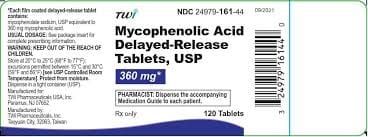
Mycophenolic Acid
Buy Mycophenolic Acid Online
Secure Encrypted Payments
Mycophenolic Acid is an immunosuppressant medication used in transplant care, most often as delayed-release tablets associated with Myfortic-style therapy. You can buy mycophenolic acid online, view current pricing, and choose the available strength that matches the directions from your transplant clinic. Confirm the active ingredient, strength, form, and quantity before checkout, because mycophenolic acid delayed-release tablets are different from mycophenolate mofetil products.
This medicine helps lower immune activity that can attack a transplanted kidney. It is usually part of a larger regimen managed by a transplant team, so product matching matters as much as price. BorderFreeHealth offers U.S.-from-Canada service context for eligible medication orders, including cash-pay planning when insurance is not part of the order.
Mycophenolic Acid Price and Strength Selection
The mycophenolic acid price depends on the strength, tablet count, form, and current pharmacy supply shown during ordering. A lower total can represent fewer tablets or fewer treatment days, so compare the strength per tablet and quantity together. The most useful cost view is the one that matches the dose schedule already set by your transplant clinic.
Common delayed-release tablet strengths include 180 mg and 360 mg. Many people search for mycophenolic acid 360mg because Myfortic 360mg is a familiar brand-linked strength. The important step is not choosing the most recognizable strength; it is choosing the strength and formulation your clinic intended.
Generic and brand-associated names can appear similar, but they may not refer to interchangeable products. Mycophenolic acid delayed-release tablets are not the same as mycophenolate mofetil tablets or capsules on a milligram-for-milligram basis. If your medication list says Myfortic, mycophenolic acid, or another related name, match the wording closely and ask your transplant team about any uncertainty before changing products.
If you are planning around mycophenolic acid cost without insurance, focus on the cash-pay amount, the number of tablets, and refill timing. Longer supplies may be convenient for stable regimens, but transplant medicines are often adjusted after labs or follow-up visits. Keep enough time for questions, clinic updates, and order processing before your current supply runs low.
Quick tip: Keep your current bottle or clinic medication list nearby while choosing the strength and quantity.
How to Order Mycophenolic Acid Online
To order mycophenolic acid online, start with the delayed-release tablet strength that matches your current regimen. Then enter the requested order information and make sure the medicine name, tablet strength, and quantity line up with your clinic instructions. Small differences in product names can be clinically important with transplant medicines.
BorderFreeHealth connects U.S. patients with medication access through licensed Canadian pharmacy channels. Order details may be reviewed when clarification is needed before pharmacy supply. This helps reduce the chance of a mismatch between mycophenolic acid tablets, Myfortic-style delayed-release tablets, and other mycophenolate products.
Refill timing is especially important because immunosuppressant therapy is usually continuous. Order early enough to account for clinic renewals, bloodwork appointments, travel, and any dosing changes after follow-up. When your planning includes mycophenolic acid US delivery from Canada, allow time for processing and prompt, express shipping rather than waiting until the final few doses.
Customers browsing immune-system medicines can also use the Immunology category to understand where this medicine fits among related therapies. Category browsing should not replace transplant-team direction, but it can help you recognize nearby medication classes and avoid confusing similar names.
What Mycophenolic Acid Is Used For
Mycophenolic Acid is used with other immunosuppressants to help prevent organ rejection in adult kidney transplant patients. In this setting, it reduces the immune response that can damage the transplanted kidney. It is not a treatment for an active rejection episode unless a transplant team specifically includes it in a broader plan.
The delayed-release tablet is commonly used with cyclosporine and corticosteroids as part of a multi-medicine transplant regimen. Each medicine has a different role. Mycophenolic acid limits certain immune-cell activity, while other medicines may affect different immune pathways or inflammation signals.
The medication works by inhibiting inosine monophosphate dehydrogenase. In plain language, it limits materials some white blood cells need to multiply. That helps reduce immune attack on the graft, but it also means the body may have a harder time fighting infections.
People may also see references to autoimmune uses of mycophenolate medicines. This product copy focuses on transplant-related use and practical ordering decisions. Any use outside the transplant context should be directed by the specialist managing that condition.
For broader treatment browsing, the Transplant Rejection collection groups medicines connected with rejection prevention. Use it as a way to understand related categories, not as a reason to switch products independently.
Forms, Strengths, and Product Matching
Mycophenolic acid medication is commonly supplied as enteric-coated delayed-release tablets. Enteric-coated means the tablet is designed to pass through the stomach and release later in the intestine. Swallow tablets whole with water unless your transplant clinic gives different instructions.
- Common form: enteric-coated delayed-release tablet
- Common strengths: 180 mg and 360 mg
- Brand reference: Myfortic is a known delayed-release mycophenolic acid product
- Generic naming: labels may use the active ingredient name
- Key distinction: not equivalent to mycophenolate mofetil milligram-for-milligram
Search terms such as myfortic mycophenolic acid, mycophenolate myfortic, myfortic acid, and mycophenolic acid 360 often point to related transplant medicines. The wording can be confusing because mycophenolate mofetil is converted in the body to mycophenolic acid. Even so, the products differ in formulation, absorption, and dosing equivalence.
Do not crush, split, or chew delayed-release tablets. Damaging the coating can change how the medicine releases. If a tablet breaks, avoid direct contact with powder; people who are pregnant or could become pregnant should be especially careful because mycophenolate medicines carry fetal risk warnings.
Why it matters: Matching the exact formulation helps prevent accidental underexposure or overexposure.
Dosing Routine and Missed Dose Basics
Most mycophenolic acid delayed-release tablet regimens use twice-daily dosing, but your schedule should come from the transplant clinic. Taking doses at consistent times supports steady medicine exposure. Consistency is especially important after transplant, during dose changes, or when other immunosuppressants are adjusted.
The official label for Myfortic-style delayed-release tablets commonly advises taking the medicine on an empty stomach for consistent absorption. Some clinics may personalize timing because of tolerability, other medicines, or daily routine. Follow the individualized plan if your care team has given one.
If a dose is missed, many labels advise taking it when remembered unless it is close to the next scheduled dose. If the next dose is near, skip the missed dose and return to the usual schedule. Do not double doses to make up for a missed tablet unless a clinician specifically tells you to do so.
Contact the transplant team if vomiting, severe diarrhea, or repeated missed doses occur. Those situations can affect medication exposure and may increase the need for lab review or clinical guidance. Do not stop mycophenolic acid because of side effects without getting transplant-team advice.
Side Effects, Warnings, and Monitoring
Mycophenolic Acid carries important safety warnings because it suppresses immune function. Serious infections can occur, and long-term immunosuppression can increase the risk of certain malignancies, including lymphoma and skin cancer. Report fever, chills, persistent sore throat, painful urination, unusual fatigue, or other signs of infection promptly.
Embryo-fetal toxicity is a major warning. Mycophenolate medicines can cause pregnancy loss and birth defects. Patients who can become pregnant are typically managed with pregnancy testing and effective contraception according to label instructions and clinician guidance. Anyone planning pregnancy or exposed during pregnancy should contact a healthcare professional right away.
Common side effects can include diarrhea, nausea, vomiting, abdominal pain, indigestion, headache, fatigue, swelling, urinary tract infections, upper respiratory infections, anemia, low white blood cells, and low platelets. Weight gain is not usually treated as a defining mycophenolic acid effect, but swelling, appetite changes, steroid use, kidney function changes, and other transplant medicines can affect weight. Report unexpected or rapid weight changes.
Urgent care may be needed for unusual bruising or bleeding, shortness of breath, severe weakness, confusion, vision changes, new neurologic symptoms, or signs of severe allergic reaction. Progressive multifocal leukoencephalopathy, pure red cell aplasia, and severe neutropenia have been reported with mycophenolate products. These are uncommon but serious concerns that require prompt medical assessment.
Monitoring commonly includes blood counts, kidney function review, infection assessment, and transplant follow-up. Bloodwork helps clinicians balance rejection prevention with infection and blood-cell risks. Skin protection is also important during long-term immunosuppression; use sun protection and keep routine skin checks if recommended.
Interactions, Vaccines, and Precautions
Several medicines can affect mycophenolic acid exposure or safety. Tell your transplant team about prescription medicines, over-the-counter products, supplements, and vaccine plans before changing anything. Even common stomach medicines can matter if taken close to mycophenolic acid delayed-release tablets.
- Magnesium or aluminum antacids may lower mycophenolic acid exposure.
- Cholestyramine and other bile acid binders can reduce levels.
- Acyclovir or ganciclovir may interact through kidney handling.
- Cyclosporine-containing regimens account for exposure changes.
- Live vaccines are generally avoided during significant immunosuppression.
Do not start, stop, or space interacting medicines on your own. If an antacid, antiviral, antibiotic, seizure medicine, or vaccine is added, ask whether the timing or monitoring plan should change. The goal is to preserve graft protection while reducing preventable safety risks.
Mycophenolic acid is not a steroid. It belongs to a group of immunosuppressants that interfere with immune-cell growth. This distinction matters because transplant regimens may include both mycophenolic acid and corticosteroids, and their side effects, monitoring needs, and taper plans are different.
Storage, Handling, and Travel
Store tablets at room temperature in the original container, away from excess moisture. Keep the bottle tightly closed and out of reach of children and pets. Do not use tablets that are cracked, crumbling, or visibly damaged.
A broken delayed-release tablet may expose powder that should not be handled casually. Wash hands after accidental contact and ask a pharmacist or clinician how to dispose of damaged tablets. People who are pregnant, planning pregnancy, or could become pregnant should avoid contact with tablet powder when possible.
For travel, carry the medicine in hand luggage and bring a medication list or labeled container. Time-zone changes can make twice-daily dosing confusing, so ask the transplant clinic how to adjust timing before departure. Do not pack all tablets in checked luggage, where delays or temperature exposure can create avoidable risk.
If country of origin matters to your ordering decision, the Canada-origin attribute section can help you understand how products are grouped by sourcing information. Product origin does not change your dosing plan; your transplant clinic’s instructions remain the controlling guide.
How It Compares With Related Mycophenolate Products
Mycophenolic acid and mycophenolate mofetil are closely related, but they are not the same product. Mycophenolate mofetil is a prodrug, meaning the body converts it into mycophenolic acid after administration. Delayed-release mycophenolic acid tablets are formulated differently and should not be substituted by matching the number of milligrams.
Myfortic is a brand reference for delayed-release mycophenolic acid tablets. CellCept is a common brand reference for mycophenolate mofetil. A term such as mmf 360mg should not be treated as a direct replacement for mycophenolic acid 360mg. If a hospital discharge list, clinic note, or bottle label uses a different name than expected, ask for clarification before using a substitute.
Transplant regimens may also include calcineurin inhibitors, corticosteroids, mTOR inhibitors, antivirals, antibiotics, or other supportive medicines. Selection depends on transplant center protocol, lab results, infection risk, side effect history, kidney function, and previous rejection history. Price and convenience should be considered only after the medication identity is clear.
The Immunology category can help you browse related immune-system therapies, while the Transplant Rejection collection focuses on products connected with graft protection. These internal collections are useful for orientation, but product changes should remain clinician-led.
Questions to Confirm Before a Refill
Before placing a refill, confirm practical details while there is still time to fix a mismatch. This is especially important after a recent transplant, hospital discharge, dose change, insurance transition, or move between pharmacies. Medication names can look similar, and transplant dosing may change after lab results.
- Exact medicine name on your current transplant plan
- Delayed-release tablet form and intended strength
- Quantity needed for the next treatment interval
- Food timing, including empty-stomach instructions
- Bloodwork and follow-up schedule
- Pregnancy testing or contraception instructions, if relevant
- Vaccine guidance and infection precautions
If mycophenolic acid cash pay is part of your planning, ask whether the refill quantity fits your current monitoring schedule. A larger supply can be convenient, but some transplant teams prefer smaller intervals when therapy is still being adjusted. Keep a current medication list with your order records so future refills are easier to match.
Authoritative Sources
FDA-approved Myfortic prescribing information supports the kidney transplant indication, delayed-release tablet use, dosing instructions, boxed warnings, side effects, and interaction details.
MedlinePlus mycophenolate drug information provides patient-facing safety information on infection risk, pregnancy warnings, use instructions, and monitoring considerations.
This content is for informational purposes only and is not a substitute for professional medical advice.
eGFR Calculator
Estimate kidney filtration using the 2021 CKD-EPI creatinine equation.
eGFR
-
mL/min/1.73 m2
G category
-
requires clinical context
These calculations are for education only and do not replace clinical advice, diagnosis, or treatment. Always confirm medical decisions with a qualified healthcare professional.
Creatinine Clearance Calculator
Estimate creatinine clearance using the Cockcroft-Gault equation.
CrCl
-
mL/min estimate
These calculations are for education only and do not replace clinical advice, diagnosis, or treatment. Always confirm medical decisions with a qualified healthcare professional.
Body Surface Area Calculator
Calculate body surface area from height and weight using the Mosteller equation.
BSA
-
m2, Mosteller equation
These calculations are for education only and do not replace clinical advice, diagnosis, or treatment. Always confirm medical decisions with a qualified healthcare professional.
Absolute Neutrophil Count Calculator
Calculate ANC from white blood cell count, neutrophil percentage, and optional band percentage.
ANC-cells/uL
ANC-10^9/L
These calculations are for education only and do not replace clinical advice, diagnosis, or treatment. Always confirm medical decisions with a qualified healthcare professional.
Express Shipping - from $29.99
Shipping with this method takes 3-5 days
Prices:
- Dry-Packed Products $29.99
- Cold-Packed Products $39.99
Shipping Countries:
- United States (all contiguous states**)
- Worldwide (excludes some countries***)
Standard Shipping - $19.99
Shipping with this method takes 5-10 days
Prices:
- Dry-Packed Products $19.99
- Not available for Cold-Packed products
Shipping Countries:
- United States (all contiguous states**)
- Worldwide (excludes some countries***)
What is mycophenolic acid used for?
Mycophenolic acid is used with other immunosuppressants to help prevent organ rejection after kidney transplantation. It lowers activity in immune cells that can attack the transplanted kidney. Some specialists may use related mycophenolate medicines for other immune conditions, but transplant use and any off-label use should be managed by the treating clinician.
What is the difference between mycophenolic acid and mycophenolate mofetil?
Mycophenolate mofetil is converted in the body into mycophenolic acid, but the products are formulated and dosed differently. Delayed-release mycophenolic acid tablets, such as Myfortic-style products, are not interchangeable with mycophenolate mofetil tablets or capsules on a milligram-for-milligram basis. Confirm the exact medicine name and form before switching.
Is mycophenolic acid a steroid?
No. Mycophenolic acid is an immunosuppressant, but it is not a steroid. Transplant regimens may include both mycophenolic acid and corticosteroids because they affect the immune system in different ways. Their side effects and monitoring needs are also different.
Does mycophenolic acid cause weight gain?
Weight gain is not usually considered a defining effect of mycophenolic acid itself. However, swelling, steroid therapy, appetite changes, kidney function changes, and other transplant medicines can affect weight. Report rapid, unexplained, or uncomfortable weight changes to your transplant team.
How should mycophenolic acid delayed-release tablets be taken?
Delayed-release tablets are usually swallowed whole with water and should not be crushed, split, or chewed. Many regimens use twice-daily dosing, and official labeling commonly recommends empty-stomach use for consistent absorption. Follow the schedule given by your transplant clinic, especially if you have other medicines or stomach side effects.
What side effects should be reported quickly?
Report fever, chills, persistent sore throat, painful urination, unusual bruising or bleeding, severe diarrhea, shortness of breath, severe weakness, confusion, vision changes, or new neurologic symptoms. Mycophenolic acid can increase infection risk and can lower blood cell counts, so monitoring and prompt reporting are important.
Rewards Program
Earn points on birthdays, product orders, reviews, friend referrals, and more! Enjoy your medication at unparalleled discounts while reaping rewards for every step you take with us.
You can read more about rewards here.
POINT VALUE
How to earn points
- 1Create an account and start earning.
- 2Earn points every time you shop or perform certain actions.
- 3Redeem points for exclusive discounts.
You Might Also Like
Select options
This product has multiple variants. The options may be chosen on the product page
Select options
This product has multiple variants. The options may be chosen on the product page
Select options
This product has multiple variants. The options may be chosen on the product page
Select options
This product has multiple variants. The options may be chosen on the product page