
Please note: a valid prescription is required for all prescription medication.
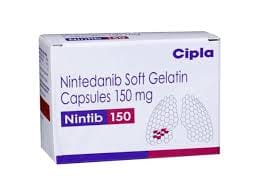
Nintedanib
Buy Nintedanib Online
Secure Encrypted Payments
Nintedanib is an oral antifibrotic medicine used for serious fibrosing interstitial lung diseases, including idiopathic pulmonary fibrosis and certain progressive fibrosing lung conditions. You can buy Nintedanib online, view current price details during ordering, and choose the capsule strength shown for the product so it matches the directions you have been given. Nintedanib capsules are commonly available as 100 mg and 150 mg strengths, including the same active ingredient used in Ofev capsules.
This medicine is taken long term to slow scarring-related decline in lung function; it is not a rescue treatment for sudden breathing trouble. BorderFreeHealth supplies regulated medications through licensed pharmacy channels, and U.S. delivery from Canada may be part of the service process for appropriate orders. Because Nintedanib can affect the liver, digestion, bleeding risk, and wound healing, it should be considered alongside recent health history, medication lists, and monitoring plans.
Nintedanib Price, Strength Selection, and Ordering Basics
Nintedanib price can vary by capsule strength, quantity, brand or generic naming, pharmacy review, and cash-pay needs. During ordering, focus on the exact active ingredient, the strength, and the quantity rather than comparing only the medicine name. If your directions specify Nintedanib 100 mg or Nintedanib 150 mg, the strength selection should match those directions closely.
Nintedanib oral capsules are typically supplied in 100 mg and 150 mg strengths. The 150 mg capsule is often used as a standard adult maintenance strength, while the 100 mg capsule may be used when a lower tolerated dose is needed. Do not switch between strengths, split doses, or change timing without medical direction, because changes can affect both side effects and treatment continuity.
| Ordering point | What to look for | Why it matters |
|---|---|---|
| Active ingredient | Nintedanib | Confirms the medicine behind Ofev and generic naming |
| Capsule strength | 100 mg or 150 mg when available | Helps match the dose schedule you were given |
| Quantity | Supply length shown during ordering | Affects refill planning and cash-pay price |
| Brand or generic name | Ofev or nintedanib | Substitution rules and availability can differ by market |
Quick tip: Keep the medicine name, strength, and dosing directions together when reviewing your order.
What Nintedanib Is Used For
Nintedanib medicine is used in adults with fibrosing interstitial lung disease, a group of lung conditions where scarring makes the lungs stiffer over time. Labeled uses include idiopathic pulmonary fibrosis, systemic sclerosis-associated interstitial lung disease, and certain chronic fibrosing interstitial lung diseases with a progressive pattern. These are specialist-managed conditions, not routine cough, asthma, COPD, or chest infection treatments.
Idiopathic pulmonary fibrosis means lung scarring with no clearly identified cause. Systemic sclerosis-associated interstitial lung disease occurs when an autoimmune disease contributes to lung scarring. Progressive fibrosing interstitial lung disease describes scarring that continues to worsen despite management of the underlying condition.
People browsing broader lung medicines can use the respiratory products category for inhalers, nebulized therapies, and other respiratory treatments. For condition education beyond this medicine, the respiratory articles collection covers practical topics across chronic lung care.
Why it matters: The exact lung diagnosis affects expected benefit, safety monitoring, and related treatment choices.
How Nintedanib Works
Nintedanib belongs to a medicine class called tyrosine kinase inhibitors. In plain terms, it blocks several cell-signaling pathways involved in scar tissue formation, including pathways connected with fibroblast growth and blood vessel growth signals. This antifibrotic effect is why it is used for lung diseases where scarring is a central problem.
The goal is not to open the airways immediately like a rescue inhaler. Instead, Nintedanib is used to reduce the rate of lung function decline in qualifying fibrosing lung diseases. That difference matters when someone is also using inhalers for breathlessness, airway disease, or symptom relief.
For nearby respiratory treatment context, articles such as Symbicort in asthma and COPD care and Spiriva in respiratory health explain medicines aimed at airway control rather than antifibrotic treatment. Those therapies are not substitutes for Nintedanib in fibrosing interstitial lung disease, but they may come up when a person has overlapping respiratory needs.
Dosage and How Capsules Are Taken
Nintedanib dosage is commonly described as twice-daily oral capsule dosing with food. Food can help reduce stomach upset, and capsules should be swallowed whole. They should not be chewed, crushed, or opened, because that can change exposure and may increase irritation.
The standard adult dose is often 150 mg twice daily. A 100 mg twice-daily schedule may be used when tolerability issues require a lower dose. Temporary interruption can also occur when side effects, liver test changes, or procedures make a pause necessary. These decisions should be individualized and based on medical follow-up.
| Situation | Common label context | Practical buying note |
|---|---|---|
| Standard adult treatment | Often 150 mg twice daily | Select the matching capsule strength if directed |
| Lower tolerated dose | 100 mg twice daily may be used | Useful when digestive or liver concerns require adjustment |
| Missed dose | Skip and take the next dose at the regular time | Do not double the next dose |
| Treatment pause | May be needed for safety reasons | Restart timing should come from your care team |
If nausea, diarrhea, appetite loss, or weight loss makes the schedule hard to continue, report it early. Supportive care, hydration planning, antidiarrheal treatment, dose reduction, or a temporary pause may be considered depending on severity.
Side Effects, Warnings, and Monitoring
Nintedanib side effects are often digestive. Diarrhea is especially common, and nausea, vomiting, stomach pain, reduced appetite, and weight loss can also occur. These effects are important because dehydration and poor nutrition can make treatment harder to continue.
Liver blood test changes can occur, including increases in liver enzymes and bilirubin. Monitoring is commonly performed before treatment and during follow-up, especially early in therapy or after dose changes. Contact a healthcare professional promptly for yellow skin or eyes, dark urine, severe fatigue, persistent nausea, or right-sided upper belly pain.
Bleeding risk deserves attention. Nintedanib can increase bleeding concerns, especially for people using anticoagulants, antiplatelet medicines, or frequent nonsteroidal anti-inflammatory drugs. Unusual bruising, black stools, vomiting blood, nosebleeds that do not stop, or new severe headache should be addressed urgently.
Serious but less common concerns include arterial thromboembolic events, gastrointestinal perforation, and problems with wound healing. Chest pain, one-sided weakness, sudden vision or speech changes, severe abdominal pain, or signs of infection around a wound need immediate medical evaluation. Planned surgery or a major procedure should be discussed in advance because treatment timing may need coordination.
Pregnancy should be avoided during treatment and for a period after the final dose according to current prescribing guidance. Breastfeeding also requires medical discussion. People who are trying to conceive, could become pregnant, or are using hormonal contraception should ask how this medicine may affect family-planning decisions.
Interactions and Health Factors to Discuss
Drug interactions can affect Nintedanib exposure or raise safety risks. Medicines that influence P-glycoprotein or CYP3A4 pathways may change levels of nintedanib in the body. Examples often flagged in drug information include ketoconazole or erythromycin, which may increase exposure, and rifampin, carbamazepine, phenytoin, or St. John’s wort, which may lower exposure.
Blood thinners, antiplatelet medicines, and some NSAIDs may increase bleeding concerns. Smoking may reduce exposure in some people, which is another reason to discuss tobacco use honestly during lung disease care. Supplements and herbal products should be included in the same medication list as prescriptions and nonprescription medicines.
Extra caution is commonly needed with liver impairment, recent major surgery, active bleeding risk, certain heart or blood vessel disorders, and severe ongoing gastrointestinal symptoms. The safety discussion should also include baseline weight, appetite, hydration, liver tests, and any history of intolerance to antifibrotic therapy.
- Share all medicines, vitamins, and herbal products.
- Report diarrhea early, especially if fluids are hard to keep down.
- Ask when liver tests should be repeated.
- Discuss procedures before they are scheduled when possible.
- Seek urgent care for chest pain, stroke-like symptoms, severe abdominal pain, or major bleeding.
Storage, Travel, and Shipping
Store Nintedanib capsules at room temperature in the original packaging unless your label gives different instructions. Keep capsules dry, protected from excess heat, and out of reach of children and pets. Bathrooms, glove boxes, and windowsills are poor storage spots because moisture and temperature can fluctuate.
When traveling, keep capsules in their labeled container and carry a current medication list. For air travel, hand luggage reduces the chance of loss and avoids unnecessary temperature exposure in checked baggage. A copy of your clinic summary or medication directions can also help if questions arise during travel.
Orders may be processed with prompt, express shipping when available through the service workflow. Refill planning is still important because long-term antifibrotic treatment should not depend on last-minute ordering, especially when strength changes or documentation updates are needed.
Nintedanib, Ofev, and Related Respiratory Choices
Ofev is the well-known brand name for nintedanib capsules. Brand and generic naming can differ by country and pharmacy supply, but the buying decision should focus on the active ingredient, capsule strength, and directions. If a brand-specific order is needed, make sure the name and strength are consistent across your records.
Nintedanib is often discussed alongside pirfenidone for idiopathic pulmonary fibrosis. Pirfenidone has a different titration schedule and side effect pattern, so the choice is not a simple brand-to-brand comparison. In autoimmune-related ILD, immune-directed therapy may also be part of the broader plan, depending on the underlying disease.
| Option | When it may come up | Practical distinction |
|---|---|---|
| Nintedanib | Fibrosing ILD with approved use context | Antifibrotic tyrosine kinase inhibitor |
| Pirfenidone | Often discussed in idiopathic pulmonary fibrosis | Different titration and side effect profile |
| Immune-directed therapy | Autoimmune-related ILD | Targets the underlying immune disease process |
| Supportive respiratory care | Breathlessness, rehab, oxygen, or airway overlap | May support symptoms but does not replace antifibrotic therapy |
Other respiratory medicines may help with different conditions. For airway-focused treatment examples, see Inspiolto Respimat, Fluticasone HFA Inhaler, or Wixela. For inhaler technique and comparison education, safer ways to compare inhalers and Combivent Respimat technique guidance can help frame non-antifibrotic respiratory decisions.
Authoritative Sources
For detailed drug information, side effects, and monitoring considerations, use authoritative sources alongside your product label and care instructions.
- Mayo Clinic nintedanib oral route information
- NCBI StatPearls nintedanib monograph
- Official OFEV patient information
This content is for informational purposes only and is not a substitute for professional medical advice.
Express Shipping - from $29.99
Shipping with this method takes 3-5 days
Prices:
- Dry-Packed Products $29.99
- Cold-Packed Products $39.99
Shipping Countries:
- United States (all contiguous states**)
- Worldwide (excludes some countries***)
Standard Shipping - $19.99
Shipping with this method takes 5-10 days
Prices:
- Dry-Packed Products $19.99
- Not available for Cold-Packed products
Shipping Countries:
- United States (all contiguous states**)
- Worldwide (excludes some countries***)
What is Nintedanib used for?
Nintedanib is used in adults with fibrosing interstitial lung diseases, including idiopathic pulmonary fibrosis, systemic sclerosis-associated interstitial lung disease, and certain progressive chronic fibrosing interstitial lung diseases. It is not a rescue medicine for sudden breathing trouble.
Is Nintedanib the same as Ofev?
Ofev is a brand name for capsules containing the active ingredient nintedanib. Brand and generic naming can vary by market, so the important ordering details are the active ingredient, capsule strength, and directions you have been given.
What strengths do Nintedanib capsules come in?
Nintedanib capsules are commonly available as 100 mg and 150 mg strengths. The 150 mg strength is often used for standard adult dosing, while 100 mg may be used when a lower tolerated dose is needed.
What are common Nintedanib side effects?
Common side effects include diarrhea, nausea, vomiting, stomach pain, reduced appetite, weight loss, and abnormal liver blood tests. Persistent diarrhea, dehydration, yellowing of the skin or eyes, dark urine, unusual bleeding, chest pain, or severe abdominal pain needs prompt medical attention.
How should Nintedanib capsules be taken?
Nintedanib is commonly taken by mouth twice daily with food. Capsules should be swallowed whole and should not be chewed, crushed, or opened. If a dose is missed, the usual label-based approach is to skip it and take the next dose at the regular time.
Can Nintedanib interact with other medicines?
Yes. Blood thinners, antiplatelet medicines, some NSAIDs, and medicines that affect P-glycoprotein or CYP3A4 pathways may require caution. Examples often discussed include ketoconazole, erythromycin, rifampin, carbamazepine, phenytoin, and St. John’s wort.
How should Nintedanib be stored?
Store Nintedanib capsules at room temperature in the original packaging unless your label says otherwise. Keep them dry, away from excess heat, and out of reach of children and pets.
Rewards Program
Earn points on birthdays, product orders, reviews, friend referrals, and more! Enjoy your medication at unparalleled discounts while reaping rewards for every step you take with us.
You can read more about rewards here.
POINT VALUE
How to earn points
- 1Create an account and start earning.
- 2Earn points every time you shop or perform certain actions.
- 3Redeem points for exclusive discounts.
You Might Also Like
Select options
This product has multiple variants. The options may be chosen on the product page
Select options
This product has multiple variants. The options may be chosen on the product page
Select options
This product has multiple variants. The options may be chosen on the product page
Select options
This product has multiple variants. The options may be chosen on the product page