
Please note: a valid prescription is required for all prescription medication.
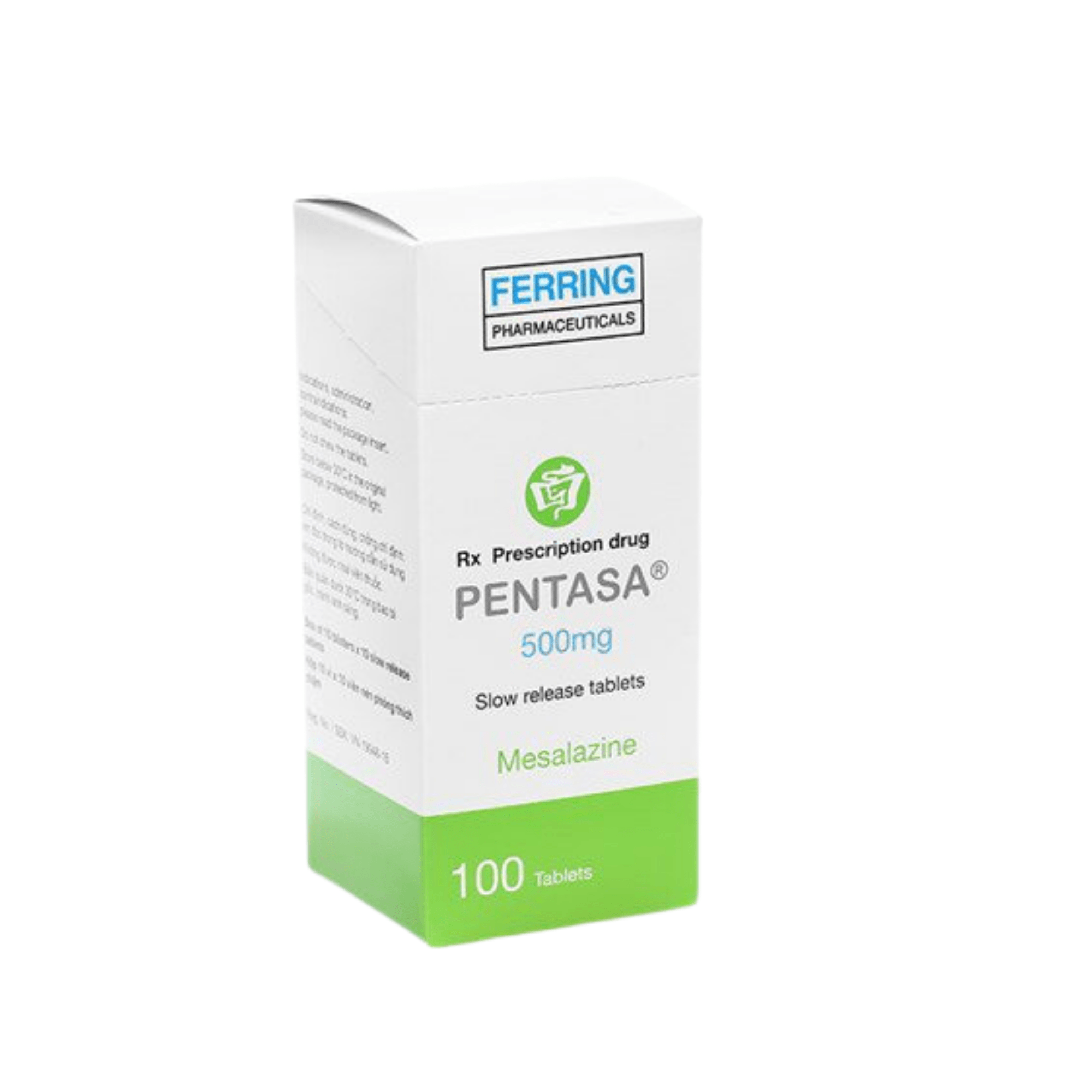
Pentasa
Buy Pentasa Online
Secure Encrypted Payments
Pentasa is a mesalazine medicine, also called mesalamine, used to reduce inflammation in inflammatory bowel disease. Pentasa can be bought online through licensed pharmacy channels, and you can choose the dose or strength shown during ordering to match your clinician’s directions. The exact form and release design matter because mesalazine products can act in different parts of the digestive tract.
Pentasa is most often discussed as a treatment for mildly to moderately active ulcerative colitis in adults. In some clinical settings or markets, mesalazine may also be used in Crohn’s disease care, so the diagnosis and intended bowel target should be clear before treatment starts or changes. This medicine is meant for ongoing inflammatory bowel management, not quick relief of sudden abdominal pain, fever, or severe bleeding.
Pentasa Price, Strength Selection, and Ordering Basics
Pentasa price can vary by strength, quantity, brand or generic naming, country-specific packaging, and the modified-release design. During ordering, review the current cash-pay cost and choose the dose or strength available for Pentasa that matches the clinician’s instructions. Do not substitute a different mesalazine product only because the milligram number looks similar.
Many people search for Pentasa 500mg, Pentasa 250mg, or Pentasa 1000 mg because strength is one of the main purchase decisions. Those search terms do not guarantee that every form or pack is appropriate for every patient. The safer approach is to match the active ingredient, strength, dosage form, release pattern, and quantity to the treatment plan already in use.
BorderFreeHealth helps U.S. customers access regulated pharmacy products through licensed pharmacies, including US delivery from Canada when the order can be completed under the applicable pharmacy process. We may review order information to make sure the medication, strength, and directions are internally consistent before the medicine is supplied.
Quick tip: Keep the medicine name, strength, and dosing directions together when placing an order.
What Pentasa Treats and How It Works
Pentasa contains mesalazine, an anti-inflammatory medicine that works mainly in the lining of the bowel. It helps reduce inflammation linked with ulcerative colitis, a condition that can cause diarrhea, rectal bleeding, urgency, abdominal discomfort, and fatigue. The U.S. labeling describes Pentasa for induction of remission and treatment of mildly to moderately active ulcerative colitis in adult patients.
Ulcerative colitis affects the colon and rectum. Mesalazine products are designed to deliver medicine locally in the intestine, but each product’s release pattern can differ. That is why Pentasa tablets, capsules, granules, or other mesalazine formulations should not be treated as automatically interchangeable unless a clinician specifically changes the regimen.
Some people encounter Pentasa in Crohn’s disease discussions. Crohn’s disease can affect different areas of the digestive tract, and treatment choices depend on disease location, severity, prior response, and monitoring needs. For broader condition context, the Ulcerative Colitis and Crohns Disease sections explain how these inflammatory bowel diseases differ.
Forms, Strengths, and Release Pattern Checks
Mesalazine products can share the same active ingredient while behaving differently in the gut. A Pentasa tablet, capsule, sachet, or another oral modified-release form may release medicine in a distinct way. That release pattern is clinically important because inflammatory bowel disease is location-specific.
When choosing Pentasa, focus on the strength, oral form, quantity, and instructions. Commonly searched strengths include 250 mg, 500 mg, and 1000 mg, but the strength alone does not fully identify the medicine. A 500 mg product with one release design may not be the same practical choice as another 500 mg mesalazine product.
Why it matters: With mesalazine, where the medicine releases can matter as much as the milligram strength.
| Purchase detail | What to match | Why it matters |
|---|---|---|
| Active ingredient | Mesalazine or mesalamine | Confirms the anti-inflammatory ingredient |
| Strength | The mg amount on the medicine | Supports the total daily amount directed by the clinician |
| Form | Tablet, capsule, granule, or other labeled form | Different forms can be used differently |
| Release design | Modified, controlled, or delayed-release wording | Influences where medicine becomes active in the bowel |
| Quantity | Pack count and supply length | Helps avoid gaps during ongoing treatment |
How to Take Pentasa Safely
Take Pentasa exactly as directed by the clinician and package instructions. The daily amount, timing, and length of treatment depend on the condition being treated, current symptoms, product form, strength, and response over time. Do not crush, chew, split, or open a modified-release product unless the label specifically allows it.
If a dose is missed, follow the package directions or ask a healthcare professional how to proceed. Doubling the next dose can raise the chance of side effects and may not improve control. If symptoms worsen after starting or changing mesalazine, contact a clinician rather than assuming the symptoms are just a temporary adjustment.
Pentasa does not usually work like an immediate symptom-relief medicine. Inflammatory bowel symptoms may improve gradually, and some people need follow-up testing or treatment changes if diarrhea, bleeding, pain, fever, or weight loss continues. The Gastrointestinal category can help place Pentasa alongside other digestive medicines by treatment purpose.
How Long Treatment May Continue
People often ask how long they can stay on Pentasa. There is no single time limit that applies to everyone. Treatment duration depends on disease activity, tolerance, lab monitoring, flare history, and the plan for maintaining remission after symptoms improve.
Some people use mesalazine during active mild to moderate ulcerative colitis symptoms, while others continue a maintenance plan to reduce relapse risk. Follow-up matters because inflammatory bowel disease can change over time. A stable routine can also make it easier to notice whether a new symptom is medication-related or part of the underlying condition.
Do not stop Pentasa only because symptoms are better unless a clinician has advised that change. Stopping anti-inflammatory bowel therapy can allow inflammation to return in some patients. If long-term treatment is planned, kidney function checks and other monitoring may be part of safe ongoing use.
Side Effects, Warnings, and Monitoring
Common Pentasa side effects can include headache, nausea, abdominal pain, indigestion, diarrhea, gas, or changes in bowel comfort. These effects can overlap with ulcerative colitis symptoms, which makes tracking timing important. Record when symptoms started, whether they followed a dose change, and whether bleeding, fever, or severe pain is present.
More serious reactions are less common but need attention. Mesalazine can rarely cause kidney problems, liver issues, pancreatitis, lung inflammation, heart inflammation, severe skin reactions, or blood changes. Some people develop an acute intolerance syndrome with cramping, worsening diarrhea, bloody stools, fever, headache, or rash soon after starting treatment.
People with aspirin or salicylate allergy, prior mesalazine reaction, kidney disease, liver disease, or a history of pancreatitis should make sure those details are considered before using Pentasa. Lab tests may be used to monitor kidney function, especially during longer treatment or when other medicines could affect the kidneys.
Seek urgent medical help for chest pain, trouble breathing, swelling of the face or throat, severe rash, yellowing of the skin or eyes, very low urination, severe abdominal pain, or sudden worsening of bloody diarrhea. Those symptoms can signal a serious reaction or a flare requiring prompt assessment.
Interactions and Situations That Need Extra Care
A medication list helps reduce avoidable risk with Pentasa. Include prescription medicines, over-the-counter pain relievers, vitamins, supplements, and herbal products. Nonsteroidal anti-inflammatory drugs, some immune-system medicines, and other kidney-stressing drugs may require closer monitoring when used with mesalazine.
Pregnancy and breastfeeding decisions should be individualized. Uncontrolled inflammatory bowel disease can also carry risks, so the balance is not simply medicine versus no medicine. A clinician can weigh disease control, prior response, and the specific mesalazine formulation being used.
- Share any history of kidney or liver disease.
- Mention aspirin, salicylate, or mesalazine reactions.
- Ask whether lab monitoring is needed.
- Report fever, rash, chest pain, or worsening bleeding quickly.
- Keep an updated list of all medicines and supplements.
Storage, Travel, and Handling
Store Pentasa according to the package instructions. Most oral medicines should be protected from excess heat, moisture, and direct light, but the label is the best source for product-specific storage requirements. Keep the medication in its original container so the name, strength, and instructions remain visible.
Travel planning is easier when the medicine stays in labeled packaging. Pack enough for the trip, keep doses accessible, and avoid leaving the medicine in very hot or damp places. If the order includes prompt, express shipping, inspect the package when it arrives and keep the label readable for future reference.
People managing more than one digestive condition may benefit from broader reading in the Gastrointestinal Articles section. General digestive symptoms can have many causes, so storage and routine planning should not replace clinical review when new bleeding, fever, dehydration, or severe pain appears.
Brand, Generic, and Alternative Mesalazine Choices
Pentasa is a brand name associated with mesalazine, also called mesalamine. A generic mesalazine product may be appropriate in some situations, but generic naming alone does not prove the same release pattern, form, or bowel distribution. The practical question is whether the specific product matches the treatment goal.
Other oral mesalazine medicines may release at different pH levels or in different regions of the intestine. Rectal mesalazine products may be considered when inflammation is mainly in the rectum or lower colon. More severe disease may require non-mesalazine options such as corticosteroids, immunomodulators, small molecules, or biologic medicines.
| Choice | Key difference | Buying consideration |
|---|---|---|
| Pentasa | Mesalazine with a specific release design | Match form, strength, and instructions |
| Other oral mesalazine | Different release profile or label language | Do not swap without clinical direction |
| Rectal mesalazine | Targets distal bowel areas | May be used alone or with oral therapy |
| Non-mesalazine therapy | Different immune or anti-inflammatory pathway | Used when severity or response pattern differs |
Country-specific labels, brand names, and generic availability can differ. That does not mean a regulated pharmacy product is unsuitable; it means the active ingredient, form, strength, and instructions deserve careful matching. Customers seeking Canadian-origin medicine information can also browse the Canada country-of-origin section.
When to Reassess Treatment
Pentasa should be reassessed if symptoms do not improve as expected, if flares become more frequent, or if side effects interfere with daily life. Persistent rectal bleeding, fever, dehydration, nighttime diarrhea, unexplained weight loss, or severe abdominal pain can signal active inflammation or another problem needing medical attention.
Monitoring may include symptom review, blood tests, urine tests, stool testing, endoscopy, or imaging depending on the clinical situation. The goal is not only symptom relief. Long-term inflammatory bowel disease care also aims to control intestinal inflammation and reduce complications.
For people with ulcerative colitis, the location and extent of inflammation can influence whether oral therapy, rectal therapy, or combination treatment is considered. For people with Crohn’s disease, disease location and complications such as narrowing, fistulas, or abscesses can change the treatment pathway.
Authoritative Sources
For official U.S. labeling, see the DailyMed Pentasa prescribing information.
For a plain-language medicine summary, see the Cleveland Clinic mesalamine guide.
This content is for informational purposes only and is not a substitute for professional medical advice.
eGFR Calculator
Estimate kidney filtration using the 2021 CKD-EPI creatinine equation.
eGFR
-
mL/min/1.73 m2
G category
-
requires clinical context
These calculations are for education only and do not replace clinical advice, diagnosis, or treatment. Always confirm medical decisions with a qualified healthcare professional.
Creatinine Clearance Calculator
Estimate creatinine clearance using the Cockcroft-Gault equation.
CrCl
-
mL/min estimate
These calculations are for education only and do not replace clinical advice, diagnosis, or treatment. Always confirm medical decisions with a qualified healthcare professional.
Body Surface Area Calculator
Calculate body surface area from height and weight using the Mosteller equation.
BSA
-
m2, Mosteller equation
These calculations are for education only and do not replace clinical advice, diagnosis, or treatment. Always confirm medical decisions with a qualified healthcare professional.
BMI Calculator
Estimate adult body mass index from height and weight, with metric and imperial units.
BMI
-
kg/m2 equivalent
Category
-
Adult screening range
These calculations are for education only and do not replace clinical advice, diagnosis, or treatment. Always confirm medical decisions with a qualified healthcare professional.
Urine Albumin-Creatinine Ratio Calculator
Calculate urine albumin-creatinine ratio from spot urine albumin and creatinine values.
uACR
-
mg/g
uACR
-
mg/mmol
Category
-
A1/A2/A3 albuminuria range
These calculations are for education only and do not replace clinical advice, diagnosis, or treatment. Always confirm medical decisions with a qualified healthcare professional.
Express Shipping - from $29.99
Shipping with this method takes 3-5 days
Prices:
- Dry-Packed Products $29.99
- Cold-Packed Products $39.99
Shipping Countries:
- United States (all contiguous states**)
- Worldwide (excludes some countries***)
Standard Shipping - $19.99
Shipping with this method takes 5-10 days
Prices:
- Dry-Packed Products $19.99
- Not available for Cold-Packed products
Shipping Countries:
- United States (all contiguous states**)
- Worldwide (excludes some countries***)
What does Pentasa do?
Pentasa contains mesalazine, also called mesalamine. It works locally in the bowel to reduce inflammation and is used for mildly to moderately active ulcerative colitis in adults. In some clinical settings, mesalazine may also be discussed in Crohn’s disease care, depending on the treatment plan.
Does Pentasa work immediately?
Pentasa is not an instant symptom-relief medicine. Some people notice gradual improvement, but timing depends on disease activity, product form, dose, and individual response. Worsening bleeding, fever, severe pain, or dehydration should be assessed promptly.
What are common Pentasa side effects?
Common side effects can include headache, nausea, abdominal pain, indigestion, diarrhea, gas, or bowel discomfort. Serious reactions are less common but can involve the kidneys, liver, pancreas, lungs, heart, skin, or allergic-type symptoms.
How long can you be on Pentasa?
Treatment length varies. Some people use mesalazine for active symptoms, while others continue it as maintenance therapy after improvement. Long-term use should include follow-up and any recommended monitoring, especially kidney function checks.
Is Pentasa the same as generic mesalazine?
Pentasa is a brand-name mesalazine medicine. A generic mesalazine product may contain the same active ingredient, but the form and release pattern still matter. Do not assume two mesalazine products are interchangeable based only on the milligram strength.
Rewards Program
Earn points on birthdays, product orders, reviews, friend referrals, and more! Enjoy your medication at unparalleled discounts while reaping rewards for every step you take with us.
You can read more about rewards here.
POINT VALUE
How to earn points
- 1Create an account and start earning.
- 2Earn points every time you shop or perform certain actions.
- 3Redeem points for exclusive discounts.
You Might Also Like
Select options
This product has multiple variants. The options may be chosen on the product page
Select options
This product has multiple variants. The options may be chosen on the product page
Select options
This product has multiple variants. The options may be chosen on the product page
Select options
This product has multiple variants. The options may be chosen on the product page