
Please note: a valid prescription is required for all prescription medication.
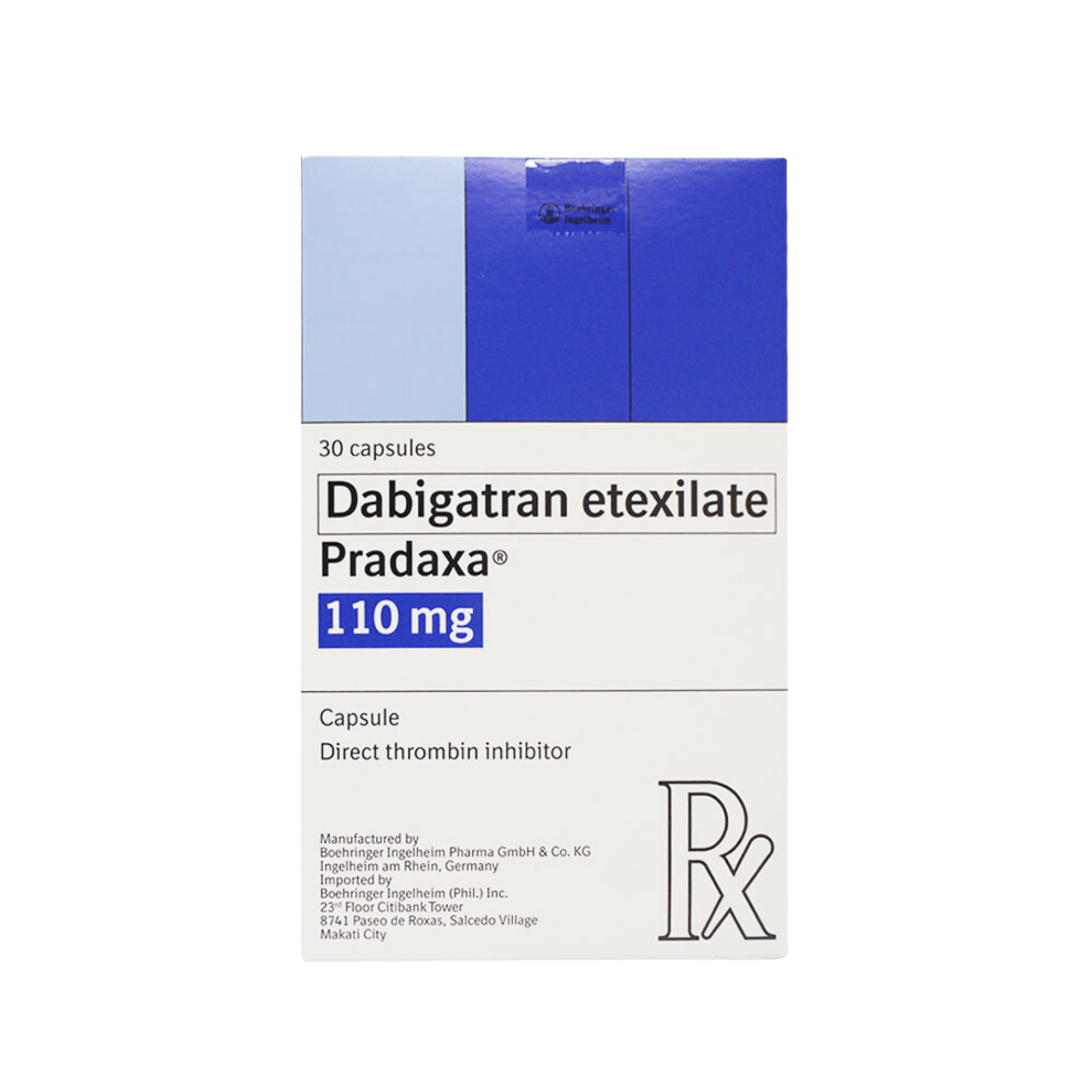
Pradaxa
Buy Pradaxa Online
Secure Encrypted Payments
Pradaxa is an oral anticoagulant medicine containing dabigatran etexilate. It can be ordered online, with current Pradaxa price information shown during checkout, and the capsule strength should match the directions from your clinician. Available strengths may include 75 mg, 110 mg, and 150 mg capsules, depending on supply and the product selected.
Pradaxa is used to reduce clot-related risks in adults with nonvalvular atrial fibrillation and to treat or help prevent certain blood clots. Because anticoagulants can cause serious bleeding, choosing the right strength, refill timing, storage routine, and interaction plan matters as much as placing the order.
Pradaxa Price, Strengths, and Ordering
Pradaxa cost can vary by capsule strength, quantity, market source, and current pharmacy inventory. During ordering, match the dose and strength to your clinician’s directions rather than choosing by price alone. Many customers look for Pradaxa 150mg capsules, Pradaxa 75mg capsules, or Pradaxa 110mg capsules, but the correct choice depends on the indication, kidney function, age, and other medicines.
Cash-pay customers often review Pradaxa Canadian pricing because ongoing anticoagulant therapy can be a recurring monthly expense. If you are estimating Pradaxa cost per month, account for the number of daily doses, pack size, and refill interval. Multi-month fills may help with planning when clinically appropriate, but you should not stockpile or change how you take an anticoagulant without clinical direction.
BorderFreeHealth provides U.S.-from-Canada service context for customers seeking regulated pharmacy sourcing. Products are supplied through licensed pharmacies, and order details may be reviewed before the medicine is released. For related browsing, the Cardiovascular category includes medicines used in heart and clot-prevention care.
What Pradaxa Treats
Pradaxa is a blood thinner, also called an anticoagulant. It does not actually thin the blood; it reduces the blood’s ability to form harmful clots. In adults with nonvalvular atrial fibrillation, it is used to lower the risk of stroke and systemic embolism. Atrial fibrillation can allow blood to pool in the heart, which may increase clot risk. For condition background, see Atrial Fibrillation.
The medicine is also used to treat deep vein thrombosis and pulmonary embolism after initial injectable anticoagulant therapy, and to reduce the risk of those clots recurring. Deep vein thrombosis usually refers to a clot in a deep vein, often in the leg. Pulmonary embolism refers to a clot that travels to the lungs. More context is available under Blood Clot DVT PE.
In some regions, dabigatran is also used to prevent clots after hip replacement surgery. Label details and approved uses may differ by country, so your clinician’s directions and the pharmacy-supplied labeling should guide how you use the capsule.
How Dabigatran Etexilate Works
Pradaxa contains dabigatran etexilate, which becomes dabigatran in the body. Dabigatran is a direct thrombin inhibitor. Thrombin is an enzyme involved in making fibrin, a key part of clot formation. By blocking thrombin, the medicine helps reduce formation of clots that can cause stroke, DVT, or PE.
This mechanism is different from warfarin, which affects vitamin K-dependent clotting factors, and different from factor Xa inhibitors such as rivaroxaban or apixaban. Pradaxa generally does not require routine INR blood testing like warfarin, but kidney function and bleeding symptoms still need periodic attention.
The capsule must be swallowed whole. Do not chew, break, crush, or open Pradaxa capsules, because doing so can change absorption and may increase exposure. Take each dose with water, with or without food, according to the schedule provided by your healthcare professional.
Typical Use and Dose Timing
Many adult regimens use Pradaxa twice daily, about 12 hours apart, for atrial fibrillation and for DVT or PE treatment after an injectable anticoagulant lead-in. Published dosing often includes dabigatran etexilate 150mg for adults with adequate kidney function, but lower or different strengths may be used in specific clinical circumstances or markets.
Kidney function is especially important because dabigatran is substantially cleared through the kidneys. Older adults, people with kidney impairment, and people with a history of gastrointestinal bleeding may need closer evaluation. If a procedure, surgery, spinal injection, or dental work is planned, your care team will decide whether and when to pause therapy.
Quick tip: Keep Pradaxa in its original container and pair each dose with a consistent daily routine.
If a twice-daily dose is missed, many labels advise taking it as soon as remembered unless the next dose is close. If it is nearly time for the next dose, skip the missed dose and return to the usual schedule. Do not take two doses at the same time to make up for a missed capsule. If your instructions differ, follow the directions provided with your medicine.
Capsule Forms, Strengths, and Storage
Pradaxa is supplied as oral capsules. Commonly published strengths include 75 mg, 110 mg, and 150 mg. Packaging may differ by country and pharmacy source, including bottles and blister packaging. The pharmacy will supply the strength selected for the order when it matches clinical directions and current availability.
Moisture protection is a key storage issue for dabigatran etexilate capsules. Keep capsules in the original bottle or blister until use. If supplied in a bottle, keep the cap tightly closed and leave the desiccant in place. Many labels instruct using bottle contents within four months after opening, but you should follow the exact timeframe printed on your package.
Do not move capsules into a weekly pill organizer unless your pharmacy labeling specifically allows it. Exposure to humidity can affect the medicine. Store at room temperature, away from excess heat, bathrooms, sinks, and direct sunlight. During travel, keep the labeled container in carry-on luggage and bring enough supply for reasonable delays. Pradaxa Ships from Canada to US through the service context available on the site.
Side Effects, Warnings, and Monitoring
Common Pradaxa side effects can include stomach pain, indigestion, heartburn, nausea, easier bruising, minor nosebleeds, or gum bleeding. These effects are not always dangerous, but persistent or worsening symptoms should be discussed with a healthcare professional. Because Pradaxa reduces clotting, any new bleeding pattern deserves attention.
Serious bleeding is the most important safety concern. Seek urgent medical help for black or tarry stools, vomiting blood, coughing blood, red or brown urine, severe headache, sudden weakness, fainting, heavy uncontrolled bleeding, or a fall with head injury. Major gastrointestinal bleeding can occur. Rare allergic reactions may also occur and can require immediate care.
Pradaxa should not be used in people with active pathological bleeding or severe hypersensitivity to dabigatran or capsule components. It is not recommended for people with mechanical prosthetic heart valves. Spinal or epidural hematoma is a serious risk in people receiving neuraxial anesthesia or spinal puncture, especially when other bleeding-risk factors are present.
Monitoring is individualized. Many people do not need routine clotting tests, but kidney function is often checked periodically. Your clinician may also assess liver history, age-related bleeding risk, body weight considerations, recent surgeries, and whether other medicines make bleeding more likely.
Interactions and What to Avoid
Some medicines can raise dabigatran levels and increase bleeding risk. Strong P-glycoprotein inhibitors, such as ketoconazole or dronedarone, are important examples. Other medicines can lower dabigatran exposure and reduce effectiveness; rifampin is a notable P-glycoprotein inducer.
Combining Pradaxa with other anticoagulants, antiplatelet medicines, NSAIDs, or certain antidepressants such as SSRIs or SNRIs can increase bleeding risk. Aspirin, ibuprofen, naproxen, clopidogrel, herbal products, and supplements should be discussed before use. Do not start over-the-counter pain relievers or anti-inflammatory medicines casually while taking an anticoagulant.
Alcohol, high-risk activities, and inconsistent dosing can also complicate bleeding risk. Use a soft toothbrush, consider an electric razor, and tell dentists or surgeons that you take dabigatran. If you are switching from another blood thinner, timing must be coordinated carefully to avoid both excessive overlap and unprotected gaps.
How Pradaxa Compares With Other Anticoagulants
Pradaxa is not the same as Eliquis. Pradaxa is a direct thrombin inhibitor, while Eliquis is a factor Xa inhibitor. Both are anticoagulants, but they differ in active ingredient, dosing considerations, interaction profile, kidney considerations, and reversal approach. The right choice depends on your medical history and current medicines.
Rivaroxaban is another factor Xa inhibitor used for several clot-prevention and clot-treatment indications. Warfarin is an older vitamin K antagonist that usually requires INR monitoring and has more dietary vitamin K considerations. Pradaxa may be preferred in some situations and avoided in others, especially when kidney function, gastrointestinal bleeding history, or procedure timing is important.
If your clinician is considering alternatives, ask which anticoagulant fits your clot risk, bleeding risk, kidney function, and daily routine. Background articles in the Cardiovascular articles section can help you prepare for that discussion without replacing individualized care.
Planning Refills and Long-Term Use
Anticoagulant treatment works best when taken consistently. Missed doses can reduce protection, while extra doses can increase bleeding risk. Set refill reminders before your supply runs low, especially if you travel or use longer fill intervals. Keep a current medication list in your wallet or phone so emergency clinicians know you take dabigatran.
Long-term use may feel uneventful because Pradaxa does not usually cause a noticeable daily effect. That is expected for many blood clot-prevention medicines. The practical goals are steady dosing, safe storage, awareness of bleeding symptoms, and periodic clinical follow-up.
Country of origin may be relevant to some customers reviewing supply. BorderFreeHealth includes country-of-origin browsing such as Canada and India, though actual availability depends on current stock and the medicine chosen during ordering.
Questions to Ask Before Starting or Refilling
- Which Pradaxa strength should I use, and why?
- How often should my kidney function be checked?
- What should I do if I miss a dose?
- Which pain relievers are safest for me to use?
- When should I stop Pradaxa before a procedure?
- What bleeding symptoms require urgent care?
- Is Pradaxa still the best anticoagulant with my current medicines?
Authoritative Sources
This content is for informational purposes only and is not a substitute for professional medical advice.
Creatinine Clearance Calculator
Estimate creatinine clearance using the Cockcroft-Gault equation.
CrCl
-
mL/min estimate
These calculations are for education only and do not replace clinical advice, diagnosis, or treatment. Always confirm medical decisions with a qualified healthcare professional.
eGFR Calculator
Estimate kidney filtration using the 2021 CKD-EPI creatinine equation.
eGFR
-
mL/min/1.73 m2
G category
-
requires clinical context
These calculations are for education only and do not replace clinical advice, diagnosis, or treatment. Always confirm medical decisions with a qualified healthcare professional.
Body Surface Area Calculator
Calculate body surface area from height and weight using the Mosteller equation.
BSA
-
m2, Mosteller equation
These calculations are for education only and do not replace clinical advice, diagnosis, or treatment. Always confirm medical decisions with a qualified healthcare professional.
Express Shipping - from $29.99
Shipping with this method takes 3-5 days
Prices:
- Dry-Packed Products $29.99
- Cold-Packed Products $39.99
Shipping Countries:
- United States (all contiguous states**)
- Worldwide (excludes some countries***)
Standard Shipping - $19.99
Shipping with this method takes 5-10 days
Prices:
- Dry-Packed Products $19.99
- Not available for Cold-Packed products
Shipping Countries:
- United States (all contiguous states**)
- Worldwide (excludes some countries***)
Is Pradaxa a blood thinner or anticoagulant?
Yes. Pradaxa is an anticoagulant, often called a blood thinner. It helps reduce clot formation by inhibiting thrombin, an enzyme involved in the clotting process.
Is Pradaxa the same as Eliquis?
No. Pradaxa contains dabigatran etexilate and works as a direct thrombin inhibitor. Eliquis contains apixaban and works as a factor Xa inhibitor. Both reduce clot risk, but they are not interchangeable without clinical direction.
What are common Pradaxa side effects?
Common side effects can include stomach discomfort, indigestion, heartburn, nausea, easier bruising, nosebleeds, or gum bleeding. Serious bleeding symptoms need urgent medical attention.
What should I avoid while taking Pradaxa?
Avoid starting NSAIDs, aspirin, antiplatelet drugs, other anticoagulants, or supplements without checking with a healthcare professional. These can raise bleeding risk or affect treatment safety.
How should Pradaxa capsules be stored?
Store Pradaxa in its original bottle or blister, protected from moisture. Keep bottle caps tightly closed, leave the desiccant in place, and follow the use-by timeframe printed on the package after opening.
Rewards Program
Earn points on birthdays, product orders, reviews, friend referrals, and more! Enjoy your medication at unparalleled discounts while reaping rewards for every step you take with us.
You can read more about rewards here.
POINT VALUE
How to earn points
- 1Create an account and start earning.
- 2Earn points every time you shop or perform certain actions.
- 3Redeem points for exclusive discounts.
You Might Also Like
Select options
This product has multiple variants. The options may be chosen on the product page
Select options
This product has multiple variants. The options may be chosen on the product page
Select options
This product has multiple variants. The options may be chosen on the product page
Select options
This product has multiple variants. The options may be chosen on the product page