
Please note: a valid prescription is required for all prescription medication.
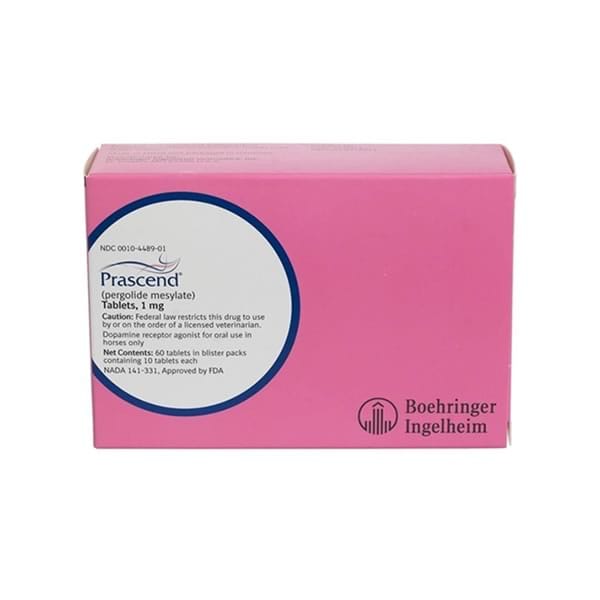
Prascend
Buy Prascend Online
Secure Encrypted Payments
Prascend is a pergolide mesylate tablet for horses with pituitary pars intermedia dysfunction, often called PPID or equine Cushing’s disease. You can buy Prascend online and choose the tablet quantity shown during ordering to match your veterinarian’s written directions. The common published strength is 1 mg pergolide, and the right refill plan depends on the horse’s daily amount and monitoring schedule.
This horse medication is intended for long-term control of PPID signs, not a cure for the underlying endocrine condition. When planning Prascend for horses, focus on the active ingredient, tablet strength, total count, handling needs, and practical timing for routine barn records. BorderFreeHealth offers U.S.-from-Canada service for customers paying cash for ongoing animal-health therapy.
Prascend Price and Tablet Quantity
The Prascend price should be judged against the total number of tablets supplied, not only the line item shown at checkout. A 60-tablet supply and a 160-tablet supply can support different refill plans, so the practical cost depends on how many tablets your horse receives each day. Larger counts may be useful for stable therapy, while smaller counts may fit a new start, a near-term recheck, or a veterinary plan that may change.
Common searches include Prascend 60 tablets, Prascend 160 tablets, Prascend 1mg, and Prascend 1mg 160 tablets. Those phrases describe common buying considerations, but the veterinarian’s directions should decide how the tablets are used. Your role during ordering is to match the strength and quantity to the care plan instead of changing the schedule to fit a pack size.
Quick tip: Record the tablet count, opening date, and expected refill date in the barn medication log.
The cost of Prascend can also matter when several animals need ongoing care. If you manage more than one animal-health product, the Pet Medications category can help keep veterinary items separate from household medicines and species-specific supplies.
How to Order Prascend Online
Start with the product name, strength, and tablet count on the current order screen. Match those details to the horse’s treatment plan, then keep the horse’s name, weight range, current daily amount, and veterinary clinic contact information in your records. Clear documentation helps prevent quantity errors when multiple caregivers give medications in the same barn.
Prascend online orders should be planned around continuity. Do not wait until the final tablet if your horse has been stable on daily therapy. Refill timing should allow for barn schedules, weekends, travel, and any clinic follow-up your veterinarian wants before continuing the same plan.
Cash-pay ordering may be helpful for owners who budget PPID care outside insurance. US delivery from Canada may be relevant for barns coordinating routine refills, and prompt, express shipping may appear when offered during checkout. Use the current quantity and handling information shown at ordering rather than assuming that every pack count has the same logistics.
What Prascend Treats in Horses
Prascend medication for horses is used to control clinical signs associated with PPID. PPID is an endocrine disorder involving the pituitary gland, a small hormone-producing structure at the base of the brain. Affected horses may develop a long or curly hair coat, delayed shedding, muscle loss, abnormal fat distribution, increased drinking, increased urination, lethargy, recurrent infections, or a higher risk of laminitis.
The active ingredient, pergolide mesylate, is a dopamine agonist. In plain English, it acts on dopamine receptors and helps reduce excessive hormone signaling from the pituitary pars intermedia. Better hormone control can support improvement in clinical signs, but response varies by horse and depends on consistent use, hoof care, nutrition, seasonal changes, and follow-up testing.
PPID care rarely relies on tablets alone. Many horses also need regular hoof care, dental care, parasite control, body-condition management, and seasonal reassessment. The Cushings Disease collection can help you navigate related endocrine products, while diagnosis and monitoring remain veterinary decisions.
Strength, Form, and Pack Details
Prascend tablets are commonly published as 1 mg pergolide tablets for oral use in horses. They are supplied in blister packaging, which helps protect each tablet until administration. The scored tablet design may help when a veterinarian instructs a dose adjustment, but splitting or changing tablets should follow the individual plan for that horse.
Do not assume that one pack equals one month or one season of treatment. A horse’s daily amount may differ from another horse’s amount, even when both have PPID. Stable managers should track how many tablets are given, who gave them, and whether the horse swallowed the dose.
| Product factor | Practical ordering point |
|---|---|
| Active ingredient | Pergolide mesylate |
| Common strength | 1 mg tablet |
| Use context | Control of PPID signs in horses |
| Quantity | Match total tablets to the veterinary plan |
| Packaging | Keep tablets in original blisters until use |
Why it matters: Correct quantity planning helps reduce missed days without encouraging unapproved dose changes.
How the Tablets Are Given
Label directions describe once-daily oral administration, with the amount determined by the veterinarian. Many horses remain on pergolide tablets for ongoing management, so consistent timing helps caregivers recognize appetite, attitude, or manure changes that may appear after treatment begins or changes.
Some horses accept the tablet more easily with a small amount of feed. If a horse refuses feed, spits out tablets, leaves medication in the bucket, or suddenly becomes difficult to dose, contact the veterinary team before improvising. A barn note that records refusals can be just as important as a note that the dose was given.
Caregivers should wash hands after handling tablets. Women who are pregnant, may become pregnant, or are breastfeeding should avoid direct contact with broken or moistened tablets because pergolide can affect hormone pathways. Tablets should not be used in horses intended for human consumption.
Side Effects, Warnings, and Monitoring
Side effects can occur, especially when therapy starts or when the horse’s needs change. Commonly discussed concerns include decreased appetite, lethargy, diarrhea or soft stool, sweating, colic signs, and behavior changes. Appetite deserves close attention because reduced feed intake can affect body condition, medication acceptance, and overall PPID management.
- Reduced appetite: track hay, grain, and supplement intake.
- Low energy: note turnout, work, and herd behavior changes.
- Digestive signs: watch manure, gut comfort, and colic cues.
- Sweating or agitation: record timing, weather, and severity.
- Coordination changes: seek prompt veterinary advice.
Too much Prascend equine therapy may increase the risk of adverse effects such as inappetence, depression, digestive upset, sweating, or neurologic signs. If an overdose is suspected, contact a veterinarian or animal poison-control resource promptly. Keep the package available so the clinician can identify the strength and estimate the amount involved.
Discuss breeding, pregnancy, lactation, other illnesses, laminitis history, and current medicines with the veterinarian. Some medicines can oppose dopamine effects or complicate monitoring, including phenothiazines, certain antiemetics, and domperidone. Sedatives and medicines that affect blood pressure may also require extra caution.
Ongoing monitoring usually combines owner observations with veterinary reassessment. Track coat shedding, drinking, urination, appetite, body condition, hoof comfort, and general attitude. Laboratory testing may be recommended to assess hormone control and guide future changes, especially around seasonal risk periods.
Storage, Handling, and Barn Travel
Store Prascend tablets in their original blister packaging at the temperature range stated on the label. Keep tablets dry, protected from direct sunlight, and away from children, pets, feed rooms, and open treat containers. A tack room may be convenient, but it may not be suitable if it becomes hot, damp, or unsecured.
Choose a storage spot that daily caregivers can access while preventing accidental exposure by other animals. Do not remove tablets from blisters in advance to fill an unlabeled container unless your veterinarian or pharmacist has given specific handling instructions. Original packaging helps preserve identity, strength, lot information, and label directions.
For shows, trailering, boarding changes, or seasonal barn moves, carry the labeled package and a copy of the veterinarian’s directions. Bring a modest buffer when appropriate, but keep the same administration schedule unless the veterinary team instructs otherwise. Travel planning should support continuity, not create dose changes.
How Prascend Fits With Other Veterinary Products
For equine PPID, pergolide is the established labeled treatment option. Supportive care can include nutrition planning, hoof care, dental care, parasite control, exercise decisions, and laminitis prevention. These measures are not replacements for pergolide when the veterinarian has recommended Prascend, but they may influence comfort and overall response.
Other endocrine medications are not interchangeable just because they involve hormone conditions. For example, Vetoryl is used for hyperadrenocorticism in dogs and has a different active ingredient, species focus, and treatment purpose. Keep diagnosis, species, and active ingredient separate when several animals in the household receive veterinary medications.
Prascend should also not be compared with antibiotics, pain medicines, or parasite-control products as if they serve the same role. If your horse develops laminitis, infection, weight loss, or sudden behavior change, the veterinarian may add other therapies based on the underlying problem. Those decisions should be made clinically rather than by substituting products on your own.
Prascend, Pergolide, and Generic Status
Prascend contains pergolide mesylate, and many owners describe it as pergolide for horses. The brand name matters because the labeled equine tablet, packaging, and product directions are designed for PPID care in horses. If you see references to pergolide tablets elsewhere, confirm the intended species, strength, and source before assuming it is the same choice.
Country-specific naming and availability can differ across markets. That distinction should not change the basic buying decision: use the product your veterinarian recommended, match the strength and quantity, and avoid switching between products without professional guidance. Compounded preparations, human medicines, and labeled equine tablets may differ in consistency, directions, packaging, and oversight.
When price is a concern, ask the veterinary team how much supply is appropriate before the next recheck. A lower apparent tablet cost is not helpful if the quantity does not fit monitoring plans or if changing products makes response harder to interpret.
Questions to Ask Before Continuing Therapy
Prascend is often part of long-term PPID management, so small details can matter over months and seasons. Before refilling, ask whether the horse’s clinical signs, body condition, hoof comfort, and appetite support continuing the same plan. Bring barn records rather than relying on memory, especially if several people feed or medicate the horse.
Useful questions include whether follow-up bloodwork is due, whether seasonal dose reassessment is expected, and whether any new medicines or supplements could affect monitoring. Ask what appetite changes should prompt a call, how to manage a missed dose, and whether the horse’s laminitis risk changes the urgency of follow-up.
If the horse is newly diagnosed, clarify what improvement would look like. Hair coat changes may take time, while drinking, urination, appetite, energy, or comfort may change on a different schedule. Setting expectations early helps you judge the product by the right clinical markers.
Authoritative Sources
Official labeling details are available from DailyMed Prascend prescribing information.
Manufacturer horse-owner information is available from Boehringer Ingelheim Prascend product information.
This content is for informational purposes only and is not a substitute for professional medical advice.
Express Shipping - from $29.99
Shipping with this method takes 3-5 days
Prices:
- Dry-Packed Products $29.99
- Cold-Packed Products $39.99
Shipping Countries:
- United States (all contiguous states**)
- Worldwide (excludes some countries***)
Standard Shipping - $19.99
Shipping with this method takes 5-10 days
Prices:
- Dry-Packed Products $19.99
- Not available for Cold-Packed products
Shipping Countries:
- United States (all contiguous states**)
- Worldwide (excludes some countries***)
What is Prascend used for in horses?
Prascend is used to control clinical signs associated with pituitary pars intermedia dysfunction, also called PPID or equine Cushing’s disease. It contains pergolide mesylate, a dopamine agonist used for long-term management in horses.
What strength are Prascend tablets?
Prascend tablets are commonly published as 1 mg pergolide tablets. Match the strength and total tablet count to your veterinarian’s directions, because treatment duration depends on the individual horse’s daily plan.
What side effects should horse owners watch for?
Possible side effects include reduced appetite, lethargy, diarrhea or soft stool, sweating, colic signs, behavior changes, and coordination changes. Contact a veterinarian promptly if signs are severe, persistent, or suggest overdose.
Can Prascend tablets be split or mixed with feed?
The scored tablet may help with veterinary-directed dose adjustments. Some horses receive the tablet with a small amount of feed for acceptance, but refusal, spitting, or appetite loss should be discussed with the veterinary team.
How should Prascend be stored in a barn?
Keep tablets in the original blister packaging at the labeled temperature range. Store them in a dry, secure place away from heat, moisture, sunlight, children, pets, feed areas, and accidental animal access.
Rewards Program
Earn points on birthdays, product orders, reviews, friend referrals, and more! Enjoy your medication at unparalleled discounts while reaping rewards for every step you take with us.
You can read more about rewards here.
POINT VALUE
How to earn points
- 1Create an account and start earning.
- 2Earn points every time you shop or perform certain actions.
- 3Redeem points for exclusive discounts.
You Might Also Like
Select options
This product has multiple variants. The options may be chosen on the product page
Select options
This product has multiple variants. The options may be chosen on the product page
Select options
This product has multiple variants. The options may be chosen on the product page
Select options
This product has multiple variants. The options may be chosen on the product page