
Please note: a valid prescription is required for all prescription medication.
Out of Stock
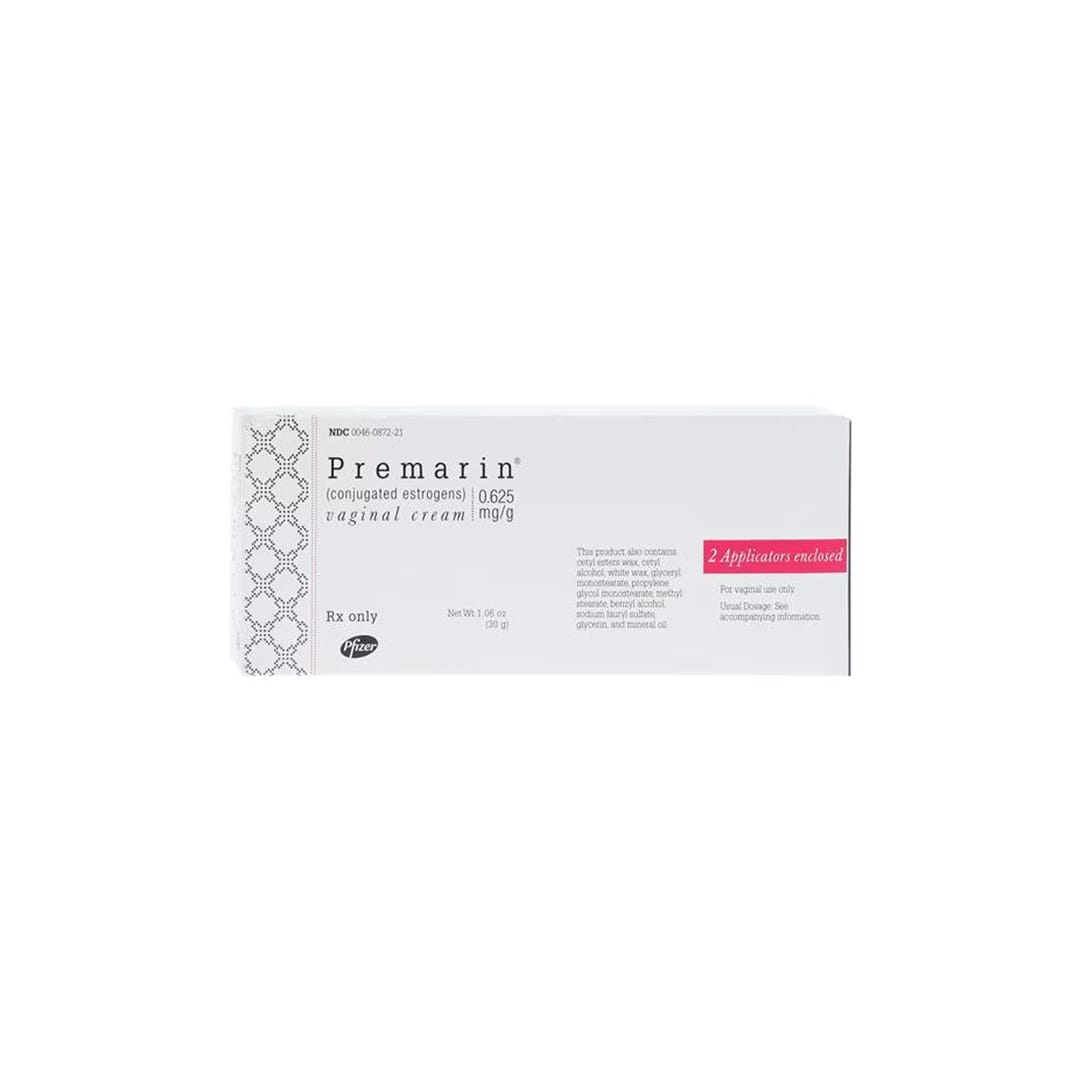
Premarin Vaginal Cream
Buy Premarin Vaginal Cream Online
Secure Encrypted Payments
Premarin Vaginal Cream is a conjugated estrogens vaginal cream used after menopause for moderate to severe changes in and around the vagina. You can buy Premarin Vaginal Cream online, view the current price, and choose the available strength shown during ordering to match your clinician’s directions. It is commonly used when low-estrogen tissue changes cause vaginal dryness, burning, itching, irritation, or pain with sex.
This medicine is intended for vaginal use, not as a general skin cream. Because estrogen products can carry important risks, a careful medical history matters before starting or continuing treatment. Tell your clinician about unexplained vaginal bleeding, breast or uterine cancer history, blood clots, stroke, heart attack, liver disease, smoking, and all hormone products you use.
Price, Strength Selection, and Ordering Basics
Premarin Vaginal Cream price can vary based on the quantity, pack presentation, and the pharmacy supplying the medication. During ordering, match the strength and amount shown for the product to the directions from your clinician. If your directions include a measured amount or a schedule, the label should guide how much cream to use and when to use it.
Many customers look at the cost of Premarin Vaginal Cream because local cash-pay prices can be high. BorderFreeHealth supports U.S.-from-Canada service for people reviewing cash-pay choices, and products are supplied through licensed pharmacies. You can also browse the Canada country-of-origin selection when origin information is useful for your medication planning.
When comparing Premarin cream cost, look beyond a single advertised number. A lower displayed figure may reflect a different tube size, refill arrangement, coupon restriction, or pharmacy program. The most useful comparison uses the same active ingredient, concentration, amount of cream, and clinician-directed schedule.
Quick tip: Keep your dosing directions nearby when choosing the strength or quantity.
What Premarin Vaginal Cream Treats
Premarin Vaginal Cream contains conjugated estrogens. Estrogen helps maintain the thickness, moisture, and elasticity of vaginal and vulvar tissues. After menopause, lower estrogen levels can contribute to tissue thinning, dryness, irritation, burning, itching, and painful sex.
The treatment is used for moderate to severe menopausal changes in and around the vagina. Clinicians may use terms such as vulvar and vaginal atrophy, atrophic vaginitis, or genitourinary syndrome of menopause. In plain language, these terms describe low-estrogen changes that can make vaginal tissue feel dry, fragile, sore, or uncomfortable during intimacy.
This cream is not the right answer for every type of genital discomfort. Infection, vulvar skin disease, pelvic floor pain, contact irritation, prolapse, urinary conditions, and unexplained bleeding can overlap with menopause symptoms. If discomfort is new, severe, one-sided, associated with sores, or accompanied by bleeding, a clinician should evaluate the cause.
For condition-level background, the vaginal atrophy information area can help you understand how low-estrogen tissue changes differ from temporary dryness or irritation. That context can make conversations about treatment choices more focused.
How to Use the Vaginal Cream
Premarin Vaginal Cream is usually placed inside the vagina using the supplied applicator. The best place to apply the measured dose is intravaginally, unless your clinician gives different instructions for a limited external area. Do not apply large amounts to general skin areas or use another person’s routine as your guide.
Typical use involves measuring the cream carefully with the applicator, inserting it as directed, and following a schedule set for your symptoms and risk profile. Some labeled regimens use twice-weekly dosing or cyclic schedules, but your own label should determine the amount and timing. Do not double a missed dose unless a clinician or pharmacist specifically tells you to do so.
Wash your hands before and after each use. Read the applicator markings before measuring the cream, then clean the applicator according to the package instructions. If your symptoms involve external burning or irritation, ask whether any external application is intended rather than assuming the same directions apply outside the vagina.
- Use the supplied applicator as directed.
- Measure only the amount on your label.
- Place the dose vaginally unless told otherwise.
- Do not share the tube or applicator.
- Ask about persistent pain, bleeding, or irritation.
Form, Active Ingredient, and Product Details
Premarin Vaginal Cream is commonly described as a conjugated estrogens vaginal cream. The active ingredient is a mixture of estrogens, and product references often describe Premarin cream 0.625 mg/g. Match the strength shown during ordering to your clinician’s directions and the medication label you receive.
The cream format can be helpful when a clinician wants local therapy with measured dosing. Some people prefer the flexibility of a cream, especially when symptoms involve dryness and tissue discomfort. Others may find creams less convenient than inserts or a longer-wear ring because the applicator must be filled, used, and cleaned.
| Feature | Practical meaning |
|---|---|
| Medicine type | Vaginal estrogen therapy |
| Active ingredient | Conjugated estrogens |
| Common use context | Menopause-related vaginal and vulvar tissue changes |
| How it is used | Measured vaginal application with an applicator |
| Selection point | Choose the strength and quantity that match your directions |
Side Effects, Warnings, and Monitoring
Common side effects can include headache, breast tenderness, abdominal discomfort, vaginal discharge, local irritation, pelvic discomfort, or spotting. Local burning or irritation may occur, especially early in treatment. Report symptoms that persist, worsen, or feel different from your usual menopause-related discomfort.
Premarin Vaginal Cream can be absorbed into the body even though it is used locally. Estrogen labeling includes serious warnings about endometrial cancer risk in people with a uterus using estrogen alone, blood clots, stroke, heart attack, dementia risk in certain older patients, and estrogen-dependent cancers. These risks do not mean every person should avoid the cream, but they do mean the decision should be individualized.
Seek urgent medical attention for chest pain, sudden shortness of breath, coughing blood, one-sided leg swelling, severe sudden headache, trouble speaking, vision changes, fainting, yellowing of the skin or eyes, severe allergic reaction, or heavy unexplained vaginal bleeding. Any postmenopausal bleeding should be discussed promptly because it may need evaluation.
Monitoring is part of responsible estrogen use. Your clinician may reassess whether symptoms have improved, whether the lowest effective amount is being used, and whether new risk factors have developed. Breast changes, pelvic pain, new migraines, or changes in bleeding pattern should be raised during follow-up.
Who Should Use Extra Caution
Extra caution is important if you have had breast cancer, cancer of the uterus, unexplained genital bleeding, blood clots, stroke, heart attack, liver disease, or a known allergy to any ingredient. People who still have a uterus may need specific discussion about the uterine lining because estrogen can stimulate endometrial tissue.
Tell your clinician about all medicines and supplements you use. Other estrogen or hormone products can change the overall risk discussion. Some medicines that affect liver enzymes, including certain seizure medicines, rifampin, and St. John’s wort, may also matter when estrogen exposure is being considered.
Smoking, high blood pressure, diabetes, high cholesterol, migraine history, and clotting disorders can affect cardiovascular risk. These factors do not automatically determine whether the medicine is suitable, but they should be part of the conversation before treatment continues long term.
Why it matters: Local estrogen can still have whole-body safety considerations.
Storage, Handling, and Travel
Store Premarin Vaginal Cream according to the carton and medication label, usually at room temperature and away from excess heat or moisture. Keep the cap closed when the tube is not in use. Do not use the cream after the expiry date or if the color, odor, or texture changes unexpectedly.
Keep the tube and applicator away from children and pets. If the applicator is reusable, clean and dry it as directed so it is ready for the next measured dose. Do not rinse or clean it in a way that conflicts with the package instructions.
For travel, keep the medicine in its original packaging so the strength, directions, and storage instructions remain easy to identify. Avoid leaving it in a hot car or direct sunlight. Orders may be handled with prompt, express shipping, but storage instructions still apply after the medication arrives.
Premarin Cream Compared With Other Vaginal Options
Premarin estrogen cream is one local hormone option for menopause-related vaginal symptoms. Other choices may include vaginal estradiol tablets, a vaginal ring, or nonhormonal moisturizers. The right fit depends on symptom severity, comfort with applicator use, medical history, and whether a clinician wants flexible measured dosing.
Premarin differs from many estrogen creams because it contains conjugated estrogens rather than a single estradiol ingredient. That difference can matter for product selection, tolerability, and how the clinician writes directions. It does not make one option automatically better for every person.
Nonhormonal moisturizers may help milder dryness, especially when symptoms are intermittent. They may be less effective for moderate to severe tissue thinning caused by low estrogen. If symptoms include painful sex, tearing, recurrent burning, or fragile tissue, a clinician may discuss local estrogen or another menopause-focused therapy.
People exploring broader categories may find the women’s health medication category useful. For educational reading on symptom patterns and treatment conversations, the women’s health article collection provides related background.
When to Reassess Treatment
Improvement may take time, and the response can vary. If dryness or pain does not improve, the cause may not be low estrogen alone. Infection, pelvic floor tension, vulvar skin disease, urinary conditions, or irritation from hygiene products can produce similar symptoms.
Reassessment is also important when symptoms return after improvement. A change in dose schedule, another diagnosis, or a different treatment format may need discussion. Do not increase the amount or frequency on your own, because estrogen exposure and safety monitoring matter.
Contact a clinician promptly for postmenopausal bleeding, new breast lumps, severe pelvic pain, unusual discharge with odor, fever, sores, or sudden urinary symptoms. These signs may require evaluation before continuing routine use.
Authoritative Sources
For label-based dosing, warnings, and safety information, see the FDA-approved prescribing information for PREMARIN vaginal cream.
For patient-friendly information about conjugated estrogens used vaginally, see the Mayo Clinic conjugated estrogens vaginal route summary.
For manufacturer labeling and patient information, review the Pfizer PREMARIN vaginal cream labeling.
This content is for informational purposes only and is not a substitute for professional medical advice.
Customer Reviews
5.0
Based on 1 Reviews
Write a Review
Ask a Question
- Reviews
- Questions
Filter Reviews:
ME
06/02/2026
Margaret E.  US
USGreat First Experience
Excellent communication made up for delays in getting my Rx approved. Otherwise, an excellent experience.
06/03/2026
borderfreehealth.com
Hi Margaret!We’re truly delighted to hear that your first experience with us was an excellent one. We sincerely appreciate your patience and understanding regarding the delay in getting your prescription approved, and we’re especially glad that our team’s communication helped make the process smoother for you.Providing clear, supportive, and reliable service is always our goal, and it means a great deal to know we were able to make a positive impression. We value the trust you place in us and will continue working hard to provide you with the best experience possible.If there is ever anything we can assist you with, please don’t hesitate to reach out. Thank you for always choosing Border Free Health! We truly appreciate your support and look forward to serving you again.
Express Shipping - from $29.99
Shipping with this method takes 3-5 days
Prices:
- Dry-Packed Products $29.99
- Cold-Packed Products $39.99
Shipping Countries:
- United States (all contiguous states**)
- Worldwide (excludes some countries***)
Standard Shipping - $19.99
Shipping with this method takes 5-10 days
Prices:
- Dry-Packed Products $19.99
- Not available for Cold-Packed products
Shipping Countries:
- United States (all contiguous states**)
- Worldwide (excludes some countries***)
Where is the best place to apply Premarin cream?
Premarin Vaginal Cream is generally placed inside the vagina with the supplied applicator. Use it externally only if your clinician gives specific directions for a limited area.
What is Premarin Vaginal Cream used for?
It is used after menopause for moderate to severe changes in and around the vagina, including dryness, burning, itching, irritation, and pain with sex related to low estrogen.
What is the most common side effect of Premarin Vaginal Cream?
Commonly reported effects include headache, breast tenderness, abdominal discomfort, vaginal discharge, local irritation, and spotting. Unexpected or postmenopausal bleeding should be discussed promptly.
What is the difference between estrogen cream and Premarin cream?
Premarin cream is an estrogen cream that contains conjugated estrogens. Other vaginal estrogen creams may contain estradiol or another estrogen, so the active ingredient and directions can differ.
Do doctors still prescribe Premarin Vaginal Cream?
Clinicians may still use Premarin Vaginal Cream for menopause-related vaginal and vulvar tissue changes when the benefits and risks fit the individual patient’s history.
How should Premarin Vaginal Cream be stored?
Store it according to the carton and medication label, usually at room temperature and away from excess heat or moisture. Keep the tube closed and out of reach of children and pets.
Rewards Program
Earn points on birthdays, product orders, reviews, friend referrals, and more! Enjoy your medication at unparalleled discounts while reaping rewards for every step you take with us.
You can read more about rewards here.
POINT VALUE
How to earn points
- 1Create an account and start earning.
- 2Earn points every time you shop or perform certain actions.
- 3Redeem points for exclusive discounts.
You Might Also Like
Select options
This product has multiple variants. The options may be chosen on the product page
Select options
This product has multiple variants. The options may be chosen on the product page
Select options
This product has multiple variants. The options may be chosen on the product page
Select options
This product has multiple variants. The options may be chosen on the product page