

Please note: a valid prescription is required for all prescription medication.
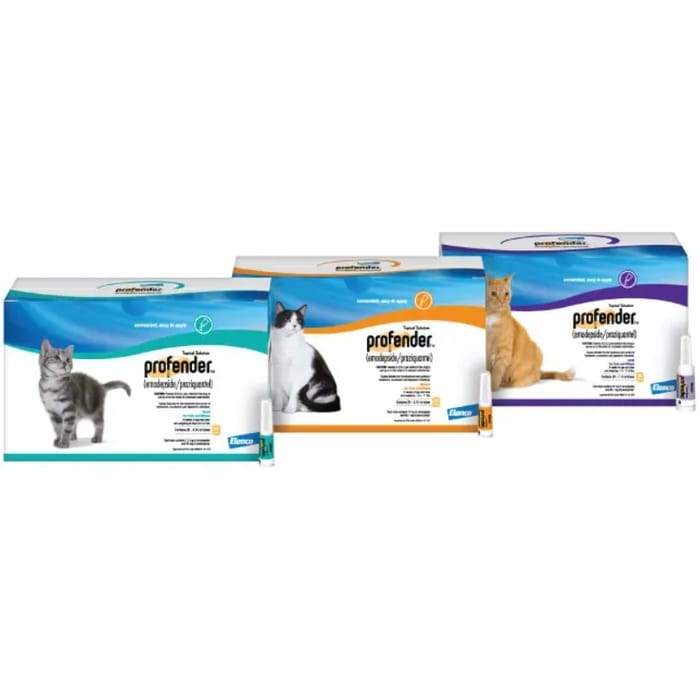
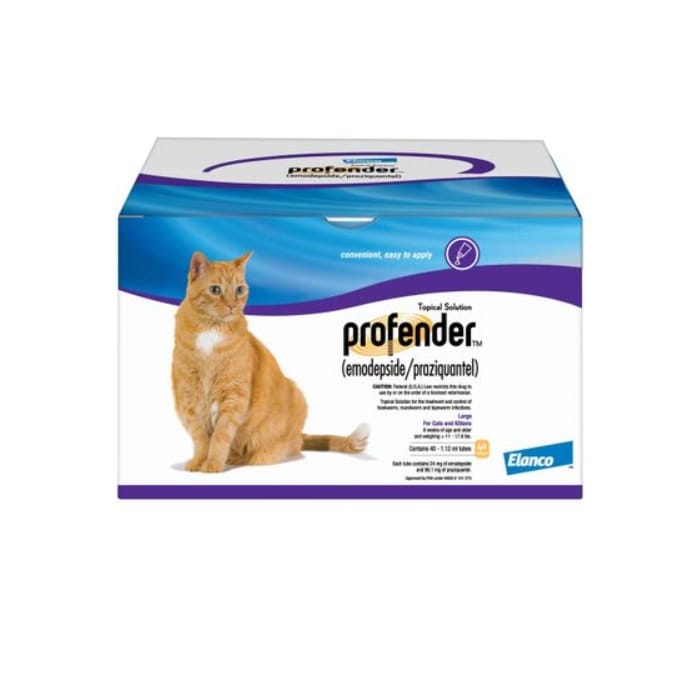
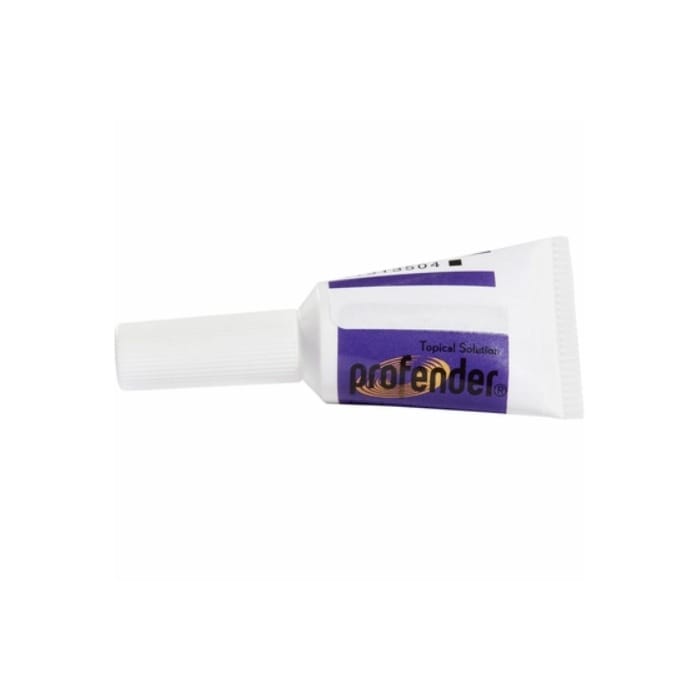
Profender
Profender for Cats: Buy With Prescription Guidance
Price:
Price range: $49.99 through $347.99
Secure Encrypted Payments
Profender is a prescription topical dewormer for cats that targets common intestinal worms. It’s used when a veterinarian diagnoses worms or when treatment is needed based on risk and exposure. This page summarizes how the medication works, what to know about safe use, and practical handling details.
What Profender Is and How It Works
This medicine is an anthelmintic (dewormer) that combines emodepside and praziquantel to treat different worm groups. Medications are dispensed by licensed Canadian partner pharmacies. Ships from Canada to US, which can support cash-pay access for people without insurance when a valid prescription is on file.
Emodepside acts primarily against nematodes (roundworms and hookworms) by disrupting parasite nerve and muscle signaling, which can lead to paralysis and elimination from the gut. Praziquantel targets cestodes (tapeworms) by damaging the parasite’s outer surface and interfering with calcium balance. Because the treatment is placed on the skin and absorbed systemically, careful technique matters: the goal is consistent contact with the skin, minimal loss on fur, and reduced chance that a cat or a housemate pet licks the wet area. This product is meant for intestinal worms; separate parasite control may be needed for fleas, ticks, or heartworm prevention.
Who It’s For
This topical worm treatment is generally used in cats with confirmed or suspected intestinal parasitism, such as infections involving roundworms, hookworms, or tapeworms. Risk can be higher with hunting, raw prey exposure, crowded living conditions, recent adoption, or contact with fleas (a common tapeworm pathway). For background on the conditions commonly involved, the site maintains browseable hubs like Roundworm Infection and Tapeworm Infection.
A veterinarian determines whether Profender is appropriate based on age, body weight, overall health, and the likelihood of specific parasites in the region. It may not be suitable for every cat, including those with known hypersensitivity to ingredients, cats that are very ill or debilitated, or situations where labeled minimum age/weight criteria are not met. Breeding, pregnancy, and lactation considerations should be reviewed with the prescribing clinician because safety guidance can differ by label and clinical context. If a cat has ongoing vomiting, weight loss, diarrhea, or a poor hair coat, the clinician may also consider other causes beyond worms, using fecal testing and history to guide care.
Dosage and Usage
Dosing is weight-based and should follow the prescription instructions and product labeling. A clinician selects the correct tube size and schedule based on the cat’s current weight and the target parasites. Profender is typically placed as a spot-on dose at the base of the skull in an area the cat cannot easily groom. Avoid dividing a tube between pets, and do not use leftover product from a previously opened package.
Topical dosing basics
Before giving the dose, read the full package directions and assemble what is needed, such as disposable gloves and a way to separate pets until the site is dry. Part the fur so the skin is visible, then empty the tube onto the skin in a single spot or as directed by the label. Keep children and other animals away from the area while it dries, and wash hands after handling. If the cat becomes wet soon after dosing or a large amount appears to have run off the skin, contact the prescriber for guidance rather than repeating the dose. If a dose is missed, the safest next step is to ask the prescribing veterinarian how to reset the schedule.
Some cats dislike restraint, so planning helps reduce stress. It can be useful to have a second adult hold the cat calmly, or to dose after a meal when the cat is more settled. Monitor the cat for a period after dosing, especially in households where pets groom each other. If grooming behavior is hard to prevent, temporary separation may reduce the chance of oral exposure. For readers comparing approaches, this site also offers a practical reference on oral options in Drontal For Cats Guide, which can help frame questions for a clinician about route, tolerance, and household logistics.
Strengths and Forms
This product is supplied as a topical solution in single-use tubes designed for different weight bands. Exact concentrations, tube volumes, and package configurations can vary by market and labeling, so the prescriber’s directions and the dispensing label should be treated as the source of truth. Profender is not a “one-size” tube; the correct presentation is chosen to match the cat’s current body weight, not the cat’s age or breed.
It can help to think of the presentation in three practical dimensions: route, parasite coverage, and handling needs. Route matters if a cat resists oral medicines or has a history of vomiting after pills. Parasite coverage matters because some dewormers focus on a narrower set of worms. Handling needs matter in multi-cat homes where grooming is common. The summary below describes typical label-level characteristics without substituting for the package insert.
| Feature | What it means | Practical note |
|---|---|---|
| Form | Topical solution in single-use tube | Keep the tube sealed until use |
| Route | Spot-on to the skin | Part fur to reach skin surface |
| Primary targets | Common intestinal worms | Worm type should match diagnosis/risk |
| Selection | Weight-banded presentations | Weigh the cat close to dosing time |
Storage and Travel Basics
Store the medication exactly as directed on the package labeling, typically in the original carton to protect it from light and physical damage. Keep it at a controlled room temperature range unless the label states otherwise, and avoid leaving it in hot cars, near heaters, or in freezing conditions. If the tube looks damaged, leaked, or has an unreadable label, contact the dispensing pharmacy for next steps rather than using it.
Quick tip: Keep the carton and any patient leaflet together for quick reference.
For travel, keep the dose in its original packaging, and bring documentation that shows the prescribing clinician and the dosing instructions. This is especially helpful if travel disrupts routine and a caregiver needs to administer the medication. Store the tube away from food items and out of reach of children. After dosing, dispose of the empty tube as instructed on the label, and prevent pets from licking any residue that may be on hands or surfaces. If skin contact occurs, wash with soap and water; if eye exposure occurs, rinse with plenty of water and seek medical guidance as needed.
Side Effects and Safety
Like many dewormers, side effects can occur and are often mild and temporary. Common issues may include drooling (especially if the cat licks the wet site), vomiting, soft stool, reduced appetite, tiredness, or mild irritation at the dosing area such as redness or hair changes. Profender should be used with care in households where pets groom each other, since accidental oral exposure can raise the chance of drooling or stomach upset.
Why it matters: Early recognition of unusual signs helps a clinician guide safe next steps.
Seek veterinary attention promptly if a cat shows severe or persistent vomiting/diarrhea, marked lethargy, tremors, unsteadiness, weakness, trouble breathing, facial swelling, or hives, as these may signal a serious reaction. Prescriptions are confirmed with the original prescriber before dispensing. Also consider human safety: avoid contact with eyes and mouth, wash hands after handling, and keep the dosing area away from children until dry. If a person accidentally ingests the product or has significant exposure, contact Poison Control or a healthcare professional with the product information available.
Drug Interactions and Cautions
Drug interactions are not always predictable without knowing the full medication list and the cat’s health status. A veterinarian should be informed about all prescriptions, supplements, and parasite preventives a cat receives, including recent dewormers and topical skin products. This matters because combining products with overlapping parasite targets can increase the chance of side effects without adding meaningful benefit. Cats with chronic disease, frailty, or neurologic conditions may need closer monitoring after dosing.
If a cat also needs flea or tick control, the clinician may choose products that can be used safely in the same season, sometimes with spacing between doses to reduce skin irritation. For broader context on combination parasite control strategies, see NexGard Combo For Cats. While this page can clarify general considerations, only the prescriber can confirm whether two products can be used together for a specific cat. If accidental double-dosing occurs, contact a veterinary clinic or poison hotline right away with the product name, dose timing, and the cat’s weight.
Compare With Alternatives
Parasite control is not one-product-fits-all, and clinicians often choose between topical and oral dewormers based on the worm type, the cat’s tolerance for pills, and household routines. Profender is a topical option, which can be helpful when oral dosing is difficult. Oral combinations are also common; for example, Drontal is a well-known multi-worm oral dewormer that some cats tolerate well, while others resist tablets.
Sometimes a narrower, targeted approach is used. If tapeworms are the main concern, a praziquantel-focused medicine such as Droncit may be considered by a clinician. Other dewormer classes (such as pyrantel or fenbendazole) are used in specific scenarios based on testing, local parasite patterns, and patient factors. If fleas are part of the story, addressing them helps reduce tapeworm reinfection risk; for background on fast-acting flea options, see Capstar Flea Treatment. A veterinarian can match the plan to the cat’s parasites, not just symptoms.
Pricing and Access
Out-of-pocket costs can vary by dose size, quantity, and dispensing channel, and veterinary prescriptions may be required for legitimate access. Profender is dispensed only after a valid prescription is provided and reviewed. Cash-pay access may help when insurance coverage is limited. For readers who want to browse other animal health items available through the platform, Pet Medications is a category hub that groups options by type.
BorderFreeHealth operates as a cross-border referral and fulfillment model that coordinates with licensed pharmacies in Canada, and it verifies prescription details before dispensing. If an existing prescription is not available, the next step is to contact the prescribing veterinary clinic to discuss diagnosis, testing, and whether treatment is appropriate. For broader guidance on evaluating online sources and documentation needs, Pet Medications Online Guide summarizes practical checkpoints such as requiring prescriptions, clear labeling, and traceable pharmacy oversight.
Authoritative Sources
For the most reliable details on indications, warnings, and handling, consult official labeling and trusted veterinary public-health resources. These references are useful when preparing questions for a veterinarian or when confirming general parasite-prevention concepts in cats.
For U.S. regulatory context on approved animal drugs, see the FDA resource: Animal Drugs @ FDA.
For parasite lifecycle and prevention guidance, CAPC provides evidence-based recommendations: Companion Animal Parasite Council.
For plain-language veterinary background on intestinal parasites, the Merck Veterinary Manual is a commonly cited reference: Merck Veterinary Manual.
If you decide to proceed through BorderFreeHealth, submit the prescription details for prompt, express shipping.
This content is for informational purposes only and is not a substitute for professional medical advice.
Express Shipping - from $25.00
Shipping with this method takes 3-5 days
Prices:
- Dry-Packed Products $25.00
- Cold-Packed Products $35.00
Shipping Countries:
- United States (all contiguous states**)
- Worldwide (excludes some countries***)
Standard Shipping - $15.00
Shipping with this method takes 5-10 days
Prices:
- Dry-Packed Products $15.00
- Not available for Cold-Packed products
Shipping Countries:
- United States (all contiguous states**)
- Worldwide (excludes some countries***)
What worms does Profender treat in cats?
This topical dewormer is labeled for common intestinal worms in cats, including roundworms, hookworms, and tapeworms. Which worms are most likely depends on exposure risks (such as hunting, flea exposure, or a new environment) and what is found on fecal testing. A veterinarian may recommend treatment based on a confirmed diagnosis or a reasonable suspicion from history and clinical signs. Because different products cover different worm groups, the best match depends on the suspected parasite and the cat’s health status.
How is Profender given if a cat hates pills?
It is administered as a spot-on topical dose placed on the skin at the back of the neck, where a cat cannot easily groom. The fur is parted so the medicine contacts the skin rather than sitting on the coat. After dosing, pets that groom each other may need temporary separation until the area is dry. The most important safety step is following the package directions and the prescription label, including the correct tube size for the cat’s weight.
Can a cat lick Profender, and what happens if it does?
A cat should not be allowed to lick the wet dosing site. If licking happens, drooling or foaming at the mouth can occur, and some cats may have stomach upset such as vomiting. These effects are often linked to the taste of the product rather than a dangerous toxicity, but any unexpected signs should be taken seriously. If significant licking occurs, or if there are neurologic signs like tremors or unsteadiness, contact a veterinarian promptly for individualized guidance.
What side effects should be monitored after dosing?
Mild effects can include temporary drooling, vomiting, soft stool, decreased appetite, tiredness, or mild skin irritation where the dose was placed. Monitoring is especially important in older cats, cats with chronic disease, and multi-pet homes where grooming can spread the product. Seek urgent veterinary advice for severe or persistent vomiting/diarrhea, marked lethargy, weakness, tremors, trouble breathing, or facial swelling, as these may indicate a serious reaction or an unrelated illness needing evaluation.
What should be asked a veterinarian before using Profender?
Helpful questions include which parasites are most likely (or confirmed) based on fecal testing, whether the cat’s age and weight meet the labeled criteria, and how often rechecking stool is recommended. It’s also reasonable to ask about household risk factors, including flea exposure, outdoor hunting, and other pets that could share parasites. If the cat takes other medications or parasite preventives, ask whether spacing doses is needed to reduce skin irritation or side effects.
Can Profender be used with flea or tick treatments?
Some cats use a dewormer and a separate flea or tick product, but compatibility depends on the specific medications, timing, and the cat’s health. Using multiple topical products at once can increase skin irritation risk, and overlapping parasite coverage can raise side-effect risk without improving outcomes. The safest approach is to provide the veterinarian with a complete list of all preventives and treatments the cat receives, including any recent dewormers, and follow a coordinated plan based on labeled directions.
Rewards Program
Earn points on birthdays, product orders, reviews, friend referrals, and more! Enjoy your medication at unparalleled discounts while reaping rewards for every step you take with us.
You can read more about rewards here.
POINT VALUE
How to earn points
- 1Create an account and start earning.
- 2Earn points every time you shop or perform certain actions.
- 3Redeem points for exclusive discounts.
How to book an appointment
- 1Create Begin by completing a profile or log into your existing account. This step ensures we have the necessary information to provide you with a service that's tailored to your needs. account and start earning.
- 2Scheduling an appointment with our online booking system is easy. Pick a day and time that suits you. You’ll receive an immediate confirmation, without the wait.
- 3Discuss your concerns and symptoms and receive a thorough diagnosis from one of our licensed doctors during a confidential video appointment.
- 4If you've been prescribed medication, your Rx is sent directly to one of our licensed pharmacies and delivered right to your door.
Get Started
To book an online doctor appointment, register for an account or login. After doing so, you can book your visit on this page.
You Might Also Like
Select options
This product has multiple variants. The options may be chosen on the product page
Select options
This product has multiple variants. The options may be chosen on the product page
Select options
This product has multiple variants. The options may be chosen on the product page
Select options
This product has multiple variants. The options may be chosen on the product page