
Please note: a valid prescription is required for all prescription medication.
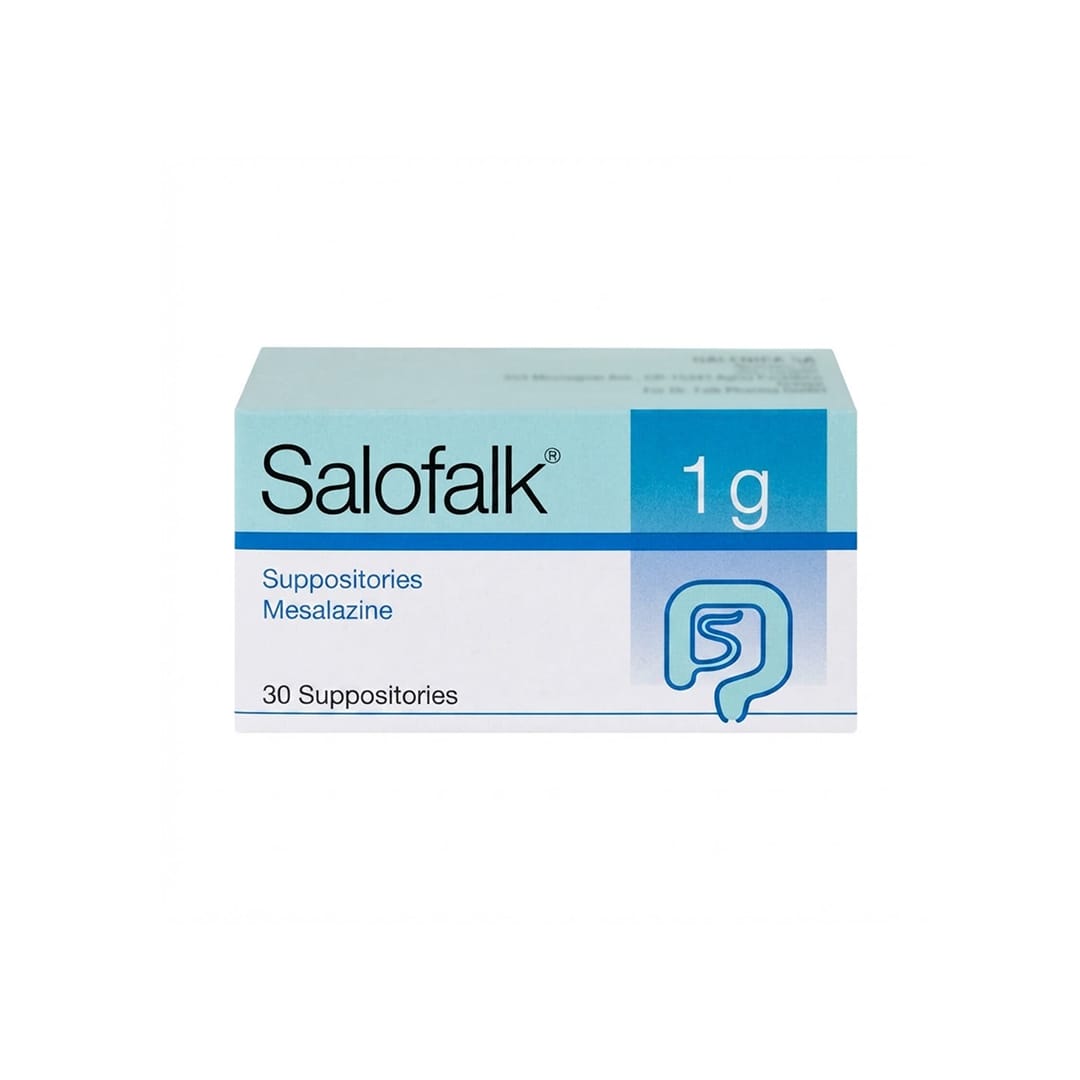
Salofalk Suppositories
Buy Salofalk Suppositories Online
Secure Encrypted Payments
Salofalk Suppositories are rectal mesalamine suppositories used for inflammation limited to the rectum, including ulcerative proctitis. They can be bought online, with current price information shown during ordering, and you can choose the available strength that matches your clinician’s directions.
Salofalk delivers mesalamine directly to the rectal lining, where symptoms such as bleeding, urgency, mucus, and discomfort often begin. This local treatment approach may be practical when inflammation is confined to the rectum rather than affecting a longer section of the colon.
Price, Strengths, and Ordering Choices
Many customers look for the Salofalk suppositories price because rectal 5-ASA therapy can be an ongoing cost during flares or maintenance planning. Current pricing depends on the strength and quantity shown at the time of ordering. If you pay out of pocket, the cash price can be compared with other rectal mesalamine choices before you finalize your request.
Common Salofalk presentations include 500 mg and 1 g rectal suppositories. The 1 g strength may also be described as Salofalk 1000 mg suppositories or Salofalk 1g suppositories. The same strength should be matched carefully to your label directions, because 500 mg and 1 g units are not interchangeable without clinician guidance.
BorderFreeHealth works with licensed pharmacies for regulated medication supply. For U.S. customers, service may include US delivery from Canada, and the order flow lets you view the available dose, strength, and quantity before checkout. If your clinician has recommended mesalamine rectal therapy, keeping the exact strength consistent helps avoid confusion when refilling.
Quick tip: Keep a photo or written note of your current strength and directions so future refills match the same regimen.
What Salofalk Suppositories Treat
Salofalk Suppositories are used for ulcerative proctitis, a form of ulcerative colitis in which inflammation is limited to the rectum. Ulcerative proctitis can cause rectal bleeding, urgency, tenesmus, mucus, and a feeling that the bowel has not fully emptied. Because the suppository melts in the rectum, it places mesalamine close to the affected tissue.
Ulcerative colitis is a chronic inflammatory bowel disease, and disease extent matters when choosing treatment. Rectal suppositories are most suited to rectal disease. If inflammation extends higher into the colon, clinicians may add or switch to enemas, foams, oral 5-ASA medicines, corticosteroids, immunomodulators, biologics, or other therapies. For broader disease education, see our ulcerative colitis information.
Salofalk is not an antibiotic and does not treat a bowel infection. New fever, severe worsening pain, dehydration, or symptoms that feel different from a usual flare should be assessed promptly. A clinician may need to rule out infection, hemorrhoids, fissures, medication reactions, or inflammation beyond the rectum.
Active Ingredient and How It Works
The active ingredient in Salofalk Suppositories is mesalamine, also called mesalazine or 5-aminosalicylic acid. Mesalamine belongs to the 5-ASA class of anti-inflammatory medicines used in ulcerative colitis care. In rectal suppository form, it acts mainly on the rectal lining rather than circulating widely through the body.
Mesalamine helps calm inflammatory activity in the intestinal lining. The exact effect involves several local pathways, including inflammatory mediator activity in the mucosa. For a person with ulcerative proctitis, reducing local inflammation can help improve bleeding, urgency, and rectal discomfort over time.
Local delivery is one reason rectal mesalamine remains a common choice for proctitis. A suppository is smaller and targets the lowest portion of the bowel. Enemas and foams may reach farther, but some people find suppositories simpler to retain, especially at bedtime.
How to Use Rectal Suppositories
Use Salofalk exactly as directed by your clinician and the package instructions. Many regimens are used at bedtime, often after a bowel movement. Emptying the bowel first can improve contact time with the rectal lining and reduce the chance of passing the suppository soon after insertion.
Wash and dry your hands before handling the medicine. Remove the wrapper gently so the suppository does not break. If it has softened, keep it wrapped and chill it briefly in the refrigerator until it firms enough to insert. Do not heat, cut, or reshape it unless your clinician or pharmacist has specifically instructed you to do so.
Lie on your side, insert the suppository pointed end first, and remain lying for several minutes. Try to avoid a bowel movement for at least one hour if possible. Some people use a small amount of water-based lubricant on the tip if insertion feels uncomfortable, but avoid products that damage the suppository or irritate the rectal area.
- Use the strength and timing directed by your clinician.
- Do not use extra units to make up for missed doses unless directed.
- Tell your care team if symptoms worsen after starting treatment.
- Report persistent rectal pain, severe irritation, or unusual bleeding.
How Long It May Take and How Long Treatment Lasts
Some people notice symptom improvement as rectal inflammation calms with regular use. Bleeding and urgency may improve gradually rather than all at once. Response time can vary depending on disease severity, how consistently the suppository is retained, and whether inflammation is limited to the rectum.
Treatment courses often run for several weeks, and some people need ongoing or repeat therapy as part of an ulcerative colitis plan. Long-term decisions should be based on symptoms, past flare pattern, examination findings, lab monitoring, and clinician assessment. Do not stop early simply because symptoms are improving unless your care plan says to do so.
A simple symptom diary can be useful. Track bleeding, urgency, nighttime bowel movements, abdominal pain, stool frequency, and whether you retained each dose. These notes can help your clinician decide whether to continue the same strength, change timing, or consider a different rectal or oral medicine.
Storage, Handling, and Travel
Store Salofalk Suppositories in the original packaging, away from moisture, direct light, and excessive heat. Follow the temperature instructions printed on the box or leaflet. Do not freeze the medicine. Keep it out of reach of children and pets, since a wrapped suppository can be mistaken for a small household item.
Heat can soften rectal suppositories. If you travel, keep the medicine in carry-on luggage when flying and avoid leaving it in a hot car. The original labeled box helps identify the medicine if you need to show it during travel or discuss it with a healthcare professional.
Orders may use prompt, express shipping when appropriate for the service selected. If your shipment arrives during hot weather, inspect the packaging and follow storage instructions right away. A softened suppository that firms again may still be usable if the package instructions allow it, but ask a pharmacist if the product appears damaged, leaking, discolored, or unusually misshapen.
Side Effects, Warnings, and Monitoring
Common side effects of mesalamine rectal suppositories can include rectal discomfort, irritation, headache, nausea, abdominal pain, gas, bloating, constipation, or diarrhea. Mild local discomfort may improve as insertion technique becomes easier, but persistent pain or worsening symptoms should be discussed with a clinician.
Serious reactions are uncommon, but mesalamine products can rarely be associated with kidney problems, pancreatitis, blood disorders, liver issues, allergic reactions, or inflammation around the heart such as myocarditis or pericarditis. Seek urgent care for chest pain, shortness of breath, swelling of the face or throat, severe abdominal pain, black or bloody stools beyond your usual flare pattern, blood in the urine, or signs of a severe allergic reaction.
People with known salicylate allergy, including serious aspirin sensitivity, should discuss the risk before using mesalamine. Extra caution may be needed with kidney disease, liver disease, peptic ulcer disease, prior pancreatitis, prior myocarditis or pericarditis, or a history of unusual blood problems. Kidney function monitoring may be recommended before and during treatment, especially when other risk factors are present.
Tell your healthcare professional about all medicines and supplements you use. Azathioprine or 6-mercaptopurine may increase the risk of blood-related side effects when combined with mesalamine. Caution may also be needed with medicines that can affect kidney function, anticoagulants, antiplatelet drugs, and regular use of nonsteroidal anti-inflammatory drugs. Do not adjust your schedule to manage interactions on your own.
Missed Dose and Routine Tips
If you miss a dose, follow the instructions provided with your medicine or contact a healthcare professional. In many situations, a missed dose is used when remembered unless the next scheduled dose is close. Taking two suppositories at once can increase local irritation and should not be done unless your directions specifically say so.
Consistency matters with rectal 5-ASA therapy. A bedtime routine often makes it easier to retain the suppository and remember each dose. Keeping the box near other nighttime health items can help, as long as the medicine remains stored safely and away from children.
If you frequently pass the suppository soon after insertion, tell your clinician. They may ask about timing, bowel habits, insertion technique, flare severity, or whether another rectal form would be easier to retain. Do not assume the medicine is ineffective until those practical factors have been reviewed.
Brand, Generic, and Similar Mesalamine Choices
Salofalk is a brand name for mesalamine suppositories. Generic mesalamine suppositories may be appropriate in some settings, depending on local availability, pharmacy supply, and clinician instructions. Brand and generic names can differ by country, so it is important to match the active ingredient, strength, and rectal form rather than relying on name recognition alone.
Other 5-ASA rectal medicines may be considered when treating ulcerative proctitis or nearby rectal disease. Some people use gastrointestinal medicines as part of a broader inflammatory bowel disease plan that includes oral and rectal therapy. The right choice depends on disease location, symptom severity, past response, and tolerability.
If symptoms extend beyond the rectum, a suppository may not reach high enough. In that case, a clinician may consider enemas, foams, or systemic treatments. The goal is to match drug delivery to the inflamed area while using the lowest practical treatment burden for disease control.
Buying From Canada and Cash-Pay Planning
Customers who buy Salofalk suppositories from Canada often want a practical way to manage medication costs without losing clarity about strength or quantity. Canadian pricing may be helpful for some cash-pay customers, especially when a multi-week course or repeat therapy is expected. The final amount depends on the strength and quantity selected during ordering.
When comparing Salofalk suppositories cost with other mesalamine rectal products, look at the total course rather than only the per-unit amount. A 500 mg regimen and a 1 g regimen may have different daily unit counts, so the apparent lower unit cost may not equal a lower treatment cost. Your clinician’s directions should guide the strength and frequency.
Some customers also browse products by country of origin when planning cross-border medication purchases. Country sourcing does not replace clinical suitability, but it can help you understand how the medicine is supplied and labeled. Keep your local care team involved so monitoring and flare management remain coordinated.
When to Contact a Healthcare Professional
Contact a healthcare professional if rectal bleeding worsens, abdominal pain becomes severe, diarrhea increases sharply, or you develop fever, dehydration, dizziness, or vomiting. These symptoms may suggest a flare that needs reassessment or a condition other than ulcerative proctitis. Urgent symptoms should not wait for a routine refill or online order update.
You should also ask for guidance if you are pregnant, planning pregnancy, breastfeeding, or managing multiple chronic conditions. Mesalamine is commonly used in inflammatory bowel disease care, but individual risks and benefits can change with kidney function, other medicines, and disease activity.
Before starting or refilling, useful questions include: which strength should I use, how long should this course last, what symptom changes should I track, will I need kidney labs, and what should I do if I cannot retain the suppository. Written answers can make daily use much easier.
Related Digestive Health Information
Inflammatory bowel disease care often involves both medication and long-term monitoring. Our gastrointestinal articles cover digestive health topics that may help you prepare for appointments and understand treatment discussions. Educational reading should support, not replace, individualized medical care.
For people living with ulcerative colitis, medication decisions can change over time. A rectal mesalamine suppository may be used for a flare, as part of a maintenance plan, or alongside another treatment when inflammation patterns shift. Keep records of past strengths, response, side effects, and refill timing so future decisions are based on your own history.
This content is for informational purposes only and is not a substitute for professional medical advice.
Express Shipping - from $29.99
Shipping with this method takes 3-5 days
Prices:
- Dry-Packed Products $29.99
- Cold-Packed Products $39.99
Shipping Countries:
- United States (all contiguous states**)
- Worldwide (excludes some countries***)
Standard Shipping - $19.99
Shipping with this method takes 5-10 days
Prices:
- Dry-Packed Products $19.99
- Not available for Cold-Packed products
Shipping Countries:
- United States (all contiguous states**)
- Worldwide (excludes some countries***)
What are Salofalk Suppositories used for?
Salofalk Suppositories are used for inflammation limited to the rectum, including ulcerative proctitis. They contain mesalamine, a 5-ASA anti-inflammatory medicine that acts locally on the rectal lining.
How long do Salofalk Suppositories take to work?
Some people notice improvement as inflammation decreases with regular use, but timing varies. Bleeding, urgency, and discomfort may improve gradually, and treatment often continues for several weeks under clinician direction.
What side effects can mesalamine suppositories cause?
Possible side effects include rectal irritation, headache, nausea, abdominal pain, gas, bloating, constipation, or diarrhea. Rare serious reactions can involve allergic symptoms, kidney problems, pancreatitis, blood disorders, or heart-related inflammation.
Are Salofalk 500 mg and 1 g suppositories the same?
They contain the same active ingredient, mesalamine, but the strength is different. A 1 g suppository equals 1000 mg. Use the exact strength and schedule directed by your clinician.
Can Salofalk be used if symptoms extend beyond the rectum?
A suppository mainly treats the rectum. If inflammation extends higher into the colon, a clinician may consider enemas, foams, oral therapy, or other ulcerative colitis treatments.
How should Salofalk Suppositories be stored?
Keep them in the original packaging and follow the temperature instructions on the box or leaflet. Protect them from heat, moisture, and light, and keep them away from children and pets.
Rewards Program
Earn points on birthdays, product orders, reviews, friend referrals, and more! Enjoy your medication at unparalleled discounts while reaping rewards for every step you take with us.
You can read more about rewards here.
POINT VALUE
How to earn points
- 1Create an account and start earning.
- 2Earn points every time you shop or perform certain actions.
- 3Redeem points for exclusive discounts.
You Might Also Like
Select options
This product has multiple variants. The options may be chosen on the product page
Select options
This product has multiple variants. The options may be chosen on the product page
Select options
This product has multiple variants. The options may be chosen on the product page
Select options
This product has multiple variants. The options may be chosen on the product page