

Please note: a valid prescription is required for all prescription medication.
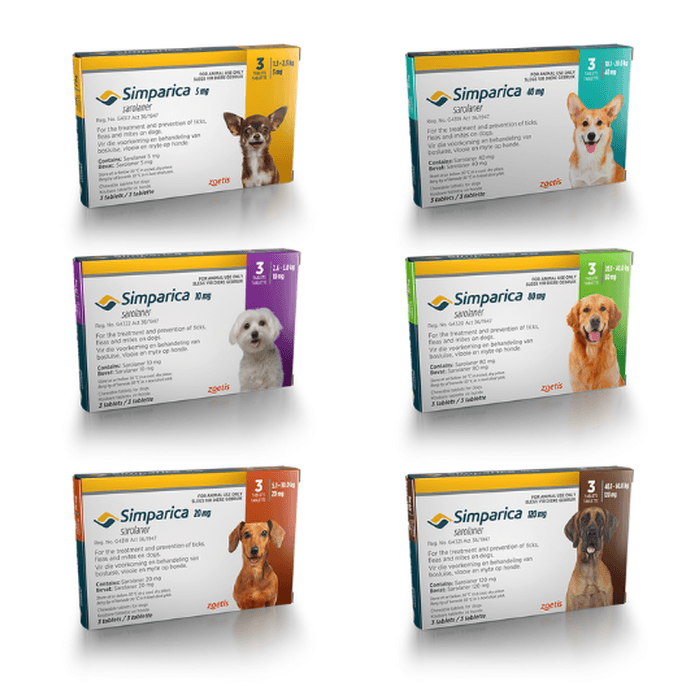
Simparica
Simparica (sarolaner) chewable tablet for dogs
Price:
Price range: $104.99 through $115.99
Secure Encrypted Payments
Simparica is a prescription chewable medicine for dogs used to control fleas and ticks. Ships from Canada to US through our referral pathway, with cash-pay access without insurance. This page summarizes how the medicine works, what to review on the label, and practical handling and safety points for a veterinarian discussion.
Because parasite prevention choices depend on age, weight, and health history, the prescribing veterinarian remains the best source for individualized guidance. The sections below are written to support clear conversations and smoother refills.
What Simparica Is and How It Works
This medicine contains sarolaner, an isoxazoline-class ectoparasiticide (external parasite killer). After a dog takes the chewable by mouth, the active ingredient is absorbed and circulates in the bloodstream. Fleas and ticks are exposed when they bite and feed, which helps stop infestations and reduces the cycle of re-infestation in the home environment.
In general terms, isoxazolines work by interfering with parasite nerve signaling, which can lead to paralysis and death of fleas and ticks. It is not a topical repellent, so preventing bites entirely is not the goal; instead, the goal is to kill parasites after they attach. Dispensing is handled by licensed Canadian partner pharmacies. For a broader view of similar prescriptions, see the Pet Medications hub.
Who It’s For
This treatment is intended for dogs when flea and tick control is needed as part of an overall parasite plan. Suitability can depend on a dog’s age, body weight, prior neurologic history, and other health conditions. For context on common infestations and prevention planning, the browseable Fleas In Pets and Ticks In Pets collections can help organize related options.
A veterinarian may consider Simparica when an oral, prescription-strength option is appropriate for the dog’s situation. This product is not labeled for every species, and it should not be shared between pets. Puppies require extra caution because minimum age and weight limits are label-specific. Reviewing the package insert with the prescribing clinic is important, especially if there is a history of seizures or other neurologic events. For additional background, the Best Flea Treatment For Dogs guide summarizes common prevention approaches.
Dosage and Usage
Label directions generally describe a once-monthly dosing schedule, using a chewable tablet chosen for the dog’s current weight. The tablet is given by mouth, and consistent administration matters because missed doses can allow fleas or ticks to return. If a dose is vomited, partially chewed and dropped, or otherwise not fully taken, the safest next step is to contact the prescribing veterinarian for instructions rather than repeating a dose without guidance.
Simparica dosing is weight-based, so it is important that the dog is weighed regularly and that the correct labeled tablet strength is used. Tablets should not be split or combined unless the label and veterinarian explicitly direct it, because doing so can change the delivered amount. Quick tip: Set a monthly calendar reminder for scheduled doses.
Prescriptions are confirmed with the prescriber before dispensing.
Strengths and Forms
This product is supplied as an oral chewable tablet. Multiple tablet strengths are made to match different weight ranges, and the correct selection depends on the label directions and the prescribing veterinarian’s instructions. Packaging may vary (for example, single doses or multi-dose cartons), and availability can differ by pharmacy partner and current supply.
When comparing options, it helps to separate “form” from “coverage.” Oral chewables are often chosen for dogs that swim frequently or are hard to treat with topical liquids, while topical products may suit dogs that refuse tablets. Some parasite plans also include separate preventives for internal parasites, depending on regional risks and the dog’s lifestyle. A veterinarian can confirm whether a single product is enough or whether a broader plan is needed.
Storage and Travel Basics
Store Simparica according to the package insert, typically at controlled room temperature and in the original packaging until use. Keeping tablets in the blister pack helps protect them from moisture and limits mix-ups with other pet medications. The product should be kept out of reach of children and animals to reduce the risk of accidental ingestion.
For travel, it helps to keep the carton or dispensing label with the medication so the active ingredient and directions are easy to verify. Avoid leaving medicines in hot vehicles, direct sun, or freezing conditions, since temperature extremes can damage packaging and may affect product integrity. If a trip spans a dosing date, planning ahead with the prescribing clinic can prevent missed monthly doses.
Side Effects and Safety
Like many prescription parasite treatments, Simparica can cause side effects. Gastrointestinal upset such as vomiting, diarrhea, or reduced appetite may occur, and some dogs may seem tired for a short period after a dose. These effects are often mild, but they still matter, especially in small dogs or pets with other conditions that increase dehydration risk.
More serious reactions are uncommon but possible, including neurologic signs such as tremors, unsteadiness, or seizures. Dogs with or without a prior seizure history have been reported to experience neurologic adverse events with isoxazoline-class medicines, so it’s important to discuss history and monitoring with the veterinarian. Signs of an allergic reaction can include facial swelling, hives, sudden weakness, or breathing difficulty, which warrants urgent veterinary care.
Why it matters: Prompt veterinary help can reduce risks from serious reactions.
Drug Interactions and Cautions
Veterinary prescriptions are often used alongside other preventives, antibiotics, anti-inflammatory medicines, and supplements. Even when a specific interaction is not expected, the prescribing clinic should have a complete list of everything the dog receives, including non-prescription products. This helps the veterinarian assess overlapping side effects, such as stomach upset or sedation, and avoid duplicating medicines in the same class.
If the dog is being treated for infections or tick-borne illness, sharing current therapies is especially important. Related guides that may help organize medication histories include Cephalexin Uses And Safety and Doxycycline Uses And Safety. For households managing multiple parasite risks, deworming schedules may also be part of the plan; the Drontal For Dogs Guide offers a practical overview to discuss with a veterinarian.
Compare With Alternatives
Simparica is one option within a broader group of flea and tick preventives, and the best choice depends on the dog’s health history, local parasite pressure, and how reliably a product can be given. Some dogs do better with topicals, while others do better with an oral medicine. If skin sensitivity or bathing frequency makes topicals difficult, a veterinarian may still prefer an oral approach, provided the dog is an appropriate candidate.
Common alternative strategies include a monthly topical preventive (for example, selamectin-based products) or a fast-acting oral flea adulticide used for quick knockdown during an active infestation. For reference, see Revolution For Dog and Capstar For Dog. For additional context on rapid relief options and how they fit into a longer plan, the Capstar Flea Treatment Guide is a helpful companion read.
Pricing and Access
The overall cost depends on the prescribed tablet strength, pack size, and refill cadence. Because this is a prescription product, access also depends on a valid veterinary prescription and confirmation of current directions. BorderFreeHealth supports cross-border fulfillment coordination through licensed partners and related documentation, and US shipping from Canada may be part of that process.
For people using a cash-pay approach, Simparica may be a practical option when coverage is limited or when paying without insurance. Cash-pay access is available for those without insurance. When available, site-wide offers are listed on Current Promotions, and the cart will reflect any applicable terms at checkout. For the smoothest processing, ensure the prescribing clinic’s contact details are current before submitting a refill request.
Authoritative Sources
For the most reliable safety and labeling details, it helps to read the manufacturer information and regulatory safety updates. The links below are useful references to review alongside a veterinarian’s instructions and the package insert.
These sources support class-level safety awareness and product labeling details:
- FDA safety information for isoxazoline flea and tick medicines: FDA Isoxazoline Product Safety Information
- Manufacturer prescribing information and administration instructions: Zoetis Product Information
To submit a prescription request through the site, select prompt, express shipping during checkout.
This content is for informational purposes only and is not a substitute for professional medical advice.
Express Shipping - from $25.00
Shipping with this method takes 3-5 days
Prices:
- Dry-Packed Products $25.00
- Cold-Packed Products $35.00
Shipping Countries:
- United States (all contiguous states**)
- Worldwide (excludes some countries***)
Standard Shipping - $15.00
Shipping with this method takes 5-10 days
Prices:
- Dry-Packed Products $15.00
- Not available for Cold-Packed products
Shipping Countries:
- United States (all contiguous states**)
- Worldwide (excludes some countries***)
What is sarolaner, and why is it used for fleas and ticks?
Sarolaner is the active ingredient in this prescription flea and tick medicine for dogs. It belongs to the isoxazoline class, which targets parasite nerve signaling. After an oral chewable is given, fleas and ticks are exposed when they bite and feed, which helps eliminate infestations and reduce ongoing reinfestation. Because it is a prescription product, a veterinarian determines whether it is appropriate based on the dog’s age, weight, health history, and parasite risks in the area.
How long does a dose typically last?
Product labeling for sarolaner chewables is generally built around a monthly dosing interval, with the goal of maintaining continuous protection through the high-risk season or year-round where parasites are common. How well a monthly schedule fits a specific dog can depend on the local flea and tick pressure, exposure during travel, and how consistently doses are given. For exact timing, missed-dose instructions, and what to do if a dose is not fully swallowed, the package insert and the prescribing veterinarian are the best references.
Can it be used in puppies?
Some dogs that are still growing may be eligible, but minimum age and weight limits are determined by the official label and should be confirmed with the prescribing veterinarian. Puppies can be more sensitive to dehydration from vomiting or diarrhea, and weight changes quickly, which affects selection of the correct tablet strength. A veterinarian can also confirm whether additional parasite prevention (such as heartworm prevention or deworming) is needed based on regional risk and the puppy’s living environment.
What side effects should be monitored after giving a dose?
Possible side effects include stomach upset (vomiting, diarrhea, decreased appetite) and temporary lethargy. More serious effects can include neurologic signs such as tremors, unsteadiness, or seizures, which have been reported with isoxazoline-class flea and tick medicines. Monitoring is especially important after the first dose and in dogs with a prior neurologic history. If severe symptoms occur—such as repeated vomiting, collapse, trouble breathing, or seizure activity—urgent veterinary assessment is recommended.
Can it be given with heartworm prevention or other parasite medicines?
Some dogs use multiple parasite preventives, but combinations should be planned with a veterinarian to avoid duplicating ingredients or overlapping side effects. The clinic should be told about all medicines the dog receives, including dewormers, topicals, supplements, and any recent flea treatments. Even if a direct drug interaction is not expected, a complete medication list helps the prescriber evaluate risks such as gastrointestinal upset, neurologic sensitivity, or underlying conditions that may affect tolerability.
What should be discussed with a veterinarian before starting it?
Key topics include the dog’s current weight, age, and any history of seizures, tremors, or other neurologic events. It also helps to review other medicines and supplements, past reactions to flea/tick products, and whether the dog is pregnant, nursing, or intended for breeding. The veterinarian can confirm which parasites need coverage in the area and whether additional prevention for internal parasites is needed. Asking for guidance on missed doses and what to do if vomiting occurs can also prevent confusion later.
Rewards Program
Earn points on birthdays, product orders, reviews, friend referrals, and more! Enjoy your medication at unparalleled discounts while reaping rewards for every step you take with us.
You can read more about rewards here.
POINT VALUE
How to earn points
- 1Create an account and start earning.
- 2Earn points every time you shop or perform certain actions.
- 3Redeem points for exclusive discounts.
How to book an appointment
- 1Create Begin by completing a profile or log into your existing account. This step ensures we have the necessary information to provide you with a service that's tailored to your needs. account and start earning.
- 2Scheduling an appointment with our online booking system is easy. Pick a day and time that suits you. You’ll receive an immediate confirmation, without the wait.
- 3Discuss your concerns and symptoms and receive a thorough diagnosis from one of our licensed doctors during a confidential video appointment.
- 4If you've been prescribed medication, your Rx is sent directly to one of our licensed pharmacies and delivered right to your door.
Get Started
To book an online doctor appointment, register for an account or login. After doing so, you can book your visit on this page.
You Might Also Like
Select options
This product has multiple variants. The options may be chosen on the product page
Select options
This product has multiple variants. The options may be chosen on the product page
Select options
This product has multiple variants. The options may be chosen on the product page
Select options
This product has multiple variants. The options may be chosen on the product page