

Please note: a valid prescription is required for all prescription medication.
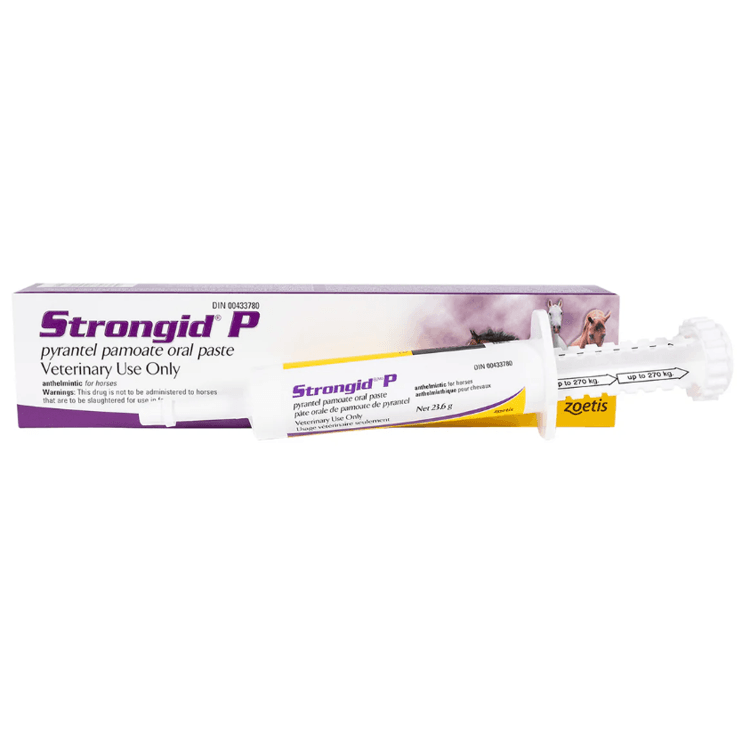
Strongid P
Strongid P Equine Dewormer Overview
Price:
$183.99
Secure Encrypted Payments
Strongid P is a veterinary deworming treatment for horses used to manage certain intestinal parasites.
This page summarizes common uses, handling basics, and key safety points, with Ships from Canada to US.
Access is available through cash-pay pathways for those without insurance.
What Strongid P Is and How It Works
When a prescription is required, it is confirmed with the prescriber.
This product is widely recognized as a pyrantel pamoate–based anthelmintic (dewormer). Pyrantel works inside the intestinal tract, where it can disrupt nerve signaling in susceptible parasites. In plain terms, it may cause worms to lose their grip and be passed from the gut. Because it mainly acts in the intestines, it is generally discussed as a treatment for internal parasites rather than external pests like ticks.
Most guidance focuses on intestinal nematodes (roundworms), including strongyles (often called bloodworms), ascarids (large roundworms), and pinworms. Some labeling for pyrantel products also describes an option used as a “double-dose” regimen for certain cestodes (tapeworms), but that use depends on the specific package directions and veterinary guidance. Parasite patterns vary by region, pasture management, and age group, so product selection is usually tied to the parasite risk profile and fecal testing trends in a barn.
Who It’s For
This medicine is intended for horses and is generally used as part of a broader parasite-control plan. Programs often differ for foals, yearlings, adult horses in training, and older horses, because exposure and susceptibility can change with age, housing, and pasture density. For background on common intestinal parasites across species, the Intestinal Worms hub is a helpful browseable starting point.
Strongid P may be considered when a veterinarian is targeting parasites that are typically susceptible to pyrantel, or when a barn plan rotates dewormers to reduce selection pressure. High-level reasons to avoid or delay treatment can include known hypersensitivity to ingredients, severe debilitation, or situations where accurate weight estimation is not possible and the risk of incorrect dosing is higher. Use in pregnant or lactating mares, very young foals, or medically complex cases should follow label directions and individualized veterinary judgment.
Dosage and Usage
Equine dewormers are usually dosed by body weight, and correct weight estimation is one of the biggest drivers of safe, effective use. Many products in this class are given by mouth, often as a paste delivered from a dosing syringe. The goal is to ensure the full measured amount is swallowed and not lost to spitting, head tossing, or feed contamination. Barn records also matter, since repeated treatments without a plan can contribute to resistance over time.
Reading the dosing directions
Label instructions typically explain how to measure a dose for weight bands and how to administer the product safely. That includes guidance such as restraining the horse calmly, placing the dosing tip in the mouth, and delivering the medicine toward the back of the tongue. If the label describes a special regimen (such as a double-dose approach for specific parasites), it should be followed exactly as written rather than improvised. When there is uncertainty about timing, parasite targets, or coexisting illness, a veterinarian can align deworming with fecal egg count results and local resistance patterns.
| Step | What to confirm |
|---|---|
| Before giving a dose | Current weight estimate, product expiration date, and the intended parasite target. |
| During administration | Calm handling and full delivery of the measured amount. |
| After dosing | Watch for unusual signs, and document the date and product used. |
Quick tip: Keep a simple deworming log with dates, weights, and fecal test notes.
Strongid P dosage is determined by the package directions and veterinary guidance, rather than a one-size schedule. In practice, barns may time treatments around risk periods (such as high exposure on pasture) and the age group most likely to carry heavy burdens. Over-treating can increase selection for resistant worms, while under-treating may leave parasites uncontrolled, so matching the plan to testing and local patterns is often the most practical approach.
Strengths and Forms
Equine pyrantel products are commonly supplied as an oral paste presented in a dosing syringe, but availability and packaging can vary by distributor. Some listings distinguish between standard presentations and versions marketed around a higher-dose option intended for particular parasite targets. Because product labeling can differ, the package insert remains the best source for the exact directions and indicated organisms.
Strongid P is typically discussed in the context of horse wormer paste formats, where dosing is adjusted for weight bands. For shoppers comparing animal health options across species, the Pet Medications category can be used to browse other pharmacy-dispensed items carried on the platform.
Dispensing is coordinated through licensed Canadian partner pharmacies.
Storage and Travel Basics
Storage recommendations should follow the label, but most oral dewormer pastes are kept at controlled room temperature and protected from extremes. Avoid leaving the product in a hot vehicle, direct sunlight, or unheated areas where freezing could occur. Keeping the cap secured and the product in its original packaging helps reduce contamination and makes it easier to track the lot number and expiration date if a concern arises.
For travel, place the medicine in a clean, dry container within a tack trunk or medical kit, separated from feed and supplements. It is also sensible to keep dosing tools clean and to avoid sharing equipment between horses when infectious disease risk is a concern. Unused or expired product should be disposed of according to label instructions or local pharmacy guidance, especially to prevent accidental exposure to children, pets, or livestock that are not the intended species.
Side Effects and Safety
Many horses tolerate pyrantel-based dewormers well, but side effects can occur. More common issues are gastrointestinal and may include mild digestive upset, transient loose stool, or temporary changes in appetite. Some horses may drool or show brief mouth irritation after oral administration. These signs are often self-limited, but they should still be tracked in barn records because patterns can matter over time.
Strongid P can rarely be associated with more serious reactions, particularly in medically fragile animals or when the parasite burden is high. Concerning signs can include marked lethargy, weakness, persistent diarrhea, hives, facial swelling, trouble breathing, or signs of colic (pawing, rolling, looking at the flank). Urgent veterinary evaluation is appropriate if severe symptoms occur, if signs worsen, or if the horse has other conditions that complicate hydration and gut motility.
Why it matters: Early recognition of adverse reactions can prevent small problems from escalating.
For readers also managing deworming in cats and dogs, these resources provide additional safety context by species: Drontal For Cats and Drontal For Dogs. While the species and products differ, the same principle applies: match the medicine to the parasite risk and monitor after dosing.
Drug Interactions and Cautions
Interactions are a practical concern when multiple parasite-control products are used in the same setting. Pyrantel can have clinically relevant interactions with certain other deworming agents, and product labels sometimes caution against combining specific drug classes. In equine practice, a classic example discussed in references is the interaction between pyrantel and piperazine, which may reduce effectiveness when used together. Exposure to some insecticides (including certain organophosphates) is another reason veterinarians may advise added caution.
Non-prescription supplements and feed additives can also complicate interpretation of side effects, especially if several items are introduced at once. If a horse is receiving other medications for pain, infection, ulcers, or endocrine disease, it is reasonable to review the full list with a veterinarian before deworming. For multi-species households where parasite products are also used in small animals, guides like NexGard Combo For Cats and Best Flea Treatment For Dogs can help clarify active-ingredient categories to discuss with a professional.
Compare With Alternatives
Equine parasite control often involves choosing among several drug classes, based on which parasites are most likely and what local resistance patterns look like. Fenbendazole-based dewormers are one common alternative, and ivermectin or moxidectin products are also widely discussed for broad parasite coverage. Tapeworm strategies may involve praziquantel-containing products, depending on the indication and the label.
Strongid P is usually compared with other equine wormers by looking at parasite spectrum, how dosing is presented, and how well the option fits an evidence-based barn plan. For reference points within the catalog, see Panacur Paste (a different dewormer class) and Strongid T (another equine deworming option). A veterinarian can help interpret fecal testing and local trends when deciding between classes.
Pricing and Access
Costs for equine dewormers can vary with package size, presentation, and dispensing requirements. Some items are sold as single-use doses, while others are packaged for a range of weights, which changes the per-treatment total. When comparing options, it helps to consider how many horses are being treated, how frequently deworming is planned based on fecal testing, and whether the product is being used as a standard or higher-dose labeled regimen.
Strongid P access through the platform is structured around pharmacy-dispensed supply pathways, and availability may differ by dispensing partner. US shipping from Canada may be used for eligible orders, and the Promotions page lists current site-wide programs when offered. For general guidance on evaluating online medication sources, Finding Pet Medications Online is a useful overview.
Access is offered on a cash-pay basis.
For households also managing parasites in smaller animals, these related reads may help with planning: Capstar Flea Treatment.
Authoritative Sources
For the most reliable details on parasite targets, contraindications, and administration instructions, consult the product label and a veterinarian familiar with local resistance patterns. Independent references can also help explain how anthelmintic drug classes are used and why rotation strategies may or may not be recommended in a given region.
Neutral pharmacology background is available from: Merck Veterinary Manual Anthelmintics.
Practical equine parasite-control guidance is available from: AAEP Clinical Guidelines.
To place an order, select prompt, express shipping when available.
This content is for informational purposes only and is not a substitute for professional medical advice.
Express Shipping - from $25.00
Shipping with this method takes 3-5 days
Prices:
- Dry-Packed Products $25.00
- Cold-Packed Products $35.00
Shipping Countries:
- United States (all contiguous states**)
- Worldwide (excludes some countries***)
Standard Shipping - $15.00
Shipping with this method takes 5-10 days
Prices:
- Dry-Packed Products $15.00
- Not available for Cold-Packed products
Shipping Countries:
- United States (all contiguous states**)
- Worldwide (excludes some countries***)
What parasites does Strongid P treat in horses?
Strongid P is commonly discussed as a pyrantel pamoate dewormer for horses that targets certain intestinal parasites, especially roundworms. Depending on the specific label, this may include strongyles (often called bloodworms), ascarids (large roundworms), and pinworms. Some pyrantel products also describe a higher-dose, label-directed regimen for certain tapeworms, but that indication depends on the exact package insert. A veterinarian can help match parasite risks to the most appropriate dewormer class and timing.
How do pyrantel-based paste dewormers work?
Pyrantel is an anthelmintic (dewormer) that primarily acts in the intestinal tract. In susceptible worms, it interferes with neuromuscular function, which can cause paralysis and loss of attachment in the gut. The parasites may then be passed in manure. Because the effect is mainly within the intestines, pyrantel products are generally used for internal parasites rather than external pests like fleas or ticks. Effectiveness and appropriate selection still depend on the parasite species and local resistance patterns.
What is meant by a “double-dose” deworming regimen?
“Double-dose” usually means administering a labeled higher-dose regimen compared with the standard roundworm dose, using the product’s own directions. In equine parasite control, this concept is sometimes associated with targeting parasites that require a higher pyrantel exposure, such as certain tapeworms, but indications differ by label and region. It is not a term to interpret loosely or improvise, because incorrect dosing can increase side-effect risk or reduce effectiveness. The safest approach is to follow the package insert and veterinary guidance.
What side effects should be monitored after deworming?
After deworming, monitoring focuses on digestive and allergic-type reactions. Mild signs can include transient drooling, brief mouth irritation, temporary appetite changes, or loose stool. More serious concerns include hives, facial swelling, breathing difficulty, marked lethargy, persistent diarrhea, or signs of colic such as pawing, rolling, or repeatedly looking at the flank. Severe symptoms warrant prompt veterinary assessment. Documenting the product used, dose date, and observed signs can help a veterinarian assess whether the reaction is likely medication-related or due to another issue.
Can pyrantel dewormers be used with other parasite treatments?
Whether pyrantel-based dewormers can be combined with other treatments depends on the specific products and active ingredients involved. Some combinations are discouraged because of potential interactions, such as pyrantel with piperazine, which may reduce effectiveness when used together. Environmental exposure to certain insecticides can also factor into safety decisions. Because barns may use multiple parasite-control tools (dewormers, fly control, topical products, supplements), it helps to review the full list with a veterinarian before dosing, especially for medically fragile horses.
What should be discussed with a veterinarian before deworming a horse?
Key discussion points include the horse’s age, pregnancy or lactation status, overall health, and a realistic weight estimate for dosing. A veterinarian may also review fecal egg count results, local resistance patterns, recent travel or new herd introductions, and any prior adverse reactions to dewormers. It is also important to list all medications, supplements, and parasite-control products currently in use, because interactions or overlapping ingredients can affect safety decisions. Bringing a written barn deworming history can make these conversations faster and more accurate.
Rewards Program
Earn points on birthdays, product orders, reviews, friend referrals, and more! Enjoy your medication at unparalleled discounts while reaping rewards for every step you take with us.
You can read more about rewards here.
POINT VALUE
How to earn points
- 1Create an account and start earning.
- 2Earn points every time you shop or perform certain actions.
- 3Redeem points for exclusive discounts.
How to book an appointment
- 1Create Begin by completing a profile or log into your existing account. This step ensures we have the necessary information to provide you with a service that's tailored to your needs. account and start earning.
- 2Scheduling an appointment with our online booking system is easy. Pick a day and time that suits you. You’ll receive an immediate confirmation, without the wait.
- 3Discuss your concerns and symptoms and receive a thorough diagnosis from one of our licensed doctors during a confidential video appointment.
- 4If you've been prescribed medication, your Rx is sent directly to one of our licensed pharmacies and delivered right to your door.
Get Started
To book an online doctor appointment, register for an account or login. After doing so, you can book your visit on this page.
You Might Also Like
Select options
This product has multiple variants. The options may be chosen on the product page
Select options
This product has multiple variants. The options may be chosen on the product page
Select options
This product has multiple variants. The options may be chosen on the product page
Select options
This product has multiple variants. The options may be chosen on the product page