

Please note: a valid prescription is required for all prescription medication.
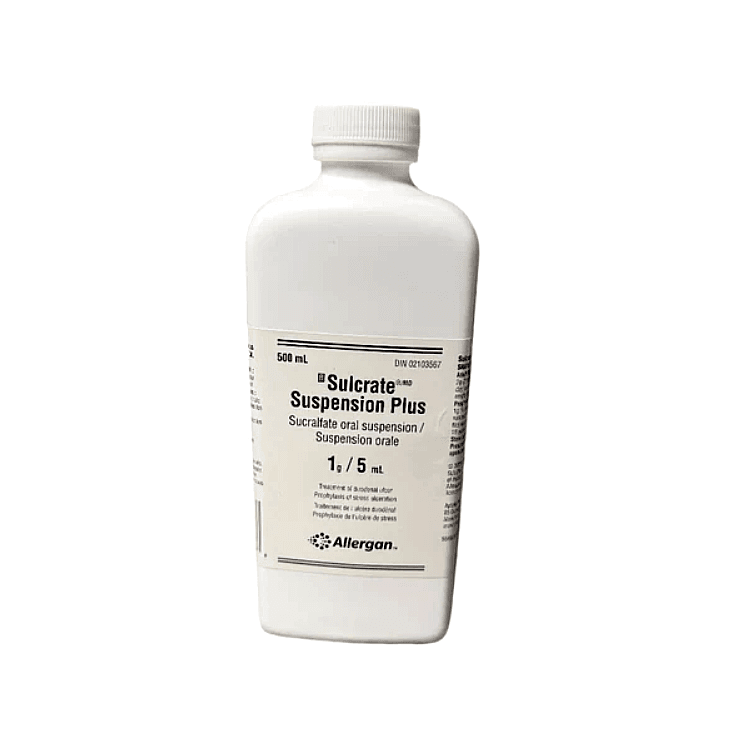
Sulcrate Suspension Plus
Sulcrate Suspension Plus (Sucralfate Oral Suspension)
Price:
$97.99
Secure Encrypted Payments
Sulcrate Suspension Plus is a prescription sucralfate liquid used to help protect irritated tissue in the upper digestive tract. This page summarizes how the medicine works, how it is typically timed, and key safety points to review with a clinician. US shipping from Canada is available for cash-pay access, including for people without insurance.
What Sulcrate Suspension Plus Is and How It Works
This medicine is an oral suspension (liquid) form of sucralfate, a medication best known for helping protect areas of irritation in the stomach or duodenum (the first part of the small intestine). Instead of reducing acid like many heartburn medicines, sucralfate mainly acts locally by forming a protective barrier over damaged tissue. That barrier can help shield the area from acid, bile salts, and digestive enzymes while the underlying tissue heals.
Some people find liquids easier than tablets when swallowing is difficult, when symptoms flare, or when precise timing with meals matters. As with other stomach-protective therapies, instructions often emphasize taking doses on an empty stomach and spacing them away from certain other medicines.
BorderFreeHealth works with licensed Canadian partner pharmacies.
Why it matters: A protective coating approach can be useful when acid reduction is not the main goal.
Because sucralfate can bind to proteins and other substances in the digestive tract, it may also bind to some medications taken at the same time. That is why timing and medication lists matter. If symptoms include weight loss, vomiting blood, black stools, trouble swallowing, or persistent pain, those red-flag concerns typically require prompt medical evaluation rather than self-management.
Who It’s For
Sucralfate oral suspension may be prescribed for certain ulcer conditions and irritation in the upper gastrointestinal (GI) tract. It is commonly associated with treatment of active duodenal ulcers and may also be used in other situations when a prescriber wants a coating agent to protect inflamed tissue. The exact reason for use should be written on the prescription and aligned with the clinician’s diagnosis.
People who are exploring options for ulcer-related care may also benefit from browsing condition and therapy hubs such as Peptic Ulcer Disease and the Gastrointestinal Category to see related prescription classes often used in GI treatment plans.
This therapy is not appropriate for everyone. It should not be used by anyone with a known allergy to sucralfate or any listed ingredients. Extra caution is often discussed for people with significant kidney disease (because sucralfate contains aluminum), those who use feeding tubes, and anyone with complex medication schedules where absorption issues could be clinically important. Pregnancy and breastfeeding questions should be reviewed with a healthcare professional using the most current labeling.
Dosage and Usage
Sulcrate Suspension Plus dosing is individualized and should follow the prescription label exactly. In general practice, sucralfate liquid is often scheduled multiple times per day on an empty stomach, sometimes including a bedtime dose. Other schedules may be used depending on the condition being treated and the prescriber’s goals.
The suspension is usually shaken well before measuring. Doses are measured in mL, and accuracy matters because “household teaspoons” vary. If a dose is missed, many clinicians advise taking the next dose at the usual time rather than doubling up, but the safest approach is to follow the patient-specific directions and ask the prescriber or pharmacist when unsure.
Quick tip: A marked oral syringe can help measure mL doses more consistently.
Timing with food and other medicines is often the most challenging part. Many labels instruct taking sucralfate before meals, because food can reduce contact with the irritated area. If other GI medicines are also prescribed (for example, acid reducers), the prescriber may set a specific schedule so each drug can work as intended.
Strengths and Forms
This product is supplied as a liquid oral suspension. Sucralfate suspensions can differ by concentration and bottle size depending on the manufacturer and pharmacy supply. For that reason, the prescription label and the pharmacy-provided monograph are the best source for the exact concentration, dosing volume, and total quantity dispensed.
Sulcrate Suspension Plus may be listed as a branded or branded-generic presentation, while “sucralfate oral suspension” is often used as the generic description. Switching between a tablet and a liquid form is not always a simple swap, because directions can differ and measurement becomes part of safe use. When a refill looks different, confirm the name, concentration, and instructions with the dispensing pharmacy.
Storage and Travel Basics
Storage instructions can vary by product, so the package label should be treated as the primary reference. Many sucralfate liquids are kept at controlled room temperature with the cap tightly closed. Some formulations should not be frozen, and excessive heat can affect consistency. Keeping the bottle in its original container helps preserve the label details needed for safe use.
For day-to-day handling, it helps to keep a dedicated measuring device with the bottle and to clean it after use. If the suspension becomes unusually thick, separates in a way that does not mix after shaking, or shows unexpected changes in color or odor, the pharmacy should be contacted before further doses are taken.
For travel, carrying the medicine in a sealed bag can prevent leaks. Keeping it in a carry-on protects it from temperature extremes and reduces the chance of missed doses due to lost luggage. Always keep a copy of the prescription or the pharmacy label for identification.
Side Effects and Safety
Most side effects reported with sucralfate relate to the digestive tract. Constipation is one of the more common complaints, and some people report nausea, dry mouth, stomach discomfort, gas, or a chalky taste. Because the medicine works largely within the GI tract, systemic side effects are less typical, but they can occur.
Sulcrate Suspension Plus should be stopped and urgent care sought for signs of a serious allergic reaction, such as swelling of the face or throat, hives, or trouble breathing. People who are medically fragile, use feeding tubes, or have difficulty swallowing may need extra monitoring for problems such as blockage (bezoar formation), especially if other risk factors are present.
Prescriptions are typically verified with the original prescriber before dispensing.
Kidney disease deserves special attention. Sucralfate contains aluminum, and in severe renal impairment, aluminum can accumulate. Clinicians may recommend alternative options, different monitoring, or additional precautions for those with advanced kidney disease or dialysis dependence. Any new or worsening symptoms should be documented and discussed with a healthcare professional.
For broader GI education and medication context, the Gastrointestinal Articles hub can be a helpful starting point for learning how different therapy classes are used.
Drug Interactions and Cautions
Sucralfate can interfere with absorption of other medications by binding them in the digestive tract. A common precaution is separating sucralfate from other oral drugs by a set number of hours, but the exact spacing should match the prescription and the pharmacist’s instructions. This is especially important for medicines where small changes in blood levels matter.
Why it matters: Separation reduces binding and helps other medicines absorb normally.
Examples of drugs that may require careful timing include certain antibiotics (such as fluoroquinolones or tetracyclines), thyroid hormone replacement, digoxin, warfarin, and some seizure medicines. Antacids may also be involved in the schedule, because they can change stomach conditions and alter how well the coating adheres. For background reading on acid-reducer options that sometimes appear in ulcer regimens, see Cimetidine Uses, Cimetidine Dosage, and Cimetidine Vs Famotidine.
It is also important to share a complete medication list, including vitamins, iron, calcium, and herbal products. When multiple medicines must be taken on an empty stomach, clinicians may prioritize timing based on the diagnosis and the relative importance of each drug’s absorption.
Compare With Alternatives
Ulcer and irritation management can involve several different medication classes, each with a distinct role. Sucralfate products such as Sulcrate Suspension Plus are primarily coating agents, while proton pump inhibitors (PPIs) reduce acid production and histamine-2 blockers reduce acid signaling. Bismuth-containing products and antibiotics may be used in specific treatment plans, such as when an infection is identified.
In terms of prescription options sometimes used for related conditions, PPIs such as Omeprazole Details or Pantoprazole Details may be considered by prescribers when acid suppression is the primary goal. The best fit depends on diagnosis, symptom pattern, other medicines, and safety factors such as kidney function or infection risk. A clinician can also advise whether combination therapy is appropriate or whether a single approach is preferred.
Non-medication steps (for example, reducing alcohol, avoiding NSAIDs when possible, and reviewing food triggers) may be part of a plan, but those choices should be individualized. Persistent or recurring symptoms usually warrant evaluation to confirm the cause and rule out complications.
Pricing and Access
Coverage varies widely for sucralfate liquids, and many people compare options using a cash-pay approach. Sulcrate Suspension Plus may be obtained with a valid prescription, and out-of-pocket costs can differ based on dispensing pharmacy and the concentration and quantity provided.
BorderFreeHealth supports access through Canadian partner pharmacies and can help facilitate cash-pay refills for those without insurance.
For site actions, prescriptions are reviewed and confirmed as part of the dispensing process, and clarifications may be requested if directions are incomplete. If a prescriber intends “brand only” or a specific formulation, that should be stated clearly to reduce delays and avoid unintended substitutions. When available, the Promotions Page may list general programs that can affect the final total, but amounts and eligibility depend on current terms.
Keeping an up-to-date medication list in the account notes can also help prevent timing conflicts and duplication. If the prescription label differs from what was expected, it is safer to pause and contact the pharmacy for confirmation than to guess.
Authoritative Sources
For the most reliable details, use the dispensing label and the official prescribing information provided with the medication. These resources describe indications, contraindications, and administration instructions in the format used by clinicians and pharmacists. When reading online, prioritize regulators and medication-label repositories over informal summaries.
The following references offer label-based and clinically reviewed information about sucralfate oral suspension. They are useful for double-checking interaction lists, safety warnings, and administration guidance before discussing questions with a healthcare professional.
- For FDA label details and product information, see DailyMed sucralfate listings.
- For patient-friendly clinical overviews, see MedlinePlus sucralfate information.
To place an order on the site, upload the prescription for review and select prompt, express shipping at checkout.
This content is for informational purposes only and is not a substitute for professional medical advice.
Express Shipping - from $25.00
Shipping with this method takes 3-5 days
Prices:
- Dry-Packed Products $25.00
- Cold-Packed Products $35.00
Shipping Countries:
- United States (all contiguous states**)
- Worldwide (excludes some countries***)
Standard Shipping - $15.00
Shipping with this method takes 5-10 days
Prices:
- Dry-Packed Products $15.00
- Not available for Cold-Packed products
Shipping Countries:
- United States (all contiguous states**)
- Worldwide (excludes some countries***)
What is sucralfate oral suspension used for?
Sucralfate oral suspension is commonly used as a lining-protective medicine for certain ulcer conditions in the upper digestive tract, especially the duodenum. It works mainly by coating irritated tissue and helping protect it from stomach acid and digestive enzymes. Clinicians may also use sucralfate liquid in other situations where a local protective barrier is desired, based on diagnosis and medical history. The exact reason for use should match what is written on the prescription and the prescriber’s treatment plan.
How quickly does sucralfate start working?
Sucralfate can begin coating the stomach or duodenal lining soon after a dose, so some people notice symptom relief relatively quickly. Healing of an ulcer or inflamed tissue usually takes longer and depends on the underlying cause, severity, and whether triggers (such as NSAID use) are addressed. Because the medicine does not primarily reduce acid, symptom response can feel different from acid-suppressing therapies. If symptoms are severe, worsening, or include alarm signs like black stools or vomiting blood, medical evaluation is important.
How should sucralfate be timed with other medicines?
Sucralfate can bind to other oral medications in the digestive tract and reduce their absorption. For that reason, prescribers and pharmacists often recommend separating sucralfate doses from other medicines by a set time interval. The exact spacing varies by the other drug and the patient’s schedule, so the prescription label and pharmacist instructions should be treated as the primary source. It is especially important to review timing for antibiotics, thyroid hormone, digoxin, warfarin, and seizure medicines.
What side effects should prompt urgent care?
Constipation and mild stomach upset are reported with sucralfate, but certain symptoms warrant urgent evaluation. Seek immediate care for signs of a severe allergic reaction such as swelling of the face or throat, hives, or breathing difficulty. Severe abdominal pain, persistent vomiting, blood in vomit, black or tarry stools, or sudden trouble swallowing should also be treated as urgent. People with feeding tubes or swallowing disorders should discuss warning signs of blockage with their clinician, since rare complications can occur in higher-risk situations.
Can sucralfate be used with kidney disease or dialysis?
Sucralfate contains aluminum, and in people with severe kidney impairment, aluminum can accumulate because it is cleared less effectively. This does not automatically rule out use, but it is an important safety consideration that should be reviewed with a clinician who knows the patient’s kidney function and full medication list. The prescriber may recommend an alternative therapy, different monitoring, or added precautions. Anyone on dialysis or with advanced chronic kidney disease should not start sucralfate liquid without medical guidance.
What should I ask my clinician before starting sucralfate liquid?
Useful questions include what condition is being treated, how long therapy is expected, and how doses should be timed around meals and other medications. It also helps to ask whether an acid reducer is needed alongside sucralfate and how to schedule the combination. Patients can request a review of kidney function considerations, especially if they have chronic kidney disease, and ask what side effects should be reported promptly. Finally, confirm what to do if a dose is missed and whether switching between tablet and liquid forms is appropriate.
Rewards Program
Earn points on birthdays, product orders, reviews, friend referrals, and more! Enjoy your medication at unparalleled discounts while reaping rewards for every step you take with us.
You can read more about rewards here.
POINT VALUE
How to earn points
- 1Create an account and start earning.
- 2Earn points every time you shop or perform certain actions.
- 3Redeem points for exclusive discounts.
How to book an appointment
- 1Create Begin by completing a profile or log into your existing account. This step ensures we have the necessary information to provide you with a service that's tailored to your needs. account and start earning.
- 2Scheduling an appointment with our online booking system is easy. Pick a day and time that suits you. You’ll receive an immediate confirmation, without the wait.
- 3Discuss your concerns and symptoms and receive a thorough diagnosis from one of our licensed doctors during a confidential video appointment.
- 4If you've been prescribed medication, your Rx is sent directly to one of our licensed pharmacies and delivered right to your door.
Get Started
To book an online doctor appointment, register for an account or login. After doing so, you can book your visit on this page.
You Might Also Like
Select options
This product has multiple variants. The options may be chosen on the product page
Select options
This product has multiple variants. The options may be chosen on the product page
Select options
This product has multiple variants. The options may be chosen on the product page
Select options
This product has multiple variants. The options may be chosen on the product page