
Shipping with this method takes 3-5 days
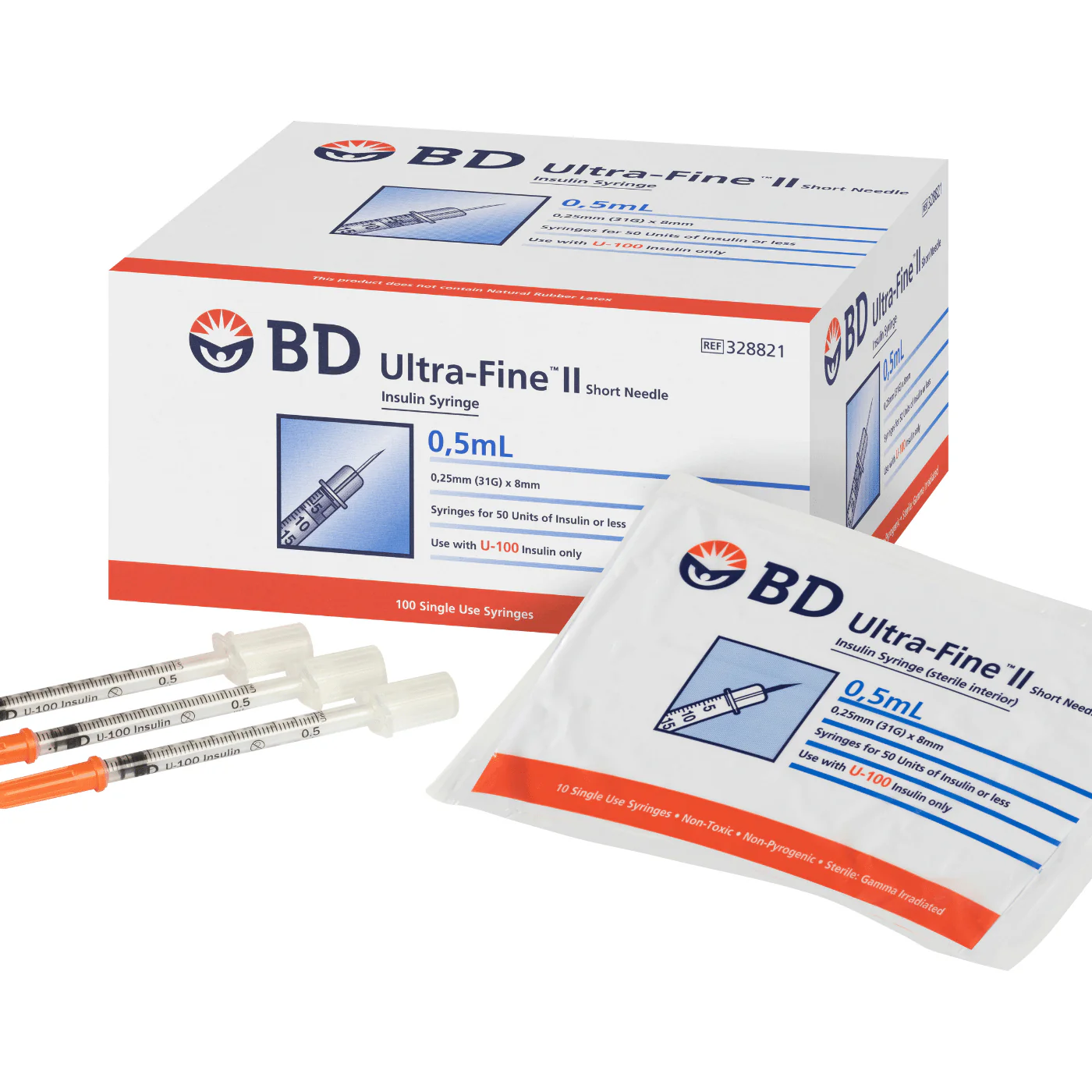
BD Ultrafine II Insulin Syringes
Buy BD Ultrafine II Insulin Syringes Online
Secure Encrypted Payments
BD Ultrafine II Insulin Syringes are sterile, single-use syringes designed for drawing insulin from a vial and injecting it under the skin. You can buy BD Ultrafine II Insulin Syringes online and choose the barrel size and needle configuration shown during ordering to match your insulin plan and clinician directions. These syringes are commonly used by people who prefer a visible barrel, fixed unit markings, and a familiar vial-based injection routine.
Price, Barrel Sizes, and Ordering
Current BD Ultra-Fine II insulin syringes price depends on the size, quantity, and supply available at the time of purchase. During ordering, choose the syringe volume that fits your usual insulin dose range, then confirm that the unit markings align with the insulin you use. Selecting a barrel that is too large for small doses can make fine measurement harder, while selecting one that is too small may not hold the planned dose.
Common options include 31G x 5/16 inch, also described as 31G x 8 mm, in 1 mL, 0.5 mL, and 0.3 mL barrels. The 1 mL size may suit larger unit draws, the 0.5 mL size may fit mid-range dosing, and the 0.3 mL size can help when smaller doses require closer reading of unit lines. Some 0.3 mL versions may include half-unit markings, which can be useful only when your diabetes plan calls for that level of measurement.
Cash-pay and self-pay customers can use the displayed selection to evaluate Canadian pricing for the quantity they need. Orders may include US delivery from Canada, and the checkout process is designed for secure handling of order information. For broader supply browsing, see our diabetes supplies category.
What These Syringes Are Used For
These syringes are used to draw insulin from a vial, remove air bubbles, and deliver a measured subcutaneous injection. Subcutaneous means the dose goes into the fatty tissue under the skin, not into a muscle or vein. The clear barrel and printed unit lines help you see the amount drawn before injection.
The needle is thin-gauge and short, which can support routine insulin administration when used with proper technique. Silicone lubrication and a tri-bevel needle tip are intended to help the needle pass through the skin more smoothly. Comfort still varies by person, injection site, insulin temperature, and technique.
People living with type 1 diabetes or type 2 diabetes may use insulin syringes when their treatment plan includes vial-based insulin. Syringes may also be used when pens or pumps are not preferred, not part of the regimen, or not practical for a specific dose routine.
Choosing Between 1 mL, 0.5 mL, and 0.3 mL
Barrel size is one of the most important buying decisions. A 1 mL, or 1cc, syringe holds a larger insulin volume and is commonly chosen when the planned dose range requires more units. A 0.5 mL, or 0.5cc, syringe gives a shorter scale for mid-range doses. A 0.3 mL syringe provides a smaller barrel, which can make lower doses easier to read.
BD Ultra-Fine II insulin syringes 31G 5/16 inch 1 mL, 0.5 mL, and 0.3 mL versions all refer to the same general short-needle category when the listed needle length is 8 mm. The 31G gauge indicates a very thin needle. Gauge numbers can be confusing because a higher gauge number means a thinner needle, not a thicker one.
Quick tip: Match the syringe volume to your typical dose range rather than choosing the largest barrel by default.
| Size term | Common meaning | Practical consideration |
|---|---|---|
| 1 mL or 1cc | Larger barrel capacity | May suit higher unit draws |
| 0.5 mL or 0.5cc | Mid-size barrel | May suit moderate unit ranges |
| 0.3 mL or 3/10 mL | Smaller barrel | May support closer reading for smaller doses |
| 31G x 5/16 inch | 31-gauge needle, about 8 mm long | Often chosen for short-needle subcutaneous injections |
How to Use a Vial-Based Insulin Syringe
Use the syringe only as directed for the insulin and dose in your care plan. A typical routine includes washing your hands, inspecting the syringe package, removing the cap carefully, and drawing air into the syringe equal to the intended dose. The air is injected into the vial before drawing insulin, which helps make withdrawal easier.
After inverting the vial, draw slightly more insulin than needed, tap the barrel to move air bubbles upward, and push the plunger until the dose lines up with the correct marking. Inject into the recommended subcutaneous site at the angle you were taught. Hold the needle in place briefly before withdrawing if your clinician has advised that technique to reduce leakage.
Rotate injection sites to help lower the chance of lipodystrophy, which means lumps, thickened areas, or dents in the fat tissue that can affect insulin absorption. If your insulin type, concentration, or dose schedule changes, revisit syringe selection and technique before continuing your usual routine. Condition education in our type 1 diabetes articles and type 2 diabetes articles can help you frame questions for your care team.
Single-Use Safety and Sharps Disposal
BD Ultrafine II Insulin Syringes are sterile and intended for one use. Reusing a syringe can dull or damage the needle, increase discomfort, and raise contamination risk. Sharing needles or syringes can transmit infections and should never occur.
Place used syringes directly into an FDA-cleared sharps container after injection. If an approved container is not available right away, use a heavy-duty plastic household container with a tight, puncture-resistant lid until you can follow local disposal instructions. Do not place loose sharps in household trash, recycling bins, purses, travel bags, or bedside drawers.
Recapping practices vary by local sharps guidance and the injection situation. If recapping is not recommended or cannot be done safely, place the syringe into a sharps container immediately without trying to replace the cap. Keep all unused and used syringes away from children and pets.
Storage, Travel, and Handling
Store unused syringes in their original packaging in a clean, dry place. Keep them away from moisture, direct sunlight, and extreme heat. Do not use a syringe if the package is torn, the needle looks bent, or sterility may have been compromised.
For travel, carry syringes in hand luggage rather than checked baggage when possible. Use a rigid case to protect the needles and keep diabetes supplies together. A portable sharps container can make disposal easier during flights, road trips, hotel stays, or workdays away from home.
Airport screening rules typically allow diabetes supplies, but packing them clearly can reduce delays. If you travel with insulin, keep the medication storage needs separate from syringe storage needs. Syringes need protection from damage and contamination, while insulin may have temperature requirements that depend on the product.
Side Effects, Risks, and When to Get Help
The syringe itself does not cause insulin side effects, but injections can cause local reactions. Common injection-site issues include brief pain, stinging, redness, mild bruising, small bleeding spots, or skin irritation. Allowing alcohol to dry fully before injection and rotating sites may reduce some irritation.
More serious problems are uncommon with correct single-use technique, but infection, persistent swelling, warmth, drainage, or worsening pain should be assessed by a healthcare professional. Bent needles, damaged packaging, or accidental needle sticks also require careful handling. Follow your local guidance for reporting or managing needle-stick injuries.
Low blood sugar, or hypoglycemia, is related to insulin dosing, timing, meals, activity, and other medicines rather than the syringe device. Symptoms can include shakiness, sweating, fast heartbeat, confusion, dizziness, hunger, or weakness. Follow the low-blood-sugar plan given by your diabetes care team, and seek urgent help for severe symptoms, loss of consciousness, or inability to swallow safely.
Dosing Accuracy and Insulin Compatibility
Dosing accuracy depends on matching the syringe markings to the insulin concentration. Many insulin products in the United States are U-100, and U-100 syringes are designed so the unit markings correspond to that concentration. Using a mismatched syringe can cause a dosing error, so check the insulin label and syringe markings before drawing each dose.
Do not mix insulins in one syringe unless the insulin labels and your care plan specifically allow it. Some insulins must not be mixed because mixing can change how they work. If your regimen includes more than one insulin, ask how to time injections, whether separate syringes are needed, and how to prevent mix-ups.
People with vision changes, hand tremor, reduced grip strength, or severe needle anxiety may need extra training or a different delivery method. A caregiver may also need instruction if they help draw or inject insulin. Safe measurement matters as much as comfort when choosing a syringe.
Who May Prefer BD Ultra-Fine II Syringes
These syringes may suit adults or adolescents who use vial-based insulin and want a familiar manual injection method. The clear barrel can make it easier to inspect the dose and see air bubbles before injection. Fixed unit markings may also feel more direct for people who have used syringes for years.
A syringe may be less convenient than a pen for people who need discreet dosing outside the home, have difficulty drawing up small volumes, or cannot read small printed lines reliably. Pen systems can help some users dial doses, but they require compatible pen needles and a different handling routine.
People with bleeding disorders, frequent unexplained bruising, or anticoagulant use should ask about injection-site care. Anyone noticing repeated lumps, dents, or hardened areas at injection sites should have those areas assessed before continuing to inject there.
How Syringes Compare With Pens and Other Supplies
Syringes work with insulin vials and let you see the liquid in the barrel. Pens use cartridges or prefilled systems and usually rely on dialed doses. Pumps deliver insulin through an infusion set and require a different training process. The right approach depends on the insulin prescribed, dose routine, comfort with devices, vision, dexterity, and daily schedule.
If you use a pen-based system, compatible pen needles are needed instead of insulin syringes. Our diabetes supplies section can help you browse related injection supplies. If your insulin or device changes, confirm that each supply still matches the new method before using it.
Why it matters: A syringe, pen needle, and pump supply are not interchangeable, even when they are all used for diabetes care.
Availability, Quantity Planning, and Cost Control
BD Ultra-Fine II insulin syringes 100 count packaging is common for routine use, though packaging and size selection can vary by supply. Planning ahead helps prevent running out between refills, especially if you inject multiple times per day. Keep enough unused syringes on hand for your usual routine, travel, and unexpected delays.
Multi-month purchasing may reduce the number of separate orders and help maintain continuity. Before choosing quantity, estimate daily syringe use and account for single-use disposal. Do not stretch supply by reusing syringes, because sterility and needle integrity matter for each injection.
Customers seeking BD Ultra-Fine II insulin syringes from Canada can view the available sizes and quantity choices during ordering. Products in the Canada country-of-origin collection may also be useful when browsing Canadian-sourced health products.
Questions to Ask Your Healthcare Professional
- Which barrel size best matches my usual insulin dose range?
- Should I use a 90-degree angle or a different angle for my body type?
- Do I need a skinfold for my injection sites?
- How should I rotate sites across the abdomen, thigh, arm, or buttock?
- Are my insulin and syringe markings both based on the same concentration?
- What should I do if I see bubbles after drawing insulin?
- When should I switch to a different injection device?
Authoritative Sources
FDA guidance on safely using sharps at home, work, and travel
CDC diabetes treatment information
This content is for informational purposes only and is not a substitute for professional medical advice.
Research & Education Tool
BD Ultrafine II Insulin Syringes Dosage Calculator
Enter the vial amount, diluent volume, and target amount to estimate concentration, draw volume on a 1 mL U-100 syringe, and approximate vial yield.
For research and educational use only. Check all values against the product label, certificate of analysis, and any applicable professional guidance before relying on the result.
mg
Concentration
-
mcg / mL
Volume per Dose
-
-
Estimated Draws / Vial
-
rounded down to whole draws
Draw Reference
Enter values to estimate the syringe mark.
0
-
-
-
-
Blood Glucose Unit Converter
Convert glucose readings between mg/dL and mmol/L without changing the clinical value.
mg/dL
-
US reporting unit
mmol/L
-
International reporting unit
These calculations are for education only and do not replace clinical advice, diagnosis, or treatment. Always confirm medical decisions with a qualified healthcare professional.
HbA1c & eAG Calculator
Convert between HbA1c percentage and estimated average glucose using the ADAG relationship.
HbA1c
-
percentage
eAG mg/dL
-
estimated average glucose
eAG mmol/L
-
estimated average glucose
These calculations are for education only and do not replace clinical advice, diagnosis, or treatment. Always confirm medical decisions with a qualified healthcare professional.
HOMA-IR Calculator
Estimate insulin resistance from fasting glucose and fasting insulin values collected from the same blood draw.
HOMA-IR
-
screening estimate, not a diagnosis
Formula used
-
depends on glucose unit
These calculations are for education only and do not replace clinical advice, diagnosis, or treatment. Always confirm medical decisions with a qualified healthcare professional.
Express Shipping - from $29.99
Prices:
- Dry-Packed Products $29.99
- Cold-Packed Products $39.99
Shipping Countries:
- United States (all contiguous states**)
- Worldwide (excludes some countries***)
Standard Shipping - $19.99
Shipping with this method takes 5-10 days
Prices:
- Dry-Packed Products $19.99
- Not available for Cold-Packed products
Shipping Countries:
- United States (all contiguous states**)
- Worldwide (excludes some countries***)
What are BD Ultrafine II Insulin Syringes used for?
They are sterile, single-use syringes used to draw insulin from a vial and inject a measured dose under the skin. They are intended for vial-based insulin routines, not pen cartridges or pump supplies.
Which BD Ultra-Fine II syringe size should I choose?
Choose the barrel size that fits your usual dose range and the unit markings you need. A 1 mL syringe holds larger doses, 0.5 mL suits mid-range doses, and 0.3 mL may be easier to read for smaller doses.
Are 31G 5/16 inch and 31G 8 mm the same type of needle length?
Yes, 5/16 inch is approximately 8 mm. A 31G needle is a thin needle, and the short length is commonly used for subcutaneous insulin injections when appropriate for the person and technique.
Can insulin syringes be reused?
BD Ultrafine II Insulin Syringes are intended for single use. Reuse can dull the needle, increase discomfort, and raise contamination risk, so used syringes should go into an appropriate sharps container.
How should used insulin syringes be disposed of?
Place used syringes directly into an FDA-cleared sharps container. If one is not available immediately, use a heavy-duty plastic container with a tight, puncture-resistant lid until you can follow local disposal rules.
Do BD Ultrafine II syringes cause insulin side effects?
The syringe does not cause insulin-related effects such as hypoglycemia. However, injections can cause local pain, redness, bruising, or irritation, and insulin dosing or timing can affect blood sugar.
Rewards Program
Earn points on birthdays, product orders, reviews, friend referrals, and more! Enjoy your medication at unparalleled discounts while reaping rewards for every step you take with us.
You can read more about rewards here.
POINT VALUE
How to earn points
- 1Create an account and start earning.
- 2Earn points every time you shop or perform certain actions.
- 3Redeem points for exclusive discounts.
You Might Also Like
Select options
This product has multiple variants. The options may be chosen on the product page
Select options
This product has multiple variants. The options may be chosen on the product page
Select options
This product has multiple variants. The options may be chosen on the product page
Select options
This product has multiple variants. The options may be chosen on the product page