
Shipping with this method takes 3-5 days
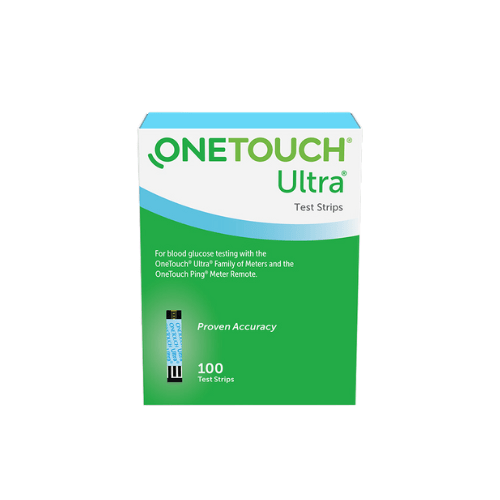
OneTouch Ultra Test Strips
Buy OneTouch Ultra Test Strips Online
Secure Encrypted Payments
OneTouch Ultra Test Strips are blood glucose test strips for use with compatible OneTouch Ultra family meters. They can be bought online with US delivery from Canada, and you can choose the available quantity that matches your testing routine and clinician’s directions. These strips support daily home glucose monitoring for people who already use a matching Ultra meter.
Each strip is designed to draw a small blood sample into the testing channel so the meter can measure glucose and display a result within seconds. Accurate use depends on matching the strip to the correct meter, storing the vial properly, and following the instructions that came with your device.
Price, Quantity, and Ordering Details
Many people look at OneTouch Ultra strips price because blood glucose testing can be a recurring out-of-pocket expense. Current cost depends on the quantity offered, supply source, and the package available at the time you order. During checkout, choose the available count that fits your testing frequency rather than buying more than you can use before the expiration date.
Common retail searches include OneTouch Ultra test strips 50 and OneTouch Ultra test strips 100 because many users plan supplies around monthly or multi-month testing. Larger quantities may be practical for people who test several times a day, while smaller quantities may suit less frequent monitoring. Always balance convenience with expiration dates and storage conditions.
BorderFreeHealth helps customers access Canadian pricing for eligible products, with products supplied through licensed pharmacies. If you are paying without insurance, viewing the cash price before ordering can help you plan refills and avoid running out of strips between routine checks.
Quick tip: Count how many strips you use in a typical week, then choose a quantity that supports your schedule without overstocking.
Meter Compatibility Comes First
OneTouch Ultra blood glucose test strips are made for select OneTouch Ultra family meters. Compatibility is the most important buying decision because glucose strips are not universal. A strip may look similar to another brand or generation, but the meter’s chemistry and coding requirements determine whether it can produce a reliable result.
People often search for OneTouch Ultra 2 test strips, OneTouch Ultra2 test strips, OneTouch Ultra Mini test strips, and OneTouch Ultra meter strips when they are trying to match an older meter. Some Ultra-series meters use Ultra-family strips, but you should confirm the exact meter model on the device label and in the meter manual before placing an order.
OneTouch Ultra Blue test strips are also associated with the Ultra family in many markets. Packaging names can vary by region and generation, so match the strip name, meter name, and instructions rather than relying on color or package appearance alone. If your meter is not an Ultra-series device, choose strips made for that specific system.
For broader supply browsing, the diabetes supplies category can help you find meter-specific strips, lancets, and related testing items. If you are unsure whether an older meter should still be used, ask a diabetes educator or clinician to review the device, technique, and strip match.
What These Strips Do
OneTouch Ultra glucose strips help measure glucose in a small capillary blood sample, usually taken from the fingertip. The strip pulls the blood into a narrow channel, and the meter analyzes the sample using its built-in testing system. The reading can then be used as part of your diabetes self-monitoring plan.
Test strips do not diagnose diabetes by themselves and do not replace laboratory testing when a clinician needs a formal diagnosis or treatment decision. They are tools for day-to-day monitoring, trend review, and checking whether symptoms may match high or low glucose. If a reading does not match how you feel, wash your hands, use a new strip, and test again.
Home testing may be part of care for people with type 1 diabetes, type 2 diabetes, or gestational diabetes. Testing frequency varies by treatment plan, medicine use, pregnancy status, illness, meals, activity, and risk of low glucose. Your clinician can help set a schedule and explain which results require action.
How to Use a Strip Correctly
Use one new strip for each glucose check. Start by washing and drying your hands, because food residue, lotion, or moisture can affect the sample. Insert the strip into the compatible meter as directed, lance the fingertip with a sterile lancet, and touch the blood drop to the correct edge of the strip.
Wait for the meter to show the result before removing the strip. Record the value if your care plan includes a logbook, app, or meter download. Notes about meals, exercise, symptoms, missed medication, or illness can make the number more useful during clinical visits.
Do not reuse strips, add more blood after the test has started unless your meter instructions specifically allow it, or apply blood to the wrong part of the strip. Avoid bending, cutting, or handling strips with wet hands. Small handling errors can lead to failed tests or misleading readings.
Some meter models allow alternate site testing, such as the forearm or palm, but limits apply. Fingertip testing is usually preferred when glucose may be changing quickly, such as after meals, during exercise, after insulin, or when you suspect hypoglycemia. Follow your meter’s user guide for allowed sites and timing.
When to Test Blood Sugar
The best time of day to check glucose depends on your treatment plan. Common testing times include fasting in the morning, before meals, after meals, at bedtime, before driving, before or after exercise, and whenever symptoms suggest low or high blood sugar. People using insulin often need a more structured plan than people managing diabetes without insulin.
If you miss a planned check, take the next reading when practical and return to your routine. Do not use several back-to-back tests simply to make up for missed readings unless a clinician has told you to do so. The goal is to collect useful patterns, not to create unnecessary finger soreness or strip waste.
During illness, medication changes, pregnancy, or unusual activity, your testing schedule may change. Bring your meter readings to appointments so your clinician can identify trends and adjust your care plan when needed. Educational material in the type 2 diabetes articles section may help you prepare questions for visits.
Control Solution Checks and Accuracy Basics
Control solution checks help verify that the meter and strips are working together within the expected range. Run a control check when opening a new vial if your meter instructions recommend it, after dropping the meter, after travel, or when readings seem inconsistent with symptoms. Use the control solution made for your meter system.
Several everyday factors can affect results. Strips past their expiration date, vials left open, heat, humidity, contaminated hands, too little blood, or using the wrong strip can all lead to inaccurate values. Severe dehydration, poor circulation, high altitude, oxygen therapy, dialysis-related substances, or certain medications and supplements may also interfere with some systems.
If a reading seems wrong, repeat the test with clean, dry hands and a new strip. If repeated values remain unexpected, use control solution and contact a healthcare professional or the meter manufacturer for device-specific help. Treat symptoms seriously, especially if you use medicines that can cause low glucose.
Storage, Handling, and Travel
Store OneTouch Ultra compatible test strips in their original vial with the cap closed tightly. Keep the vial away from moisture, heat, and direct sunlight. Bathrooms, cars, windowsills, and kitchen counters near steam are poor storage locations because temperature and humidity can change quickly.
Do not move strips into pill organizers, plastic bags, or other containers. The original vial helps protect the strip chemistry from air and moisture. Use strips within the timeframe listed on the label after opening, and discard any strips that are expired, damaged, discolored, or exposed to liquid.
When traveling, pack extra strips, lancets, and meter batteries. Keep supplies in your carry-on when flying so they are less exposed to temperature extremes. Ships from Canada to US with prompt, express shipping may help with planning, but you should still reorder before your current vial runs low.
If you travel across time zones or change meals and activity levels, your glucose pattern may shift. Bring a written list of diabetes supplies and keep your meter instructions available. After long travel days, a control solution check can help confirm that the meter and strips still perform as expected.
Who These Strips May Suit
These strips may suit people who already use a compatible Ultra-series meter and need a supply for routine home monitoring. They may also suit caregivers who assist someone with diabetes testing, provided the caregiver follows the meter instructions and uses safe lancing practices.
They may not be appropriate if your meter is from another brand, a different OneTouch family, or a newer system that uses a different strip. OneTouch Ultra Plus test strips and OneTouch Ultra Plus Flex test strips are not the same as Ultra-family strips unless the manufacturer’s instructions for your exact meter say they are compatible. Do not switch strip types based only on a similar name.
People with vision, dexterity, circulation, or tremor issues may need extra support to test accurately. Larger meter displays, accessible lancing devices, or caregiver training may reduce errors. For general condition education, the type 1 diabetes articles section can support conversations about daily monitoring challenges.
Side Effects, Safety, and When to Seek Help
Test strips themselves are not a medicine, but testing can still cause minor effects. The most common issue is fingertip soreness from lancing. Some people also develop mild irritation from frequent handwashing, alcohol swabs, or adhesive dressings used around testing supplies.
The main safety concern is an inaccurate result leading to the wrong decision. If your meter shows a very high or low value, or if symptoms do not match the number, repeat the test with a new strip after washing and drying your hands. Follow your clinician’s plan for treating low glucose, and seek urgent care for severe symptoms such as confusion, fainting, persistent vomiting, chest pain, or trouble breathing.
Never use test strips on newborns, arterial samples, or sample types not allowed by the meter instructions. People on dialysis, people receiving oxygen therapy, and those with severe dehydration or poor peripheral circulation should discuss meter accuracy limits with a healthcare professional. Keep used lancets and strips away from children and pets, and dispose of sharps safely.
How These Compare With Other Strips
Blood glucose strips are brand- and meter-specific. OneTouch Ultra Test Strips are intended for compatible Ultra meters, while other systems require their own strips. If you switch meters, you will usually need to switch strips too.
Generic OneTouch Ultra test strips and UniStrip test strips for OneTouch Ultra may appear in some markets, but third-party choices require careful review. Confirm accuracy claims, meter compatibility, and instructions before changing from the manufacturer-matched strip. A lower out-of-pocket cost is not helpful if the strip does not work correctly with your meter.
If your current meter is aging, damaged, or difficult to read, speak with a clinician or diabetes educator before replacing only the strips. Newer meters may use different strips and different software features. The type 2 diabetes condition section may help frame questions about monitoring goals, testing frequency, and glucose targets.
Country of Origin and Cross-Border Access
Packaging and labels can differ between countries, even when a product belongs to the same meter family. Canadian-supplied items may use market-specific labeling, quantity formats, or packaging language. Focus on the exact strip and meter compatibility rather than assuming every package from every market is identical.
Some customers prefer products sourced from Canada because they are comparing cash-pay options and recurring supply costs. You can browse items associated with Canada as country of origin when that information is available for specific products. Country information should be considered alongside compatibility, expiration date, storage, and your usual testing schedule.
Questions to Ask Your Clinician or Diabetes Educator
- Does my exact meter model use OneTouch Ultra Test Strips?
- How often should I test on ordinary days?
- Should I test at different times during illness, travel, or medication changes?
- What glucose ranges should prompt a call or urgent care?
- Can I use alternate site testing with my meter?
- When should I run a control solution check?
- Could my medicines, supplements, dialysis treatment, or health conditions affect readings?
These questions are especially useful when your monitoring plan changes or your readings stop matching how you feel. A brief technique review can uncover simple issues, such as insufficient sample size, expired strips, or storing the vial in a humid location.
Authoritative Sources
For device-specific compatibility, setup, control solution ranges, and troubleshooting, use the instructions included with your meter and strip package. Manufacturer materials are the best source for model-specific steps because meter features and strip requirements can vary by generation.
This content is for informational purposes only and is not a substitute for professional medical advice.
Blood Glucose Unit Converter
Convert glucose readings between mg/dL and mmol/L without changing the clinical value.
mg/dL
-
US reporting unit
mmol/L
-
International reporting unit
These calculations are for education only and do not replace clinical advice, diagnosis, or treatment. Always confirm medical decisions with a qualified healthcare professional.
HbA1c & eAG Calculator
Convert between HbA1c percentage and estimated average glucose using the ADAG relationship.
HbA1c
-
percentage
eAG mg/dL
-
estimated average glucose
eAG mmol/L
-
estimated average glucose
These calculations are for education only and do not replace clinical advice, diagnosis, or treatment. Always confirm medical decisions with a qualified healthcare professional.
CGM Time-in-Range Summary
Summarise CGM percentages across very low, low, in-range, high, and very high glucose bands.
Entered total
-
should equal 100%
Below range
-
very low plus low
Above range
-
high plus very high
Summary
-
common adult CGM targets vary by patient
These calculations are for education only and do not replace clinical advice, diagnosis, or treatment. Always confirm medical decisions with a qualified healthcare professional.
Express Shipping - from $29.99
Prices:
- Dry-Packed Products $29.99
- Cold-Packed Products $39.99
Shipping Countries:
- United States (all contiguous states**)
- Worldwide (excludes some countries***)
Standard Shipping - $19.99
Shipping with this method takes 5-10 days
Prices:
- Dry-Packed Products $19.99
- Not available for Cold-Packed products
Shipping Countries:
- United States (all contiguous states**)
- Worldwide (excludes some countries***)
What test strips are compatible with OneTouch Ultra meters?
Use strips that your exact OneTouch Ultra meter manual identifies as compatible. Ultra-family names can vary by package and market, so confirm the meter model and strip instructions before ordering.
Are OneTouch Ultra Blue test strips the same as OneTouch Ultra strips?
OneTouch Ultra Blue test strips are associated with the Ultra family in many markets, but packaging names can differ. Match the strip label to your exact meter instructions rather than relying only on color or wording.
What time of day should I check my blood sugar?
Testing times depend on your care plan. Common times include fasting, before meals, after meals, at bedtime, before driving, during symptoms, and around exercise or medication changes.
Can I reuse a OneTouch Ultra test strip?
No. Use a new strip for each test. Reusing a strip can cause failed tests or inaccurate readings because the strip chemistry is designed for one blood sample only.
How should I store OneTouch Ultra Test Strips?
Keep strips in the original vial with the cap closed. Store them away from heat, humidity, and direct sunlight, and do not use strips that are expired, damaged, or exposed to moisture.
What should I do if a reading does not match how I feel?
Wash and dry your hands, retest with a new strip, and run a control solution check if needed. Contact a healthcare professional if readings remain unexpected or symptoms are concerning.
Rewards Program
Earn points on birthdays, product orders, reviews, friend referrals, and more! Enjoy your medication at unparalleled discounts while reaping rewards for every step you take with us.
You can read more about rewards here.
POINT VALUE
How to earn points
- 1Create an account and start earning.
- 2Earn points every time you shop or perform certain actions.
- 3Redeem points for exclusive discounts.
You Might Also Like
Select options
This product has multiple variants. The options may be chosen on the product page
Select options
This product has multiple variants. The options may be chosen on the product page
Select options
This product has multiple variants. The options may be chosen on the product page
Select options
This product has multiple variants. The options may be chosen on the product page