
Please note: a valid prescription is required for all prescription medication.
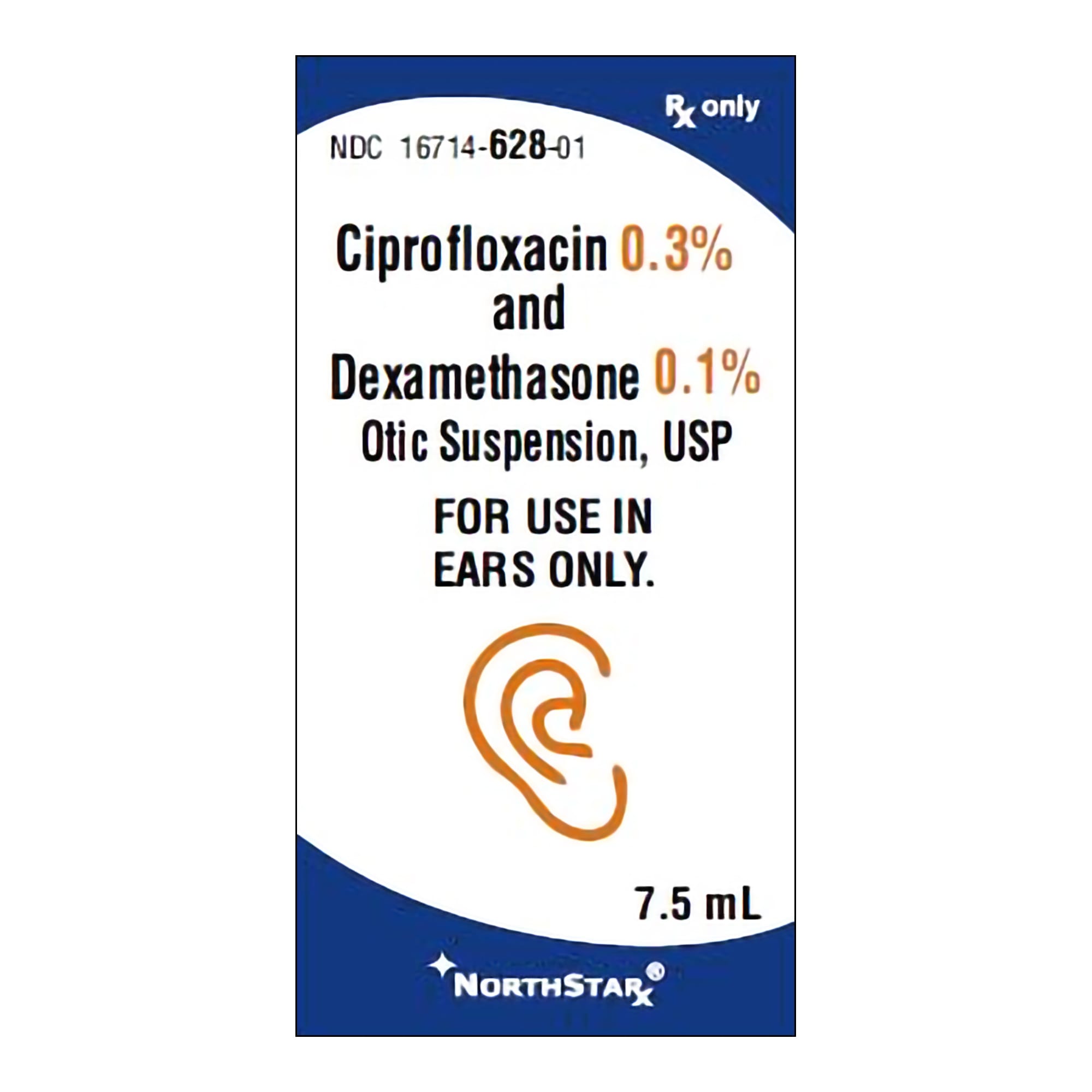
Ciprofloxacine/ Dexamethasone 0.3%/0.1%
Buy Ciprofloxacin/Dexamethasone Ear Drops Online
Secure Encrypted Payments
Ciprofloxacine/ Dexamethasone 0.3%/0.1% is an otic suspension used in the ear for certain bacterial ear infections. It combines ciprofloxacin, an antibiotic, with dexamethasone, a corticosteroid that helps reduce inflammation. When ordering, choose the available strength and quantity that match the directions from your healthcare professional.
This combination is commonly associated with CIPRODEX 0.3%/0.1% Otic Suspension, although the dispensed product may be a brand or generic version depending on what is available and appropriate. The drops are placed directly into the ear canal, so they act at the infected area with limited whole-body exposure compared with many oral antibiotics.
Price, Strength, and Ordering Details
Ciprofloxacin/Dexamethasone 0.3%/0.1% otic suspension is available for customers who want to view current cost details and choose the ear drop product that matches their treatment directions. The active ingredient strengths are ciprofloxacin 0.3% and dexamethasone 0.1%, the same combination many people search for as CIPRODEX 0.3%/0.1% ear drops.
The CIPRODEX 0.3%/0.1% price can vary by brand status, manufacturer, bottle size, and pharmacy source. If you are paying out of pocket, compare the displayed cash-pay cost with your local quote and ask your clinician whether a generic ciprofloxacin dexamethasone 0.3%/0.1% otic product is suitable for your situation.
Orders are supplied through licensed pharmacies. For customers using a cross-border service, US delivery from Canada may be available with prompt, express shipping. Product sourcing and packaging may vary by country; for Canadian-sourced products, you can browse items associated with Canada.
What This Ear Drop Treats
Ciprofloxacin and dexamethasone otic drops treat bacterial ear infections when the infecting bacteria are susceptible to ciprofloxacin. Labeled uses include acute otitis externa, often called swimmer’s ear, and acute otitis media in people with tympanostomy tubes. Otitis externa affects the outer ear canal, while otitis media involves the middle ear space.
The antibiotic component helps kill or stop the growth of bacteria that can drive pain, drainage, and irritation. The steroid component can reduce swelling, redness, and inflammatory discomfort. This dual action is why antibiotic steroid ear drops 0.3%/0.1% are often considered when inflammation and bacterial infection are both part of the diagnosis.
These drops are for ear use only. They are not intended for the eye, and the dropper tip should not touch the eye, fingers, ear, or any other surface. If your clinician is treating an eye infection or eye inflammation, different products and categories may apply, such as the Ophthalmology category, bacterial eye infection information, or eye inflammation information.
How the Active Ingredients Work
Ciprofloxacin is a fluoroquinolone antibiotic. It works by interfering with bacterial enzymes that bacteria need to copy and repair genetic material. When the bacteria cannot maintain that process, they cannot keep multiplying normally.
Dexamethasone is a corticosteroid. In an ear drop, it acts locally to calm inflammation in the canal or tube-accessed middle ear space. Less swelling may make the ear feel less blocked and may help the medicine spread through the affected area.
The combination does not treat every cause of ear pain. Viral infections, fungal infections, wax impaction, injury, eczema, and jaw-related pain can mimic bacterial ear symptoms. If symptoms do not fit a bacterial ear infection, a different evaluation or treatment may be needed.
How to Use Otic Drops Safely
Use the product exactly as directed by your healthcare professional and the pharmacy label. Do not change the number of drops, treatment length, or dosing frequency on your own. Finishing the directed course matters because stopping early can allow symptoms to return or make the infection harder to clear.
Many otic suspensions need to be shaken before use so the medicine is evenly mixed. Holding the bottle in your hand for a short time can make cold drops feel less uncomfortable. Avoid heating the bottle in hot water unless the label specifically instructs you to do so.
- Wash your hands before and after applying the drops.
- Lie down or tilt your head with the affected ear facing upward.
- For adults, gently pull the upper ear up and back.
- For children, gently pull the lower ear down and back.
- Instill the directed number of drops without touching the dropper tip.
- Keep the ear facing upward for about 60 seconds, or as directed.
- Replace the cap tightly after use.
If both ears are being treated, follow the directions for each ear separately. Do not place cotton swabs deep into the ear canal. If your clinician recommends a cotton plug at the ear opening, use it only as instructed and avoid pushing it into the canal.
Missed Doses, Timing, and Expected Improvement
If a dose is missed, use it when remembered unless the next scheduled dose is close. If it is nearly time for the next dose, skip the missed one and return to the usual schedule. Do not double the amount to make up for a missed application.
Some people notice less pain, pressure, or swelling after several doses, but improvement time varies. The full benefit depends on the infection, correct drop placement, and completing the treatment course. If symptoms worsen, new drainage develops, or hearing changes suddenly, contact a healthcare professional promptly.
Keeping the ear dry often helps during treatment. Your clinician may advise avoiding swimming, submerging the ear, or getting water into the canal until the infection has improved. Ask how to protect the ear during bathing, especially for children with tubes.
Side Effects, Warnings, and When to Get Help
Common side effects may include mild ear discomfort, itching, residue, or a feeling of fullness. A brief unusual taste can happen if drops pass through the Eustachian tube. These effects are often temporary, but persistent or worsening symptoms deserve medical attention.
- Mild burning, stinging, or ear discomfort
- Itching or irritation in the ear canal
- Ear debris, residue, or fullness
- Temporary taste disturbance
- Headache or local sensitivity in some users
Serious reactions are uncommon but important. Stop using the drops and seek urgent help for signs of a severe allergic reaction, such as swelling of the face or throat, widespread rash, dizziness, or trouble breathing. Contact a clinician if ear pain gets worse, drainage increases, fever appears, or hearing changes are sudden or significant.
People with a known allergy to quinolone antibiotics, corticosteroids, or any ingredient in the suspension should not use this combination unless a clinician has specifically evaluated the risk. A non-intact eardrum without tubes needs careful assessment because not all ear medicines are suitable for every ear condition.
Because the drops are used locally in the ear, major whole-body drug interactions are not expected for most people. Still, avoid combining multiple ear products unless directed. Tell your healthcare professional about allergies, current medicines, ear surgeries, ear tubes, and any prior reaction to fluoroquinolones or steroid products.
Storage and Travel Basics
Store the bottle according to the label, typically at room temperature and away from excess heat, moisture, and direct light. Keep the cap closed tightly when the medicine is not in use. Do not freeze the suspension unless the label says otherwise.
Keep the bottle out of reach of children and pets. Do not share ear drops with another person, even if symptoms look similar. Sharing can spread infection and may expose someone else to an inappropriate medicine.
When traveling, keep the product in its original packaging with the label visible. Pack it in a protective pouch to reduce leakage. If you are also carrying eye medications, separate them from ear drops to reduce the chance of using the wrong bottle.
Brand, Generic, and Canadian Supply Context
CIPRODEX is a brand name for ciprofloxacin 0.3% with dexamethasone 0.1% otic suspension. Generic ciprofloxacin/dexamethasone otic drops may contain the same active ingredient combination and strength, though inactive ingredients, bottle design, and manufacturer may differ.
Brand and generic naming can differ between markets. A Canadian-sourced product may have labeling that reflects Canadian pharmacy supply rules, while the active ingredient combination remains the key item to match with your directions. If a substitution is offered, confirm that the strength, route, and intended ear use match what your clinician selected.
Country-specific product information should not be confused with eye medications containing ciprofloxacin or steroid ingredients. Ear products are labeled for otic use. Eye categories, such as ophthalmology articles, can be useful for separate eye-care learning but should not guide ear drop use.
Comparing Ear Drop Alternatives
Clinicians may choose other otic antibiotics depending on the diagnosis, eardrum status, tube status, allergy history, and local bacterial patterns. Ofloxacin otic solution is one possible alternative. Neomycin, polymyxin B, and hydrocortisone combinations may also be used in some situations, but they are not suitable for every ear condition.
The main practical difference is that ciprofloxacin/dexamethasone combines a fluoroquinolone antibiotic with a steroid in one ear drop. Some alternatives contain an antibiotic alone, while others use different antibiotic classes or steroid combinations. The right choice depends on the ear exam and the suspected organism.
If symptoms are severe, recurrent, or associated with swelling that blocks the canal, additional care may be needed. A clinician may clean the canal, place a wick, culture drainage, or choose a different treatment approach. Do not switch products based only on price if the ear condition requires a specific option.
Questions to Ask Before Starting
Clear instructions make ear drops easier to use and help prevent avoidable problems. Before starting ciprofloxacin with dexamethasone ear drops, ask how long to use them, how many drops to place, and whether both ears need treatment.
- Is this infection in the outer ear canal or related to ear tubes?
- How should the ear be positioned after each dose?
- Should swimming, earbuds, or hearing aids be avoided during treatment?
- What symptoms should improve first?
- When should follow-up happen if pain or drainage continues?
- Are any other ear products safe to use at the same time?
Quick tip: Write the dosing times on the package or set phone reminders before the first dose.
Authoritative Sources
Official prescribing information for CIPRODEX otic suspension
MedlinePlus: Ciprofloxacin and dexamethasone otic
This content is for informational purposes only and is not a substitute for professional medical advice.
Express Shipping - from $29.99
Shipping with this method takes 3-5 days
Prices:
- Dry-Packed Products $29.99
- Cold-Packed Products $39.99
Shipping Countries:
- United States (all contiguous states**)
- Worldwide (excludes some countries***)
Standard Shipping - $19.99
Shipping with this method takes 5-10 days
Prices:
- Dry-Packed Products $19.99
- Not available for Cold-Packed products
Shipping Countries:
- United States (all contiguous states**)
- Worldwide (excludes some countries***)
What is ciprofloxacin 0.3% and dexamethasone 0.1% used for?
It is an ear drop combination used for certain bacterial ear infections, including acute otitis externa and acute otitis media in people with ear tubes. Ciprofloxacin treats susceptible bacteria, while dexamethasone helps reduce inflammation.
How long does ciprofloxacin/dexamethasone otic take to work?
Some symptoms, such as pain or swelling, may begin improving after several doses. The full response depends on the infection and correct use. Contact a healthcare professional if symptoms worsen or do not improve as expected.
How long should the drops stay in the ear?
After placing the directed number of drops, keep the affected ear facing upward for about 60 seconds, or follow the timing on your label. This helps the suspension spread through the ear canal.
Is Ciprofloxacin/Dexamethasone the same as CIPRODEX?
CIPRODEX is a brand name for ciprofloxacin 0.3% and dexamethasone 0.1% otic suspension. Generic versions may use the active ingredient names and can differ in manufacturer, packaging, or inactive ingredients.
Can these ear drops be used in the eye?
No. Ciprofloxacin/dexamethasone otic suspension is for ear use only. Eye symptoms need a separate evaluation and an eye product selected for that purpose.
What side effects should I watch for?
Mild ear discomfort, itching, residue, fullness, or a temporary unusual taste can occur. Seek medical help for allergic reaction symptoms, worsening pain, new drainage, fever, or sudden hearing changes.
Rewards Program
Earn points on birthdays, product orders, reviews, friend referrals, and more! Enjoy your medication at unparalleled discounts while reaping rewards for every step you take with us.
You can read more about rewards here.
POINT VALUE
How to earn points
- 1Create an account and start earning.
- 2Earn points every time you shop or perform certain actions.
- 3Redeem points for exclusive discounts.
You Might Also Like
Select options
This product has multiple variants. The options may be chosen on the product page
Select options
This product has multiple variants. The options may be chosen on the product page
Select options
This product has multiple variants. The options may be chosen on the product page
Select options
This product has multiple variants. The options may be chosen on the product page