
Please note: a valid prescription is required for all prescription medication.
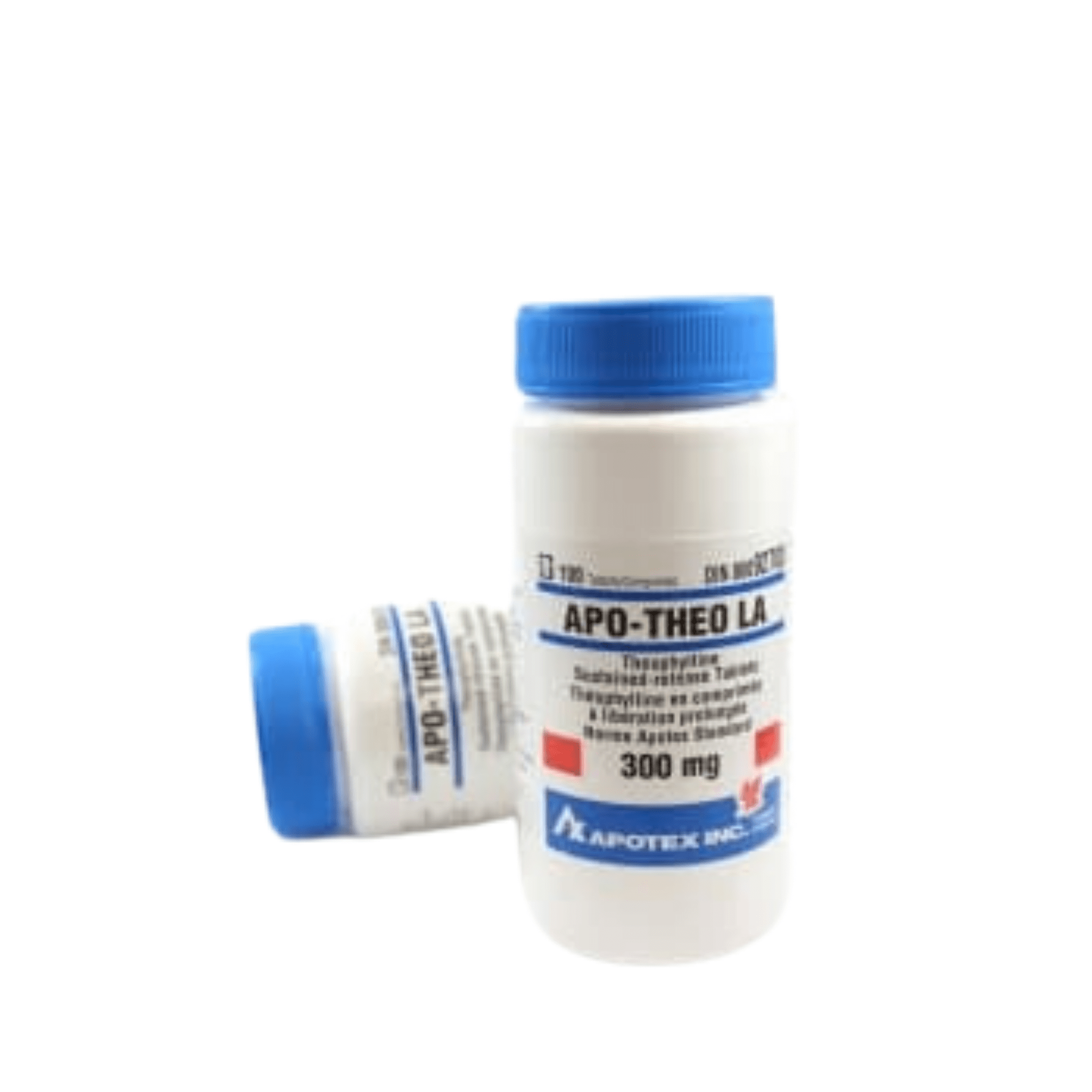
Theo LA
Buy Theo LA Online
Secure Encrypted Payments
Theo LA is an extended-release theophylline medicine used for long-term control of breathing symptoms in selected chronic lung conditions. It can be bought online, with current price information shown during ordering and dose or strength choices matched to the directions from your clinician. This medicine is intended for ongoing management, not fast relief of sudden breathing trouble.
The active ingredient, theophylline, belongs to a methylxanthine bronchodilator class related to caffeine. Extended-release products release medicine gradually, which helps maintain steadier blood levels than short-acting theophylline. Because theophylline has a narrow safety range, consistent use and careful monitoring matter more than with many routine medicines.
Price, Dose, and Ordering Details
When ordering Theo LA, use the current product menu to view the available dose or strength and match it to your clinician’s written directions. The cost can vary by strength, manufacturer, quantity, and pharmacy sourcing. Cash-pay customers can see the current out-of-pocket price before completing their order, which may help when insurance does not cover the medicine or when a plan has a high deductible.
Theo LA may be searched as APO-Theo LA, theophylline ER, or theophylline extended-release. These terms commonly refer to extended-release theophylline products, but the exact item you receive should match the active ingredient, release type, strength, and directions on the pharmacy label. If your clinician changes the dose, do not reuse an older order without confirming that the strength and schedule still match the updated plan.
Products are supplied through licensed pharmacies, and order details may be reviewed before medicine is released. Ships from Canada to US service language can apply to cross-border pharmacy access, with prompt, express shipping when available. Keep the labeled container after delivery because it carries the specific administration and storage instructions for the medicine you receive.
What Theo LA Treats
Theo LA is used as maintenance therapy for selected people with asthma or chronic obstructive pulmonary disease (COPD). It may help reduce day-to-day chest tightness, wheezing, and shortness of breath when a clinician decides an oral bronchodilator fits the treatment plan. Many people with chronic airway disease also use inhaled medicines, so Theo LA is often considered in the context of the full regimen rather than as a stand-alone decision.
The medicine is not a rescue inhaler. It should not be relied on for sudden bronchospasm, an asthma attack, or a rapid COPD flare because its extended-release design does not work quickly enough for emergency symptom relief. If sudden breathing symptoms occur, follow the urgent-action plan provided by your clinician and seek emergency care when symptoms are severe, unusual, or not improving.
For broader respiratory treatment browsing, the respiratory medicines category groups products used across airway conditions. Condition-specific reading is also available for asthma and chronic obstructive pulmonary disease.
How Extended-Release Theophylline Works
Theophylline helps relax airway smooth muscle, which can support airflow through narrowed breathing passages. It also has stimulant-like effects on the heart and central nervous system. Those effects explain why some people notice jitteriness, sleep changes, palpitations, or stomach upset, especially after dose changes or when blood levels rise.
Extended-release theophylline is designed to release medicine over hours. This design can support maintenance control, but it also means the tablet or capsule should be handled according to the label. Crushing, chewing, or otherwise changing an extended-release product can release medicine too quickly and may increase side-effect or toxicity risk.
Why it matters: The same total daily amount can behave differently if the release system is damaged.
Who May Be a Candidate
A clinician may consider Theo LA for long-term symptom control in certain people with asthma or COPD when an oral bronchodilator is appropriate. It may be discussed when symptoms remain troublesome despite other controller medicines, when inhaler technique is difficult, or when an additional maintenance option is needed. The decision depends on lung disease pattern, current medicines, smoking status, liver function, age, and history of side effects.
Theophylline is not suitable for everyone. Extra caution is commonly needed for people with certain heart rhythm problems, seizure disorders, thyroid disease, liver disease, active stomach ulcers, or a history of sensitivity to methylxanthines. Older adults may be more sensitive to effects from theophylline, and illness with high fever can change how the body clears the drug.
Because chronic airway disease often changes over time, Theo LA should be reassessed when symptoms worsen, smoking habits change, or new medicines are added. Respiratory education articles in the respiratory posts section can help you prepare practical questions for a healthcare visit.
How to Take and Handle the Medicine
Take Theo LA exactly as directed on the pharmacy label. Extended-release theophylline products are usually taken on a consistent schedule so blood levels remain within a target range. Dose selection is individualized, and small changes can sometimes cause meaningful changes in blood concentration.
Most extended-release tablets or capsules are meant to be swallowed whole. Food instructions can vary by product, so follow the directions that come with the medicine rather than assuming all theophylline products are used the same way. If you miss a dose, use the written instructions provided with your medicine or ask a pharmacist or clinician; do not double doses unless specifically instructed.
Consistency also applies to caffeine. Since theophylline is related to caffeine, large swings in coffee, tea, energy drinks, or other caffeine sources may make side effects harder to interpret. Keeping daily intake steady can help your care team evaluate whether symptoms are from the medicine, the underlying lung condition, or another factor.
Strengths, Forms, and Switching Considerations
Theo LA may be supplied as an extended-release oral product depending on pharmacy sourcing and the exact item ordered. Choose the available strength that matches your clinician’s directions. The final label will show the active ingredient, strength, quantity, and administration schedule for the dispensed medicine.
Not all theophylline products are interchangeable milligram for milligram. Immediate-release, sustained-release, and extended-release versions can differ in how quickly medicine enters the bloodstream. Switching between brands, release systems, or schedules may require reassessment and, in some cases, blood-level monitoring after the change.
| Product factor | Why it matters |
|---|---|
| Release type | Extended-release designs are intended for gradual absorption over time. |
| Strength | The strength should match the current clinician-directed regimen. |
| Food directions | Some products have specific meal-related instructions on the label. |
| Brand or manufacturer | Different release characteristics may affect monitoring needs after a switch. |
Storage and Travel
Store Theo LA at room temperature in a dry place away from excess heat, moisture, and direct light. Bathrooms and kitchen counters can be humid, so a cabinet outside those areas is often a better choice. Keep the container closed tightly and leave the pharmacy label attached.
Accidental ingestion of theophylline can be dangerous for children and pets. Store the medicine out of sight and reach, and do not transfer it to an unlabeled container. If tablets or capsules look damaged, wet, or otherwise changed, ask a pharmacist before using them.
For travel, carry the labeled container in hand luggage to reduce missed doses if checked bags are delayed. Time-zone changes can make scheduled medicines confusing, so ask a healthcare professional how to keep doses spaced safely before long trips. Country-of-origin browsing is available through the Canada product attribute when you want to understand sourcing categories across the store.
Side Effects, Warnings, and Monitoring
Theophylline can cause nausea, vomiting, stomach upset, headache, tremor, restlessness, trouble sleeping, or a jittery feeling. Some people also notice faster heartbeat or palpitations. These effects may appear after starting therapy, after a dose increase, or when another medicine changes theophylline blood levels.
Serious toxicity requires urgent medical attention. Warning symptoms can include severe or repeated vomiting, marked agitation, confusion, fainting, fast or irregular heartbeat, or seizures. Toxicity risk may rise with fever, dehydration, liver problems, advanced age, interacting medicines, or changes in smoking status.
Clinicians may use theophylline blood tests to check whether the level is within a safe and useful range. Testing is especially important after dose changes, changes in tobacco use, new interacting medicines, or unexplained side effects. Do not stop or change the medicine on your own because worsening airway symptoms can also be dangerous.
Drug Interactions and Practical Cautions
Theophylline has many clinically important interactions. Some antibiotics, including certain macrolides and fluoroquinolones, can raise theophylline levels. Some seizure medicines can lower levels, while other medicines used for stomach acid, heart rhythm, or infection may change how the body clears the drug. Over-the-counter medicines and supplements should also be discussed because interaction risk is specific to the exact product.
Smoking tobacco can lower theophylline levels by speeding metabolism. Stopping smoking can raise levels, sometimes quickly, even if the dose has not changed. Fever, viral illness, liver impairment, and alcohol use can also affect clearance or tolerability.
Keep an updated medication list and share it whenever a new medicine is started, stopped, or adjusted. This is especially important for antibiotics, seizure medicines, heart rhythm medicines, and products containing caffeine-like stimulants. If new nausea, tremor, insomnia, palpitations, or unusual nervousness develops, contact a healthcare professional promptly.
How It Compares With Other Respiratory Treatments
Theo LA is an oral bronchodilator, while many asthma and COPD medicines are inhaled. Inhalers deliver medication directly to the lungs and may reduce some whole-body exposure compared with oral therapy. Depending on diagnosis and severity, a treatment plan may include inhaled corticosteroids, long-acting beta agonists, long-acting muscarinic antagonists, rescue inhalers, or combinations of these medicines.
Theophylline may still be useful in selected situations, but it requires more attention to interactions and blood levels than many inhaled controller options. The best comparison is not simply oral versus inhaled; it is whether the medicine improves the overall plan while keeping risks manageable. Bring questions about symptom timing, flare history, inhaler technique, and side effects to your next appointment.
Do not substitute Theo LA for a rescue inhaler unless a clinician specifically changes the plan. If you use both maintenance and rescue medicines, keep each labeled and understand which one is meant for daily control and which one is for sudden symptoms.
What to Ask Before Reordering
Before reordering Theo LA, confirm that your current strength, dosing schedule, and quantity still match the latest clinical instructions. Refill planning is especially important after hospital visits, COPD flares, asthma worsening, smoking changes, or medication updates. A dose that was appropriate before one of these changes may need reassessment.
Ask whether blood-level monitoring is needed, especially if side effects have appeared or another medicine was recently started. You can also ask whether the extended-release product should be taken with food, whether caffeine intake should be adjusted, and what symptoms require urgent care. Clear answers make home use safer and reduce confusion when the label directions change.
Quick tip: Set a daily reminder and keep the medicine in the same safe storage location.
Authoritative Sources
Official and patient-focused medical references explain theophylline’s approved use context, interaction concerns, monitoring needs, and toxicity symptoms. These sources are useful when you want to verify safety information or prepare questions for a clinician.
This content is for informational purposes only and is not a substitute for professional medical advice.
Peak Flow Zone Calculator
Calculate asthma peak-flow zones from personal best and current peak flow.
Current % best-current / personal best
Zone-green >=80%, yellow 50-79%, red <50%
Zone cutoffs-80% and 50% of best
These calculations are for education only and do not replace clinical advice, diagnosis, or treatment. Always confirm medical decisions with a qualified healthcare professional.
Express Shipping - from $29.99
Shipping with this method takes 3-5 days
Prices:
- Dry-Packed Products $29.99
- Cold-Packed Products $39.99
Shipping Countries:
- United States (all contiguous states**)
- Worldwide (excludes some countries***)
Standard Shipping - $19.99
Shipping with this method takes 5-10 days
Prices:
- Dry-Packed Products $19.99
- Not available for Cold-Packed products
Shipping Countries:
- United States (all contiguous states**)
- Worldwide (excludes some countries***)
What is Theo LA used for?
Theo LA is an extended-release theophylline medicine used for maintenance treatment of breathing symptoms in selected people with asthma or COPD. It is not meant for quick relief of sudden bronchospasm or an acute breathing attack.
Is Theo LA the same as theophylline ER?
Theo LA contains theophylline in an extended-release form. Terms such as theophylline ER or sustained-release theophylline can describe similar release concepts, but products may differ in how they release medicine, so switches should be guided by a healthcare professional.
Why does theophylline need monitoring?
Theophylline has a narrow therapeutic range, meaning the difference between a useful level and a harmful level can be small. Blood-level testing may be used after dose changes, illness, smoking changes, or interacting medicines.
What side effects can Theo LA cause?
Common side effects include nausea, upset stomach, headache, tremor, jitteriness, trouble sleeping, and palpitations. Severe vomiting, confusion, fainting, irregular heartbeat, or seizures require urgent medical attention because they may signal toxicity.
Can Theo LA be used as a rescue medicine?
No. Theo LA is an extended-release maintenance medicine and is not designed to treat sudden asthma attacks or rapid COPD flares. Use the rescue plan provided by your clinician for urgent symptoms.
What medicines interact with Theo LA?
Some antibiotics, seizure medicines, heart rhythm medicines, stomach-acid medicines, caffeine-like stimulants, and tobacco smoking changes can affect theophylline levels. Keep an updated medication list and ask a pharmacist or clinician before adding or stopping medicines.
How should Theo LA be stored?
Store Theo LA at room temperature in a dry place away from heat, moisture, and direct light. Keep it in the original labeled container and out of reach of children and pets.
Rewards Program
Earn points on birthdays, product orders, reviews, friend referrals, and more! Enjoy your medication at unparalleled discounts while reaping rewards for every step you take with us.
You can read more about rewards here.
POINT VALUE
How to earn points
- 1Create an account and start earning.
- 2Earn points every time you shop or perform certain actions.
- 3Redeem points for exclusive discounts.
You Might Also Like
Select options
This product has multiple variants. The options may be chosen on the product page
Select options
This product has multiple variants. The options may be chosen on the product page
Select options
This product has multiple variants. The options may be chosen on the product page
Select options
This product has multiple variants. The options may be chosen on the product page