
Please note: a valid prescription is required for all prescription medication.
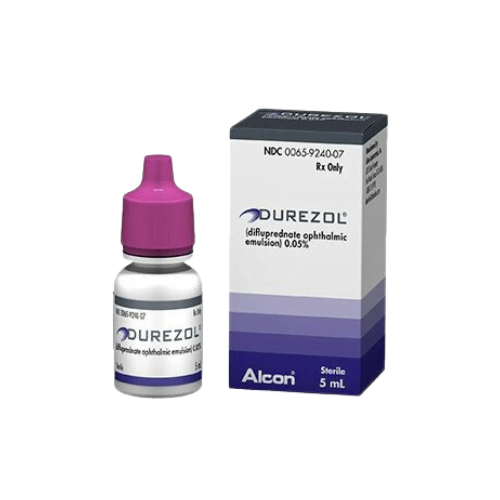
Durezol Ophthalmic Eyedrops
Buy Durezol Ophthalmic Eyedrops Online
Secure Encrypted Payments
Durezol Ophthalmic Eyedrops are corticosteroid eye drops used to reduce inflammation in the eye. You can buy Durezol eye drops online, view the current product price, and choose the strength or quantity shown during ordering that matches your clinician’s directions. The commonly referenced product is Durezol eye drops 0.05% emulsion, also known by the active ingredient difluprednate.
Durezol is most often used after eye surgery to help control inflammation and pain. It is also used for anterior uveitis when a clinician determines that a topical ophthalmic steroid is appropriate. Because steroid eye medicines can raise eye pressure and affect healing, follow the dosing and tapering plan given to you and keep any recommended follow-up visits.
Durezol Price, Strength Selection, and Ordering
The Durezol price can vary by quantity, sourcing, and the exact product shown during checkout. When ordering, match the product strength and bottle size to the directions on your treatment plan. If your clinician has allowed a generic or alternative steroid, ask whether difluprednate ophthalmic emulsion or another ophthalmic corticosteroid is appropriate for your situation before changing products.
BorderFreeHealth supplies products through licensed pharmacies and may review order details for accuracy before the pharmacy ships. Durezol from Canada may be useful for cash-pay customers who are comparing the Durezol cost with local pharmacy pricing. Service wording such as US delivery from Canada describes the cross-border ordering model, not a change in how the medication should be used.
Quick tip: Keep the medication name, strength, and directions together when placing an order so the product selected matches your eye-care plan.
What Durezol Treats
Durezol contains difluprednate, a corticosteroid for ophthalmic use. It helps reduce inflammation in eye tissues by suppressing inflammatory signals that contribute to swelling, redness, discomfort, and light sensitivity. It is used for inflammation and pain associated with ocular surgery and for endogenous anterior uveitis, an inflammatory condition affecting the front part of the eye.
Ophthalmic steroid drops are not general-purpose redness drops. They are chosen when inflammation is the treatment target and when the benefits outweigh risks such as higher intraocular pressure, delayed wound healing, or worsening of certain infections. For condition context, see eye inflammation and related information on eye pain.
Anterior uveitis can cause redness, pain, blurred vision, and sensitivity to light. Post-surgical inflammation can occur after cataract surgery or other eye procedures. In both situations, the goal is to calm inflammation while monitoring for complications that can affect vision.
How Difluprednate Works
Difluprednate is considered a potent topical ophthalmic corticosteroid. Steroids decrease the activity of immune and inflammatory pathways in the eye, including signals involved in swelling and tissue irritation. That potency can be helpful when inflammation is significant, but it also makes correct use and monitoring especially important.
The emulsion format helps distribute the medicine across the ocular surface. Some eye medicines are suspensions that require careful shaking to redistribute particles; Durezol is an emulsion and is still commonly handled by shaking the bottle as directed on the label or by the clinician. Avoid assuming that two steroid eye drops are interchangeable, because potency, formulation, preservative profile, and dosing schedules may differ.
Patients often ask whether difluprednate is a “strong steroid.” In practical terms, it is a high-potency ophthalmic steroid, so it should be used only for the condition and duration recommended by an eye-care professional. If you have glaucoma, a history of steroid response, or previous high eye pressure, ask how your pressure will be monitored during treatment.
How to Use the Drops Safely
Use Durezol exactly as directed on your treatment plan. Many regimens begin with one drop in the affected eye or eyes several times daily, followed by a taper as inflammation improves. Do not extend treatment, stop abruptly, or change the taper unless your clinician instructs you to do so.
- Wash your hands before handling the bottle.
- Shake the bottle if the label or clinician instructs you to do so.
- Tilt your head back and pull down the lower eyelid.
- Place one drop into the pocket without touching the dropper tip.
- Close the eye and gently press the inner corner for about one minute.
- Wait at least 5 to 10 minutes before using another eye medicine.
Do not let the bottle tip touch your eye, eyelashes, fingers, or any surface. Contamination can introduce bacteria and may increase the risk of eye infection. If you use more than one ophthalmic product, spacing the drops helps prevent one medicine from washing out another.
Missed Dose, Timing, and Tapering
If you miss a dose, use it when you remember unless it is almost time for the next scheduled dose. If the next dose is close, skip the missed dose and return to the regular schedule. Do not apply extra drops to make up for a missed application.
Consistent timing matters because inflammation can return if treatment is interrupted too often. Use phone reminders, a written schedule, or pairing doses with regular daily routines to help stay on track. If you miss multiple doses, contact your eye-care team for guidance rather than restarting or increasing the dose on your own.
Tapering is especially important with steroid eye drops. Stopping suddenly can allow rebound inflammation in some situations. Your clinician may shorten, extend, or adjust the taper based on eye pressure, healing, symptoms, and exam findings.
Side Effects, Warnings, and Monitoring
Common side effects can include temporary blurred vision, burning or stinging after application, eye irritation, redness, watery eyes, headache, and light sensitivity. These effects are often brief, but persistent discomfort or worsening symptoms should be reported promptly.
Important risks include increased intraocular pressure, glaucoma, delayed wound healing, cataract formation with prolonged use, and secondary eye infection. Steroids can also mask infection signs, which may make an eye problem look less obvious while it worsens. People with corneal thinning may face a higher risk of perforation when topical steroids are used.
Durezol should generally be avoided in active viral diseases of the cornea or conjunctiva, including epithelial herpes simplex keratitis, unless a specialist gives specific instructions. Fungal or mycobacterial eye infections are also major concerns with steroid use. Tell your clinician about any history of herpes eye disease, glaucoma, cataracts, recent eye injury, or eye surgery complications.
Seek urgent medical help if you develop severe eye pain, sudden vision changes, new discharge, significant swelling, halos around lights, new floaters, or worsening redness. Follow-up visits may include eye pressure checks and examination of the cornea, lens, and anterior chamber. These checks help confirm that inflammation is improving without avoidable steroid-related harm.
Drug Interactions and Contact Lens Precautions
Systemic drug interactions are uncommon because difluprednate is used in the eye. Practical interactions still matter when multiple eye drops are used together. Separate drops by at least 5 to 10 minutes, and ask which product should be applied first if you also use glaucoma drops, antibiotic drops, artificial tears, or allergy drops.
Soft contact lenses can absorb preservatives found in some ophthalmic products. Remove contact lenses before applying the drops if instructed, and wait before reinserting them. In many post-surgical or active inflammation situations, clinicians may advise avoiding lenses entirely until the eye has healed.
If you use glaucoma medicines such as Cosopt or dorzolamide ophthalmic solution, ask how to space each dose and how often your eye pressure should be checked. Steroid-related pressure changes can occur even when the eye feels better, so symptoms alone are not a reliable safety measure.
Storage, Handling, and Travel
Store the bottle at room temperature, away from excess heat, moisture, and direct light. Keep it tightly closed and upright when not in use. Do not freeze the drops, and do not use the bottle if the solution looks unusual or the packaging appears compromised.
For travel, keep Durezol in its original packaging with the pharmacy label. Pack it in your carry-on bag to reduce exposure to temperature swings and to keep it available if luggage is delayed. If you will be away for an extended period, bring enough medication for the treatment plan and keep a copy of your eye-care instructions with you.
Orders may be handled with prompt, express shipping when appropriate for the product and service route. Storage instructions still apply once the package arrives. Open the package soon after delivery and place the bottle in the recommended storage area.
Brand, Generic, and Alternative Steroid Options
Durezol is the brand name for difluprednate ophthalmic emulsion. Some customers also search for generic difluprednate 0.05% eye drops or compare Durezol versus generic difluprednate cost. Brand and generic naming, substitution rules, and product availability can differ by country, so follow the exact product and directions approved by your clinician.
Other topical ophthalmic steroids include prednisolone acetate and loteprednol products. These medicines differ in potency, formulation, dosing frequency, and risk profile. A less potent steroid may be suitable for some eye conditions, while stronger anti-inflammatory activity may be selected in others. For broader browsing, visit the ophthalmology category or ophthalmology articles in the ophthalmology learning section.
Country-of-origin information can help customers understand sourcing. You can review products associated with Canada when comparing pharmacy-supplied choices. Do not switch between Durezol, generic difluprednate, or another steroid without confirming the plan, because treatment response and pressure risk may differ.
What to Avoid While Using Difluprednate
Avoid touching the dropper tip to any surface, wearing contact lenses unless permitted, and using other eye drops too close together. Do not drive or operate machinery until temporary blurred vision clears after application. Avoid sharing the bottle with anyone, even if symptoms appear similar.
Do not use leftover steroid eye drops for a new episode of redness or irritation. Red eyes can come from allergy, infection, injury, dry eye, pressure problems, or inflammation, and steroids can worsen some causes. A fresh eye exam may be needed before restarting treatment.
Avoid stopping early simply because the eye feels better. Symptoms can improve before inflammation has fully settled. At the same time, do not continue longer than directed without follow-up, because long-term use increases the need for pressure and lens monitoring.
Questions to Ask Your Clinician
- What eye condition is being treated with Durezol?
- How many drops should I use each day, and when should I taper?
- When should my eye pressure be checked?
- Should I avoid contact lenses during treatment?
- How should I space Durezol from glaucoma, antibiotic, allergy, or artificial tear drops?
- What symptoms mean I should seek urgent care?
- Is generic difluprednate or another steroid suitable for my eye condition?
Authoritative Sources
Official Durezol prescribing information
Health Canada product record for Durezol
This content is for informational purposes only and is not a substitute for professional medical advice.
Express Shipping - from $29.99
Shipping with this method takes 3-5 days
Prices:
- Dry-Packed Products $29.99
- Cold-Packed Products $39.99
Shipping Countries:
- United States (all contiguous states**)
- Worldwide (excludes some countries***)
Standard Shipping - $19.99
Shipping with this method takes 5-10 days
Prices:
- Dry-Packed Products $19.99
- Not available for Cold-Packed products
Shipping Countries:
- United States (all contiguous states**)
- Worldwide (excludes some countries***)
What are Durezol eye drops used for?
Durezol eye drops are used to reduce inflammation and pain associated with ocular surgery. They are also used for endogenous anterior uveitis when a clinician determines that a topical ophthalmic corticosteroid is appropriate.
Is difluprednate a strong steroid?
Difluprednate is considered a potent ophthalmic corticosteroid. That can make it effective for significant eye inflammation, but it also increases the importance of correct dosing, tapering, and eye pressure monitoring.
Is Durezol safe for long-term use?
Long-term or repeated steroid eye-drop use can increase risks such as high eye pressure, glaucoma, cataracts, delayed healing, and secondary infection. Use it for the duration directed and keep recommended follow-up exams.
What should I avoid while using difluprednate eye drops?
Avoid touching the dropper tip, sharing the bottle, wearing contact lenses unless permitted, and driving until blurred vision clears. Do not use leftover steroid drops for a new eye problem without medical evaluation.
Can I use Durezol with other eye drops?
Many people use more than one eye medicine, but doses should usually be separated by at least 5 to 10 minutes. Ask your clinician how to sequence Durezol with glaucoma drops, antibiotics, artificial tears, or allergy drops.
Rewards Program
Earn points on birthdays, product orders, reviews, friend referrals, and more! Enjoy your medication at unparalleled discounts while reaping rewards for every step you take with us.
You can read more about rewards here.
POINT VALUE
How to earn points
- 1Create an account and start earning.
- 2Earn points every time you shop or perform certain actions.
- 3Redeem points for exclusive discounts.
You Might Also Like
Select options
This product has multiple variants. The options may be chosen on the product page
Select options
This product has multiple variants. The options may be chosen on the product page
Select options
This product has multiple variants. The options may be chosen on the product page
Select options
This product has multiple variants. The options may be chosen on the product page