
Please note: a valid prescription is required for all prescription medication.
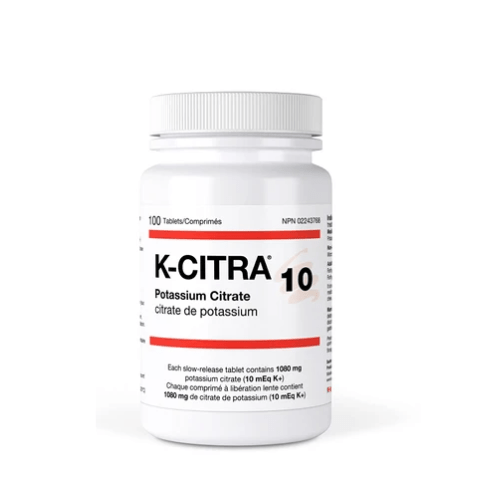
K-Citra Potassium Citrate
Buy K-Citra Potassium Citrate Online
Secure Encrypted Payments
K-Citra Potassium Citrate is an oral urinary alkalinizer used to make urine less acidic and increase urinary citrate. You can buy K-Citra Potassium Citrate online, view the current K-Citra price, and choose the dose or strength shown during ordering to match your healthcare professional’s directions. BorderFreeHealth supplies medications through licensed pharmacies and offers US delivery from Canada for eligible orders.
Price, Strength Selection, and Ordering
K-Citra cost depends on the strength, quantity, and current pharmacy supply shown at checkout. If you pay cash or out of pocket, review the displayed quantity carefully because the per-tablet cost can differ by pack size. The product name may appear with potassium citrate strength information, such as K-Citra Potassium Citrate 10 mEq tablets or Potassium Citrate 1080 mg tablets, when that strength is available for selection.
Choose the form and strength that match the directions from your healthcare professional. Do not switch between tablets, oral solution, powder packets, or different milliequivalent strengths unless your care team has told you how to convert the dose. Potassium citrate products are not all interchangeable in a simple one-to-one way because release characteristics, concentration, and dosing schedules can differ.
During ordering, confirm the active ingredient, strength, quantity, and label directions before completing payment. If you are planning a multi-month supply, make sure your ongoing monitoring schedule is in place so therapy remains aligned with urine and blood test results. For broader urinary tract and stone-prevention items, the Urology category can help you browse related treatments without confusing them with direct substitutes.
What K-Citra Is Used For
K-Citra contains potassium citrate, a potassium salt of citric acid. It helps alkalinize urine, meaning it raises urine pH so the urine becomes less acidic. Potassium citrate is commonly used in people who form certain kidney stones, especially when testing shows low urinary citrate or persistently acidic urine.
Kidney stones can develop when minerals crystallize in urine. Citrate helps bind calcium in urine, which may reduce crystal formation in appropriate patients. Raising urine pH can also help reduce the conditions that favor uric acid stone formation. This therapy works best as part of a broader plan that may include fluid goals, sodium reduction, and nutrition changes recommended by a healthcare professional.
People with renal tubular acidosis may also use potassium citrate when their care plan calls for urinary alkalinization. Renal tubular acidosis is a kidney-related acid-base disorder that can make urine chemistry more likely to support stones. K-Citra does not physically remove a large existing stone, and it should not replace urgent care for severe pain, fever, vomiting, or inability to urinate.
How Potassium Citrate Works
Potassium citrate separates into potassium and citrate after it is absorbed. Citrate is metabolized into bicarbonate, which contributes to an alkalinizing effect. In practical terms, the medicine can increase urinary citrate and raise urine pH toward the target range chosen by your healthcare professional.
The goal is balance. Urine that remains too acidic may allow uric acid stones to form, while urine that becomes too alkaline can create other stone risks in some patients. That is why urine testing matters. Your care team may use 24-hour urine collections, spot urine pH checks, or periodic bloodwork to guide ongoing treatment.
Why it matters: Potassium citrate is usually a prevention-focused therapy, so progress is often seen in lab values rather than how you feel each day.
Tablets, Oral Solution, and Powder Packet Differences
K-Citra Potassium Citrate tablets are often chosen for routine daily use because they are easy to carry and dose consistently. Extended-release tablets, when supplied, are intended to release medication gradually. Swallow extended-release tablets whole with a full glass of water unless the specific label says otherwise. Crushing, chewing, or sucking these tablets can increase irritation and may change how the medicine is released.
Some potassium citrate products may be supplied as oral solution or powder packets. Liquid and powder forms can be useful for people who have difficulty swallowing tablets, but they can have different concentrations and instructions. Measure liquid doses with an oral dosing device, not a kitchen spoon. Mix powder packets exactly as directed on the label, and do not combine forms without guidance.
| Form | Practical point | Use caution |
|---|---|---|
| Tablets | Convenient for regular dosing and travel | Swallow whole when extended-release |
| Oral solution | May suit people who cannot swallow tablets | Measure with a proper dosing device |
| Powder packets | Mixed before use according to the label | Do not dry-swallow or estimate mixtures |
How to Take It Safely
Follow the label directions provided with your medicine and the plan from your healthcare professional. Potassium citrate is often taken with meals or soon after eating to reduce stomach upset. Take tablets with a full glass of water and remain upright for a short time after swallowing, especially if you are prone to reflux or throat irritation.
Drink enough fluids throughout the day unless you have been told to restrict fluid intake. Hydration helps dilute urine and supports stone-prevention strategies. Your care team may also recommend changes to sodium, animal protein, oxalate-containing foods, or calcium intake depending on your stone type and urine test results.
Avoid taking extra doses to make up for missed doses. If you miss a dose, follow the instructions on your medication label or ask a healthcare professional for a safe plan. Consistent timing can help maintain steadier urine chemistry, but doubling up can raise the risk of stomach effects or high potassium.
Quick tip: Pair each dose with a regular meal reminder so timing becomes easier to maintain.
Side Effects, Warnings, and Monitoring
Common side effects of potassium citrate include nausea, stomach discomfort, bloating, gas, diarrhea, or loose stools. Taking doses with food and water may improve tolerability. Throat irritation can occur if tablets are taken without enough fluid or if you lie down immediately after swallowing.
Serious problems need prompt medical attention. Contact a healthcare professional urgently for severe abdominal pain, black or bloody stools, persistent vomiting, chest discomfort, fainting, severe weakness, or an irregular heartbeat. These symptoms may signal gastrointestinal injury, bleeding, high potassium, or another condition that needs evaluation.
Potassium citrate may not be appropriate for people with high blood potassium, severe kidney impairment, untreated dehydration, active urinary tract infection in some stone settings, delayed stomach emptying, significant gastrointestinal narrowing, or conditions that slow tablet passage. People with a history of ulcers, bowel obstruction, or certain surgeries may need additional caution with tablet products.
Monitoring protects you from both undertreatment and overtreatment. Blood tests may check potassium, bicarbonate, and kidney function. Urine tests may assess pH, citrate, calcium, uric acid, and total urine volume. If results fall outside target ranges, your healthcare professional may adjust the regimen or revisit diet and fluid goals.
Drug Interactions and What to Avoid
Tell your healthcare professional about all medicines, vitamins, minerals, and supplements you use. Potassium-sparing diuretics such as spironolactone, amiloride, and triamterene can increase potassium levels. ACE inhibitors, angiotensin receptor blockers, some heart or blood pressure medicines, and frequent NSAID use may also affect potassium balance or kidney function in certain patients.
Avoid salt substitutes unless your care team has said they are safe for you. Many salt substitutes contain potassium chloride, which can add a significant potassium load. Potassium supplements, electrolyte powders, and high-potassium nutrition drinks can also matter when taken with K-Citra.
Do not crush or chew extended-release potassium citrate tablets. Avoid taking tablets right before lying down. If you have trouble swallowing, pain with swallowing, or tablets seem to stick, ask about another form rather than forcing tablets down. Alcohol is not known as a direct potassium citrate interaction, but heavy use can worsen dehydration and may undermine stone-prevention goals.
How Long Treatment May Continue
Many people use potassium citrate as a long-term prevention medicine when kidney stone risk remains ongoing. The exact duration depends on the reason it was started, urine chemistry results, side effects, kidney function, and whether dietary changes reduce stone risk enough. Some patients continue therapy for years under monitoring, while others use it for a shorter period when the underlying issue changes.
Do not stop treatment only because you feel well. Stone-prevention medicines often do not produce a noticeable daily effect, even when they are improving lab values. Ask your healthcare professional what urine pH and citrate targets apply to you, how often testing should be repeated, and what symptoms should trigger a call.
For practical prevention habits, hydration and nutrition changes can be as important as the medication. The BorderFreeHealth urology articles in the Urology articles section can help you prepare better questions for your next visit, while your care team should make individualized treatment decisions.
Storage, Refills, and Travel
Store K-Citra at room temperature in a dry place, away from excess heat and moisture. Keep the container tightly closed and out of reach of children and pets. Do not move tablets into an unlabelled bottle, because the original label helps identify the medicine, strength, and directions.
Plan refills before you run low, especially if your therapy is tied to recurring urine testing. If your dose or strength changes, confirm that the new bottle matches the updated directions before taking the first dose. Old tablets should not be mixed with a new strength in the same container.
When traveling, carry potassium citrate in your hand luggage with the original labelled container. Bring enough medication for delays and keep a copy of your medication list. For orders involving US shipping from Canada, allow time for processing and transit before your current supply runs out. Items associated with Canadian supply can also be browsed by country of origin when that helps you understand sourcing.
Related Treatment Decisions
Kidney stone prevention is highly dependent on the stone type. Potassium citrate is not a universal stone medicine and is not the same as a pain reliever, antibiotic, or procedure to remove stones. A person with uric acid stones, calcium oxalate stones, cystine stones, or infection-related stones may need different testing and different prevention strategies.
Some patients are treated with medicines that lower uric acid or adjust urinary calcium, but those choices depend on lab results and medical history. K-Citra is best understood as a urinary alkalinizer and citrate replacement approach, not as a direct substitute for unrelated therapies. If your stone history is unclear, ask whether stone analysis or a 24-hour urine test would help guide the choice.
Because recurrent stones can be painful and disruptive, it is reasonable to ask clear questions before paying for a refill. Useful questions include: What type of stone have I formed? Is my citrate low? Is my urine pH too acidic? How will we know the dose is working? What potassium level would be concerning for me?
Authoritative Sources
FDA DailyMed potassium citrate labels
NIH MedlinePlus potassium citrate information
K-Citra Potassium Citrate can be a practical part of a prevention plan when urine chemistry supports its use. View the current Potassium Citrate price, select the matching strength or form when available, and keep monitoring appointments so therapy stays safe and purposeful.
This content is for informational purposes only and is not a substitute for professional medical advice.
eGFR Calculator
Estimate kidney filtration using the 2021 CKD-EPI creatinine equation.
eGFR
-
mL/min/1.73 m2
G category
-
requires clinical context
These calculations are for education only and do not replace clinical advice, diagnosis, or treatment. Always confirm medical decisions with a qualified healthcare professional.
Creatinine Clearance Calculator
Estimate creatinine clearance using the Cockcroft-Gault equation.
CrCl
-
mL/min estimate
These calculations are for education only and do not replace clinical advice, diagnosis, or treatment. Always confirm medical decisions with a qualified healthcare professional.
Urine Albumin-Creatinine Ratio Calculator
Calculate urine albumin-creatinine ratio from spot urine albumin and creatinine values.
uACR
-
mg/g
uACR
-
mg/mmol
Category
-
A1/A2/A3 albuminuria range
These calculations are for education only and do not replace clinical advice, diagnosis, or treatment. Always confirm medical decisions with a qualified healthcare professional.
Corrected Sodium Calculator
Estimate sodium corrected for hyperglycemia using common 1.6 and 2.4 correction factors.
Corrected sodium
-
1.6 factor
Corrected sodium
-
2.4 factor
These calculations are for education only and do not replace clinical advice, diagnosis, or treatment. Always confirm medical decisions with a qualified healthcare professional.
Anion Gap Calculator
Calculate anion gap from sodium, chloride, and bicarbonate, with optional albumin correction.
Anion gap
-
Na - (Cl + HCO3)
Albumin corrected
-
adds 2.5 per 1 g/dL below 4.0
These calculations are for education only and do not replace clinical advice, diagnosis, or treatment. Always confirm medical decisions with a qualified healthcare professional.
Express Shipping - from $29.99
Shipping with this method takes 3-5 days
Prices:
- Dry-Packed Products $29.99
- Cold-Packed Products $39.99
Shipping Countries:
- United States (all contiguous states**)
- Worldwide (excludes some countries***)
Standard Shipping - $19.99
Shipping with this method takes 5-10 days
Prices:
- Dry-Packed Products $19.99
- Not available for Cold-Packed products
Shipping Countries:
- United States (all contiguous states**)
- Worldwide (excludes some countries***)
Why would someone use K-Citra Potassium Citrate?
K-Citra Potassium Citrate is used to make urine less acidic and increase urinary citrate. It may be used for certain kidney stone prevention plans or renal tubular acidosis when a healthcare professional determines that urinary alkalinization is appropriate.
What are common potassium citrate side effects?
Common side effects include nausea, stomach discomfort, bloating, gas, diarrhea, or loose stools. Taking the medicine with food and a full glass of water may help tolerability. Severe abdominal pain, black stools, persistent vomiting, weakness, or irregular heartbeat needs prompt medical attention.
What should I avoid while taking potassium citrate?
Avoid salt substitutes, extra potassium supplements, or electrolyte products unless your healthcare professional says they are safe for you. Do not crush or chew extended-release tablets, and avoid lying down right after taking a tablet.
How long do people take potassium citrate for kidney stones?
Duration varies. Some people use potassium citrate long term when stone risk remains high, while others use it for a shorter period based on urine tests, kidney function, side effects, and diet changes. Monitoring helps decide whether treatment should continue or change.
Are K-Citra tablets, oral solution, and powder packets the same?
They contain potassium citrate or related alkalinizing ingredients, but forms can differ in concentration, release, measuring instructions, and dosing schedule. Do not switch between tablets, oral solution, or powder packets unless your healthcare professional has explained the correct conversion.
Rewards Program
Earn points on birthdays, product orders, reviews, friend referrals, and more! Enjoy your medication at unparalleled discounts while reaping rewards for every step you take with us.
You can read more about rewards here.
POINT VALUE
How to earn points
- 1Create an account and start earning.
- 2Earn points every time you shop or perform certain actions.
- 3Redeem points for exclusive discounts.
You Might Also Like
Select options
This product has multiple variants. The options may be chosen on the product page
Select options
This product has multiple variants. The options may be chosen on the product page
Select options
This product has multiple variants. The options may be chosen on the product page
Select options
This product has multiple variants. The options may be chosen on the product page