

Please note: a valid prescription is required for all prescription medication.
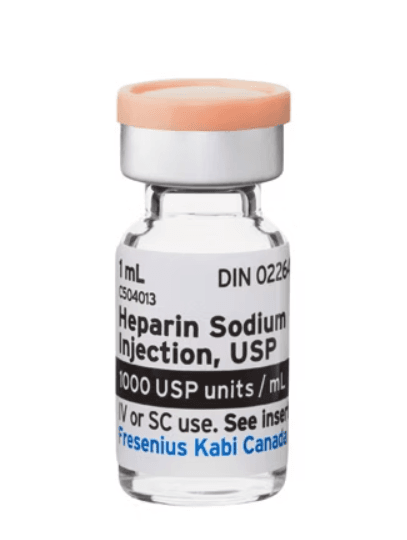
Heparin Vial
Buy Heparin Vial Online
Secure Encrypted Payments
Heparin Vial contains heparin sodium, an injectable anticoagulant used when fast-acting blood thinning is needed. Customers can buy Heparin Vial online, view current pricing, and choose the vial strength shown during ordering to match the directions from their healthcare professional. This medicine is supplied through licensed pharmacy channels, with US delivery from Canada available for eligible orders.
Heparin Vial Price and Strength Selection
The heparin vial price depends on the concentration, vial size, manufacturer, and quantity supplied. During ordering, choose the dose or strength displayed for this product and match it to the directions on your medical order or clinic instructions. Do not estimate a dose from the vial label alone, because heparin concentrations can differ between products.
Common heparin sodium vial searches include 1,000 units/mL, 5,000 units/mL, 10,000 units/mL, 20,000 units/mL, and 25,000 unit presentations. Those terms describe possible concentrations or total units in certain products, not a universal dose. Some vials are single-dose, while others are multi-dose containers with preservatives. The exact vial you receive should be used only according to the labeled concentration and the directions given by your care team.
Cash-pay customers often compare heparin vial cost by concentration and total quantity, especially when insurance does not cover the medicine. If your care plan includes multiple injectable medicines, organizing refills together may help reduce separate handling or shipment steps. Use the product strength, quantity, and label directions as the practical basis for cost comparisons rather than unit terms found online.
How to Order Heparin Vial Online
To order heparin vial online, select the displayed strength and quantity that align with your directions. We may review order details to help ensure the medicine, form, and quantity are appropriate for the request. If your order involves clinic use or a protocol-based regimen, keep the written instructions available so the product chosen matches the intended use.
Heparin is a high-alert anticoagulant, so vial selection matters. A heparin injection vial with one concentration may contain a very different number of total units than another vial with a similar size. Read the label carefully before each dose, and ask a healthcare professional if the concentration, route, or volume is unclear.
Products may be supplied in presentations sourced from Canada, and shipping may use prompt, express shipping when appropriate. Keep the medication in its original packaging until use so the lot, concentration, and storage instructions remain visible.
What Heparin Vial Is Used For
Heparin is an anticoagulant, often called a blood thinner, although it does not actually thin the blood. It reduces the blood’s ability to form clots by enhancing antithrombin activity, which slows key clotting factors in the coagulation cascade. Clinicians use heparin when rapid anticoagulation is needed and when the effect may need close adjustment.
Heparin sodium injection is used for prevention and treatment of venous thrombosis and pulmonary embolism in appropriate settings. It may also be used around certain surgeries, during hospital care, during some cardiovascular procedures, and in low-dose line-maintenance protocols when specifically directed. For condition background, see Blood Clot DVT PE and Acute Coronary Syndrome.
Some people receive heparin only for a short period before switching to another anticoagulant. Others receive it in supervised care because it starts working quickly and can be adjusted based on laboratory results. Your healthcare professional determines the route, timing, monitoring plan, and duration based on your clotting risk and bleeding risk.
How Heparin Works and How It Is Given
Heparin works by increasing the activity of antithrombin, a natural protein that helps control clot formation. This action reduces the activity of thrombin and factor Xa, two important drivers of clotting. Intravenous heparin can act quickly, while subcutaneous injection has a slower onset and is often used for prevention protocols.
A heparin sodium injection vial is drawn up with a sterile syringe. Intravenous use is usually managed in a facility or by trained professionals because infusion rates and lab monitoring may be needed. Subcutaneous injections may be used in some prevention regimens, with the injection placed into fatty tissue as directed.
Do not switch between intravenous, subcutaneous, or flush use unless your healthcare professional has instructed you to do so. Low-dose catheter flush products and systemic anticoagulation products can have different intended uses. Using the wrong concentration or route can increase the risk of bleeding or inadequate clot prevention.
Single-Dose, Multi-Dose, and Preservative-Free Vials
Heparin vials may be supplied as single-dose or multi-dose containers. A single-dose heparin vial is intended for one entry and one use, then disposal of any remaining solution. A multi-dose heparin vial may contain a preservative and can be used for more than one dose if the label permits and sterile technique is maintained.
Preservative-free heparin vial presentations are used when a preservative-free product is required or preferred for the care situation. Preserved multi-dose products may contain benzyl alcohol, which is not appropriate for neonates. The container type, preservative status, and concentration should be checked before drawing up a dose.
Quick tip: Keep single-dose and multi-dose vials separated in storage to reduce selection errors.
Is 5,000 Units of Heparin Always 1 mL?
No. The volume depends on the vial concentration. If a vial is labeled 5,000 units/mL, then 1 mL contains 5,000 units. If a different concentration is supplied, the volume needed for a 5,000-unit dose may be different. Always calculate from the exact label and the directions provided by your healthcare professional.
Online searches often refer to 5,000 units of heparin in 1 mL, insulin syringes, or specific vial sizes. Those examples can be misleading if your product concentration is different. Use only syringes and measurement methods your care team has approved, and do not convert units to mL without clear instructions.
Missed Dose and Timing Basics
If a scheduled preventive dose is missed, contact your care team for individualized instructions. Do not double a dose unless you are specifically told to do so. Anticoagulant timing matters because too much medicine can raise bleeding risk, while too little may leave you under-protected.
For infusion-based treatment, follow the facility protocol for pauses, restarts, or rate adjustments. Therapeutic heparin is often managed with blood tests such as aPTT or anti-Xa testing, depending on the protocol. Keep a written log of dose times, infusion changes, and any bleeding or bruising symptoms.
Storage, Handling, and Travel
Store heparin vials at room temperature as directed on the label, and protect them from freezing. Keep vials in the original carton when possible so the concentration, lot number, and expiry date stay with the medicine. Do not use a vial if the solution looks discolored, cloudy, or contains particles unless the label indicates otherwise.
Once opened, a multi-dose vial should be used only within the timeframe allowed by the label or the policy of the care setting. Single-dose containers should be discarded after one use. Clean the stopper as directed before drawing up medicine, and use a new sterile needle and syringe each time.
When traveling, carry the vial in its original packaging with the medication label. Pack syringes, alcohol swabs, and sharps supplies together. If you fly, keep injectable medicines and sharps in carry-on luggage and follow airline or security rules for medical supplies.
Needles, Syringes, and Sharps Disposal
Heparin Vial is not a pen device. It is intended for use with sterile syringes and needles selected for the prescribed route and volume. Use a new needle and syringe for every injection or vial entry, unless a trained professional provides a different sterile process in a controlled setting.
Place used needles and syringes into an FDA-cleared sharps container immediately after use. If one is not available, use a heavy-duty, puncture-resistant container with a tight lid until you can follow local disposal rules. Do not throw loose sharps into household trash or recycling.
Benefits and Practical Limits
Heparin’s main practical advantage is rapid, adjustable anticoagulation. In monitored settings, clinicians can change infusion rates and respond to lab results. Protamine sulfate can be used as a reversal agent when medically necessary, although reversal decisions require professional supervision.
The same flexibility also means heparin requires care. Incorrect dosing, accidental duplicate therapy, or use with other blood-thinning medicines can lead to serious bleeding. This product is best understood as a powerful anticoagulant for specific clot-prevention or clot-treatment situations, not a general wellness injection.
For broader cardiovascular medicine browsing, visit the Cardiovascular category. If your anticoagulation plan relates to rhythm-related stroke risk, the Atrial Fibrillation condition section may help frame questions for your next appointment.
Side Effects, Warnings, and Monitoring
The most common heparin side effects involve bleeding or bruising. Injection site pain, redness, irritation, and mild skin reactions can also occur. Some people may have mild changes in liver enzyme tests. Report persistent bruising, nosebleeds, gum bleeding, unusually heavy menstrual bleeding, or black stools promptly.
Serious risks include major bleeding and heparin-induced thrombocytopenia, often called HIT. HIT is an immune reaction that lowers platelets and can paradoxically increase clotting risk. It can occur during heparin treatment or after recent exposure, so tell your care team if you have ever been told you had HIT.
Heparin may not be appropriate for people with active major bleeding, a history of HIT, severe platelet problems, or certain recent surgeries involving the brain, spine, or eye. Caution is also important with uncontrolled high blood pressure, stomach ulcers, bleeding disorders, liver disease, kidney disease, or recent trauma. Therapeutic regimens may require platelet counts and clotting tests.
Seek emergency help for severe bleeding, vomiting blood, coughing blood, fainting, sudden weakness, severe headache, chest pain, sudden shortness of breath, or new neurologic symptoms. Also seek urgent care for swelling, hives, wheezing, or other signs of a severe allergic reaction.
Drug Interactions and Procedure Cautions
Medicines and supplements that affect clotting can increase bleeding risk when used with heparin. Important examples include aspirin, nonsteroidal anti-inflammatory drugs such as ibuprofen or naproxen, antiplatelet medicines, other anticoagulants, thrombolytic medicines, and some herbal products such as ginkgo, garlic, and high-dose fish oil.
Tell your healthcare professional about every medicine, supplement, and over-the-counter product you use. Timing around spinal taps, epidural anesthesia, spinal surgery, dental procedures, and other operations may need careful planning. Epidural or spinal bleeding can cause long-term nerve injury if not recognized and treated quickly.
If your care involves acute coronary syndrome, stents, or antiplatelet therapy, ask how heparin fits with the rest of your regimen. Related cardiovascular education is available in the Cardiovascular articles section.
What to Expect During Treatment
Most people do not feel heparin working. The goal is to reduce clot formation while minimizing bleeding. In a hospital or clinic, staff may adjust the dose based on lab values, weight, procedure timing, and bleeding signs.
With intravenous use, anticoagulant effects begin quickly and can decrease after the infusion stops. Subcutaneous prevention regimens are designed to provide steady protection when doses are given on schedule. If your treatment changes to a longer-term medicine, ask how and when the transition should occur.
Wear or carry medical identification if you use anticoagulation over time. Keep a current list of medicines in your wallet or phone. This helps emergency clinicians recognize bleeding risk quickly if an accident or urgent procedure occurs.
Related Anticoagulant Choices
Heparin is often compared with low molecular weight heparins and oral anticoagulants. Low molecular weight heparins may allow once- or twice-daily injections in many care plans, while unfractionated heparin may be preferred when rapid adjustment or reversal is important. The best choice depends on kidney function, procedure timing, clot type, bleeding risk, and monitoring needs.
Warfarin and direct oral anticoagulants may be used for longer-term anticoagulation in selected patients. Some people start with heparin during acute care and later transition to another medicine. Do not switch products or stop heparin without professional direction, because clot risk can return quickly.
For condition-specific context, the DVT and pulmonary embolism section explains why anticoagulation is used after a clot. The acute coronary syndrome section may be useful when anticoagulants are part of a heart-related treatment plan.
Questions to Ask Before Using Heparin
- Which vial concentration should I use for my directions?
- Is my vial single-dose, multi-dose, or preservative-free?
- Should this be given intravenously, subcutaneously, or only as a line flush?
- Do I need lab monitoring such as aPTT, anti-Xa testing, or platelet counts?
- Which bleeding symptoms require urgent care?
- Which medicines or supplements should I avoid while using heparin?
- How should doses be timed around procedures, dental work, or travel?
Authoritative Sources
Ready to continue? Choose the Heparin Vial strength and quantity shown during ordering, then match it carefully to the directions from your healthcare professional. Keep all labels, storage instructions, and monitoring notes with the medicine so each dose can be prepared safely.
This content is for informational purposes only and is not a substitute for professional medical advice.
Research & Education Tool
Heparin Vial Dosage Calculator
Enter the vial amount, diluent volume, syringe size, and target amount to estimate concentration, draw volume, and approximate vial yield.
For research and educational use only. Check all values against the product label, certificate of analysis, and any applicable professional guidance before relying on the result.
mg
Concentration
-
mcg / mL
Volume per Dose
-
-
Estimated Draws / Vial
-
rounded down to whole draws
Draw Reference
Enter values to estimate the syringe mark.
0
-
-
-
-
Express Shipping - from $29.99
Shipping with this method takes 3-5 days
Prices:
- Dry-Packed Products $29.99
- Cold-Packed Products $39.99
Shipping Countries:
- United States (all contiguous states**)
- Worldwide (excludes some countries***)
Standard Shipping - $19.99
Shipping with this method takes 5-10 days
Prices:
- Dry-Packed Products $19.99
- Not available for Cold-Packed products
Shipping Countries:
- United States (all contiguous states**)
- Worldwide (excludes some countries***)
What is Heparin Vial used for?
Heparin Vial is used when anticoagulation is needed to help prevent or treat blood clots, including venous thrombosis and pulmonary embolism in appropriate care settings. It may also be used around procedures or for line-maintenance protocols when specifically directed.
Is 5,000 units of heparin always 1 mL?
No. The volume depends on the concentration printed on the vial. A 5,000 units/mL vial contains 5,000 units in 1 mL, but a different concentration requires a different volume calculation.
How much does a vial of heparin cost?
Heparin vial cost varies by concentration, vial size, manufacturer, and quantity. View the current product price during ordering and compare it against the exact strength and amount needed for your directions.
How long is a heparin vial good for after opening?
Follow the vial label and care-setting policy. Single-dose vials are used once and discarded, while multi-dose vials may be used only within the labeled or policy-defined beyond-use period if sterile technique is maintained.
What are the most important heparin side effects?
Bleeding and bruising are the most important risks. Injection site irritation can occur. Serious concerns include major bleeding and heparin-induced thrombocytopenia, which requires urgent medical attention.
Can heparin interact with other medicines?
Yes. Aspirin, NSAIDs, antiplatelet medicines, other anticoagulants, thrombolytics, and some supplements can increase bleeding risk. Share a complete medicine and supplement list with your healthcare professional.
Rewards Program
Earn points on birthdays, product orders, reviews, friend referrals, and more! Enjoy your medication at unparalleled discounts while reaping rewards for every step you take with us.
You can read more about rewards here.
POINT VALUE
How to earn points
- 1Create an account and start earning.
- 2Earn points every time you shop or perform certain actions.
- 3Redeem points for exclusive discounts.
You Might Also Like
Select options
This product has multiple variants. The options may be chosen on the product page
Select options
This product has multiple variants. The options may be chosen on the product page
Select options
This product has multiple variants. The options may be chosen on the product page
Select options
This product has multiple variants. The options may be chosen on the product page