

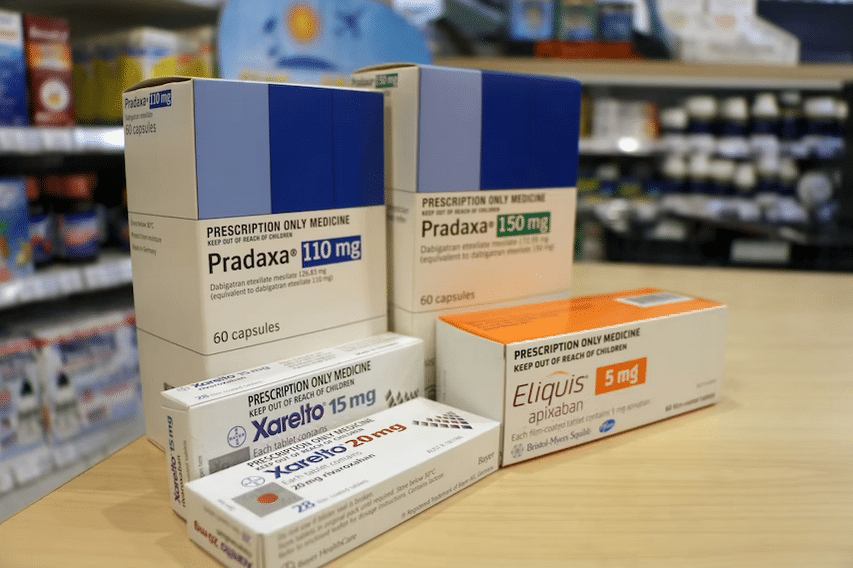
Xarelto and Eliquis are both direct oral anticoagulants that help prevent dangerous blood clots, but neither is automatically “better” for everyone. In a Xarelto vs Eliquis decision, the safer fit depends on why you need treatment, your kidney function, bleeding history, age, weight, other medicines, and how reliably you can follow the schedule.
Both medicines block factor Xa, a clotting protein involved in blood clot formation. Xarelto is the brand name for rivaroxaban. Eliquis is the brand name for apixaban. The comparison matters because small differences in dosing, food instructions, interactions, and bleeding patterns can affect real-world safety.
Key Takeaways
- Same class, different fit: both block factor Xa, but personal risk factors guide selection.
- Bleeding risk matters most: age, kidney function, prior bleeding, and drug interactions can change safety.
- Dosing routines differ: Xarelto is often once daily, while Eliquis is often twice daily, depending on the condition.
- Kidney function is central: reduced kidney clearance may affect dose choice and follow-up monitoring.
- Switching needs a plan: avoid gaps or overlap unless your clinician gives clear instructions.
How These Blood Thinners Compare Day to Day
The practical differences between these medicines usually show up in routine use. Both are approved for common anticoagulant needs, including stroke prevention in nonvalvular atrial fibrillation and treatment or prevention of deep vein thrombosis (DVT) and pulmonary embolism (PE). Yet the day-to-day experience can differ.
| Feature | Xarelto (rivaroxaban) | Eliquis (apixaban) |
|---|---|---|
| Drug class | Factor Xa inhibitor | Factor Xa inhibitor |
| Common uses | AFib stroke prevention; DVT/PE treatment and prevention | AFib stroke prevention; DVT/PE treatment and prevention |
| Typical routine | Often once daily for some uses | Often twice daily for many uses |
| Food instructions | Some doses are taken with food | Usually taken with or without food |
| Kidney considerations | Dose and suitability may depend on kidney function | Dose and suitability may depend on kidney function |
| Monitoring focus | Bleeding signs, kidney function, interactions, adherence | Bleeding signs, kidney function, interactions, adherence |
For some people, once-daily dosing feels simpler. For others, twice-daily dosing fits better because it becomes part of a morning and evening routine. Food instructions also matter. If a prescribed Xarelto dose must be taken with food, missed meals can create practical problems. If you want a broader medication-class comparison, see our related Eliquis vs Xarelto resource.
Why it matters: The safest medicine is often the one that fits both your medical risks and your daily routine.
Which Is Safer: Bleeding, Side Effects, and Risk Factors
Bleeding is the key safety concern with both medicines. Any anticoagulant can cause minor bleeding, such as easy bruising or nosebleeds, and serious bleeding, such as gastrointestinal bleeding or bleeding in the brain. Studies and real-world analyses often compare apixaban vs rivaroxaban bleeding risk, but your individual profile remains the deciding factor.
Some observational studies have found lower bleeding rates with apixaban in certain groups, especially older adults or people treated for atrial fibrillation. Those findings can inform clinical conversations, but they do not mean Eliquis is automatically safer for every person. Differences in diagnosis, dose, kidney function, body weight, and other medicines can affect results.
Side effects may include bleeding, bruising, nausea, anemia, dizziness, or other symptoms. Report unusual bleeding patterns, but treat certain symptoms as urgent. Seek immediate medical help for black or bloody stools, vomiting blood, coughing blood, severe headache, sudden weakness, fainting, or a fall with head injury.
Drug interactions can also raise bleeding risk. Nonsteroidal anti-inflammatory drugs (NSAIDs), aspirin, antiplatelet drugs, some antidepressants, certain antifungals, some antibiotics, and herbal products may affect bleeding risk or drug levels. Do not stop a prescribed medicine on your own. Instead, ask your care team how to manage the combination safely.
For deeper safety reading, review Xarelto Side Effects and Eliquis Side Effects and Dosage. These resources can help you prepare better questions for your prescriber.
Kidney Function, Age, and Frailty
Kidney function affects how anticoagulants are selected and monitored. The kidneys help clear both medicines, though the degree of kidney involvement differs. Reduced kidney function can increase medication exposure, which may raise bleeding risk in some people.
Clinicians often review estimated glomerular filtration rate (eGFR), creatinine, age, weight, and interacting medicines before choosing a dose. This is especially important after dehydration, infection, hospitalization, or a new kidney-related diagnosis. If your lab results change, your anticoagulant plan may need review.
Older adults often need closer follow-up because several risks can overlap. Falls, frailty, lower body weight, kidney changes, anemia, and multiple prescriptions can all influence safety. That does not mean anticoagulants should be avoided solely because of age. It means the decision should be individualized and revisited over time.
Use this calculator only as a general kidney-function estimate to support discussion of lab results. It does not choose a medicine or dose.
eGFR Calculator
Estimate kidney filtration using the 2021 CKD-EPI creatinine equation.
These calculations are for education only and do not replace clinical advice, diagnosis, or treatment. Always confirm medical decisions with a qualified healthcare professional.
For more context on anticoagulant decisions in later life, see Anticoagulant Therapy in Elderly Patients. Bring your current medication list to every visit, including over-the-counter pain relievers and supplements.
Uses: AFib, DVT, PE, and Stroke Prevention
Xarelto vs Eliquis questions often start with the condition being treated. For nonvalvular atrial fibrillation, both medicines help reduce the risk of stroke caused by blood clots. For DVT and PE, both can be used in treatment and prevention plans, depending on the clinical situation.
Condition details matter. A person with AFib and kidney disease may need a different discussion than someone recovering from a blood clot after surgery. A person with a history of gastrointestinal bleeding may need closer review than someone without prior bleeding. Cancer, recent procedures, pregnancy considerations, liver disease, and antiplatelet therapy can also change the decision.
Some patients ask why Eliquis is favored over Xarelto in certain conversations. Often, the reason is not popularity alone. Clinicians may consider evidence, bleeding history, twice-daily dosing, kidney function, insurance access, and patient preference. Other clinicians may choose Xarelto when once-daily dosing or indication-specific factors fit better.
For a wider cardiovascular medication context, you can browse the Cardiovascular Articles collection. If you are comparing medication options more broadly, our Heart Medications Overview explains how several cardiovascular drugs fit into care.
Switching From One Anticoagulant to Another
Switching from Xarelto to Eliquis can be appropriate for some people, but it must be timed carefully. The main safety concern is avoiding a gap that leaves you under-protected or an overlap that increases bleeding risk.
Common reasons for switching include side effects, bleeding concerns, kidney-function changes, adherence problems, new drug interactions, or access barriers. Your prescriber will usually consider the indication, last dose time, kidney function, bleeding risk, and any upcoming procedures before setting a transition plan.
Do not create your own conversion schedule. There is no simple one-to-one Xarelto to Eliquis dose conversion that works for every condition. The correct plan depends on the reason you take the anticoagulant and your current clinical factors.
Quick tip: Before any switch, write down your last dose time, tablet strength, and missed doses.
Cost, Access, and Practical Barriers
Cost can influence adherence, and missed anticoagulant doses can be risky. If either medicine is hard to afford, tell your clinician or pharmacist before skipping doses. There may be clinically appropriate alternatives, formulary options, or different access pathways to discuss.
Warfarin is one alternative for some patients, but it requires blood-test monitoring and has more diet and interaction considerations. That trade-off can be acceptable for some people and difficult for others. The right choice depends on your medical needs and your ability to follow monitoring requirements.
BorderFreeHealth connects U.S. patients with licensed Canadian partner pharmacies, and prescription details are verified with the prescriber when required before pharmacy dispensing. For patients exploring cash-pay prescription options without insurance, eligibility and jurisdiction still apply. Medication-specific navigation pages include Xarelto, Eliquis, Apixaban, and Warfarin.
Questions to Bring to Your Clinician
A strong Xarelto and Eliquis comparison should end with practical questions. These prompts can help you discuss safety without trying to self-prescribe.
- Reason for treatment: which condition is the medicine treating?
- Bleeding history: do past bleeding events change the choice?
- Kidney labs: are recent eGFR or creatinine results needed?
- Other medicines: do pain relievers or supplements increase risk?
- Dosing routine: would once-daily or twice-daily dosing improve adherence?
- Food instructions: does the dose need to be taken with food?
- Missed dose plan: what should happen if a dose is forgotten?
- Procedure planning: when should surgery or dental work be reported?
If you notice repeated bleeding, new weakness, sudden severe pain, or symptoms after a fall, seek care promptly. These situations need medical assessment, not watchful waiting.
Authoritative Sources
For clinical context on anticoagulant selection in atrial fibrillation, review the 2023 atrial fibrillation guideline from major U.S. cardiovascular societies. It discusses stroke-risk assessment, bleeding-risk review, and follow-up considerations.
For official apixaban safety details, contraindications, and prescribing information, see the FDA Eliquis prescribing information. Product labels are important sources for warnings, interactions, and use-specific dosing frameworks.
For official rivaroxaban regulatory information, consult the FDA Xarelto application page. It links to regulatory history and label-related information for rivaroxaban.
Recap
Xarelto vs Eliquis is not a one-size-fits-all decision. Both medicines can reduce clot risk, but bleeding history, kidney function, age, interactions, food instructions, dosing routine, and access all shape the safer choice. The best next step is a focused conversation with your clinician using your current labs and medication list.
This content is for informational purposes only and is not a substitute for professional medical advice.


