
Please note: a valid prescription is required for all prescription medication.
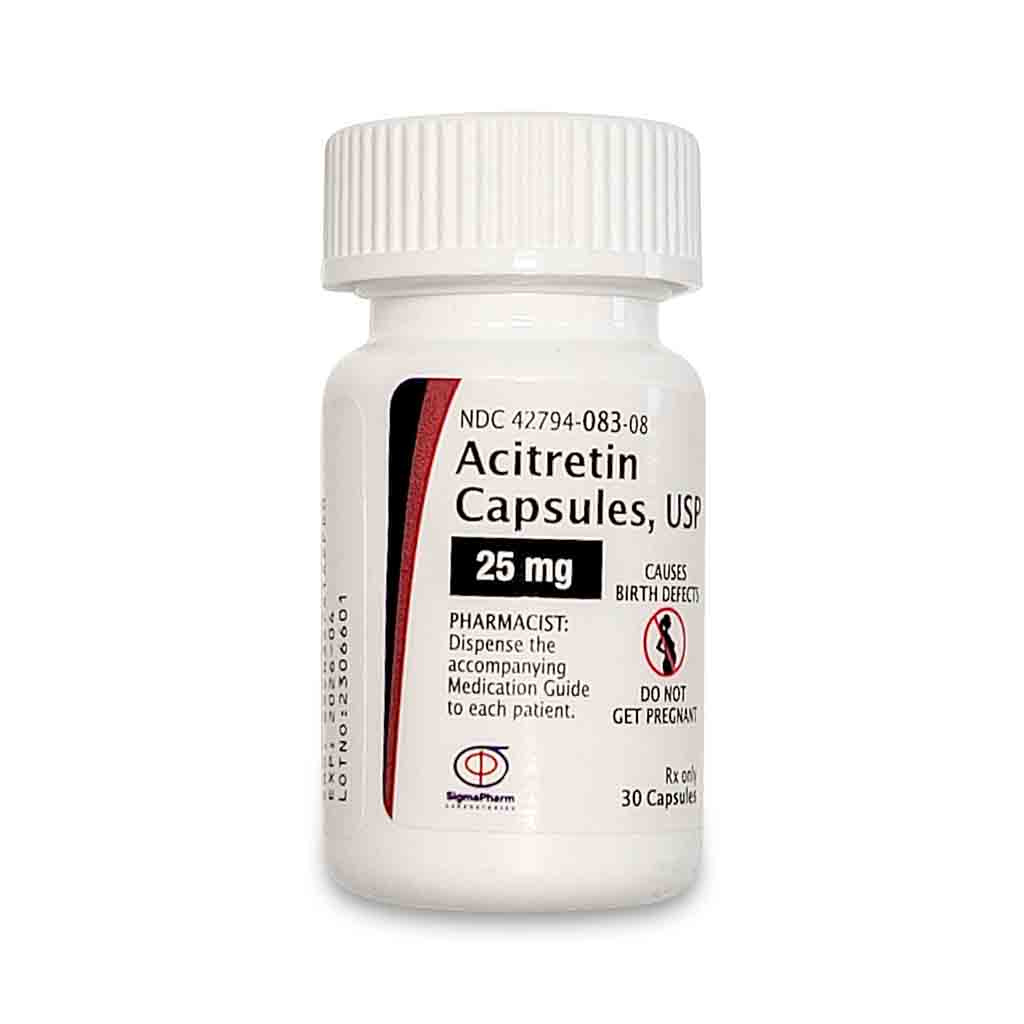
Acitretin
Buy Acitretin Online
Secure Encrypted Payments
Acitretin is an oral retinoid medicine used in severe psoriasis when a systemic treatment is appropriate. It can be bought online through licensed pharmacy channels, with current pricing shown during ordering and available capsule strengths chosen to match clinician directions. Because this medicine carries major safety warnings, especially around pregnancy, careful medical oversight is central to responsible use.
Acitretin capsules are not a routine skin cream, cosmetic product, or quick-relief psoriasis treatment. They work throughout the body and may take weeks to show visible improvement. People often search for acitretin 10mg, acitretin 25mg, acitretin capsules, or acitretin oral treatment; the practical choice should always follow the strength and schedule set by the clinician managing psoriasis.
Acitretin Price, Strength, and Ordering Basics
You can buy Acitretin and view the current price before completing your request. The amount paid can vary by capsule strength, manufacturer, quantity, and whether related medical visits or lab testing are part of your overall care plan. The ordering step should be matched to the exact dose or strength written in your treatment plan, rather than to a search result or a prior bottle from another pharmacy.
Commonly seen Acitretin capsule strengths include 10 mg and 25 mg, although manufacturer and market availability can differ. Some people look for acitretin tablets, acitretin pills, or acitretin 30 mg, but capsules are the usual presentation described for this medicine. If your clinician changes the dose, the capsule strength used for future orders may also need to change.
US delivery from Canada may be part of the service experience for eligible orders, and products are supplied through licensed pharmacies. Keep the medication name, strength, directions, and quantity aligned with the clinician’s instructions so the order reflects your actual treatment plan.
| Ordering factor | What it means | Why it matters |
|---|---|---|
| Strength | Often 10 mg or 25 mg capsules | The strength should match clinician directions |
| Form | Oral capsule | Acitretin is usually swallowed with food |
| Price | Shown during ordering | Cost may vary by strength, quantity, and manufacturer |
| Follow-up care | Lab tests and safety checks may be needed | Monitoring helps manage liver, lipid, and pregnancy-related risks |
How This Medicine Is Used for Severe Psoriasis
Acitretin is used for severe forms of psoriasis, including disease that is widespread, very inflamed, thick, scaly, or difficult to control with topical treatments alone. It may be considered when creams, ointments, or light therapy do not provide enough control, or when the pattern of psoriasis calls for a body-wide treatment. For condition background and related therapy categories, the Psoriasis section can help place this medicine within broader psoriasis care.
As a retinoid, Acitretin is related to vitamin A. It helps influence how skin cells grow and mature, which is relevant in psoriasis because skin cells turn over too quickly and form plaques. It does not work like a steroid cream and does not suppress a single immune pathway in the same way as many injectable biologic treatments.
Improvement is usually gradual. Some people notice dryness, peeling, or irritation before plaques improve. This slower timeline matters when planning refills, follow-up appointments, and expectations for skin comfort during the first weeks of therapy.
Why it matters: Acitretin treats psoriasis systemically, so safety monitoring is part of the treatment decision.
Who May Be a Candidate
This medicine is generally considered for adults with severe psoriasis when the potential benefit justifies the safety burden. The decision is individualized and may depend on the type of psoriasis, past treatment response, liver health, blood fat levels, alcohol use, pregnancy potential, and other medicines. People with limited mild plaques may be better served by topical treatment or other approaches.
Pregnancy precautions are unusually strict with Acitretin. The medicine can cause severe birth defects, and people who can become pregnant typically need clear prevention and testing measures. Breastfeeding, pregnancy plans, or uncertainty about avoiding pregnancy should be discussed with a qualified clinician before treatment starts.
Alcohol use is also important. Alcohol may contribute to formation of a related compound that can remain in the body longer and extend reproductive risk concerns after stopping treatment. This warning is one reason Acitretin is not a casual self-start medication.
Capsule Form, Strengths, and Brand Names
Acitretin is the active ingredient. Soriatane is a well-known brand name associated with acitretin, and generic versions may be available in some markets. Manufacturer names and capsule appearance can vary, so color or imprint should not be used as the only way to identify the medicine.
Capsules are the usual dosage form. Searches for acitretin tablet uses or acitretin tablets usually refer to the same active medicine, but the practical pharmacy form is typically an oral capsule. Do not crush, split, or alter capsules unless a healthcare professional specifically instructs you, because the product is intended to be swallowed whole.
| Attribute | Typical information | Customer note |
|---|---|---|
| Active ingredient | Acitretin | An oral retinoid used in severe psoriasis care |
| Usual form | Capsule | Often taken once daily with food when directed |
| Common strengths | 10 mg and 25 mg | Use the strength selected by the treating clinician |
| Brand relationship | Soriatane is a known brand name | Generic and brand presentations can differ by market |
How to Take Acitretin
Acitretin is usually taken by mouth with food, often with the main meal. Food, especially a meal containing fat, helps absorption become more predictable. Taking capsules on an empty stomach may affect how much medicine your body absorbs.
The daily dose is individualized. It may be adjusted over time based on psoriasis response, side effects, and laboratory results. Do not double up after a missed dose unless your clinician specifically tells you to do so; missed-dose instructions should be clarified before treatment begins.
- Take capsules with a meal unless instructed otherwise.
- Swallow the capsule whole.
- Use the same routine each day when possible.
- Keep follow-up visits and lab work.
- Report troublesome dryness, vision changes, or abdominal symptoms promptly.
Quick tip: Keep a short symptom and dosing log for follow-up visits.
Side Effects, Warnings, and Monitoring
Many common side effects reflect the drying effect of retinoids. Dry lips, dry mouth, peeling skin, nose dryness, nosebleeds, dry eyes, contact lens discomfort, hair thinning, and muscle or joint aches can occur. Sun sensitivity may also increase, so practical sun protection matters during treatment.
More serious risks need prompt attention. Acitretin can affect liver tests and blood fats, including cholesterol and triglycerides. Severe headache, vision changes, sudden difficulty seeing at night, yellowing skin, dark urine, severe abdominal pain, vomiting, chest pain, or shortness of breath should be treated as urgent symptoms that require medical guidance.
Pregnancy-related risk is the most important warning for many people. Acitretin can cause severe harm to a fetus. Blood donation is generally avoided during treatment and for 3 years after stopping, because donated blood could expose a pregnant recipient. People who can become pregnant may need repeated pregnancy testing and strict prevention measures before, during, and after treatment.
Monitoring may include liver tests, cholesterol, triglycerides, pregnancy testing when relevant, and questions about headaches, mood, vision, abdominal pain, and dryness. The monitoring plan should be clear before refills are needed, because safety checks can influence whether treatment continues or the dose changes.
- Common effects: dry lips, peeling skin, dry eyes, nosebleeds, hair thinning.
- Lab concerns: liver enzymes, cholesterol, triglycerides.
- Urgent symptoms: severe headache, vision changes, jaundice, severe abdominal pain.
- Pregnancy warning: severe birth-defect risk requires strict precautions.
- Driving caution: reduced night vision can affect safety.
Drug Interactions and Precautions
Interactions matter because several medicines and supplements can increase retinoid toxicity or add organ stress. Vitamin A supplements and other oral retinoids may compound side effects. Tetracycline antibiotics can raise concern for pressure-related headaches, and methotrexate can add liver-related risk.
Alcohol deserves special caution with Acitretin. Drinking alcohol may increase formation of a related compound that can prolong reproductive safety concerns. People with heavy alcohol use, significant liver disease, high triglycerides, or a history of pancreatitis may need a different psoriasis strategy.
Tell the clinician managing treatment about all medicines, supplements, and over-the-counter products. This includes acne treatments, vitamin products, antibiotics, cholesterol medicines, herbal products, and any therapy started by another healthcare professional. The Dermatology Products category can help you see how different skin treatments are grouped, but safety decisions should remain individualized.
Storage, Travel, and Shipping Considerations
Store Acitretin at room temperature in the original container, protected from excess heat, direct light, and moisture unless the container label gives different instructions. Keep capsules out of reach of children and pets. Do not share this medicine, even with someone who also has psoriasis.
When traveling, keep the labeled container with you and avoid leaving capsules in a hot car or damp bathroom. If capsules look damaged, wet, or unusual, ask a pharmacist before using them. Prompt, express shipping may be used according to pharmacy procedures and destination rules.
- Keep capsules in the original labeled container.
- Avoid heat, light, and moisture.
- Store away from children and pets.
- Carry the container when traveling.
- Ask before using damaged capsules.
How It Compares With Other Psoriasis Treatments
Acitretin is one systemic psoriasis option among several. It is not a topical steroid, not a biologic injection, and not the same kind of immune-modifying tablet as some newer therapies. The best fit depends on psoriasis severity, pregnancy risk, liver health, blood fats, immune status, convenience, and monitoring preferences.
Methotrexate is another oral systemic option used in psoriasis care, but it has its own liver, blood, and interaction considerations. Cyclosporine may be used in selected cases, often with kidney and blood pressure monitoring. Biologic treatments act on targeted immune pathways and are usually injected or infused. Sotyktu is another oral psoriasis medicine with a different mechanism; the Sotyktu product information may be useful when discussing oral alternatives with a clinician.
| Treatment type | How it differs from Acitretin | Main practical issue |
|---|---|---|
| Topical treatments | Applied to skin plaques | May be insufficient for severe or widespread disease |
| Phototherapy | Light-based treatment | Requires clinic schedule and regular visits |
| Methotrexate | Oral systemic medicine with different effects | Requires safety monitoring |
| Biologics | Targeted immune therapy, usually injection or infusion | Screening and infection-related precautions |
For broader education on skin-treatment decisions, the Dermatology Articles section can support conversations about therapy expectations, monitoring, and related conditions. Use it as background, not as a replacement for individualized medical care.
Authoritative Sources
For label-level warnings, patient medication information, and clinical background, the following sources offer useful safety context:
- Official prescribing information for Soriatane capsules
- MedlinePlus patient medication information for acitretin
- DermNet clinical overview of acitretin
This content is for informational purposes only and is not a substitute for professional medical advice.
BMI Calculator
Estimate adult body mass index from height and weight, with metric and imperial units.
BMI
-
kg/m2 equivalent
Category
-
Adult screening range
These calculations are for education only and do not replace clinical advice, diagnosis, or treatment. Always confirm medical decisions with a qualified healthcare professional.
Ideal & Adjusted Body Weight Calculator
Estimate ideal body weight with the Devine equation and adjusted body weight when actual weight is above the estimate.
Ideal body weight
-
Devine equation
Adjusted body weight
-
IBW + 0.4 x excess weight
Difference from IBW
-
actual minus ideal
These calculations are for education only and do not replace clinical advice, diagnosis, or treatment. Always confirm medical decisions with a qualified healthcare professional.
Body Surface Area Calculator
Calculate body surface area from height and weight using the Mosteller equation.
BSA
-
m2, Mosteller equation
These calculations are for education only and do not replace clinical advice, diagnosis, or treatment. Always confirm medical decisions with a qualified healthcare professional.
Affected Body Surface Area Calculator
Estimate affected body surface area using palm units and optional entered body-region percentages.
Estimated affected BSA-one palm approximates 1%
Check-screening estimate only
These calculations are for education only and do not replace clinical advice, diagnosis, or treatment. Always confirm medical decisions with a qualified healthcare professional.
Cholesterol Ratio Calculator
Calculate common lipid ratios and non-HDL cholesterol from a standard cholesterol panel.
Total / HDL
-
cholesterol ratio
LDL / HDL
-
lipid ratio
Non-HDL
-
total minus HDL
These calculations are for education only and do not replace clinical advice, diagnosis, or treatment. Always confirm medical decisions with a qualified healthcare professional.
Express Shipping - from $29.99
Shipping with this method takes 3-5 days
Prices:
- Dry-Packed Products $29.99
- Cold-Packed Products $39.99
Shipping Countries:
- United States (all contiguous states**)
- Worldwide (excludes some countries***)
Standard Shipping - $19.99
Shipping with this method takes 5-10 days
Prices:
- Dry-Packed Products $19.99
- Not available for Cold-Packed products
Shipping Countries:
- United States (all contiguous states**)
- Worldwide (excludes some countries***)
What is Acitretin used for?
Acitretin is an oral retinoid used for severe psoriasis when a systemic treatment is appropriate. It may be considered when topical treatments or light therapy do not provide enough control.
Is Acitretin a capsule or a tablet?
Acitretin is usually supplied as an oral capsule. Common searches for acitretin tablets or pills often refer to the same active medicine, but capsules are the usual presentation.
How long does Acitretin take to work?
Improvement is usually gradual and may take weeks. Some people notice dryness, peeling, or irritation before they see clearer skin, so follow-up monitoring is important.
What are common Acitretin side effects?
Common effects include dry lips, dry skin, peeling, dry eyes, nosebleeds, hair thinning, and joint or muscle aches. Serious symptoms such as vision changes, severe headache, jaundice, or severe abdominal pain need prompt medical guidance.
Why are pregnancy precautions so strict with Acitretin?
Acitretin can cause severe birth defects. People who can become pregnant typically need strict pregnancy prevention and testing measures, and blood donation is generally avoided during treatment and for 3 years after stopping.
Can alcohol interact with Acitretin?
Yes. Alcohol may contribute to formation of a related compound that can prolong reproductive safety concerns after treatment ends. Alcohol use should be discussed before starting therapy.
Rewards Program
Earn points on birthdays, product orders, reviews, friend referrals, and more! Enjoy your medication at unparalleled discounts while reaping rewards for every step you take with us.
You can read more about rewards here.
POINT VALUE
How to earn points
- 1Create an account and start earning.
- 2Earn points every time you shop or perform certain actions.
- 3Redeem points for exclusive discounts.
You Might Also Like
Select options
This product has multiple variants. The options may be chosen on the product page
Select options
This product has multiple variants. The options may be chosen on the product page
Select options
This product has multiple variants. The options may be chosen on the product page
Select options
This product has multiple variants. The options may be chosen on the product page