
Please note: a valid prescription is required for all prescription medication.
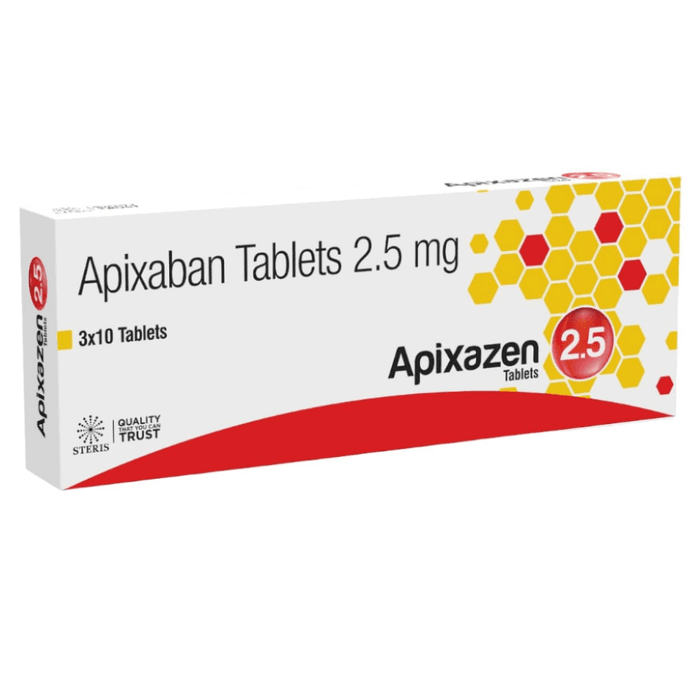
Apixaban
Buy Apixaban Online
Secure Encrypted Payments
Apixaban is an oral anticoagulant, often called a blood thinner, used in adults who need help lowering the risk of harmful blood clots. Apixaban can be bought online, with current pricing shown during ordering and dose or strength choices matched to the clinician’s directions. Common apixaban tablets include 2.5 mg and 5 mg strengths, and the right strength depends on the condition being treated, kidney function, age, body size, and other medicines.
Apixaban is the generic name for the active ingredient in Eliquis. It works by blocking factor Xa, a clotting protein involved in the blood-clotting process. Because that same action can increase bleeding risk, the safest purchase decision includes understanding why it is being used, how it is taken, and which medicines or procedures may change the risk balance.
Apixaban Price, Strength, and Ordering Basics
Apixaban price can vary by strength, quantity, manufacturer, and whether the order is for generic apixaban or a brand version of the same active ingredient. During ordering, select the apixaban dose or strength that matches the directions from your clinician. Do not choose a different strength to stretch tablets, reduce expense, or change how often you take the medicine unless your care team gives specific instructions.
Many people compare apixaban cost because anticoagulants are often used for months or longer. The total cash-pay amount may differ for apixaban 5 mg, apixaban 2.5 mg, and brand-name Eliquis strengths. If long-term therapy is planned, it can help to review the quantity, refill timing, and whether the same strength is expected to continue after the initial treatment phase.
We may review order details for accuracy before the medication is supplied through licensed pharmacies. Some customers also look for US delivery from Canada when comparing cash-pay options, and shipping logistics may include prompt, express shipping. Keep enough medication on hand to avoid accidental gaps, because missed or stopped anticoagulant therapy can raise clot-related concerns.
Quick tip: Match the tablet strength to the written directions, not to tablet appearance or past packaging.
What Apixaban Is Used For
Apixaban is used to reduce the risk of stroke and systemic embolism in adults with nonvalvular atrial fibrillation. Atrial fibrillation can allow blood to pool and clot inside the heart, and a clot can travel to the brain or another organ. For more condition background, the atrial fibrillation section explains the heart-rhythm context behind stroke prevention.
Apixaban is also used to treat deep vein thrombosis and pulmonary embolism, and to reduce the risk that those clots come back after initial treatment. Deep vein thrombosis, or DVT, usually means a clot in a deep vein of the leg. Pulmonary embolism, or PE, means a clot has moved to the lungs. The blood clot DVT and PE section can help connect the medicine to these clot conditions.
Another use is prevention of certain blood clots after hip or knee replacement surgery. In that setting, the timing and duration are closely linked to the surgical plan. Across all uses, the same apixaban oral tablet can be used differently, so the treatment reason is one of the most important details for safe ordering and ongoing use.
| Use context | Why apixaban may be used | Practical buying point |
|---|---|---|
| Nonvalvular atrial fibrillation | Helps reduce stroke and systemic embolism risk | Strength may depend on age, weight, kidney function, and interacting drugs |
| DVT or PE treatment | Treats harmful clots in leg veins or lungs | Early treatment may differ from later maintenance therapy |
| Extended clot prevention | Helps reduce the chance of another clot after treatment | Longer-term plans may use a different strength than acute treatment |
| After hip or knee replacement | Helps prevent postoperative clots | Start and stop timing should follow the surgical team’s plan |
Apixaban Generic Name, Brand Relationship, and Mechanism
Apixaban is the generic name of the anticoagulant sold under the brand name Eliquis. A search for generic Eliquis, Eliquis generic name, or generic for Eliquis 5 mg usually refers to the same active ingredient: apixaban. Packaging, manufacturer, tablet markings, and market naming can differ, but the medication decision still centers on the active ingredient, strength, and directions.
The apixaban mechanism of action is direct factor Xa inhibition. Factor Xa helps the body generate thrombin, which is part of forming fibrin clots. By reducing factor Xa activity, apixaban lowers the blood’s tendency to form clots in situations where clot prevention or clot treatment is medically needed.
This mechanism differs from warfarin, an older anticoagulant that affects vitamin K-dependent clotting factors and usually requires INR blood testing. Apixaban does not usually require routine INR monitoring, but follow-up still matters. Kidney function, liver disease, bleeding history, new medicines, and upcoming procedures can all change the safety picture.
How Apixaban Tablets Are Usually Taken
Apixaban tablets are commonly taken twice daily, but the exact apixaban dose depends on the approved use and patient-specific factors. Some treatment plans begin with one pattern and later move to another. Others use a lower strength for selected long-term prevention or after certain orthopedic surgeries.
Tablets can generally be taken with or without food. Consistency helps: many people link doses to morning and evening routines so spacing stays predictable. If swallowing is difficult, some labeled apixaban products may be crushed and mixed with certain soft foods or liquids, or given through a feeding tube, but product-specific directions should be followed.
If a dose is missed, use the instructions provided with the medicine rather than guessing. Taking extra tablets to make up for a missed dose can increase bleeding risk. If missed doses happen often, ask your clinician or pharmacist about reminders, packaging, or schedule changes that do not alter the intended daily amount.
- Use the strength directed for the treatment reason.
- Take doses at consistent times each day.
- Do not stop suddenly without medical guidance.
- Ask before changing tablets, schedules, or administration method.
- Tell every healthcare professional that you take an anticoagulant.
Side Effects, Bleeding Warnings, and When to Get Help
The most common apixaban side effects relate to bleeding or bruising. Minor bleeding may include easy bruising, longer bleeding from small cuts, nosebleeds, bleeding gums, or heavier menstrual bleeding. Some people notice tiredness, weakness, or pale skin if blood loss gradually contributes to anemia.
Serious bleeding needs urgent medical attention. Warning signs include black or tarry stools, red or dark brown urine, coughing up blood, vomiting blood or material that looks like coffee grounds, severe headache, sudden weakness, vision or speech changes, unusual swelling, fainting, or dizziness that does not settle. A fall, hard blow, or head injury should be taken seriously even when no bleeding is visible.
Apixaban carries important warnings around stopping therapy and around spinal or epidural procedures. Stopping an anticoagulant without adequate protection can increase the risk of stroke or other clotting events in some people. Bleeding near the spine after spinal injections, epidural anesthesia, or spinal puncture can cause severe nerve problems, so procedure teams need to know anticoagulant use well in advance.
Allergic reactions are less common, but they can occur. Seek urgent help for facial swelling, severe rash, trouble breathing, or chest tightness. People with active major bleeding, certain severe liver problems, or a history of serious bleeding need individualized evaluation before continuing or changing anticoagulant therapy.
Why it matters: Bleeding can be internal, so symptoms may appear before obvious blood loss.
Interactions, Cautions, and Monitoring
Drug interactions can make apixaban levels too high or too low. Strong combined CYP3A4 and P-gp inhibitors, such as ketoconazole or ritonavir, can increase exposure and raise bleeding risk. Strong inducers, such as rifampin, carbamazepine, phenytoin, or St. John’s wort, can lower exposure and may reduce clot protection.
Other medicines can add to bleeding risk even if they do not strongly change apixaban levels. Aspirin, clopidogrel, ibuprofen, naproxen, and similar anti-inflammatory pain relievers can increase bleeding risk, especially with frequent use. Some antidepressants may also affect bleeding tendency. Before adding an over-the-counter pain reliever, supplement, antibiotic, or antiviral, ask a pharmacist or clinician to screen for compatibility.
Kidney function, liver function, age, body weight, fall risk, ulcer history, pregnancy, breastfeeding, and recent surgery can all influence whether apixaban remains appropriate. Routine INR testing is not usually used to manage apixaban, but periodic clinical follow-up is still important. Lab work may be used to monitor kidney function, liver status, blood counts, or other safety factors.
Coffee is not generally listed as a direct apixaban interaction, but alcohol and stomach-irritating medicines can complicate bleeding risk for some people. If you drink alcohol, have reflux, ulcers, or frequent stomach pain, ask how those factors should affect your plan. Avoid starting, stopping, or combining medicines casually while taking an anticoagulant.
Storage, Travel, and Procedure Planning
Store apixaban tablets at room temperature, away from excess heat and moisture. Bathrooms, windowsills, and hot vehicles are poor storage areas because temperature and humidity can affect medicine quality. Keep tablets in the labeled container unless a pharmacist provides different packaging instructions, and store them away from children and pets.
For travel, keep apixaban in carry-on luggage when possible and bring an updated medication list. Original packaging can help with security checks and urgent care visits. If travel crosses time zones, ask in advance how to keep the twice-daily schedule consistent without taking doses too close together.
Before surgery, dental procedures, injections near the spine, or any procedure with bleeding risk, tell the healthcare team that you take apixaban. The decision to pause or restart anticoagulation depends on the procedure, kidney function, bleeding risk, and the reason you need clot prevention. Do not improvise by skipping tablets unless a healthcare professional gives a plan.
Apixaban Compared With Related Anticoagulants
Apixaban belongs to a group often called direct oral anticoagulants, or DOACs. Rivaroxaban, dabigatran, and edoxaban are other medicines in or near this category, while warfarin is an older anticoagulant with a different monitoring approach. The best choice depends on the medical reason, kidney function, bleeding history, dosing routine, food considerations, and interaction profile.
Apixaban and Eliquis contain the same active ingredient, so many practical differences relate to brand versus generic sourcing, cost, packaging, and availability of specific strengths. Rivaroxaban is another factor Xa inhibitor, but its dosing schedule and food instructions can differ by use. Warfarin may be preferred in certain complex situations, but it usually requires INR monitoring and closer food-drug interaction management.
For broader browsing, the cardiovascular products category groups heart and circulation medicines. The cardiovascular articles section offers additional reading on long-term medication decisions and heart-health topics. If country of supply matters for your planning, the Canada country-of-origin section can help identify products grouped by origin.
| Medicine or class | How it compares | Decision factor |
|---|---|---|
| Apixaban | Direct factor Xa inhibitor often taken twice daily | Used across atrial fibrillation, DVT, PE, and selected postoperative prevention |
| Eliquis | Brand name for apixaban | Same active ingredient; packaging and cost may differ |
| Rivaroxaban | Another direct factor Xa inhibitor | Some uses have different food or timing instructions |
| Warfarin | Vitamin K antagonist | Usually requires INR monitoring and has more food interactions |
Authoritative Sources
For official labeling, review the ELIQUIS prescribing information. It covers approved uses, boxed warnings, dosing principles, interactions, contraindications, and procedure-related precautions.
For plain-language medicine safety information, see MedlinePlus apixaban drug information. Mayo Clinic also provides an apixaban oral route monograph with patient-oriented use and side-effect details.
This content is for informational purposes only and is not a substitute for professional medical advice.
eGFR Calculator
Estimate kidney filtration using the 2021 CKD-EPI creatinine equation.
eGFR
-
mL/min/1.73 m2
G category
-
requires clinical context
These calculations are for education only and do not replace clinical advice, diagnosis, or treatment. Always confirm medical decisions with a qualified healthcare professional.
Creatinine Clearance Calculator
Estimate creatinine clearance using the Cockcroft-Gault equation.
CrCl
-
mL/min estimate
These calculations are for education only and do not replace clinical advice, diagnosis, or treatment. Always confirm medical decisions with a qualified healthcare professional.
BMI Calculator
Estimate adult body mass index from height and weight, with metric and imperial units.
BMI
-
kg/m2 equivalent
Category
-
Adult screening range
These calculations are for education only and do not replace clinical advice, diagnosis, or treatment. Always confirm medical decisions with a qualified healthcare professional.
Body Surface Area Calculator
Calculate body surface area from height and weight using the Mosteller equation.
BSA
-
m2, Mosteller equation
These calculations are for education only and do not replace clinical advice, diagnosis, or treatment. Always confirm medical decisions with a qualified healthcare professional.
Ideal & Adjusted Body Weight Calculator
Estimate ideal body weight with the Devine equation and adjusted body weight when actual weight is above the estimate.
Ideal body weight
-
Devine equation
Adjusted body weight
-
IBW + 0.4 x excess weight
Difference from IBW
-
actual minus ideal
These calculations are for education only and do not replace clinical advice, diagnosis, or treatment. Always confirm medical decisions with a qualified healthcare professional.
Customer Reviews
4.5 Based on 26 Reviews
Write a Review Ask a Question - Reviews
- Questions
Filter Reviews:
CK
08/16/2026
Carl K.  US
UScustomer review
very good customer service and will recommend this service in the future.
08/17/2026
borderfreehealth.com
Hi Carl!We're delighted to hear that you had a positive experience with our customer service and that you would recommend us to others. Your support and trust mean so much to our team. Providing quality medications at affordable prices, along with excellent customer care, is always our goal. If you ever need assistance, we're always here to help.Thank you for choosing Border Free Health!
GH
08/02/2026
Geoffrey H. USapixaban
Great service with great price.
08/03/2026
borderfreehealth.com
Hi Geoffrey!Thank you for your kind feedback! We're delighted to hear that you were happy with both our service and pricing. Providing quality medications at affordable prices, along with excellent customer care, is always our goal. If you ever need assistance, we're always here to help. Thank you for choosing Border Free Health!
CM
05/09/2026
Carl M. USBorder Free Health
Overall Experience was very good
05/12/2026
borderfreehealth.com
Hi Carl!Thank you for choosing Border Free Health. We’re delighted to hear that your overall experience was very good. Providing excellent customer service and a smooth ordering experience is always our goal. We truly appreciate your trust and support, and we look forward to assisting you again with your future healthcare needs.
CD
05/03/2026
Carl D. USGreat service
I was kept abreast of everything being placed, when a new script was needed, price and shipping, very senior friendly.
05/06/2026
borderfreehealth.com
Hi Carl! We’re truly delighted to hear that you had a positive experience with our service. Keeping our customers informed every step of the way, from order placement, prescription updates, pricing, and shipping, is something we take great pride in. It’s especially meaningful to know that you found our service senior friendly and easy to navigate, as we always aim to make the process as smooth and accessible as possible. Your kind words inspire us to continue providing the care and support you deserve, and please know that we are always here to help whenever you need assistance. Thank you for always trusting Border Free Health!
BM
04/19/2026
Brian M. USOutstanding service
The staff are very friendly and helpful. They keep you informed of the progress of your order. I had problems on my end and they worked with me to get them corrected. Order shipped fast and arrived earlier than expected.
04/20/2026
borderfreehealth.com
Hi Brian,It is wonderful to hear that our team was able to support you every step of the way and keep you informed throughout your order process. We understand that issues can arise, and we are glad we could work with you to resolve them smoothly. Your kind words about our staff’s friendliness and helpfulness mean a great deal to us. We are also pleased to know that your order arrived earlier than expected providing timely service is always our goal. Thank you again for your trust and support. We look forward to assisting you with your future healthcare needs.
Express Shipping - from $29.99
Shipping with this method takes 3-5 days
Prices:
- Dry-Packed Products $29.99
- Cold-Packed Products $39.99
Shipping Countries:
- United States (all contiguous states**)
- Worldwide (excludes some countries***)
Standard Shipping - $19.99
Shipping with this method takes 5-10 days
Prices:
- Dry-Packed Products $19.99
- Not available for Cold-Packed products
Shipping Countries:
- United States (all contiguous states**)
- Worldwide (excludes some countries***)
Is apixaban the same as Eliquis?
Apixaban is the generic name of the active ingredient in Eliquis. Eliquis is the brand name. Both refer to the same anticoagulant molecule, but packaging, manufacturer, tablet appearance, and cost may differ.
What is apixaban used for?
Apixaban is used in adults to reduce stroke and systemic embolism risk in nonvalvular atrial fibrillation, treat deep vein thrombosis and pulmonary embolism, reduce the chance of those clots returning, and prevent certain clots after hip or knee replacement.
What are the most common side effects of apixaban?
The most common side effects involve bleeding or bruising, such as easy bruising, nosebleeds, bleeding gums, longer bleeding from cuts, or heavier menstrual bleeding. Serious symptoms such as black stools, blood in urine, vomiting blood, severe headache, sudden weakness, or a head injury need urgent medical attention.
What should I avoid while taking apixaban?
Avoid changing or stopping apixaban without medical guidance. Ask before using aspirin, ibuprofen, naproxen, clopidogrel, St. John’s wort, or new antibiotics or antivirals, because some products can increase bleeding risk or change apixaban levels.
Can I drink coffee while taking apixaban?
Coffee is not generally listed as a direct apixaban interaction. Individual health issues still matter, especially stomach irritation, ulcer history, high alcohol intake, or other medicines that increase bleeding risk. Ask a clinician or pharmacist if your daily routine raises concerns.
Does apixaban require INR blood testing like warfarin?
Apixaban does not usually require routine INR monitoring. Follow-up is still important because kidney function, liver disease, blood counts, bleeding history, new medicines, and upcoming procedures can affect safety.
Rewards Program
Earn points on birthdays, product orders, reviews, friend referrals, and more! Enjoy your medication at unparalleled discounts while reaping rewards for every step you take with us.
You can read more about rewards here.
POINT VALUE
How to earn points
- 1Create an account and start earning.
- 2Earn points every time you shop or perform certain actions.
- 3Redeem points for exclusive discounts.
You Might Also Like
Select options
This product has multiple variants. The options may be chosen on the product page
Select options
This product has multiple variants. The options may be chosen on the product page
Select options
This product has multiple variants. The options may be chosen on the product page
Select options
This product has multiple variants. The options may be chosen on the product page