

Please note: a valid prescription is required for all prescription medication.
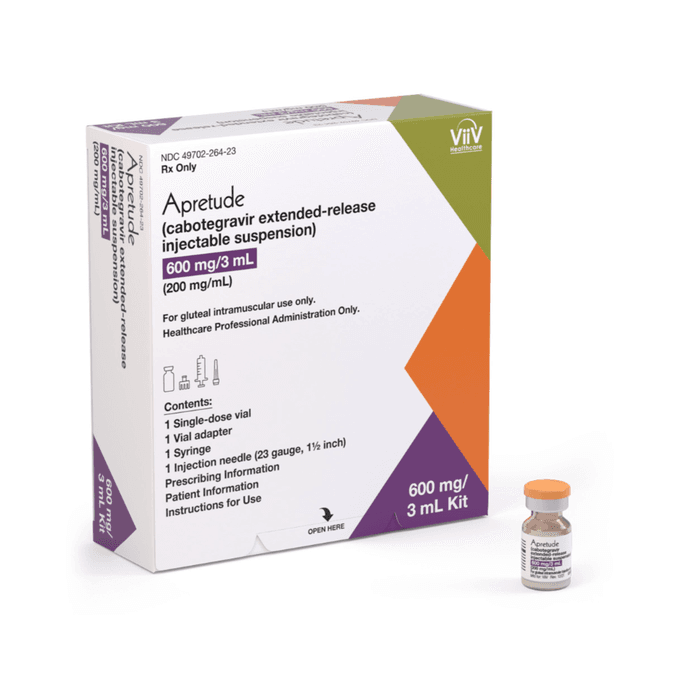
Apretude Injectable Suspension
Apretude Injectable Suspension: Buy for HIV PrEP
Price:
$2,412.99
Secure Encrypted Payments
Apretude Injectable Suspension is a prescription, long-acting cabotegravir injection used for HIV-1 pre-exposure prophylaxis (PrEP) to help reduce the risk of getting HIV from sex. This page summarizes how clinic dosing is typically scheduled, what routine testing may involve, and practical handling details. BorderFreeHealth supports access with US shipping from Canada for people paying cash, including those without insurance, once a valid prescription is confirmed.
What Apretude Injectable Suspension Is and How It Works
This medicine contains cabotegravir, an HIV-1 integrase strand transfer inhibitor (INSTI, a drug class that blocks a key viral enzyme). By preventing HIV from integrating into human DNA, the drug can help stop the virus from establishing infection when it is used as PrEP and taken on schedule. Because this is an extended-release intramuscular suspension, cabotegravir is released slowly from the injection site over time.
Medications are dispensed through licensed Canadian partner pharmacies. Long-acting therapy can be useful for people who prefer fewer dosing days, but it also means cabotegravir can remain in the body for a period after the last injection. For that reason, the official labeling emphasizes ongoing HIV testing and clear plans for missed appointments. For background on PrEP in general, see What Is PrEP Medication.
Who It’s For
PrEP is intended for people who are currently HIV-negative and have ongoing risk of HIV exposure through sex. A healthcare professional will typically review recent HIV test results, symptoms that could suggest acute HIV infection, and the timing of any recent potential exposures before starting a long-acting option. Community-level HIV education and prevention resources may also help with decision-making; the site’s HIV Condition Hub is a browseable collection of related topics.
Apretude Injectable Suspension may not be appropriate for someone who already has HIV, has had a serious allergic reaction to cabotegravir, or cannot reliably return for scheduled injections and required testing. It is not a treatment for established HIV infection. People who need clarity on terms often used in clinics may find it helpful to review HIV Vs AIDS Difference before discussing next steps with a prescriber.
Dosage and Usage
This therapy is administered as an intramuscular injection by a healthcare professional, typically in the gluteal (buttock) muscle. For PrEP, dosing is commonly described as an initiation phase followed by a maintenance phase: two starter injections given about one month apart, then ongoing injections about every two months. Clinics may also consider an oral lead-in (short course of tablets) in some situations to assess tolerability, based on labeling and local availability.
Apretude Injectable Suspension is not designed for self-injection at home. Visit timing matters because low drug levels could increase the chance of HIV infection and resistance if exposure occurs. If an appointment will be delayed, the prescriber or clinic can advise how to stay protected using label-directed options. Testing logistics can vary by location; for context on turnaround times, see How Long HIV Test Takes.
Why it matters: Long-acting PrEP works best when dosing and HIV testing stay on schedule.
Strengths and Forms
This product is supplied as a suspension for injection in a single-dose vial. The labeled presentation is cabotegravir 600 mg per 3 mL, which is prepared and administered by trained clinical staff. Because it is a suspension, the clinic follows the manufacturer’s instructions for preparation and administration to help ensure the dose is delivered correctly.
Apretude Injectable Suspension is one way cabotegravir is provided for long-acting PrEP, and availability of supplies and administration appointments can vary. It may be listed alongside other prescription antivirals in category hubs like Antivirals Category. A prescription is required, and clinicians typically coordinate the injection visit, HIV testing cadence, and follow-up plan.
Storage and Travel Basics
Storage requirements are important because temperature extremes can affect injectable suspensions. Product is commonly kept refrigerated according to the carton instructions, protected from light, and not frozen. Clinics often allow the vial to reach room temperature before administration, as directed by labeling, to improve comfort and handling during preparation. Because policies differ, patients usually do not need to store the vial at home unless specifically instructed.
If travel, relocation, or schedule changes are expected, it helps to plan injection visits in advance and confirm how the clinic handles any needed transfers. People may also want to align PrEP follow-up with other preventive care dates and regular testing reminders. For broader HIV prevention awareness and screening reminders, National HIV Testing Day provides additional context.
Quick tip: Keep a list of recent doses and lab dates in one place.
Side Effects and Safety
Like many intramuscular therapies, the most common issues are injection-site reactions. These can include pain, tenderness, swelling, firmness, or a lump where the medication was given, and they often improve over time. Other effects reported with cabotegravir long-acting injection can include headache, fever, tiredness, muscle or joint aches, nausea, dizziness, and rash. Any new or persistent symptoms should be discussed with a healthcare professional, especially after the first doses.
More serious concerns can include allergic or hypersensitivity reactions and liver-related problems (which may show up as abdominal pain, dark urine, or yellowing of the skin or eyes). Mood changes have also been reported with some medicines in this class, so changes in sleep, anxiety, or depression symptoms should be mentioned promptly. Prescriptions are confirmed with the original prescriber before dispensing. Clinics also emphasize HIV testing before starting and during ongoing care because starting long-acting cabotegravir during undiagnosed HIV infection can lead to drug-resistant virus.
Apretude Injectable Suspension has a prolonged “tail” after stopping, meaning drug levels decline gradually. During that period, a prescriber may recommend another proven HIV prevention approach if exposure risk continues. For myth-busting around transmission routes that sometimes confuse testing decisions, see HIV From Kissing and HIV From Saliva.
Drug Interactions and Cautions
Cabotegravir is affected by certain medicines that speed up drug metabolism (enzyme inducers). Strong inducers—such as rifampin or rifapentine (often used for tuberculosis), some seizure medicines (for example carbamazepine, phenytoin, or phenobarbital), and the herbal supplement St. John’s wort—can lower cabotegravir levels and may reduce PrEP protection. A clinician should review all prescriptions, over-the-counter products, and supplements before the first injection and whenever the medication list changes.
Other cautions may apply in pregnancy or breastfeeding, in people with liver disease, or when symptoms suggest possible acute HIV infection. Because this is an intramuscular gluteal injection, clinicians may also consider factors that affect injection technique and comfort, such as bleeding disorders or anticoagulant use. The safest approach is to share a full health history and confirm the monitoring plan described in the product labeling.
Compare With Alternatives
Pre-exposure prophylaxis can be delivered in different ways, and the best fit often depends on adherence patterns, medical history, and access to regular testing. Daily oral PrEP tablets are widely used and may be preferred when someone wants a rapidly stoppable option. Some settings also use event-driven (“2-1-1”) oral PrEP for certain populations, though it is not appropriate for everyone and is not the standard approach in all regions.
Apretude Injectable Suspension is a long-acting option that may suit people who do not want a daily pill routine, but it requires clinic visits and careful follow-up if doses are delayed or stopped. Post-exposure prophylaxis (PEP) is different: it is used after a potential exposure and must be started quickly under medical guidance. For related listings, see Apretude Product Page (availability can differ by pharmacy and region).
Pricing and Access
Out-of-pocket pricing for long-acting PrEP often reflects more than the medicine alone. Total expenses may include clinic administration fees, required HIV and STI testing, and follow-up visits. Apretude Injectable Suspension may also require scheduling support to keep initiation and maintenance injections aligned with the labeled intervals. When comparing options, it can help to separate medication charges from clinic service charges.
Cash-pay options may help when insurance coverage is limited. Some people explore manufacturer support programs, public health clinics, or community services to reduce overall financial barriers, depending on eligibility. Information about sitewide offers, when available, is listed on Current Promotions.
To start, a valid prescription is required and will be verified with the prescriber before dispensing. For site actions, submit prescription details in your account and choose prompt, express shipping when available.
Authoritative Sources
For decisions about PrEP medicines and monitoring, the most reliable references are the official product label and public health guidance. These sources describe who the medicine is indicated for, how HIV testing is performed around dosing, and which interactions matter most. They also outline steps for missed doses and what symptoms warrant urgent evaluation.
Use these references to support a focused conversation with a healthcare professional, especially if there has been a recent possible exposure, new symptoms, or a change in other medicines. Reading primary sources can also help clarify which details are fixed (label requirements) and which are individualized (clinic protocols and patient history).
- FDA prescribing information is provided in the Apretude label (PDF).
- CDC PrEP recommendations are summarized in CDC PrEP Basics.
This content is for informational purposes only and is not a substitute for professional medical advice.
Express Shipping - from $25.00
Shipping with this method takes 3-5 days
Prices:
- Dry-Packed Products $25.00
- Cold-Packed Products $35.00
Shipping Countries:
- United States (all contiguous states**)
- Worldwide (excludes some countries***)
Standard Shipping - $15.00
Shipping with this method takes 5-10 days
Prices:
- Dry-Packed Products $15.00
- Not available for Cold-Packed products
Shipping Countries:
- United States (all contiguous states**)
- Worldwide (excludes some countries***)
What is Apretude used for?
Apretude is used as HIV-1 pre-exposure prophylaxis (PrEP), meaning it is taken by people who are HIV-negative to help reduce the risk of getting HIV from sex. It is not a treatment for established HIV infection. Because it is long-acting, it is given as an intramuscular injection in a clinic rather than taken daily by mouth. A clinician typically confirms HIV-negative status before starting and continues routine HIV testing while PrEP is ongoing.
How often are Apretude injections given?
Apretude is generally scheduled as two initiation injections given about one month apart, followed by maintenance injections about every two months. Exact timing and visit planning are handled by the clinic, because the injection must be administered by a healthcare professional and includes routine HIV testing. If an injection visit is going to be delayed, it’s important to contact the prescriber or clinic for label-directed guidance rather than trying to “make up” doses independently.
Do I need HIV testing while taking Apretude?
Yes. Ongoing HIV testing is a core safety requirement for PrEP with long-acting cabotegravir. Testing is typically done before starting and before each scheduled injection, and clinicians may add testing if symptoms suggest possible acute HIV infection (such as fever, sore throat, rash, or swollen glands after an exposure). This monitoring helps avoid using cabotegravir alone when HIV is present, which can increase the risk of developing drug-resistant virus.
What happens if I miss an Apretude injection appointment?
Missing or delaying an injection can matter because drug levels may fall over time, and protection may decrease if exposure risk continues. The appropriate next step depends on how late the visit is, recent exposures, and the clinic’s protocol. A prescriber may advise rescheduling promptly and, in some cases, using an alternative proven HIV prevention method during the gap. Because cabotegravir remains in the body after stopping, follow-up planning is also important when injections are discontinued.
What side effects should I watch for after an Apretude injection?
Injection-site reactions are common and may include pain, swelling, firmness, or a lump where the dose was given. Some people also report headache, tiredness, fever, nausea, dizziness, muscle aches, or rash. Seek urgent evaluation for signs of a serious allergic reaction (such as trouble breathing, facial swelling, or widespread hives) or possible liver problems (such as dark urine, severe stomach pain, or yellowing of skin/eyes). Report mood changes or persistent symptoms to a clinician.
What should I ask my clinician before starting Apretude?
Useful questions include: which HIV test will be used and how often it will be repeated; what symptoms should prompt extra testing; how missed visits are handled; and whether any current medicines or supplements could interact (for example rifampin, certain seizure medicines, or St. John’s wort). It also helps to ask about clinic administration details, expected injection-site effects, and how follow-up will work if travel or schedule changes are likely. Discuss pregnancy or breastfeeding considerations if relevant.
Rewards Program
Earn points on birthdays, product orders, reviews, friend referrals, and more! Enjoy your medication at unparalleled discounts while reaping rewards for every step you take with us.
You can read more about rewards here.
POINT VALUE
How to earn points
- 1Create an account and start earning.
- 2Earn points every time you shop or perform certain actions.
- 3Redeem points for exclusive discounts.
How to book an appointment
- 1Create Begin by completing a profile or log into your existing account. This step ensures we have the necessary information to provide you with a service that's tailored to your needs. account and start earning.
- 2Scheduling an appointment with our online booking system is easy. Pick a day and time that suits you. You’ll receive an immediate confirmation, without the wait.
- 3Discuss your concerns and symptoms and receive a thorough diagnosis from one of our licensed doctors during a confidential video appointment.
- 4If you've been prescribed medication, your Rx is sent directly to one of our licensed pharmacies and delivered right to your door.
Get Started
To book an online doctor appointment, register for an account or login. After doing so, you can book your visit on this page.
You Might Also Like
Select options
This product has multiple variants. The options may be chosen on the product page
Select options
This product has multiple variants. The options may be chosen on the product page
Select options
This product has multiple variants. The options may be chosen on the product page
Select options
This product has multiple variants. The options may be chosen on the product page