
Please note: a valid prescription is required for all prescription medication.
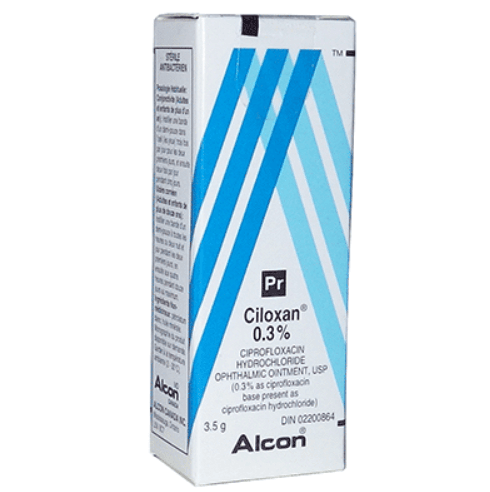
Ciloxan Oint 3%
Buy Ciloxan Oint 3% Online
Secure Encrypted Payments
Ciloxan Oint 3% is a ciprofloxacin ophthalmic ointment used in the eye for bacterial conjunctivitis caused by susceptible bacteria. It can be bought online through Border Free Health, with current pricing shown during checkout and dose or strength choices matched to the directions from your clinician. This sterile eye ointment is intended for ophthalmic use, not for skin infections or non-bacterial eye irritation.
Ciloxan eye ointment 0.3% contains ciprofloxacin, a fluoroquinolone antibiotic. The ointment base helps the medicine stay on the eye surface longer than a liquid drop may in some situations, which can be useful when nighttime application is part of the care plan. Use it only for the eye condition it was chosen for, and avoid sharing the tube with anyone else.
Ciloxan Oint 3% Price, Strength, and Ordering
When you order Ciloxan ointment online, the checkout flow shows the current Ciloxan eye ointment 0.3% price and any available quantity or strength choices. Select the product that matches the directions you received, including the same form and concentration. If your written directions mention ciprofloxacin ophthalmic ointment 0.3%, that refers to the active ingredient and concentration used in Ciloxan Oint 3%.
Many cash-pay customers look at Ciloxan ophthalmic ointment 0.3% cost because eye antibiotics can vary by brand, supply source, and tube size. Border Free Health provides U.S.-from-Canada service context for eligible medication orders, and products are supplied through licensed pharmacies. If you are paying out of pocket, focus on the total amount due rather than only the unit price, since ordering, quantity, and handling details can affect the final cost.
A common presentation referenced for this medicine is a Ciloxan ointment 3.5 g tube. Product availability, manufacturer presentation, and country-of-origin details can vary, so match the product shown during ordering with your clinician’s directions and the label on the tube you receive. For broader eye-care browsing, the ophthalmology category groups related eye medications in one place.
What Ciloxan Ointment Is Used For
Ciloxan Oint 3% is used to treat bacterial conjunctivitis, a bacterial infection of the conjunctiva. The conjunctiva is the thin membrane covering the white part of the eye and the inside of the eyelids. Symptoms may include redness, discharge, crusting, irritation, and eyelids that stick together after sleep.
This medicine does not treat viral pink eye, allergic conjunctivitis, or eye redness from dry eye, irritants, or injury. Antibiotics only work against bacteria, so a correct diagnosis matters. If pain, light sensitivity, vision changes, swelling around the eye, or symptoms after contact lens wear occur, seek prompt clinical attention because those signs may need a different evaluation.
Ciloxan may also be discussed alongside other bacterial eye conditions, but the ointment use should follow the directions given for your specific diagnosis. For condition-focused reading, see bacterial conjunctivitis and bacterial keratitis. These condition pages can help you understand why clinicians distinguish surface conjunctival infection from deeper corneal involvement.
How Ciprofloxacin Ophthalmic Ointment Works
Ciprofloxacin is a fluoroquinolone antibiotic. Fluoroquinolones act by interfering with bacterial enzymes needed for DNA replication and repair. When susceptible bacteria cannot maintain DNA processes, bacterial growth slows or stops, allowing the infection to improve with appropriate therapy.
The ointment is placed inside the lower eyelid, where it melts and spreads across the eye surface. Because ointments are thicker than drops, they can blur vision temporarily after application. Many people find that ointment use is easiest when they can rest the eye afterward or when clear vision is not immediately needed.
Some people use eye drops during the day and an ointment at night when directed. Do not combine eye products unless your clinician has told you how to space them. If more than one ophthalmic product is being used, drops usually go in before ointment so the thicker base does not block the liquid from reaching the eye surface.
How to Apply the Eye Ointment
Wash your hands before applying Ciloxan Oint 3%. Tilt your head back, gently pull down the lower eyelid, and place a small ribbon of ointment into the pocket between the lid and the eye. Close the eye gently for a short time so the ointment can spread.
Do not touch the tube tip to your eye, eyelashes, fingers, countertop, or any other surface. Contamination can introduce organisms into the tube and may worsen an eye infection. Replace the cap immediately after use and keep the tube for one person only.
Temporary blurred vision is expected with ophthalmic ointments. Avoid driving, operating machinery, or doing tasks that require clear sight until your vision clears. If you wear contact lenses, remove them during active eye infection and ask when it is safe to resume lens wear.
Quick tip: Keep a clean tissue nearby, but do not wipe the tube tip after it touches the eye area; avoid contact in the first place.
Who Should Use Caution
Do not use Ciloxan Oint 3% if you have had an allergic reaction to ciprofloxacin, another quinolone antibiotic, or an ingredient in the ointment. Allergy symptoms may include rash, swelling, severe itching, hives, or breathing difficulty. Stop use and seek urgent care if severe allergy symptoms appear.
Tell your clinician about recent eye surgery, corneal disease, glaucoma medicines, steroid eye drops, severe dry eye, blepharitis, contact lens use, pregnancy, or breastfeeding. These details can affect whether an ointment is appropriate and whether follow-up is needed. Children, adults, and older adults may use ophthalmic ciprofloxacin when it is considered suitable for the diagnosed infection.
Do not use leftover antibiotic ointment to self-treat a later episode of redness or discharge. Similar symptoms can come from viral infection, allergy, injury, dry eye, or a corneal problem. Reusing an old tube may also expose the eye to contamination or outdated medication.
Side Effects, Warnings, and Monitoring
Common side effects are usually local to the eye. They may include mild burning, stinging, discomfort, itching, redness, tearing, eyelid crusting, residue around the lashes, or temporary blurred vision. Some people notice an unusual taste after ophthalmic medicines drain through the tear duct.
- Mild eye discomfort after application
- Temporary blurred vision
- Itching, redness, or tearing
- Residue or crusting on the eyelid
- Unusual taste in the mouth
Contact a clinician promptly if symptoms worsen, if discharge increases, or if the eye becomes more painful. Vision changes, light sensitivity, severe swelling, injury, or a suspected foreign body should not be managed as routine conjunctivitis. These signs may suggest a condition that needs urgent eye examination.
Prolonged antibiotic use can sometimes allow non-susceptible organisms, including fungi, to overgrow. Use the ointment for the duration directed and do not extend treatment on your own. Although systemic exposure from eye ointment is generally low, tell your clinician about all medicines you use, including other eye drops, oral antibiotics, diabetes medicines, and supplements.
Storage, Handling, and Travel
Store the tube at room temperature according to the label, with the cap tightly closed. Keep it away from excessive heat, freezing conditions, and moisture. Do not use the ointment if the tube appears damaged, the contents look unusual, or the label date indicates it should no longer be used.
For travel, keep Ciloxan Oint 3% in its original carton or tube packaging so the name, strength, and directions remain visible. Pack it in a clean pouch in your carry-on if flying. If your order involves US delivery from Canada, handling information will be provided with the order, and prompt, express shipping may be available as part of the service.
Keep the medicine out of reach of children and pets. Eye ointments can be mistaken for other small tubes, so store them separately from skin creams, cosmetics, and first-aid ointments. Discard any tube that becomes contaminated or was used during an infection and later stored without clear guidance to keep it.
Ciloxan Ointment, Generic Ciprofloxacin, and Eye Drops
Ciloxan is the brand name for ciprofloxacin ophthalmic ointment 0.3%. Generic ciprofloxacin eye ointment 0.3% may be discussed as an alternative when it is available and appropriate. Brand and generic names can differ by country, so match the active ingredient, strength, form, and directions rather than relying on name alone.
Ointments and drops are not identical in daily use. Drops may be easier when daytime clarity is important, while ointment may provide longer surface contact and more blur. The right choice depends on the diagnosis, severity, schedule, and whether the eye surface needs a thicker preparation.
If a related product is being considered, your clinician may weigh whether a solution, ointment, or other ophthalmic antibiotic fits the infection. The ophthalmology articles include broader eye-care education, while the Canada country-of-origin section can help you understand sourcing labels when reviewing medication options.
What to Expect During Treatment
With bacterial conjunctivitis, discharge and irritation may begin improving after the antibiotic has been used as directed for a period of time. The eye may still look red while the surface heals. Complete the directed course even if symptoms improve early, unless a clinician tells you to stop.
Good hygiene helps reduce spread. Wash hands often, avoid touching or rubbing the eye, do not share towels, and replace eye makeup used around the time of infection. Clean glasses and avoid contact lenses until you are told they can be used again.
If symptoms do not improve, worsen, or return shortly after treatment, follow up for reassessment. Bacterial resistance, incorrect diagnosis, contaminated lenses, corneal involvement, or another eye condition may need to be considered. Do not increase the amount or frequency of ointment without medical guidance.
Authoritative Sources
For detailed prescribing and safety information, consult official references and professional guidance. These sources support the clinical information on ciprofloxacin ophthalmic ointment and bacterial eye infection use.
- DailyMed prescribing information for CILOXAN ciprofloxacin hydrochloride ointment
- Health Canada Drug and Health Product Register record for CILOXAN
This content is for informational purposes only and is not a substitute for professional medical advice.
Express Shipping - from $29.99
Shipping with this method takes 3-5 days
Prices:
- Dry-Packed Products $29.99
- Cold-Packed Products $39.99
Shipping Countries:
- United States (all contiguous states**)
- Worldwide (excludes some countries***)
Standard Shipping - $19.99
Shipping with this method takes 5-10 days
Prices:
- Dry-Packed Products $19.99
- Not available for Cold-Packed products
Shipping Countries:
- United States (all contiguous states**)
- Worldwide (excludes some countries***)
What is Ciloxan ointment used for?
Ciloxan Oint 3% is used in the eye for bacterial conjunctivitis caused by susceptible bacteria. It is not intended for viral pink eye, allergic eye irritation, skin infections, or undiagnosed eye redness.
What type of antibiotic is Ciloxan?
Ciloxan contains ciprofloxacin, a fluoroquinolone antibiotic. It works by interfering with bacterial DNA enzymes that bacteria need to grow and repair themselves.
How do you apply ciprofloxacin ophthalmic ointment 0.3%?
Wash your hands, pull down the lower eyelid, and place a small ribbon of ointment inside the eyelid pocket as directed. Avoid touching the tube tip to the eye, lashes, fingers, or any surface.
Why does Ciloxan eye ointment blur vision?
The ointment base is thicker than eye drops and spreads as a film across the eye surface. Temporary blur is common, so avoid driving or tasks requiring clear vision until sight clears.
What side effects can Ciloxan Oint 3% cause?
Common effects may include mild burning, discomfort, itching, redness, tearing, eyelid residue, or temporary blurred vision. Seek medical help for severe allergy symptoms, worsening pain, vision changes, or significant swelling.
Rewards Program
Earn points on birthdays, product orders, reviews, friend referrals, and more! Enjoy your medication at unparalleled discounts while reaping rewards for every step you take with us.
You can read more about rewards here.
POINT VALUE
How to earn points
- 1Create an account and start earning.
- 2Earn points every time you shop or perform certain actions.
- 3Redeem points for exclusive discounts.
You Might Also Like
Select options
This product has multiple variants. The options may be chosen on the product page
Select options
This product has multiple variants. The options may be chosen on the product page
Select options
This product has multiple variants. The options may be chosen on the product page
Select options
This product has multiple variants. The options may be chosen on the product page