
Please note: a valid prescription is required for all prescription medication.
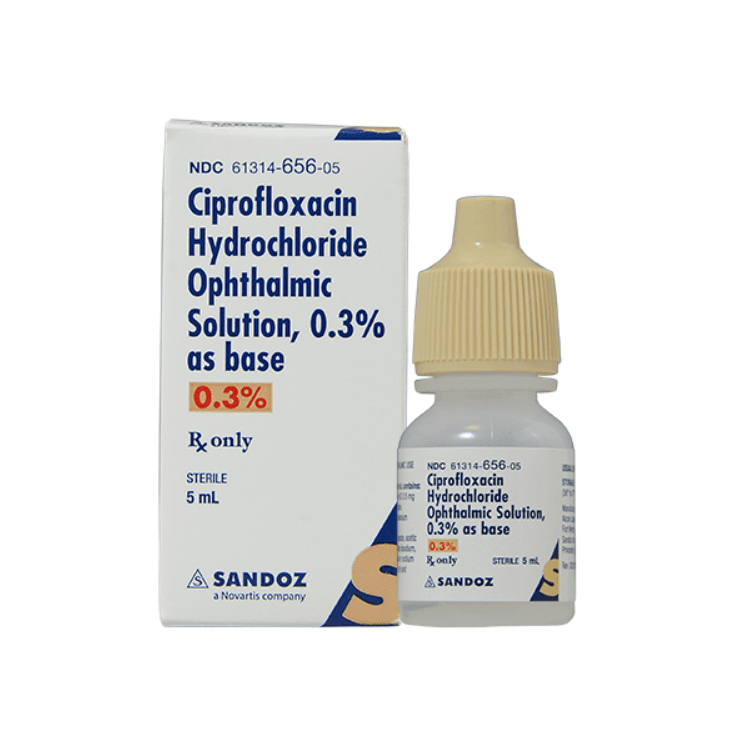
Ciprofloxacin Ophthalmic Solution
Buy Ciprofloxacin Ophthalmic Solution Online
Secure Encrypted Payments
Ciprofloxacin Ophthalmic Solution is an antibiotic eye drop used for certain bacterial eye infections, including bacterial conjunctivitis and corneal ulcers when clinically appropriate. It can be ordered online, with current price details shown during checkout and available strengths or quantities selected to match the directions you have been given. The medicine is for use in the eye only and does not treat viral, allergic, or fungal eye problems.
The active ingredient, ciprofloxacin, belongs to the fluoroquinolone class of antibacterial medicines. It works locally on susceptible bacteria in the eye, which helps limit whole-body exposure compared with oral antibiotics. BorderFreeHealth works with licensed pharmacies and supports US delivery from Canada for patients using cash-pay access.
Ciprofloxacin Eye Drops 0.3% Price and Bottle Selection
Ciprofloxacin eye drops 0.3% price can vary by bottle size, supplier, and current pharmacy availability. Review the current cost at checkout, then choose the quantity that fits the full course you were instructed to complete. Completing the full course matters because stopping too soon may allow the infection to return or become harder to treat.
Common presentations include ciprofloxacin ophthalmic solution 5 mL and ciprofloxacin ophthalmic solution 10 mL. The right quantity depends on the condition being treated, how often the drops are used, and how long treatment continues. Corneal ulcer schedules may use drops more frequently at the beginning, so some people may need more than one bottle.
Quick tip: Keep the bottle size and dosing schedule together when planning your order, especially for intensive early dosing.
How to Order Ciprofloxacin Ophthalmic Solution Online
Order Ciprofloxacin 0.3% eye drops online by selecting the available strength and bottle size that match your clinical directions. During ordering, we may review order details and pharmacy documentation when needed so the product can be supplied through licensed pharmacy channels. Payment and account information are handled through encrypted checkout.
Patients paying out of pocket often look for a clear Ciprofloxacin eye drops cash price before starting treatment. Current pricing is displayed during ordering, and Canada-sourced supply may be helpful for customers managing self-pay medication costs. For broader eye medication browsing, the ophthalmology category groups related eye-care therapies in one place.
Prompt, express shipping may be available as part of the order process. Keep in mind that bacterial eye infections can worsen quickly, particularly when the cornea is involved, so urgent symptoms should be handled through direct clinical care rather than delayed for an online order.
What Ciprofloxacin Ophthalmic Solution Treats
Ciprofloxacin Ophthalmic Solution is used for bacterial conjunctivitis caused by susceptible organisms and for bacterial corneal ulcers when directed by a clinician. Bacterial conjunctivitis may cause redness, discharge, eyelid crusting, and irritation. A corneal ulcer is more serious because it involves an open sore on the clear front surface of the eye.
This antibiotic does not treat pink eye caused by viruses, seasonal allergies, or fungal infections. If symptoms include severe pain, light sensitivity, vision changes, eye trauma, or a white spot on the cornea, seek urgent evaluation. Those signs may require same-day assessment and close follow-up.
For condition background, see bacterial conjunctivitis and corneal ulcer. These resources can help you understand why diagnosis matters before choosing an antibiotic eye drop.
How the Antibiotic Works
Ciprofloxacin is a fluoroquinolone antibacterial. It inhibits bacterial enzymes called DNA gyrase and topoisomerase IV, which bacteria need to copy and repair their genetic material. When susceptible bacteria cannot complete those processes, their growth is controlled and the infection can improve with proper use.
Because the drop is applied directly to the eye, the medication concentrates at the infected surface. Many people notice less discharge, redness, or irritation as bacterial growth declines. Improvement timing varies, and persistent or worsening symptoms should be discussed with a healthcare professional.
Ciloxan eye drops 0.3% contain ciprofloxacin as the active antibacterial ingredient in a branded ophthalmic formulation. Generic ciprofloxacin ophthalmic solution may be considered when appropriate, but brand, manufacturer, and market naming can differ between countries.
How to Use Ciprofloxacin Eye Drops
Use the drops exactly as directed for your condition. For bacterial conjunctivitis, labeled adult regimens commonly begin with more frequent dosing while awake for the first two days, followed by less frequent dosing for several more days. Corneal ulcer regimens are usually more intensive at first and require careful monitoring.
Good drop technique helps protect the sterile bottle tip and improves delivery to the eye:
- Wash your hands before each dose.
- Tilt your head back and gently pull down the lower eyelid.
- Hold the bottle above the eye without touching lashes, skin, or the eye surface.
- Place the drop into the lower-lid pocket.
- Close the eye gently for one to two minutes.
- Press lightly at the inner corner of the eye to reduce drainage into the nose.
- Separate other eye drops by at least five minutes.
- Use gels or ointments last if more than one eye medicine is being used.
Do not share eye drops, even with someone who appears to have the same infection. Sharing can spread germs and contaminate the bottle. If you miss a dose, use it when remembered unless it is nearly time for the next dose; do not double the amount.
Contact Lenses, Hygiene, and Contamination Prevention
Avoid wearing contact lenses during an active eye infection unless a healthcare professional specifically tells you it is safe. Contacts can trap bacteria against the eye and may worsen irritation. Soft lenses may also absorb preservatives used in some ophthalmic solutions.
Replace or disinfect lenses and lens cases after the infection clears, following professional guidance. Wash pillowcases, towels, and face cloths frequently during active conjunctivitis. Avoid touching or rubbing the infected eye, and wash hands after applying drops or wiping discharge.
Why it matters: Preventing contamination protects both the treated eye and the remaining medicine in the bottle.
Storage, Travel, and Handling
Store ciprofloxacin ophthalmic solution at room temperature in the original container. Keep the cap tightly closed and protect the dropper tip from contamination. Do not freeze the bottle, and avoid leaving it in a hot car or direct sunlight.
Ciprofloxacin eye drops usually do not need refrigeration unless the specific label or pharmacy directions say otherwise. When traveling, place the bottle in a sealed bag inside carry-on luggage and keep it away from excessive heat. Carry your medication directions with you in case you need help using the drops correctly while away from home.
Discard the bottle by the labeled in-use period after opening, even if some liquid remains. Eye drops can become contaminated after repeated use, and older bottles should not be saved for future eye symptoms.
Side Effects, Warnings, and When to Get Help
Common side effects can include temporary burning, stinging, eye discomfort, redness, tearing, itching, or a feeling that something is in the eye. Some people notice a bitter or unusual taste after dosing because a small amount may drain through the tear duct into the nose and throat.
During corneal ulcer treatment, white crystalline deposits have been reported on the corneal surface. A clinician should monitor corneal ulcers closely because untreated or worsening ulcers can threaten vision. Keep follow-up appointments if they are scheduled, even if the eye feels better.
Stop using the drops and seek medical help if signs of a serious allergic reaction occur, such as hives, swelling of the face or eyelids, severe rash, wheezing, or trouble breathing. Urgent care is also needed for severe eye pain, sudden vision changes, increasing light sensitivity, worsening swelling, or symptoms that do not improve as expected.
Tell a healthcare professional about prior reactions to ciprofloxacin, levofloxacin, moxifloxacin, or other quinolone antibiotics. Overgrowth of non-susceptible organisms can occur with prolonged antibiotic use, which is one reason the course should follow individualized directions rather than being extended on your own.
Interactions and Other Eye Medicines
Major whole-body drug interactions are not expected with typical ophthalmic use because very little ciprofloxacin enters the bloodstream. The most practical interaction issue is timing with other eye products. Space separate drops by at least five minutes so the first medicine is not washed out.
If you use artificial tears, glaucoma drops, steroid drops, or an eye ointment, ask how to sequence them. Ointments and gels should generally be applied last because they can blur vision and create a thicker layer on the eye surface. Do not add steroid eye drops for redness unless they have been specifically recommended, since steroids can worsen some infections.
Temporary blurred vision may occur right after dosing. Wait until vision clears before driving, using machinery, or performing tasks that require sharp eyesight.
Brand, Generic, and Related Eye-Antibiotic Choices
Ciprofloxacin Ophthalmic Solution is the generic active-ingredient choice associated with Ciloxan ophthalmic products. Brand and generic products may differ in inactive ingredients, bottle design, manufacturer, and market availability while using the same antibacterial ingredient. Your choice should match the product, strength, and quantity directed for the eye condition being treated.
Some people may be directed to use a brand formulation or an ointment instead of drops. Ointments can provide longer contact time on the eye surface and may be useful when nighttime coverage is needed, but they can blur vision. Drops are often easier to apply during waking hours and may fit frequent dosing schedules.
If you are reviewing broader eye-care options, browse ophthalmology articles for patient education and the Canada-sourced product section for items grouped by country of origin. Internal education does not replace diagnosis, but it can help you prepare better questions.
Questions to Ask Before Starting Treatment
Ask what type of infection is suspected and how long the drops should be used. Clarify whether one or both eyes need treatment, how to handle missed doses, and when improvement should be noticeable. If cultures or staining were performed, ask whether results could change the antibiotic choice.
Contact lens users should ask when lenses can be resumed and whether old lenses or cases should be replaced. People using multiple eye medicines should write down the order and spacing for each product. If the infection involves the cornea, ask when follow-up should occur and what symptoms require urgent care.
Authoritative Sources
For official and clinical product information, consult these references:
- DailyMed prescribing information for ciprofloxacin ophthalmic solution
- Mayo Clinic ciprofloxacin ophthalmic information
This content is for informational purposes only and is not a substitute for professional medical advice.
Express Shipping - from $29.99
Shipping with this method takes 3-5 days
Prices:
- Dry-Packed Products $29.99
- Cold-Packed Products $39.99
Shipping Countries:
- United States (all contiguous states**)
- Worldwide (excludes some countries***)
Standard Shipping - $19.99
Shipping with this method takes 5-10 days
Prices:
- Dry-Packed Products $19.99
- Not available for Cold-Packed products
Shipping Countries:
- United States (all contiguous states**)
- Worldwide (excludes some countries***)
What is Ciprofloxacin Ophthalmic Solution used for?
Ciprofloxacin Ophthalmic Solution is used for certain bacterial eye infections, including bacterial conjunctivitis and corneal ulcers caused by susceptible organisms. It is not used for viral, allergic, or fungal eye problems.
Should Ciprofloxacin eye drops be refrigerated?
Ciprofloxacin eye drops are generally stored at room temperature unless the bottle label or pharmacy directions say otherwise. Keep the cap closed, avoid freezing, and protect the tip from contamination.
How often can Ciprofloxacin eye drops be used?
Frequency depends on the condition being treated. Bacterial conjunctivitis regimens often start more frequently for the first two days, while corneal ulcer regimens can be much more intensive. Follow the directions provided for your specific treatment.
Can I wear contact lenses while using Ciprofloxacin eye drops?
Contact lenses are usually avoided during an active eye infection unless a healthcare professional says otherwise. Lenses and cases may need replacement or disinfection after the infection clears.
What side effects can Ciprofloxacin eye drops cause?
Common effects include temporary burning, stinging, redness, discomfort, tearing, itching, foreign-body sensation, or an unusual taste after dosing. Seek urgent help for severe pain, vision changes, swelling, rash, or breathing difficulty.
Rewards Program
Earn points on birthdays, product orders, reviews, friend referrals, and more! Enjoy your medication at unparalleled discounts while reaping rewards for every step you take with us.
You can read more about rewards here.
POINT VALUE
How to earn points
- 1Create an account and start earning.
- 2Earn points every time you shop or perform certain actions.
- 3Redeem points for exclusive discounts.
You Might Also Like
Select options
This product has multiple variants. The options may be chosen on the product page
Select options
This product has multiple variants. The options may be chosen on the product page
Select options
This product has multiple variants. The options may be chosen on the product page
Select options
This product has multiple variants. The options may be chosen on the product page