
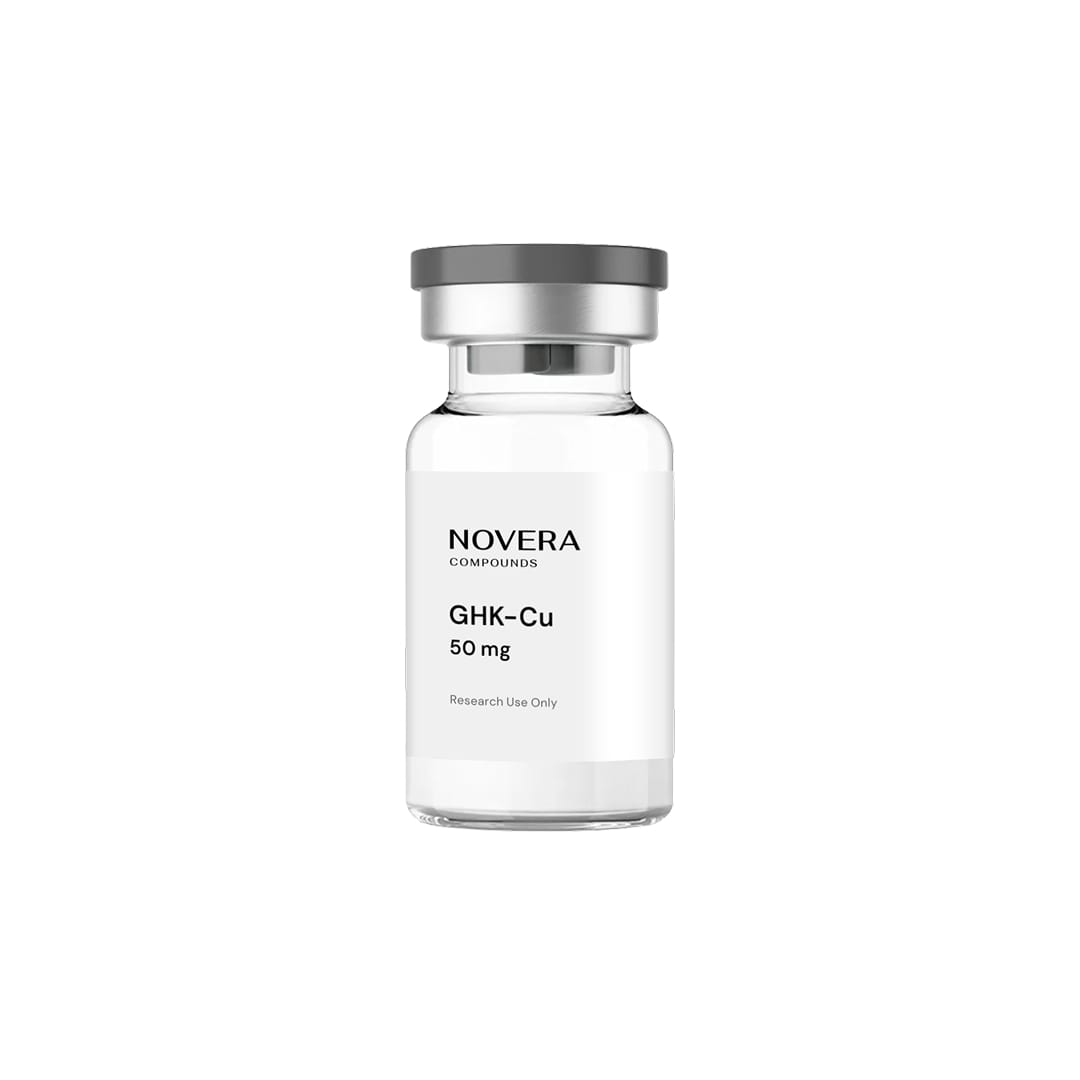
GHK-Cu

Buy GHK-Cu Online

Book Now

Questions about peptides? Click here to schedule a free consultation with a physician.
x
Secure Encrypted Payments

Buy GHK-Cu online with a valid prescription and compare current listed pricing, available presentations, and key safety basics before ordering. You can use this page to check GHK-Cu price factors, dose-option details, and product information in one place, including US delivery from Canada when that service is available for the selected listing. Match the presentation on the page with the directions from your clinician so the order reflects the product you were prescribed.

GHK-Cu is a copper-binding peptide, so form, concentration, handling, and route-specific instructions matter. Before checkout, compare the selected option, quantity, storage notes, and any required product details instead of assuming that every peptide listing is interchangeable.

GHK-Cu Price and Available Options

The current listed price should be read together with the selected presentation. A peptide listing may show different quantities, strengths, concentrations, or package sizes as separate options, and each choice can affect the final checkout total. Compare the exact option on the product page with your clinician’s directions before you rely on any displayed amount.

When reviewing GHK-Cu cost, look beyond the headline listing. Total contents, concentration, and the number of supplied units are not the same as a single use or an individualized protocol. If the page shows more than one presentation, check whether the selector changes the quantity, storage needs, or preparation instructions.

Quick tip: Keep the product name, strength, form, and quantity beside your prescription while comparing options.

Detail to checkWhy it matters
PresentationTopical, injectable, or other forms are not interchangeable unless your clinician confirms the match.
Strength or concentrationThe labeled amount can change how the product is prepared, stored, or measured.
Total quantityPackage size affects how much product is supplied, not your personal dose.
Handling notesTemperature, light protection, and preparation directions can affect product integrity.

If you are comparing peptide listings more broadly, the Peptides category can help you separate product types before reviewing a specific prescription order.

How to Buy GHK-Cu Online

Choose the presentation that matches your clinician’s instructions, then review the checkout fields before submitting the order. The page may ask for the prescribed product details, prescriber information, or other supporting information so the selected option can be checked before it is filled.

Prescriber details may be reviewed when needed, especially when the product, form, or quantity needs confirmation. Cash-pay access may be available for eligible patients without insurance, but the product details still need to match the clinical directions you received.

The practical value of ordering through a PDP is clarity. You can compare the listed option, read handling notes, and check safety basics before moving forward. If express shipping options appear at checkout, review any temperature or handling instructions before payment rather than relying on timing alone.

Why it matters: Peptide products can look similar online while requiring very different handling or use instructions.

What This Peptide Is Used For

GHK-Cu is a copper complex of the small peptide glycyl-L-histidyl-L-lysine. It is discussed in research and clinical practice for roles related to skin appearance, tissue support, and repair signaling, but results can vary by formulation, route, and patient factors. It should not be treated as a guaranteed cosmetic or wellness outcome.

Some customers review this product while exploring clinician-directed skin or recovery protocols. If your interest is mainly cosmetic, compare the prescribed product with the type of skin concern being addressed. The Skin Rejuvenation and Anti-Aging collections can help you browse related product areas without assuming that every option serves the same purpose.

Because peptide evidence is not identical across forms, avoid using general online claims to choose a route, dose, or schedule. A topical copper peptide cosmetic, a clinician-directed peptide product, and a research discussion may refer to the same molecule in different contexts. The correct choice is the one that matches your prescribed plan.

Dose Options and Product Details to Match

GHK-Cu dose options should be interpreted through the product’s labeled form and your clinician’s instructions. Do not calculate a dose from the product title alone. A concentration, vial size, container volume, or number of units may describe what is supplied, not the amount intended for each use.

If the listing includes a strength selector, compare every field before checkout. Small differences in volume or concentration can change how a product is measured. If the form requires mixing, preparation, or a device, make sure the supplied components and instructions are clear before you proceed.

  • Confirm the form: Check whether the listing matches topical, injectable, or another directed use.
  • Check the strength: Match concentration or labeled amount to the prescribed product.
  • Review the quantity: Package size may reflect supply, not a dose.
  • Look for devices: Syringes, droppers, or other tools may change handling needs.
  • Save instructions: Keep written directions available for preparation and storage questions.

Ask your clinician or pharmacist if the product label, selected option, or instructions do not line up. Do not substitute a different form just because it appears similar or is easier to obtain.

Handling, Storage, and Travel Basics

Storage matters for peptide products. Follow the label and any pharmacy-provided directions for temperature, light exposure, and beyond-use dating. If refrigeration is required, keep the product cold as directed and avoid leaving it in a hot car, checked luggage, or direct sunlight.

Some peptide preparations may have different storage needs before and after opening or mixing. If your product arrives with diluent, a device, or preparation instructions, keep the materials together until you understand the steps. Do not freeze a product unless the label specifically says to do so.

For travel, plan around temperature control and access to the original label. Keep products in secure packaging, separate them from cosmetics or supplements, and carry enough information to identify the product if asked. If you are unsure whether travel conditions could damage the product, ask before you leave rather than trying to correct a storage problem later.

Safety Basics Before Using This Product

Safety questions should be answered before the first use, not after a reaction occurs. Possible issues may include skin irritation, redness, itching, rash, or sensitivity at the site of use. If the prescribed form is injectable, injection-site pain, swelling, bruising, or signs of infection may also need attention.

Seek urgent help for symptoms that could suggest a serious allergic reaction, such as trouble breathing, facial swelling, widespread hives, or severe dizziness. Contact a healthcare professional if you notice spreading redness, warmth, pus, fever, or worsening pain after an injection or skin exposure. These symptoms should not be managed by changing the product schedule on your own.

Tell your clinician about liver disease, known copper metabolism problems, pregnancy, breastfeeding, immune compromise, or a history of strong skin reactions. Also mention procedures, wound-healing concerns, and any recent cosmetic treatments. These details can affect whether the product is appropriate and how closely you should be monitored.

Expectations also matter. Some people search for fast visible changes, but peptide response is not guaranteed and may not follow social-media timelines. Track any reaction, benefit, or concern in a simple log so your clinician can assess the product against your actual experience.

Interactions and Monitoring Questions

GHK-Cu does not have the same standardized interaction profile as many approved prescription medicines. That makes a full medication and supplement list especially important. Include copper supplements, multivitamins, topical acids, retinoids, exfoliants, wound products, injections, and any treatments used on the same skin area.

Avoid stacking several new products at once unless your clinician gives specific instructions. Starting multiple skin, supplement, or peptide products together can make it harder to identify the cause of irritation or other side effects. If the product is used around a procedure, ask whether timing or site selection matters.

Monitoring may be simple or more involved, depending on the protocol. Your clinician may want updates about irritation, injection-site changes, skin response, or other symptoms. Keep the product container and lot information available if you need to report a concern.

How It Compares With Related Options

Peptide products are not interchangeable just because they share a category. GHK-Cu is commonly discussed for copper-peptide and skin-support contexts, while other peptides may be prescribed for very different goals. For example, Cagrilintide is a separate peptide option and should not be compared as a substitute for skin or tissue-support protocols.

If your clinician is evaluating inflammation-related concerns, the Inflammation collection may help you browse adjacent product areas. Use comparisons to clarify questions for your clinician, not to change the product, form, or dose on your own.

The best comparison is practical: intended use, route, strength, storage needs, and safety profile. A lower-looking listing may not represent the same total quantity or handling requirement, and a larger package may not be appropriate for the directions you received.

Authoritative Sources

Published research can help explain why copper peptides are studied, but it does not replace product-specific directions or a clinician’s assessment. The sources below are useful for understanding the research context behind the molecule.

This content is for informational purposes only and is not a substitute for professional medical advice.

Express Shipping - from $25.00

Shipping with this method takes 3-5 days

Prices:
  • Dry-Packed Products $25.00
  • Cold-Packed Products $35.00
Shipping Countries:
  • United States (all contiguous states**)
  • Worldwide (excludes some countries***)

Standard Shipping - $15.00

Shipping with this method takes 5-10 days

Prices:
  • Dry-Packed Products $15.00
  • Not available for Cold-Packed products
Shipping Countries:
  • United States (all contiguous states**)
  • Worldwide (excludes some countries***)

Rewards Program

Earn points on birthdays, product orders, reviews, friend referrals, and more! Enjoy your medication at unparalleled discounts while reaping rewards for every step you take with us.

You can read more about rewards here.

POINT VALUE

100 points
1 USD

How to earn points

  • 1Register and/or Login
    Create an account and start earning.
  • 2Earn Rewards
    Earn points every time you shop or perform certain actions.
  • 3Redeem
    Redeem points for exclusive discounts.

You Might Also Like

TB500

$61.74

  • In Stock
  • Express Shipping
Our Price $61.74
Select options This product has multiple variants. The options may be chosen on the product page
Cagrilintide

$186.19

  • In Stock
  • Express Shipping
Our Price $186.19
Select options This product has multiple variants. The options may be chosen on the product page
BPC-157

$47.49

  • In Stock
  • Express Shipping
Our Price $47.49
Select options This product has multiple variants. The options may be chosen on the product page
Retatrutide

$85.49

  • In Stock
  • Express Shipping
Our Price $85.49
Select options This product has multiple variants. The options may be chosen on the product page

Peptide Screening Form

Patient Information

Please provide your basic demographic information.

Type your date of birth in MM/DD/YYYY format.

Peptides of Interest

Peptides of Interest

Select the peptides you are interested in or have been recommended.

Medical History & Screening

Medical History & Screening

Please indicate if any of the following apply to you. Red flag alerts will appear if a condition contraindicates any of the available peptide therapies.

Contraindicated for CJC-1295: Growth hormone-releasing peptides like CJC-1295 are contraindicated in patients with active cancer because they may promote cell proliferation and tumor growth.

Contraindicated for Ipamorelin: Ipamorelin stimulates growth hormone release, which may promote tumor growth and cell proliferation in active cancers.

Contraindicated for Sermorelin: Sermorelin increases growth hormone production, which may stimulate growth of existing tumors.

Contraindicated for BPC-157: BPC-157 promotes angiogenesis (new blood vessel formation), which could support tumor growth and metastasis in active cancers.

Contraindicated for AOD-9604: Although AOD-9604 is a modified GH fragment, it may still interact with growth-related pathways in patients with active malignancies.

Contraindicated for TB-500 (Thymosin Beta-4): TB-500 promotes cell migration and angiogenesis, which may facilitate tumor growth and metastasis in active cancers.

Contraindicated for GHK-Cu: GHK-Cu promotes angiogenesis and tissue remodeling, which may support tumor growth in patients with active cancer.

Contraindicated for Epithalon (Epitalon): Epithalon stimulates telomerase activity. Cancer cells exploit telomerase to achieve immortality, potentially accelerating tumor growth.

Contraindicated for Semax: Semax has neurotrophic properties that promote cell growth, which may be concerning in patients with active malignancies.

Contraindicated for MOTS-c: MOTS-c influences cellular metabolism and AMPK pathways. Effects on cancer cell metabolism are not fully understood.

Contraindicated for Tesamorelin: Tesamorelin stimulates growth hormone release, which may promote tumor growth in patients with active malignancies.

Contraindicated for Hexarelin: Hexarelin stimulates growth hormone release, which may promote tumor growth and cell proliferation.

Contraindicated for GHRP-6: GHRP-6 stimulates growth hormone release, which may promote tumor growth in active cancers.

Contraindicated for GHRP-2: GHRP-2 stimulates growth hormone release, which may promote tumor growth in active malignancies.

Contraindicated for Melanotan II: Melanotan II stimulates melanocyte activity. In patients with skin cancers, particularly melanoma, it may accelerate disease progression.

Contraindicated for Dihexa: Dihexa activates hepatocyte growth factor (HGF) pathways, which can promote tumor growth and metastasis.

Contraindicated for Kisspeptin-10: Kisspeptin-10 influences reproductive hormone pathways. Hormone-sensitive cancers may be affected by altered GnRH and gonadotropin levels.

Contraindicated for Humanin: Humanin has anti-apoptotic properties that may protect cancer cells from programmed cell death, potentially supporting tumor survival.

Contraindicated for Retatrutide: Retatrutide acts on multiple metabolic pathways including GLP-1 and GIP receptors. Its effects on cell proliferation in patients with active malignancies have not been fully characterized.

Contraindicated for CJC-1295: CJC-1295 stimulates growth hormone release, which can increase IGF-1 levels. Elevated IGF-1 has been associated with cancer recurrence.

Contraindicated for Ipamorelin: The growth hormone and IGF-1 elevation from Ipamorelin may increase the risk of cancer recurrence.

Contraindicated for Sermorelin: Growth hormone stimulation from Sermorelin elevates IGF-1, which has been linked to increased cancer recurrence risk.

Contraindicated for BPC-157: The pro-angiogenic properties of BPC-157 may potentially support recurrence by promoting blood vessel growth that could feed dormant cancer cells.

Contraindicated for TB-500 (Thymosin Beta-4): The pro-angiogenic and cell-migration properties of TB-500 may increase the risk of cancer recurrence.

Contraindicated for Epithalon (Epitalon): Telomerase activation from Epithalon may increase the risk of cancer recurrence by supporting abnormal cell survival.

Contraindicated for Tesamorelin: Growth hormone and IGF-1 elevation from Tesamorelin may increase risk of cancer recurrence.

Contraindicated for Hexarelin: Elevated growth hormone and IGF-1 from Hexarelin may increase risk of cancer recurrence.

Contraindicated for GHRP-6: Growth hormone and IGF-1 elevation from GHRP-6 may increase risk of cancer recurrence.

Contraindicated for GHRP-2: Elevated IGF-1 from GHRP-2-stimulated growth hormone may increase cancer recurrence risk.

Contraindicated for Melanotan II: Melanocortin stimulation from Melanotan II may increase melanoma recurrence risk in patients with skin cancer history.

Contraindicated for Dihexa: HGF pathway activation from Dihexa may increase cancer recurrence risk through pro-growth signaling.

Contraindicated for Humanin: The cytoprotective effects of Humanin may increase cancer recurrence risk by inhibiting apoptosis in dormant cancer cells.

Contraindicated for Retatrutide: GLP-1 receptor agonists have been linked to thyroid C-cell tumors in animal studies. Retatrutide is contraindicated in patients with a personal or family history of medullary thyroid carcinoma.

Contraindicated for Retatrutide: Retatrutide is contraindicated in patients with Multiple Endocrine Neoplasia syndrome type 2 (MEN 2) due to the risk of medullary thyroid carcinoma associated with GLP-1 receptor agonists.

Contraindicated for CJC-1295: CJC-1295 has not been studied in pregnancy and may affect fetal development through altered growth hormone levels.

Contraindicated for Ipamorelin: Ipamorelin has not been studied in pregnancy. Altered growth hormone levels may impact fetal development.

Contraindicated for Sermorelin: Sermorelin is not approved for use during pregnancy due to potential effects on fetal growth and development.

Contraindicated for BPC-157: BPC-157 has not been adequately studied in human pregnancy. Its tissue-modulating effects may pose risks to fetal development.

Contraindicated for Thymosin Alpha-1: Immune modulation during pregnancy may disrupt the delicate immune tolerance required for fetal development.

Contraindicated for PT-141: PT-141 is contraindicated in pregnancy as melanocortin receptor activation may affect fetal development.

Contraindicated for AOD-9604: AOD-9604 has not been studied in pregnancy. Its effects on fetal metabolism are unknown.

Contraindicated for TB-500 (Thymosin Beta-4): TB-500 has not been studied in pregnancy. Its tissue-remodeling effects may pose risks to fetal development.

Contraindicated for GHK-Cu: GHK-Cu has not been studied in pregnancy. Copper peptide effects on fetal development are unknown.

Contraindicated for Epithalon (Epitalon): Epithalon has not been studied in pregnancy. Effects on fetal cellular development are unknown.

Contraindicated for Selank: Selank has not been studied in pregnancy. Its neuroactive effects may impact fetal brain development.

Contraindicated for Semax: Semax has not been studied in pregnancy. Its neuroactive and hormonal effects may affect fetal development.

Contraindicated for DSIP (Delta Sleep-Inducing Peptide): DSIP has not been studied in pregnancy. Its neuroendocrine effects may impact fetal development.

Contraindicated for MOTS-c: MOTS-c has not been studied in pregnancy. Its metabolic effects may impact fetal development.

Contraindicated for Tesamorelin: Tesamorelin is contraindicated in pregnancy due to potential effects on fetal growth from altered growth hormone levels.

Contraindicated for Hexarelin: Hexarelin has not been studied in pregnancy. Altered growth hormone levels may impact fetal development.

Contraindicated for GHRP-6: GHRP-6 has not been studied in pregnancy. Growth hormone modulation may affect fetal development.

Contraindicated for GHRP-2: GHRP-2 has not been studied in pregnancy. Its effects on fetal growth and development are unknown.

Contraindicated for Melanotan II: Melanotan II is contraindicated in pregnancy due to unknown effects on fetal development from melanocortin receptor activation.

Contraindicated for LL-37: LL-37 has not been studied in pregnancy. Immune modulation may disrupt maternal-fetal immune tolerance.

Contraindicated for KPV: KPV has not been studied in pregnancy. Its immunomodulatory effects may impact fetal development.

Contraindicated for Dihexa: Dihexa has not been studied in pregnancy. Its neurotrophic and growth factor effects may impact fetal development.

Contraindicated for 5-Amino-1MQ: 5-Amino-1MQ has not been studied in pregnancy. Its metabolic enzyme inhibition may affect fetal development.

Contraindicated for SS-31 (Elamipretide): SS-31 has not been studied in pregnancy. Its effects on mitochondrial function in developing tissues are unknown.

Contraindicated for PE-22-28: PE-22-28 has not been studied in pregnancy. Its neurogenic effects may impact fetal brain development.

Contraindicated for Kisspeptin-10: Kisspeptin-10 directly affects reproductive hormones and GnRH signaling. Use during pregnancy may disrupt hormonal balance critical for fetal development.

Contraindicated for Humanin: Humanin has not been studied in pregnancy. Its effects on fetal cellular development and apoptosis pathways are unknown.

Contraindicated for KLOW: KLOW has not been studied in pregnancy. Effects on fetal development are unknown.

Contraindicated for GLOW: GLOW has not been studied in pregnancy. Effects on fetal development are unknown.

Contraindicated for Retatrutide: Retatrutide has not been studied in pregnancy. GLP-1 receptor agonists may affect fetal development and maternal glucose regulation.

Contraindicated for CJC-1295: Safety of CJC-1295 during breastfeeding has not been established. Growth hormone modulation could affect lactation.

Contraindicated for BPC-157: Insufficient safety data exists for BPC-157 use during breastfeeding.

Contraindicated for PT-141: Safety of PT-141 during breastfeeding has not been established.

Contraindicated for AOD-9604: Insufficient safety data for AOD-9604 during breastfeeding.

Contraindicated for Selank: Safety of Selank during breastfeeding has not been established. Neuroactive peptides may pass into breast milk.

Contraindicated for DSIP (Delta Sleep-Inducing Peptide): Safety of DSIP during breastfeeding has not been established.

Contraindicated for KPV: Safety of KPV during breastfeeding has not been established.

Contraindicated for 5-Amino-1MQ: Safety of 5-Amino-1MQ during breastfeeding has not been established.

Contraindicated for PE-22-28: Safety of PE-22-28 during breastfeeding has not been established. Neuroactive peptides may pass into breast milk.

Contraindicated for Kisspeptin-10: Kisspeptin-10 modulates reproductive hormones, which may affect lactation and hormonal balance during breastfeeding.

Contraindicated for KLOW: Safety of KLOW during breastfeeding has not been established.

Contraindicated for GLOW: Safety of GLOW during breastfeeding has not been established.

Contraindicated for Retatrutide: Safety of Retatrutide during breastfeeding has not been established. It is unknown whether the peptide is excreted in breast milk.

Contraindicated for CJC-1295: Growth hormone elevation from CJC-1295 can worsen diabetic retinopathy by promoting abnormal blood vessel growth in the retina.

Contraindicated for Ipamorelin: Elevated growth hormone from Ipamorelin can accelerate retinal neovascularization in diabetic retinopathy.

Contraindicated for GHRP-6: Elevated growth hormone from GHRP-6 can worsen diabetic retinopathy by promoting abnormal blood vessel growth.

Contraindicated for GHRP-2: Growth hormone elevation from GHRP-2 can accelerate retinal neovascularization in diabetic retinopathy.

Contraindicated for Retatrutide: Rapid improvement in glycemic control from Retatrutide may temporarily worsen diabetic retinopathy. Close ophthalmologic monitoring is recommended.

Contraindicated for CJC-1295: Growth hormone-releasing peptides can elevate intracranial pressure, worsening existing intracranial hypertension.

Contraindicated for Sermorelin: Growth hormone elevation from Sermorelin can increase intracranial pressure.

Contraindicated for Tesamorelin: Growth hormone elevation from Tesamorelin can increase intracranial pressure.

Contraindicated for CJC-1295: CJC-1295 acts on the pituitary gland. Existing pituitary disorders may lead to unpredictable or dangerous hormone responses.

Contraindicated for Ipamorelin: Ipamorelin directly stimulates the pituitary gland. Pre-existing pituitary conditions may result in adverse hormonal responses.

Contraindicated for Sermorelin: Sermorelin requires a functioning pituitary gland. Pituitary disorders may prevent proper response or cause adverse effects.

Contraindicated for DSIP (Delta Sleep-Inducing Peptide): DSIP affects neuroendocrine signaling involving the pituitary gland. Pre-existing pituitary conditions may lead to unpredictable effects.

Contraindicated for Tesamorelin: Tesamorelin acts directly on the pituitary gland. Pre-existing pituitary disorders may cause unpredictable hormonal responses.

Contraindicated for Hexarelin: Hexarelin acts on the pituitary gland. Pre-existing pituitary conditions may result in adverse hormonal responses.

Contraindicated for GHRP-6: GHRP-6 acts directly on the pituitary gland. Pre-existing disorders may cause adverse hormonal effects.

Contraindicated for GHRP-2: GHRP-2 directly stimulates the pituitary gland. Pre-existing pituitary disorders may cause unpredictable responses.

Contraindicated for Kisspeptin-10: Kisspeptin-10 stimulates the hypothalamic-pituitary axis. Pre-existing pituitary disorders may lead to unpredictable hormonal responses.

Contraindicated for Thymosin Alpha-1: Thymosin Alpha-1 stimulates T-cell activity and immune response. In patients with autoimmune conditions, this can trigger disease flares.

Contraindicated for Epithalon (Epitalon): Epithalon may modulate immune function through its effects on the pineal gland, potentially exacerbating autoimmune conditions.

Contraindicated for Melanotan II: Melanotan II modulates immune function through melanocortin receptors, potentially exacerbating autoimmune conditions.

Contraindicated for LL-37: LL-37 is a potent immune activator. In autoimmune conditions, it may trigger inflammatory flares and worsen disease activity.

Contraindicated for KLOW: Peptide blends may modulate immune function. Patients with autoimmune conditions should consult their provider before use.

Contraindicated for GLOW: Peptide blends may modulate immune function. Patients with autoimmune conditions should consult their provider before use.

Contraindicated for Thymosin Alpha-1: Thymosin Alpha-1 enhances immune function, which directly counteracts immunosuppressive therapy required to prevent organ rejection.

Contraindicated for LL-37: LL-37 enhances immune function, which may counteract immunosuppressive therapy in transplant recipients.

Contraindicated for PT-141: PT-141 affects blood pressure and cardiovascular function. Patients with heart disease face increased risk of adverse cardiac events.

Contraindicated for Hexarelin: Hexarelin has been shown to affect cardiac function and cortisol release. Patients with cardiovascular disease should use caution.

Contraindicated for Melanotan II: Melanotan II affects cardiovascular function and can cause nausea and flushing. Heart disease patients should avoid use.

Contraindicated for PT-141: PT-141 can cause transient increases in blood pressure. Uncontrolled hypertension increases the risk of cardiovascular events.

Contraindicated for Semax: Semax can influence blood pressure regulation. Patients with uncontrolled hypertension should use caution.

Contraindicated for Melanotan II: Melanotan II can cause blood pressure fluctuations. Patients with uncontrolled hypertension face increased cardiovascular risk.

Contraindicated for Dihexa: Dihexa may influence cardiovascular function. Patients with uncontrolled hypertension should exercise caution.

Contraindicated for AOD-9604: Patients with severe kidney disease may have impaired clearance of AOD-9604 metabolites.

Contraindicated for MOTS-c: Patients with severe kidney disease may have impaired clearance of MOTS-c metabolites.

Contraindicated for 5-Amino-1MQ: Patients with kidney disease may have impaired clearance of 5-Amino-1MQ metabolites.

Contraindicated for SS-31 (Elamipretide): Patients with severe kidney disease may have impaired clearance of SS-31 and its metabolites.

Contraindicated for Retatrutide: Patients with severe kidney disease may have impaired clearance of Retatrutide. Dose adjustment or avoidance may be necessary.

Contraindicated for GHK-Cu: Copper metabolism is heavily dependent on liver function. Patients with liver disease may accumulate copper to toxic levels.

Contraindicated for 5-Amino-1MQ: 5-Amino-1MQ affects metabolic enzyme pathways. Patients with liver disease may experience altered drug metabolism and increased toxicity risk.

Contraindicated for Retatrutide: Retatrutide is metabolized hepatically. Patients with significant liver impairment may experience altered drug levels and increased risk of adverse effects.

Contraindicated for Retatrutide: GLP-1 receptor agonists, including Retatrutide, have been associated with an increased risk of pancreatitis. Patients with a history of pancreatitis should avoid use.

Contraindicated for BPC-157: BPC-157 affects the nitric oxide system and may influence blood clotting. Patients with clotting disorders should avoid use.

Contraindicated for TB-500 (Thymosin Beta-4): TB-500 can influence blood clotting pathways. Patients with clotting disorders or on anticoagulants should avoid use.

Contraindicated for Selank: Selank is derived from tuftsin, which can influence immune and coagulation pathways. Patients with clotting disorders should use caution.

Contraindicated for SS-31 (Elamipretide): SS-31 has been associated with injection site reactions. Patients with known peptide allergies should be monitored.

Contraindicated for KLOW: Multi-component peptide blends carry increased risk of allergic reactions. Patients with known peptide allergies should be monitored.

Contraindicated for GLOW: Multi-component peptide blends carry increased risk of allergic reactions. Patients with known peptide allergies should be monitored.

Contraindicated for Thymosin Alpha-1: Thymosin Alpha-1 directly opposes immunosuppressive medications, potentially causing dangerous drug interactions.

Contraindicated for LL-37: LL-37 stimulates immune responses, potentially opposing immunosuppressive medications.

Contraindicated for KPV: KPV has anti-inflammatory and immune-modulating effects that may interact with immunosuppressive medications.

Current Medications

List all medications, supplements, and treatments you are currently using.

Additional Notes

Medical Disclaimer

This screening questionnaire is for informational and pre-consultation purposes only. It does not constitute medical advice, diagnosis, or a treatment recommendation.

All peptide therapy protocols must be prescribed and supervised by a licensed healthcare provider. The contraindication information provided here is based on general clinical guidelines and may not reflect every individual’s unique medical circumstances.

Peptide therapies are used off-label in many cases. Results vary by individual. Borderfreehealth.com does not guarantee outcomes from any peptide therapy program.

By submitting this form, you acknowledge that a qualified medical professional will review your responses and determine appropriate treatment options. Do not discontinue any current medications or begin any new treatment based solely on the results of this screening.