
Questions about peptides? Click here to schedule a free consultation with a physician.
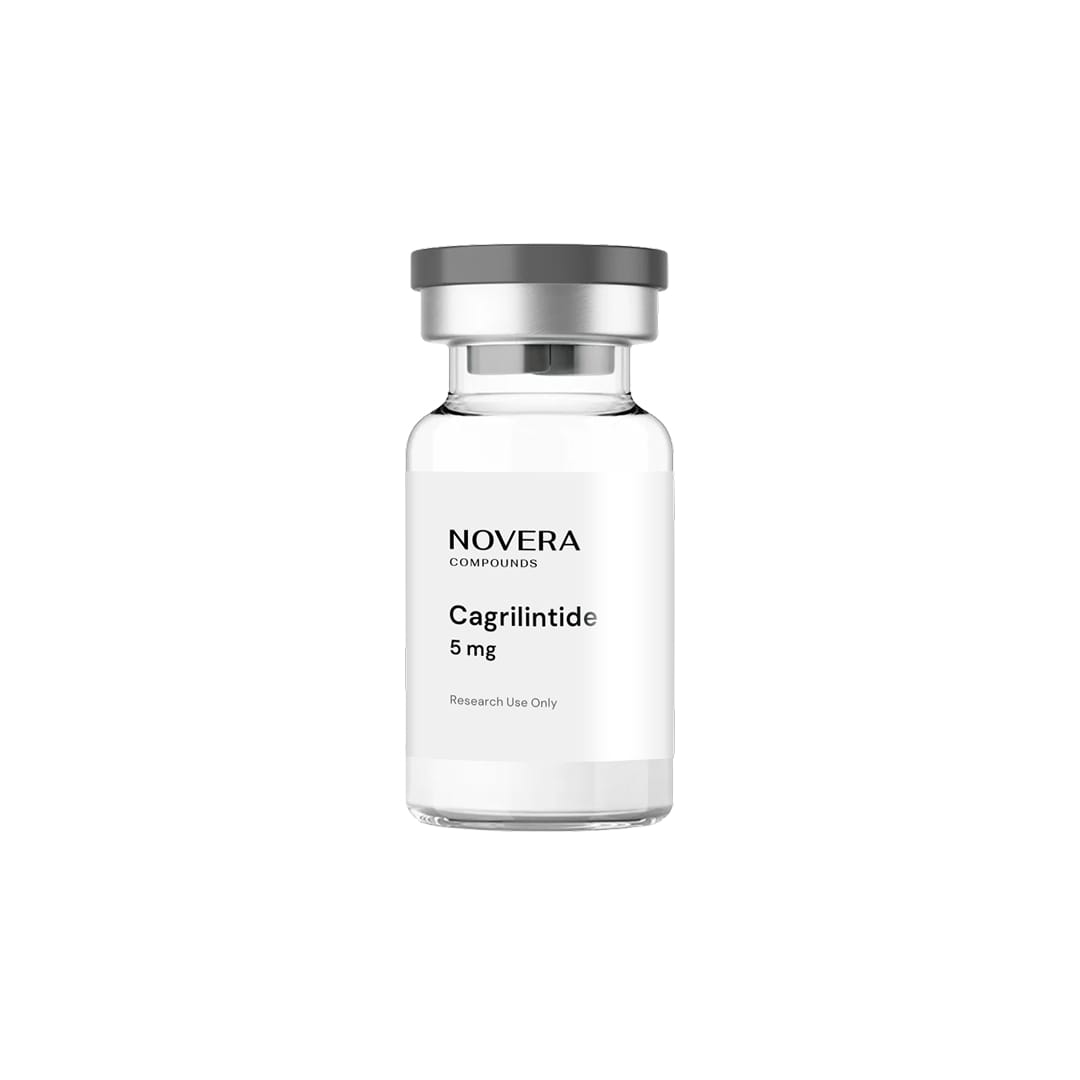
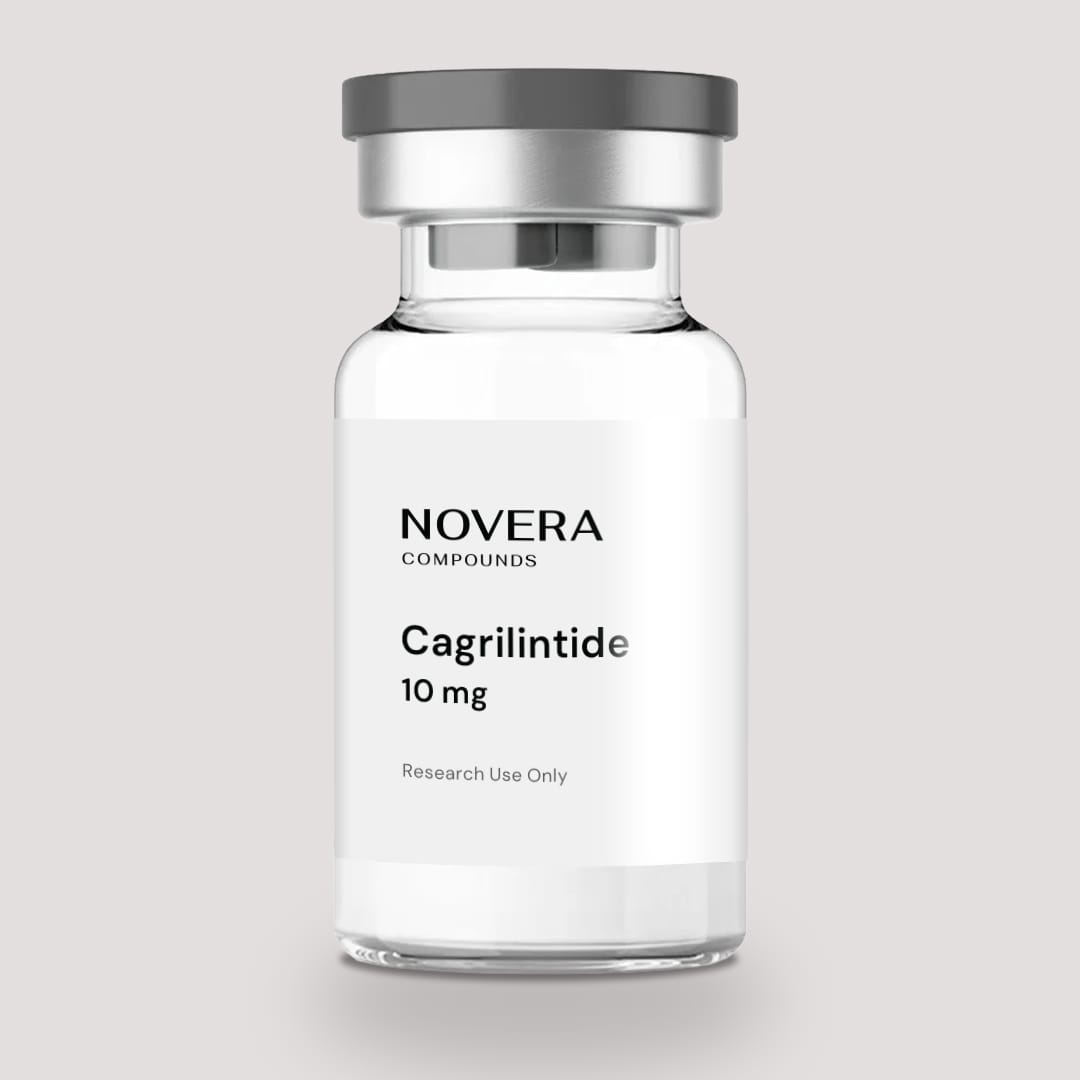
Cagrilintide is a long-acting synthetic analogue of amylin, a peptide hormone normally released with insulin after food intake. Cagrilintide can be bought online as a research-use peptide, with current price information and available quantity shown during ordering. It is not an approved self-treatment, weight-loss medication, diagnostic product, or substitute for clinician-directed care.
For research and analytical purposes only. Not intended for human consumption, therapeutic use, veterinary administration, diagnostic use, self-administration, or clinical application.
Cagrilintide Price, Ordering, and Research-Use Status
Cagrilintide price can vary by quantity, batch availability, and supply conditions. The current cost should be read at the time of ordering rather than estimated from older discussions, trial headlines, or social media posts about weight-management peptides. Choose the available quantity that matches the intended research context, storage plan, and handling requirements supplied with the material.
The most important status distinction is simple: research peptide availability, clinical trial participation, and approved medical treatment are separate pathways. This material is offered for research use, while trial participation is handled through formal clinical-study channels, and approved treatment decisions belong with a qualified clinician using regulated medical products.
Cagrilintide is often discussed around obesity, overweight, appetite regulation, and metabolic science because amylin pathways are involved in satiety and gastric emptying. That scientific interest does not make a research peptide appropriate for personal dosing. Anyone looking for treatment for weight management, diabetes, or metabolic disease should discuss approved options and individual risks with a healthcare professional.
For broader browsing around the topic, the overweight collection and the peptides category place this compound near related metabolic and peptide discussions. If diabetes-related pathways are part of the comparison, the type 2 diabetes collection adds useful condition context.
Quick tip: Match the active ingredient name, batch information, and storage instructions before preparing any research material.
Chemical Makeup and Product Identity
Cagrilintide is also known in scientific literature as AM833. It belongs to the long-acting amylin analogue class and was engineered to mimic amylin-related activity while extending duration compared with endogenous amylin peptides. Its modified structure is one reason it receives attention in metabolic, endocrine, and neuroendocrine research.
| Attribute | Research Information |
|---|---|
| Product name | Cagrilintide |
| Other known titles | Cagrilintide; AM833; long-acting amylin analogue |
| Peptide class | Long-acting amylin analogue |
| Molecular type | Synthetic peptide |
| Sequence category | Modified amylin mimetic |
| Molecular formula | C194 H312 N54 O59 S2 |
| Molecular weight | 4409 g/mol |
| Appearance | Lyophilized powder |
| Purity | Research grade |
| Intended use | Research and analytical applications only |
Lyophilized peptide materials can be sensitive to moisture, heat, contamination, and repeated handling. Reconstitution, aliquoting, and storage conditions may affect consistency, so Cagrilintide should not be treated as interchangeable with unrelated peptide products, trial medicines, commercial dosage forms, or social-media dosing references.
How This Amylin Analogue Is Studied
Amylin is a naturally occurring peptide hormone released by pancreatic beta cells alongside insulin. It is believed to participate in satiety signaling, nutrient-intake behavior, and gastric emptying. Cagrilintide was developed as a longer-acting amylin receptor agonist so sustained receptor activation and downstream physiological responses could be studied.
Current scientific interest includes appetite and satiety regulation, energy balance, metabolic control, gastric motility, nutrient-intake behavior, body-weight regulation research, and combination peptide investigations. These themes explain why Cagrilintide peptide research often appears near semaglutide, tirzepatide, and other incretin-related discussions. GLP-1 receptor agonists are incretin-based medicines, while Cagrilintide is an amylin analogue with a different pathway.
- Activation of amylin receptor pathways
- Modulation of satiety-related signaling
- Influence on gastric emptying mechanisms
- Interaction with central appetite regulation systems
- Effects on nutrient-intake behavior
- Participation in energy-balance research
Many mechanism questions remain under active investigation. Laboratory findings, early clinical signals, and combination-study headlines should not be converted into personal treatment decisions, starting-dose plans, injection schedules, or comparisons of individual suitability.
Cagrilintide, Weight Loss, and Clinical Trial Context
Cagrilintide is being studied in weight-management and metabolic-disease settings, including research involving adults with obesity or overweight. In that context, the compound is investigated for effects related to appetite, fullness, energy intake, and body-weight regulation. These trial themes help explain public interest, but they do not change the status of a research-use peptide.
People asking about Cagrilintide for weight loss are usually trying to understand three different things: whether the compound can be ordered as a research peptide, whether a clinical trial is available, and whether an approved treatment can be prescribed. Those are separate decisions. Research materials are not a route to self-treatment; clinical trials have formal enrollment rules; approved therapy requires a clinician to assess risks, alternatives, medical history, and monitoring needs.
Questions about a Cagrilintide dose, starting dose, or dosage schedule should not be answered from research-material descriptions. Dose selection in clinical research comes from a formal protocol, while personal treatment dosing should come only from approved product labeling and clinician direction. A peptide vial or powder description is not a medical administration instruction.
For consumer-facing background on the broader topic, peptides for weight loss explains why online peptide discussions need careful interpretation. For safety-focused context specific to this compound, Cagrilintide side effects and safety signals reviews concerns that should be discussed with a clinician when treatment questions arise.
Research Applications in Metabolic Science
Appetite and Satiety Signaling
One major research theme involves appetite-control mechanisms. Cagrilintide is used to examine how amylin-associated pathways may contribute to meal termination signals and satiety perception. This work helps clarify how peripheral hormone signals communicate with central nervous system pathways involved in feeding behavior.
Energy Balance and Nutrient Intake
Energy homeostasis depends on interactions between hormones, neural circuits, nutrient sensing, and behavior. Cagrilintide has been used in experimental models to evaluate how sustained amylin signaling may influence nutrient intake and metabolic adaptation. The topic is especially relevant to long-duration changes in feeding patterns and body-weight regulation research.
Gastric Emptying and Digestive Function
Amylin-related signaling has been associated with regulation of gastric motility. Cagrilintide research may examine how prolonged amylin receptor activation affects the movement of stomach contents into the small intestine. Gastric emptying is important because it can influence nutrient sensing, fullness, and the timing of other orally administered substances in experimental settings.
Neuroendocrine Pathways
The central nervous system regulates hunger, satiety, and energy expenditure through coordinated signaling networks. Cagrilintide research commonly examines brain regions associated with food intake and metabolic control. The goal is to better understand communication between peripheral peptide signals and central appetite regulation systems.
Cagrilintide With Semaglutide, Tirzepatide, and Related Options
Cagrilintide is not the same compound as semaglutide, tirzepatide, or retatrutide. Semaglutide is a GLP-1 receptor agonist, tirzepatide acts on GLP-1 and GIP pathways, and retatrutide has been studied as a multi-receptor agonist. Cagrilintide is an amylin analogue, so its research rationale is different even when the broader topic is body-weight regulation.
Combination peptide research has attracted attention because several hormonal pathways may contribute to appetite and energy homeostasis. Cagrilintide with semaglutide has been evaluated in clinical research settings, including studies of coadministered cagrilintide and semaglutide in adults with obesity or overweight. That does not mean research materials should be combined, dosed, injected, or used outside approved clinical or formal study frameworks.
It is not accurate to call Cagrilintide simply better than semaglutide for every person or every research question. The compounds act through different pathways, and clinical comparisons depend on the study design, population, outcome measured, side-effect profile, and whether the compound is used alone or in combination. Individual treatment decisions should be based on approved products and clinician guidance, not headline comparisons.
If you are separating nearby terms, CagriSema explained discusses the cagrilintide and semaglutide combination concept, while Retatrutide vs Tirzepatide helps distinguish other multi-pathway metabolic agents. For questions about evidence limits around combinations, Cagrilintide dosage with tirzepatide explains why combination dosing discussions require caution.
Related product browsing should stay mechanism-led. MOTS-c belongs to a different peptide research area, while Jardiance and Glumetza sit in established diabetes-treatment categories with different active ingredients and use contexts. The compound name alone is never enough to decide suitability, protocol design, or safety expectations.
Handling, Storage, and Documentation Basics
Cagrilintide is supplied as a research-grade lyophilized powder. Store it according to the accompanying product documentation, maintain clean labeling, and record receipt conditions, preparation dates, dilution factors, freeze-thaw history, and disposal details when applicable. These practical steps help protect material integrity and support consistency in peptide work.
Peptides may degrade or lose consistency when exposed to unsuitable temperature, moisture, repeated freeze-thaw cycles, or contamination. Use clean technique, suitable equipment, and appropriate protective measures during analytical handling. If checkout shows prompt, express shipping, plan for timely inspection and storage after arrival rather than leaving peptide material at room temperature unnecessarily.
Solubility or reconstitution language should be read only as research-handling information. It should not be used to infer a human dose, starting dose, injection volume, route of administration, or treatment schedule. Any product-specific preparation should follow the supplied documentation and the validated protocol for the intended non-clinical use.
Safety, Interactions, and Medical Questions
Cagrilintide is associated with pathways that may affect appetite, gastric emptying, and nutrient intake. In clinical discussions of amylin-related or appetite-related agents, healthcare professionals may consider gastrointestinal effects, blood glucose patterns, hydration, body-weight changes, and medicines whose absorption timing could be affected by delayed stomach emptying. These considerations are not instructions for personal use of a research compound.
Anyone reading about Cagrilintide for weight loss should keep medical questions separate from peptide ordering. Approved weight-management therapy requires an individualized review of current medicines, diabetes status, kidney and gastrointestinal history, pregnancy plans, breastfeeding, upcoming surgery, and any history of eating disorder symptoms. Diabetes medicines, GLP-1 medicines, tirzepatide, and drugs affected by stomach-emptying changes deserve particular care in that conversation.
Personal exposure to research-grade peptide materials should be prevented. Wear appropriate protective equipment, avoid ingestion or skin and eye contact, and follow the incident procedure for accidental exposure. If symptoms occur after an exposure, seek medical advice and provide the product identity and any available safety documentation.
Questions about whether a prescription is needed for Cagrilintide depend on the context. This research-use material is not presented as an approved prescription treatment for self-administration. If someone is seeking medical treatment, a clinician should discuss approved therapies, trial options, and whether any prescription medication is appropriate for that person.
Quality Standards for Research-Grade Material
Research-grade Cagrilintide should be evaluated by identity, purity expectations, lot information, analytical documentation, storage conditions, and suitability for the intended analytical use. Testing helps support consistency and product integrity, but it does not change the intended-use category. The compound remains limited to research, analytical, and educational applications.
Good handling records can improve reproducibility, especially in long-duration metabolic studies where small preparation differences may affect interpretation. Lot number, receipt date, storage temperature, reconstitution date, aliquot history, and freeze-thaw exposure are all practical details that can matter when reviewing results.
Do not use research-grade peptide materials for human consumption, medical treatment, diagnosis, veterinary administration, or therapeutic application. Follow applicable laws, safety procedures, and handling requirements for purchase, storage, preparation, transport, and disposal.
Authoritative Sources
The following sources support the scientific context for Cagrilintide and related combination research. They are not dosing instructions, treatment recommendations, or guarantees of clinical availability.
- PubMed record for cagrilintide and semaglutide research summarizes a clinical trial in adults with obesity or overweight.
- Peer-reviewed trial report in the New England Journal of Medicine provides detailed findings for coadministered cagrilintide and semaglutide.
This content is for informational purposes only and is not a substitute for professional medical advice.
BMI Calculator
Estimate adult body mass index from height and weight, with metric and imperial units.
BMI
-
kg/m2 equivalent
Category
-
Adult screening range
These calculations are for education only and do not replace clinical advice, diagnosis, or treatment. Always confirm medical decisions with a qualified healthcare professional.
Calorie & TDEE Calculator
Estimate resting energy needs and daily calorie range from age, sex, body size, and activity level.
Hold Ctrl or Cmd to select more than one calculator.
BMR
-
estimated calories/day at rest
Maintenance
-
BMR multiplied by activity
Weight loss guide
-
maintenance minus 500 kcal/day
These calculations are for education only and do not replace clinical advice, diagnosis, or treatment. Always confirm medical decisions with a qualified healthcare professional.
Macro Calculator
Split a daily calorie target into protein, carbohydrate, and fat ranges using common nutrition planning ratios.
Protein
-
grams/day at 4 kcal/g
Carbohydrate
-
grams/day at 4 kcal/g
Fat
-
grams/day at 9 kcal/g
These calculations are for education only and do not replace clinical advice, diagnosis, or treatment. Always confirm medical decisions with a qualified healthcare professional.
Protein Intake Calculator
Estimate daily protein grams from body weight and nutrition goal.
Daily protein
-
grams/day
Per meal
-
daily target divided by meals
Protein calories
-
4 kcal per gram
These calculations are for education only and do not replace clinical advice, diagnosis, or treatment. Always confirm medical decisions with a qualified healthcare professional.
Weight Loss Timeline Calculator
Estimate a simple timeline from current weight, goal weight, and average daily calorie deficit.
Estimated weekly change
-
based on 3,500 kcal per lb
Estimated time
-
simple arithmetic estimate
Approx. date
-
if average deficit is maintained
These calculations are for education only and do not replace clinical advice, diagnosis, or treatment. Always confirm medical decisions with a qualified healthcare professional.
Express Shipping - from $29.99
Shipping with this method takes 3-5 days
Prices:
- Dry-Packed Products $29.99
- Cold-Packed Products $39.99
Shipping Countries:
- United States (all contiguous states**)
- Worldwide (excludes some countries***)
Standard Shipping - $19.99
Shipping with this method takes 5-10 days
Prices:
- Dry-Packed Products $19.99
- Not available for Cold-Packed products
Shipping Countries:
- United States (all contiguous states**)
- Worldwide (excludes some countries***)
What does Cagrilintide peptide do?
Cagrilintide is a long-acting amylin analogue studied for effects on amylin receptor pathways, satiety signaling, nutrient intake, gastric emptying, and energy-balance biology. This research context does not make it an approved self-treatment or dosing product.
Is Cagrilintide better than semaglutide?
Cagrilintide and semaglutide act through different pathways, so one should not be called better for every person or every research question. Semaglutide is a GLP-1 receptor agonist, while Cagrilintide is an amylin analogue; comparisons depend on study design, outcomes, tolerability, and whether the compounds are studied alone or together.
What is the difference between Cagrilintide and tirzepatide?
Cagrilintide is an amylin analogue. Tirzepatide acts on GLP-1 and GIP pathways. Both may appear in metabolic and weight-management discussions, but they are different compounds with different mechanisms, evidence bases, and use contexts.
Do you need a prescription for Cagrilintide?
This Cagrilintide material is presented as a research-use peptide, not as an approved prescription treatment for self-administration. If you are seeking medical treatment for weight management, diabetes, or another metabolic condition, speak with a clinician about approved therapies and formal trial options.
Can Cagrilintide be used for weight loss?
Cagrilintide is being studied in weight-management and metabolic research, including clinical studies involving adults with obesity or overweight. Research interest does not mean a research peptide should be used for personal weight loss, self-experimentation, or substitution for approved medication.
Can Cagrilintide be combined with semaglutide or tirzepatide?
Cagrilintide with semaglutide has been evaluated in formal clinical research settings, and online discussions sometimes mention other combinations. Research materials should not be combined or dosed outside an approved clinical protocol or clinician-directed treatment pathway.
How should Cagrilintide be stored?
Cagrilintide is supplied as a lyophilized research-grade peptide and should be stored according to the accompanying product documentation. Protect peptide material from unsuitable temperature, moisture, contamination, and unnecessary repeated handling.
Rewards Program
Earn points on birthdays, product orders, reviews, friend referrals, and more! Enjoy your medication at unparalleled discounts while reaping rewards for every step you take with us.
You can read more about rewards here.
POINT VALUE
How to earn points
- 1Create an account and start earning.
- 2Earn points every time you shop or perform certain actions.
- 3Redeem points for exclusive discounts.
You Might Also Like
Select options
This product has multiple variants. The options may be chosen on the product page
Select options
This product has multiple variants. The options may be chosen on the product page
Select options
This product has multiple variants. The options may be chosen on the product page
Select options
This product has multiple variants. The options may be chosen on the product page