
Questions about peptides? Click here to schedule a free consultation with a physician.
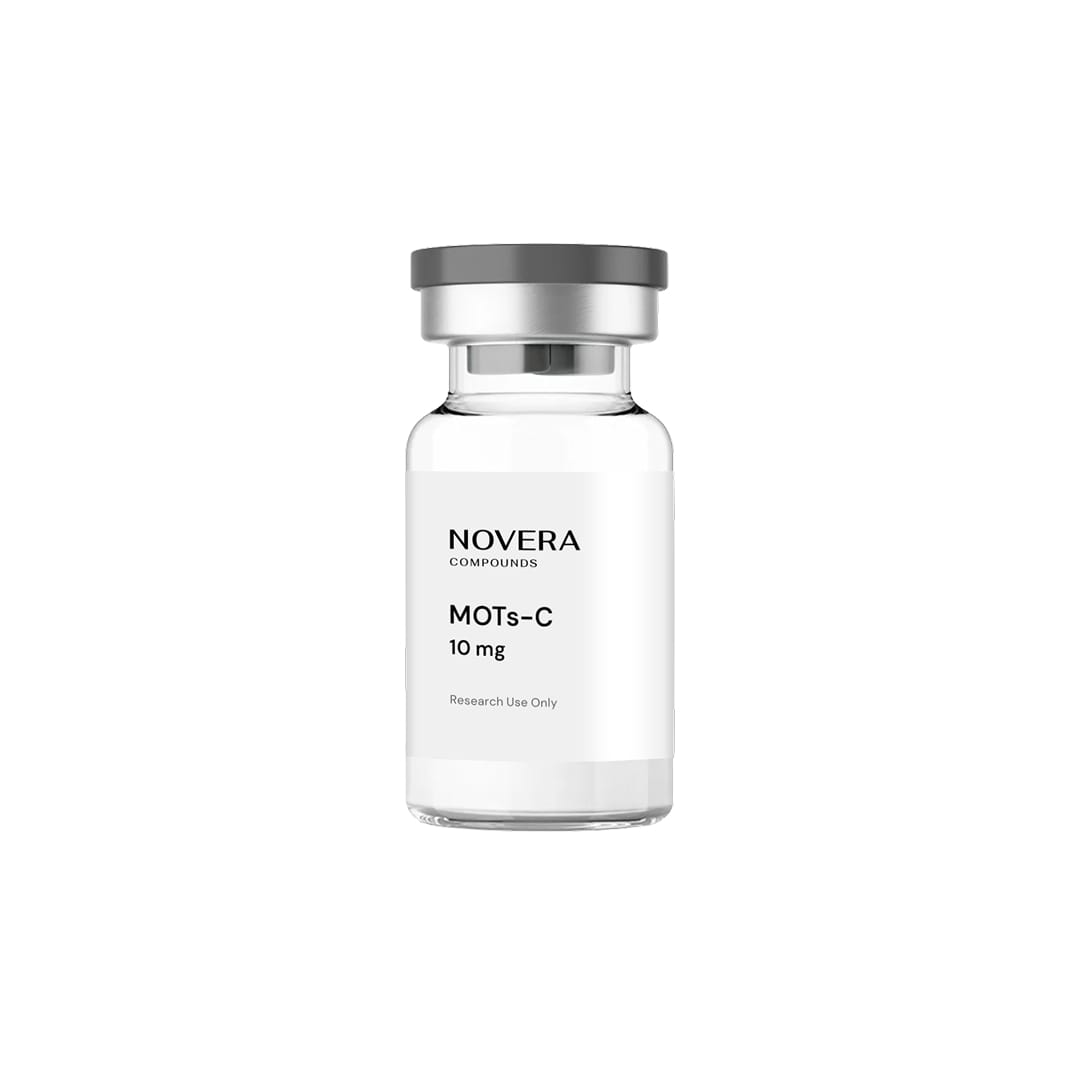
MOTS-c (Mitochondrial Open Reading Frame of the 12S rRNA Type-c) is a mitochondria-derived peptide that has emerged as a significant area of investigation within the fields of metabolic biology, cellular energetics, and mitochondrial research. Encoded within mitochondrial DNA, MOTS-c represents a unique class of signaling molecules that may facilitate communication between mitochondria and the cell nucleus, influencing a variety of physiological and metabolic processes.
Researchers have explored MOTS-c for its potential role in cellular energy regulation, metabolic adaptation, stress-response pathways, and mitochondrial function. Its distinctive origin and biological profile have established it as an important subject of study in the rapidly growing field of mitochondrial-derived peptides.
For laboratory research and analytical purposes only. Not intended for human consumption, therapeutic use, or clinical application.
Chemical Makeup
Molecular Formula: C101H152N28O22S2
Molecular Weight: 2174.64 g/mol
Other Titles: Mitochondrial-derived peptide MOTS-c, Mitochondrial open reading frame of the 12S rRNA-c
Product Overview
MOTS-c is a naturally derived mitochondrial peptide that has been investigated for its involvement in cellular metabolism and energy homeostasis. Unlike many signaling peptides encoded by nuclear DNA, MOTS-c originates from mitochondrial genetic material, making it a unique research tool for studying mitochondrial communication pathways.
Scientific investigations have examined its interaction with cellular mechanisms involved in nutrient sensing, metabolic regulation, and adaptive physiological responses.
Current areas of scientific interest include:
- Mitochondrial biology research
- Cellular energy regulation studies
- Metabolic adaptation investigations
- Exercise physiology research
- Nutrient sensing pathways
- Cellular stress-response mechanisms
- Longevity and healthy aging research
Due to its unique biological origin and expanding research profile, MOTS-c continues to attract substantial interest across multiple scientific disciplines.
Technical Specifications
| Parameter | Specification |
| Product Name | MOTS-c |
| Full Name | Mitochondrial Open Reading Frame of the 12S rRNA Type-c |
| Peptide Class | Mitochondrial-Derived Peptide |
| Amino Acid Length | 16 Amino Acids |
| Molecular Type | Synthetic Peptide |
| Purity | Research Grade |
| Appearance | Lyophilized Powder |
| Solubility | Suitable for laboratory reconstitution |
| Storage Conditions | Store according to product documentation |
| Intended Use | Research and Laboratory Applications Only |
Scientific Background
MOTS-c was first identified as a peptide encoded within the mitochondrial genome, expanding scientific understanding of the functional complexity of mitochondrial DNA.
Historically, mitochondria were primarily viewed as cellular energy-producing structures. However, the discovery of mitochondrial-derived peptides such as MOTS-c has led researchers to investigate their broader role in cellular communication and physiological regulation.
Experimental studies have suggested that MOTS-c may participate in signaling pathways that help coordinate cellular responses to metabolic demands and environmental stressors. These findings have positioned the peptide as a key area of interest within metabolic and mitochondrial research.
Research Applications
Mitochondrial Function Studies
One of the primary areas of investigation involving MOTS-c centers on mitochondrial biology and cellular energy production.
Researchers have explored how the peptide may participate in communication between mitochondria and other cellular systems. These studies aim to improve understanding of the mechanisms that regulate energy production, metabolic efficiency, and cellular adaptation.
This remains one of the most active areas of MOTS-c research.
Metabolic Regulation Research
Metabolic homeostasis requires coordinated regulation of nutrient utilization, energy expenditure, and cellular signaling.
Experimental investigations have examined how MOTS-c may interact with pathways involved in glucose metabolism, nutrient sensing, and metabolic adaptation. Researchers continue to explore these mechanisms to better understand cellular responses to changing energy demands.
These studies contribute to a broader understanding of metabolic physiology.
Cellular Stress Response Investigations
Cells are continually exposed to environmental and physiological stressors that require adaptive responses to maintain function.
Researchers have investigated MOTS-c within experimental models designed to evaluate stress-response signaling pathways and cellular resilience mechanisms. These studies seek to determine how mitochondrial-derived peptides may contribute to maintaining cellular homeostasis under challenging conditions.
Further research remains ongoing in this area.
Exercise Physiology Research
MOTS-c has generated scientific interest in studies involving physical performance, exercise adaptation, and energy utilization.
Researchers have explored how mitochondrial signaling pathways may influence physiological responses to increased energy demands associated with exercise and physical activity. These investigations continue to expand understanding of metabolic adaptation processes.
This area represents a growing field of research involving mitochondrial-derived peptides.
Longevity and Healthy Aging Studies
Mitochondrial function is widely recognized as an important factor in aging-related biological processes.
Researchers have examined MOTS-c in experimental models investigating cellular maintenance, metabolic health, and age-associated physiological changes. These studies aim to better understand how mitochondrial signaling influences long-term cellular function.
Interest in this area continues to grow as longevity research expands.
Cellular Communication Research
The discovery of MOTS-c highlighted the potential for mitochondria to function as signaling organelles rather than solely as energy producers.
Scientific investigations have examined how MOTS-c may facilitate communication between mitochondrial and nuclear genetic systems, helping coordinate adaptive cellular responses.
Understanding these communication pathways remains an important objective in modern cellular biology.
Mechanisms Under Investigation
Current scientific literature suggests that MOTS-c may exert biological activity through mechanisms that include:
- Participation in mitochondrial signaling pathways
- Modulation of cellular energy regulation
- Interaction with nutrient sensing systems
- Influence on metabolic adaptation processes
- Regulation of cellular stress-response pathways
- Participation in mitochondrial-to-nuclear communication
Many aspects of these mechanisms remain active areas of research and continue to be explored in experimental settings.
Research Significance
MOTS-c represents a significant advancement in the understanding of mitochondrial biology and intracellular communication.
Its unique origin within mitochondrial DNA and its potential involvement in energy regulation, metabolic adaptation, and cellular resilience have made it an important research tool for scientists studying metabolism, aging, and mitochondrial function.
As interest in mitochondrial-derived peptides continues to expand, MOTS-c remains a widely investigated compound within academic, commercial, and laboratory research environments.
Quality and Research Standards
Our research-grade MOTS-c is manufactured under strict quality-control procedures designed to support consistency, purity, and reliability for laboratory applications.
Each production batch undergoes analytical testing to help ensure product integrity and suitability for scientific investigation.
Researchers should follow all established laboratory handling, storage, and safety protocols when working with peptide materials.
Important Notice
This product is supplied exclusively for:
- Scientific research
- Laboratory investigation
- Analytical testing
- Educational applications
This material is not intended for:
- Human consumption
- Veterinary administration
- Medical treatment
- Diagnostic use
- Therapeutic application
Users are responsible for complying with all applicable regulations and institutional requirements concerning the purchase, handling, storage, and use of research compounds.
References
MOTS-c has been the subject of scientific investigation in the fields of mitochondrial biology, metabolic regulation, cellular energetics, exercise physiology, aging research, and peptide pharmacology. Researchers are encouraged to consult peer-reviewed literature and experimental studies for detailed methodologies and findings relating to this peptide.
Authoritative Sources
For scientific context, a peer-reviewed review on mitochondrial peptides describes MOTS-c research in metabolism and aging-related pathways. It is useful background, but it does not confirm that a specific product is appropriate for a specific person.
A USADA athlete safety resource discusses peptide-related anti-doping concerns and the risks of relying on unverified supplement or peptide claims.
This content is for informational purposes only and is not a substitute for professional medical advice.
Research & Education Tool
MOTS-c Dosage Calculator
Enter the vial amount, diluent volume, and target amount to estimate concentration, draw volume on a 1 mL U-100 syringe, and approximate vial yield.
For research and educational use only. Check all values against the product label, certificate of analysis, and any applicable professional guidance before relying on the result.
mg
Concentration
-
mcg / mL
Volume per Dose
-
-
Estimated Draws / Vial
-
rounded down to whole draws
Draw Reference
Enter values to estimate the syringe mark.
0
-
-
-
-
Express Shipping - from $29.99
Shipping with this method takes 3-5 days
Prices:
- Dry-Packed Products $29.99
- Cold-Packed Products $39.99
Shipping Countries:
- United States (all contiguous states**)
- Worldwide (excludes some countries***)
Standard Shipping - $19.99
Shipping with this method takes 5-10 days
Prices:
- Dry-Packed Products $19.99
- Not available for Cold-Packed products
Shipping Countries:
- United States (all contiguous states**)
- Worldwide (excludes some countries***)
What does the MOTS-c peptide do?
MOTS-c is a mitochondrial-derived peptide studied for possible roles in metabolic signaling, skeletal muscle activity, glucose handling, and exercise-related pathways. Much of the available discussion comes from laboratory, animal, and early human research. That means claims about energy, metabolism, or insulin sensitivity should be treated carefully. A clinician can help place the research in context with your health history, medications, and monitoring needs.
Does MOTS-c have side effects?
Possible side effects may include injection-site discomfort if an injectable form is used, headache, nausea, fatigue, flushing, rash, or digestive upset. Safety information is less complete than it is for many long-approved medicines. Serious allergic symptoms, such as trouble breathing, facial swelling, widespread hives, or fainting, need urgent medical attention. Report unexpected symptoms to a qualified healthcare professional, especially if you use glucose-lowering medicines or have chronic health conditions.
Can MOTS-c help with weight loss?
MOTS-c is often discussed in relation to metabolism and insulin sensitivity, which is why some people connect it with weight-management goals. That does not mean weight loss is guaranteed or that the peptide is appropriate for everyone. Body weight is affected by diet, activity, sleep, medical conditions, hormones, and other medicines. Ask a clinician whether any peptide discussion fits your broader treatment plan and what outcomes would be realistic to monitor.
What should I ask my clinician before using MOTS-c?
Ask whether MOTS-c fits your health goals, current diagnoses, and medication list. Important topics include diabetes medicines, insulin use, kidney or liver disease, cardiovascular history, pregnancy, breastfeeding, allergies, and whether extra monitoring is needed. Also ask how the product form should be handled and what symptoms should prompt medical help. Bring the exact listing details, including form, strength, and quantity, so the discussion is specific.
Are MOTS-c injections and tablets the same?
No. An injection, tablet, powder, vial, or other presentation can differ in handling, storage, measurement, and how a clinician may discuss use. Do not assume two forms are interchangeable because they share the same peptide name. Compare the exact listing details, including total contents, concentration, and pack size when shown. If the form is unclear, clarify it before use rather than switching products on your own.
Rewards Program
Earn points on birthdays, product orders, reviews, friend referrals, and more! Enjoy your medication at unparalleled discounts while reaping rewards for every step you take with us.
You can read more about rewards here.
POINT VALUE
How to earn points
- 1Create an account and start earning.
- 2Earn points every time you shop or perform certain actions.
- 3Redeem points for exclusive discounts.
You Might Also Like
Select options
This product has multiple variants. The options may be chosen on the product page
Select options
This product has multiple variants. The options may be chosen on the product page
Select options
This product has multiple variants. The options may be chosen on the product page
Select options
This product has multiple variants. The options may be chosen on the product page