
Please note: a valid prescription is required for all prescription medication.
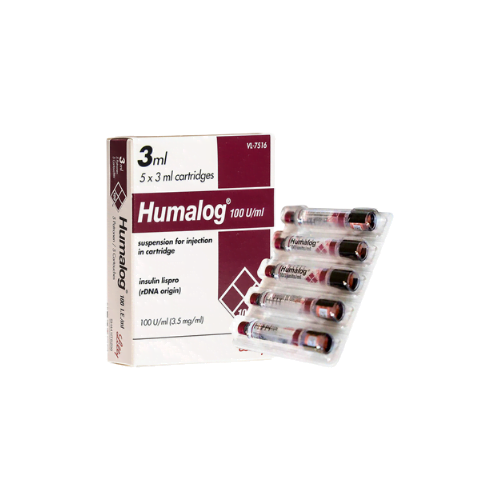
Humalog Cartridge
Buy Humalog Cartridge Online
Secure Encrypted Payments
Humalog Cartridge is a rapid-acting insulin lispro cartridge used to help control blood sugar around meals in people with diabetes. It can be bought online through licensed pharmacy channels with US delivery from Canada, and you can choose the available cartridge quantity that matches your clinician’s directions. The commonly supplied cartridge format is 3 mL of U-100 insulin lispro, equal to 100 units/mL.
Humalog Cartridge is intended for use with compatible reusable insulin pen systems. It is not the same as a prefilled disposable pen; the cartridge is inserted into the appropriate device, fitted with a new needle, primed, and then used for the dose directed in your diabetes plan. Because mealtime insulin acts quickly, timing, glucose monitoring, meal intake, and safe storage all matter when deciding whether this cartridge format fits your routine.
Price, cartridge quantity, and ordering details
Humalog Cartridge pricing depends on the cartridge quantity shown during ordering, current pharmacy supply, and any cash-pay considerations. The product is commonly associated with 3 mL U-100 cartridges, and some markets supply boxes containing multiple cartridges. Choose the cartridge quantity displayed at checkout and match it to the directions you use for mealtime insulin.
For people paying without insurance, cartridge format can be useful because it pairs with reusable pen dosing and may reduce vial handling. Your actual monthly cost depends on your total daily mealtime insulin needs, how often your dose changes, and whether you also use a basal insulin. If you track how many units you use per meal, you can better estimate how long a cartridge supply may last without changing your treatment plan on your own.
Quick tip: Keep your current insulin schedule, device name, and needle size nearby when arranging a refill.
Many customers looking for diabetes supplies also browse the broader Diabetes Care category to keep related treatment items organized. If you use more than one insulin type, plan refill timing carefully so your mealtime and background insulin supplies do not run out at different times.
What Humalog Cartridge treats
Humalog is insulin lispro, an insulin analog used to improve glycemic control in adults and children with diabetes mellitus. In plain terms, it helps move glucose from the blood into body tissues after meals. It is commonly used by people with type 1 diabetes and by people with type 2 diabetes when a mealtime insulin is part of the treatment plan.
This medication is often paired with a longer-acting basal insulin for full-day coverage. Basal insulin addresses background insulin needs, while rapid-acting insulin lispro is timed around meals or correction dosing as directed. People managing type 1 diabetes often need both types, while people managing type 2 diabetes may add mealtime insulin when other therapies no longer provide enough post-meal control.
Humalog Cartridge is not a substitute for glucose monitoring, meal planning, or sick-day instructions. Illness, changes in activity, alcohol intake, delayed meals, and changes in carbohydrate intake can all alter insulin needs. Keep a written or digital log of doses, meals, and glucose readings if your care team asks you to review patterns.
How insulin lispro works and when it is used
Insulin lispro is a rapid-acting insulin. It starts working faster than human regular insulin and has a shorter duration of action. That profile makes it useful for mealtime blood sugar control because it can be taken close to eating, according to the directions provided in your treatment plan.
Many people use Humalog shortly before a meal or immediately after starting a meal when instructed. The goal is to match insulin action with the rise in blood sugar caused by food. If your plan includes carbohydrate counting or correction dosing, follow the rules given to you rather than guessing or repeating a prior dose.
Glucose monitoring is central to safe use. Fingerstick readings or continuous glucose monitor data can help show whether your current meal timing, insulin dose, and food intake are aligned. Sudden changes in readings, frequent lows, or repeated high readings after meals should be discussed with a qualified healthcare professional.
Cartridge form, strength, and device compatibility
Humalog Cartridge is typically supplied as a 3 mL cartridge containing insulin lispro 100 units/mL. That means each 3 mL cartridge contains 300 units of insulin lispro. The cartridge is designed for compatible reusable insulin pens, not for use in every pen device.
Can insulin cartridges be used in any pen? No. Cartridges must be used only with the pen systems specified by the manufacturer and device instructions. Pen compatibility matters because an incompatible device may not hold the cartridge securely, prime correctly, or deliver the intended dose.
The cartridge format differs from a vial and a disposable pen. A vial is used with a syringe or other compatible delivery system. A prefilled pen already contains insulin and is discarded after its in-use period or when empty. A refill cartridge is placed into a reusable pen body, which may appeal to people who prefer pen dosing but do not want a fully disposable pen for every fill.
| Format | Practical distinction |
|---|---|
| Humalog Cartridge | 3 mL U-100 cartridge for compatible reusable pen systems |
| Humalog vial | Used with syringes or compatible insulin delivery methods |
| Prefilled insulin pen | Disposable pen already filled with insulin |
How to use a Humalog Cartridge safely
Use the cartridge exactly as directed in your diabetes plan and the instructions for the compatible pen device. Before each injection, look at the insulin. Humalog should appear clear and colorless. Do not use it if it looks cloudy, discolored, thickened, or contains particles.
Insert the cartridge into the reusable pen according to the device manual. Attach a new pen needle before each injection, prime the pen until insulin appears at the needle tip, dial the directed dose, and inject into an approved injection area. Common injection areas include the abdomen, thigh, upper arm, or buttocks, depending on your instructions and device guidance.
Rotate injection sites within the same body region to reduce the risk of lipodystrophy, which means thickened, pitted, or lumpy skin under the injection area. Do not inject into skin that is tender, bruised, scarred, hard, or visibly changed. Avoid sharing pens, cartridges, or needles, even with another person who also uses insulin.
- Use a compatible reusable insulin pen only.
- Attach a new needle for every injection.
- Prime before dosing to confirm insulin flow.
- Rotate injection sites as instructed.
- Keep fast-acting carbohydrates available for low blood sugar.
- Place used needles in a proper sharps container.
Do not mix Humalog Cartridge with other insulin inside a pen. If you also use basal insulin, take it as a separate injection unless your clinician has given different device-specific instructions.
Missed meal dose, timing, and monitoring
Because Humalog works quickly, missed or delayed meal doses require caution. If you forget a usual pre-meal dose and have already started eating, follow your personal correction or missed-dose instructions. If you are unsure what to do, check your glucose and seek clinical guidance rather than doubling a later dose.
Low blood sugar can happen when insulin is taken without enough food, when a meal is delayed, after increased physical activity, or after alcohol use. Symptoms may include sweating, shakiness, hunger, fast heartbeat, headache, irritability, confusion, or weakness. Severe hypoglycemia can cause seizures, loss of consciousness, or the need for emergency help.
Keep glucose tablets, juice, regular soda, or another fast-acting carbohydrate nearby. People at risk for severe hypoglycemia may also be advised to keep glucagon available. If you have repeated low readings, nighttime lows, or difficulty noticing low blood sugar symptoms, your treatment plan may need review.
Storage, travel, and handling
Store unopened Humalog cartridges according to the product label, usually refrigerated until first use. Do not freeze insulin. If a cartridge has been frozen, exposed to excessive heat, or left in direct sunlight, it should be discarded. In-use cartridges are generally kept at room temperature for the period stated in the manufacturer information.
Protect cartridges from heat and light. Keep them out of reach of children and pets. Do not store insulin in a car glove box, checked luggage, or any place where temperature may swing sharply. During travel, carry insulin, pen needles, glucose monitoring supplies, and low-blood-sugar treatment in hand luggage.
Insulin is temperature-sensitive, so handling matters during transport and at home. Orders may be supported by prompt, express shipping when appropriate for the medicine and route. After receipt, follow the storage instructions on the package and do not use any cartridge that appears damaged or abnormal.
Side effects, warnings, and interactions
The most important risk with Humalog Cartridge is hypoglycemia, or low blood sugar. Common side effects may include injection-site redness, itching, swelling, mild discomfort, weight gain, and skin changes at repeated injection sites. Some people may also experience fluid retention, especially when insulin is used with certain other diabetes medicines.
Serious reactions require urgent attention. These include severe hypoglycemia, severe allergic reaction, and low potassium levels. Signs of a serious allergic reaction can include rash over the whole body, trouble breathing, wheezing, dizziness, fast heartbeat, or swelling of the face, lips, tongue, or throat. Low potassium may cause weakness, muscle cramps, or abnormal heartbeat.
Several medicines can change insulin needs. Corticosteroids, some diuretics, thyroid medicines, certain psychiatric medicines, and some infection treatments may raise blood sugar. Other diabetes medicines, ACE inhibitors, salicylates, and some antidepressants may increase the risk of low blood sugar. Beta blockers can make warning symptoms of hypoglycemia harder to notice. Thiazolidinediones used with insulin may increase fluid retention and heart failure risk in susceptible people.
Tell your healthcare professional about all medicines, supplements, alcohol use, and major lifestyle changes. Kidney or liver problems can affect insulin requirements. Pregnancy, breastfeeding, acute illness, planned surgery, and major weight changes are also reasons to revisit your insulin plan.
Who may need extra caution
People with a history of severe hypoglycemia need a clear prevention and rescue plan before using rapid-acting insulin. Extra caution is also important if you have impaired awareness of low blood sugar, irregular meals, strenuous activity, kidney disease, liver disease, or difficulty using a pen device correctly.
Do not use insulin lispro if you have had a serious allergic reaction to insulin lispro or any ingredient in the product. Do not inject during an episode of low blood sugar. If you are switching from another rapid-acting insulin or changing from vial to cartridge format, device training and dose-confirmation routines can help prevent errors.
Caregivers should understand the difference between cartridge, vial, and prefilled pen formats. Confusing one insulin product for another, using the wrong pen, or overlooking a concentration can lead to dangerous dosing mistakes. Store insulin products separately and keep labels readable.
Humalog Cartridge vs vial and other mealtime insulin choices
The main decision between a Humalog Cartridge and a vial is the delivery method. A cartridge works with a compatible reusable pen, which may help with dose dialing, portability, and convenience. A vial may suit people who prefer syringes, use certain dosing routines, or have device-specific needs.
Other rapid-acting insulins may be considered when device preference, formulary coverage, tolerance, or availability changes. The right mealtime insulin depends on onset, duration, dose plan, device fit, and how well it works with your daily schedule. Do not switch between insulin products or delivery formats without clinical direction.
If you are evaluating diabetes treatment categories, the type 1 diabetes articles and type 2 diabetes articles can provide additional condition-focused reading. Product browsing can also be filtered by Canadian-sourced medications when that helps with planning.
Questions to ask before refilling
Good refill planning reduces the chance of missed doses or device problems. Ask which reusable pen is compatible with your cartridge, which pen needles to use, and how often to replace or inspect the pen body. If you use a continuous glucose monitor, ask how to interpret trend arrows when dosing around meals.
- What meal timing should I follow with insulin lispro?
- How should I treat low blood sugar?
- When should I use correction dosing?
- How do I adjust during illness or travel?
- Which pen device fits this cartridge?
- How long can an in-use cartridge remain at room temperature?
- When should I call about repeated high or low readings?
Bring your glucose log, meal notes, and current medication list to appointments. These details help your care team identify patterns without relying on memory. If your activity level, eating schedule, or weight changes, your mealtime insulin routine may need reassessment.
Authoritative sources
Official labeling and patient information should guide safe use. DailyMed provides U.S. labeling for Humalog insulin lispro, including indication, warnings, and adverse reactions: DailyMed Humalog prescribing information. Eli Lilly’s Canadian consumer information explains cartridge and pen-use considerations: Humalog cartridge consumer information. Health Canada’s drug database can be used to review Canadian product records: Health Canada Drug Product Database.
This content is for informational purposes only and is not a substitute for professional medical advice.
Blood Glucose Unit Converter
Convert glucose readings between mg/dL and mmol/L without changing the clinical value.
mg/dL
-
US reporting unit
mmol/L
-
International reporting unit
These calculations are for education only and do not replace clinical advice, diagnosis, or treatment. Always confirm medical decisions with a qualified healthcare professional.
HbA1c & eAG Calculator
Convert between HbA1c percentage and estimated average glucose using the ADAG relationship.
HbA1c
-
percentage
eAG mg/dL
-
estimated average glucose
eAG mmol/L
-
estimated average glucose
These calculations are for education only and do not replace clinical advice, diagnosis, or treatment. Always confirm medical decisions with a qualified healthcare professional.
Carb Serving Calculator
Convert total carbohydrate grams into carb choices for meal planning and diabetes education.
Carb choices
-
total carbs divided by choice size
Rounded choices
-
nearest half choice
Carb calories
-
4 kcal per gram
These calculations are for education only and do not replace clinical advice, diagnosis, or treatment. Always confirm medical decisions with a qualified healthcare professional.
Glycaemic Load Calculator
Calculate glycaemic load from glycaemic index and available carbohydrate in a serving.
Glycaemic load
-
GI x carbs / 100
Range
-
single serving estimate
Total carbs used
-
serving carbs x servings
These calculations are for education only and do not replace clinical advice, diagnosis, or treatment. Always confirm medical decisions with a qualified healthcare professional.
CGM Time-in-Range Summary
Summarise CGM percentages across very low, low, in-range, high, and very high glucose bands.
Entered total
-
should equal 100%
Below range
-
very low plus low
Above range
-
high plus very high
Summary
-
common adult CGM targets vary by patient
These calculations are for education only and do not replace clinical advice, diagnosis, or treatment. Always confirm medical decisions with a qualified healthcare professional.
Express Shipping - from $29.99
Shipping with this method takes 3-5 days
Prices:
- Dry-Packed Products $29.99
- Cold-Packed Products $39.99
Shipping Countries:
- United States (all contiguous states**)
- Worldwide (excludes some countries***)
Standard Shipping - $19.99
Shipping with this method takes 5-10 days
Prices:
- Dry-Packed Products $19.99
- Not available for Cold-Packed products
Shipping Countries:
- United States (all contiguous states**)
- Worldwide (excludes some countries***)
Does Humalog come in cartridges?
Yes. Humalog is available as an insulin lispro cartridge in a 3 mL U-100 format in markets where that presentation is supplied. The cartridge is used with compatible reusable insulin pen systems, not as a standalone injection device.
How many units are in a Humalog Cartridge?
A 3 mL Humalog U-100 cartridge contains 100 units/mL, for a total of 300 units per cartridge. Use the cartridge quantity and dose schedule that match your clinician’s directions.
Can Humalog cartridges be used in any insulin pen?
No. Insulin cartridges must be used only with compatible pen systems specified by the manufacturer. Using the wrong pen may cause dosing errors or device failure.
How is a Humalog Cartridge administered?
The cartridge is inserted into a compatible reusable insulin pen. A new needle is attached, the pen is primed, the directed dose is dialed, and the insulin is injected under the skin into an appropriate injection area.
What is the difference between Humalog Cartridge and Humalog vial?
The active ingredient is insulin lispro, but the delivery format differs. A cartridge fits a compatible reusable pen, while a vial is used with syringes or other compatible delivery methods.
What are common Humalog Cartridge side effects?
Common effects include low blood sugar, injection-site redness or itching, mild swelling, weight gain, and skin changes at repeated injection sites. Severe low blood sugar or allergic symptoms need urgent medical attention.
How should Humalog cartridges be stored?
Unopened cartridges are usually refrigerated as directed on the label. Do not freeze them or expose them to heat or direct sunlight. In-use cartridges are generally kept at room temperature for the time stated in the product information.
Rewards Program
Earn points on birthdays, product orders, reviews, friend referrals, and more! Enjoy your medication at unparalleled discounts while reaping rewards for every step you take with us.
You can read more about rewards here.
POINT VALUE
How to earn points
- 1Create an account and start earning.
- 2Earn points every time you shop or perform certain actions.
- 3Redeem points for exclusive discounts.
You Might Also Like
Select options
This product has multiple variants. The options may be chosen on the product page
Select options
This product has multiple variants. The options may be chosen on the product page
Select options
This product has multiple variants. The options may be chosen on the product page
Select options
This product has multiple variants. The options may be chosen on the product page