

Please note: a valid prescription is required for all prescription medication.
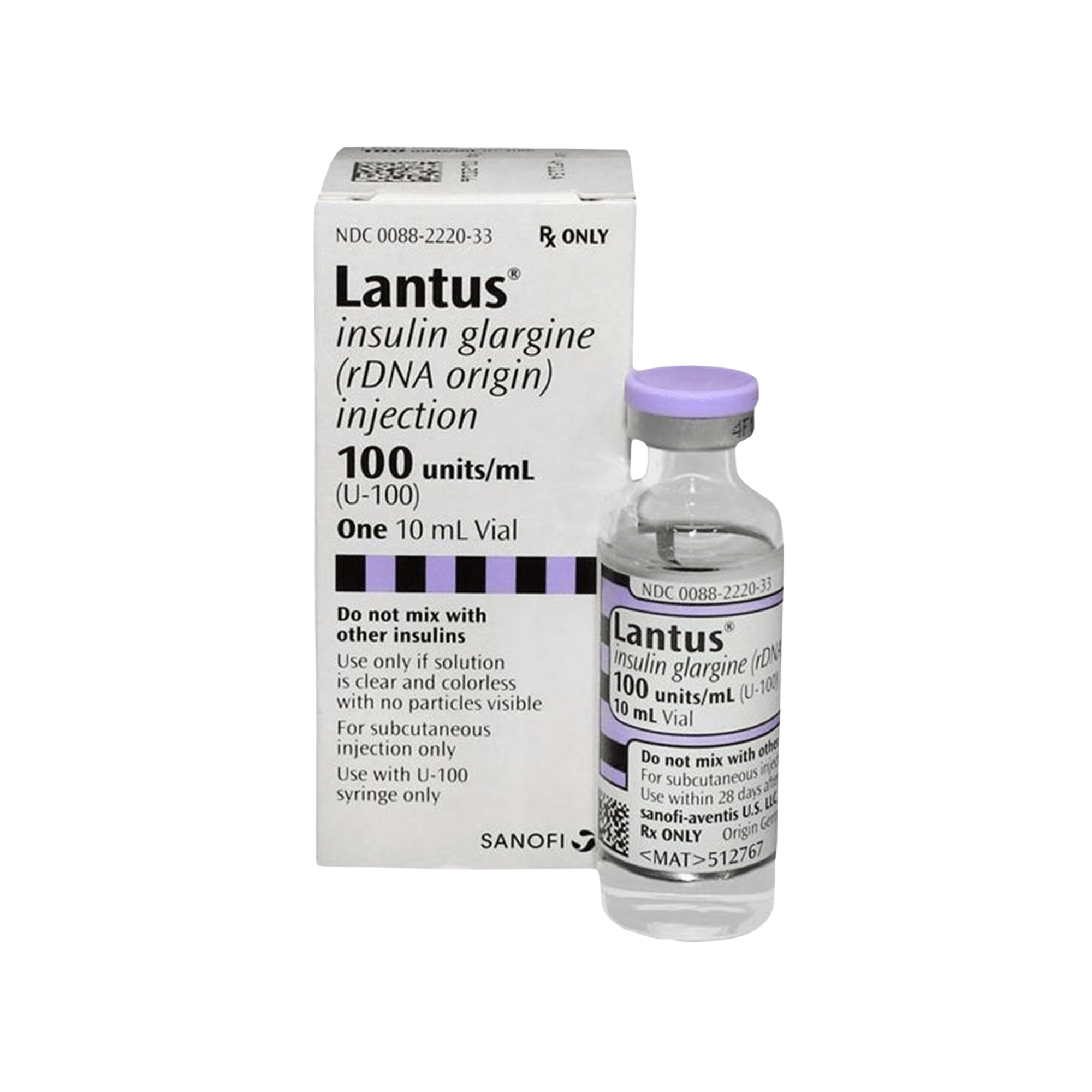
Lantus Vial
Buy Lantus Vial Online
Secure Encrypted Payments
Lantus Vial is a long-acting insulin glargine injection supplied as a 10 mL multiple-dose vial at U-100 strength. You can buy Lantus Vial online, view the current price, and match the vial strength and quantity to the insulin routine your clinician has given you.
This Lantus insulin vial is used with compatible U-100 insulin syringes for subcutaneous injection, meaning injection under the skin. The vial format may suit people who already draw up insulin, use a care partner for injections, or need a basal insulin format that fits established home supplies.
Lantus Vial Price, Strength, and Quantity
The Lantus Vial price should be considered together with the 10 mL vial size, U-100 concentration, and number of vials needed for your refill plan. U-100 means each milliliter contains 100 units of insulin glargine. A full 10 mL vial contains 1,000 units in total, although the number of days it lasts depends on the daily dose set by your clinician.
People often compare Lantus insulin vial cost with pen formats because the device changes how doses are measured. A vial requires a separate insulin syringe, while a pen uses a built-in dose selector. If your routine is based on a vial and syringe, keep the format consistent unless your clinician changes it.
| Attribute | Lantus vial information |
|---|---|
| Active ingredient | Insulin glargine |
| Form | Multiple-dose vial for subcutaneous injection |
| Size | 10 mL vial |
| Strength | U-100, or 100 units/mL |
| Total insulin in vial | 1,000 units per 10 mL vial |
| Needed supplies | Compatible U-100 insulin syringes and sharps disposal |
Quick tip: Match the U-100 vial with U-100 insulin syringes before arranging home supplies.
Cash-pay planning is more accurate when you include insulin, syringes, alcohol swabs, glucose monitoring supplies, and safe needle disposal. If you use Lantus Vial without insurance, the vial price is only one part of the monthly diabetes-care budget. Refill timing also matters because insulin is temperature-sensitive and should not be left until the last dose is nearly gone.
How to Order Lantus Vial Online
To order Lantus Vial online, choose the 10 mL U-100 vial and enter the quantity that fits your refill needs. We may review order details when required so the pharmacy can supply the correct medicine, strength, and quantity through licensed pharmacy channels.
Before checkout, make sure your injection routine includes the supplies needed for a vial. Lantus Vial is not a self-contained pen. You will need compatible U-100 syringes, clean injection technique, and a sharps container or approved needle-disposal method.
US delivery from Canada may be available for this temperature-sensitive medication, with prompt, express shipping used as part of the logistics process. Delivery timing, cold-chain handling, and order requirements should be considered when planning refills, especially if you rely on insulin every day.
The broader diabetes care collection can help you browse related diabetes products and supplies. Use category browsing only to support product planning; do not replace one insulin, device, or strength with another unless your clinician has directed the change.
What Lantus Vial Is Used For
Lantus contains insulin glargine, a long-acting man-made insulin used to improve blood sugar control in people with diabetes mellitus. Official labeling includes use in adults and pediatric patients with type 1 diabetes and adults with type 2 diabetes. It is not intended to treat diabetic ketoacidosis, a serious emergency that needs different medical treatment.
Long-acting insulin provides basal coverage, which means background insulin between meals and overnight. It does not work like a rapid-acting mealtime insulin used for food-related glucose rises. Many people use basal insulin with other diabetes therapies, but timing and combinations should come from an individualized care plan.
If your treatment is for autoimmune insulin deficiency, the Type 1 Diabetes category may help you understand related product groupings. If your treatment is for insulin resistance or progressive insulin needs, the Type 2 Diabetes category may be more relevant for browsing.
The vial can be useful for people who are comfortable drawing up insulin or who receive help from a caregiver. It can also support a consistent routine when the same syringe type, injection steps, and storage habits are already established at home.
Vial and Syringe Basics
Yes, Lantus is available in a vial. The Lantus 10 mL vial is a multiple-dose container of insulin glargine 100 units/mL. Because the vial holds many doses, the amount drawn into the syringe must be based on clinician instructions, not on the amount left in the bottle.
Use only syringes intended for U-100 insulin. A syringe that does not match the concentration can cause a serious dosing error. Read the syringe markings carefully, draw the dose slowly, and avoid using insulin that looks cloudy, colored, or contains particles. Lantus should be clear and colorless.
Inject Lantus under the skin in an appropriate area such as the abdomen, thigh, or upper arm. Rotate injection sites within the same region to reduce skin changes, including thickening, pitting, or lumps. Do not inject Lantus into a vein, do not use it in an insulin pump, and do not mix or dilute it with other insulins.
How long one vial lasts depends on the dose used each day. For example, a 10 mL U-100 vial contains 1,000 units total, but the number of days varies by individual insulin needs. Do not change the dose to make a vial last longer, and ask your clinician how to plan refills safely.
Storage, Handling, and Travel
Insulin is sensitive to temperature, light, and freezing. Unopened Lantus vials are usually kept refrigerated according to the official label. Do not freeze insulin, and discard a vial if it has been frozen, overheated, or exposed to conditions that make product quality uncertain.
Once a vial is in use, follow the label’s in-use storage period and temperature limits. Keep the vial protected from direct light, avoid shaking it, and inspect the solution before each injection. Good storage habits are especially important if you keep more than one vial at home.
When traveling, carry insulin with you rather than packing it in checked baggage. Bring syringes, glucose supplies, alcohol swabs, and a safe disposal option for used needles. Keeping insulin, supplies, and treatment information together can reduce delays during travel or security screening.
Why it matters: Temperature changes can affect insulin quality before you notice anything unusual in the vial.
Side Effects, Warnings, and Monitoring
The most important safety risk with insulin is hypoglycemia, or low blood sugar. Symptoms may include shakiness, sweating, hunger, headache, fast heartbeat, weakness, confusion, or irritability. Severe hypoglycemia can cause seizure, loss of consciousness, or the need for emergency care.
- Low blood sugar, especially if meals, activity, illness, or other medicines change.
- Injection-site reactions, such as redness, swelling, itching, or pain.
- Skin changes at injection sites, including lumps or thickened areas.
- Weight gain, which can occur with insulin therapy.
- Fluid retention or swelling in some people.
- Allergic reactions, including rash, wheezing, or facial swelling.
Do not use insulin during an episode of low blood sugar. People with kidney or liver impairment may need closer glucose monitoring because insulin requirements can change. Alcohol, missed meals, increased physical activity, and illness can also make blood sugar harder to predict.
Insulin can lower potassium levels in the blood. Significant low potassium may cause muscle weakness, unusual fatigue, or irregular heartbeat. Seek urgent medical help for severe low blood sugar, signs of a serious allergic reaction, chest symptoms, fainting, or any reaction that feels dangerous.
Monitoring usually includes home glucose readings and periodic A1C testing. Keep a practical record of lows, highs, injection timing, meals, activity changes, and illness. That record helps your clinician adjust therapy based on patterns rather than isolated readings.
Some diabetes routines include a practical waiting period after treating a low or checking an unexpected reading. The phrase “3-hour rule” can mean different things depending on the care plan, insulin type, meal timing, or glucose-correction approach. Follow the specific instructions your clinician gave you rather than applying a general rule to Lantus.
Interactions and Situations That Can Change Insulin Needs
Many medicines can raise or lower insulin needs. Examples include corticosteroids, thyroid medicines, diuretics, hormonal contraceptives, some antipsychotics, some antivirals, and other glucose-lowering medicines. Beta blockers may make warning signs of low blood sugar harder to notice.
Thiazolidinediones, a class of diabetes medicines, may increase fluid retention when used with insulin. Report new or worsening shortness of breath, swelling, or sudden weight changes to a healthcare professional. These symptoms matter more if you have a history of heart failure or related heart concerns.
Changes in diet, exercise, stress, infection, surgery, travel, or sleep patterns can also change glucose levels. Keep fast-acting carbohydrate available for low blood sugar treatment if that is part of your plan. Contact your clinician if lows become frequent, severe, or difficult to explain.
Comparing Vials, Pens, and Other Diabetes Products
Lantus vial and pen formats may contain the same active ingredient and U-100 strength, but they are not used the same way. A vial requires drawing insulin into a syringe. A pen uses a device mechanism and pen needles. The right format depends on dexterity, eyesight, dose-measurement needs, storage habits, and clinician direction.
Do not switch between vial, pen, cartridge, or another insulin glargine product without clinical guidance. Different devices can have different handling steps, priming needs, storage instructions, and supply requirements. A familiar device can support safer routines when it is used correctly every time.
Rapid-acting insulins and basal insulins serve different roles. Lantus is a long-acting basal insulin, while mealtime insulins are generally used around food intake or correction needs. The Type 1 Diabetes articles and Type 2 Diabetes articles can help explain diabetes-care topics without changing your prescribed routine.
Practical Cash-Pay Planning
Lantus Vial cash pay planning should include vial count, syringe supply, glucose monitoring supplies, and safe disposal. If your monthly dose changes, the number of vials needed may change too. Plan refills before the vial is nearly empty so storage, order review, and delivery steps do not create a gap.
The Lantus 100 unit mL vial is a concentrated medication, so small measurement differences can matter. Keep insulin and syringes separate from non-diabetes supplies, and avoid using household measuring tools for any injection. If another person helps with injections, make sure both of you follow the same vial, syringe, and site-rotation steps.
If the insulin appears damaged, frozen, overheated, cloudy, colored, or particulate, do not start that vial. Contact a healthcare professional or the pharmacy for next steps. Keep unused and in-use vials according to label directions, and rotate stock so older vials are used before later expiration dates.
Authoritative Sources
- Official Lantus prescribing information
- DailyMed label record for insulin glargine
- FDA labeling details for Lantus
This content is for informational purposes only and is not a substitute for professional medical advice.
Blood Glucose Unit Converter
Convert glucose readings between mg/dL and mmol/L without changing the clinical value.
mg/dL
-
US reporting unit
mmol/L
-
International reporting unit
These calculations are for education only and do not replace clinical advice, diagnosis, or treatment. Always confirm medical decisions with a qualified healthcare professional.
HbA1c & eAG Calculator
Convert between HbA1c percentage and estimated average glucose using the ADAG relationship.
HbA1c
-
percentage
eAG mg/dL
-
estimated average glucose
eAG mmol/L
-
estimated average glucose
These calculations are for education only and do not replace clinical advice, diagnosis, or treatment. Always confirm medical decisions with a qualified healthcare professional.
CGM Time-in-Range Summary
Summarise CGM percentages across very low, low, in-range, high, and very high glucose bands.
Entered total
-
should equal 100%
Below range
-
very low plus low
Above range
-
high plus very high
Summary
-
common adult CGM targets vary by patient
These calculations are for education only and do not replace clinical advice, diagnosis, or treatment. Always confirm medical decisions with a qualified healthcare professional.
HOMA-IR Calculator
Estimate insulin resistance from fasting glucose and fasting insulin values collected from the same blood draw.
HOMA-IR
-
screening estimate, not a diagnosis
Formula used
-
depends on glucose unit
These calculations are for education only and do not replace clinical advice, diagnosis, or treatment. Always confirm medical decisions with a qualified healthcare professional.
Carb Serving Calculator
Convert total carbohydrate grams into carb choices for meal planning and diabetes education.
Carb choices
-
total carbs divided by choice size
Rounded choices
-
nearest half choice
Carb calories
-
4 kcal per gram
These calculations are for education only and do not replace clinical advice, diagnosis, or treatment. Always confirm medical decisions with a qualified healthcare professional.
Express Shipping - from $29.99
Shipping with this method takes 3-5 days
Prices:
- Dry-Packed Products $29.99
- Cold-Packed Products $39.99
Shipping Countries:
- United States (all contiguous states**)
- Worldwide (excludes some countries***)
Standard Shipping - $19.99
Shipping with this method takes 5-10 days
Prices:
- Dry-Packed Products $19.99
- Not available for Cold-Packed products
Shipping Countries:
- United States (all contiguous states**)
- Worldwide (excludes some countries***)
Can you get Lantus in a vial?
Yes. Lantus is supplied as a 10 mL multiple-dose vial containing insulin glargine 100 units/mL. The vial is used with compatible U-100 insulin syringes for injections under the skin.
How many units are in a 10 mL vial of Lantus?
A 10 mL Lantus vial at U-100 strength contains 1,000 units total. U-100 means 100 units per milliliter. Your actual dose is the amount your clinician has instructed you to draw into the syringe.
How long does one vial of Lantus last?
The number of days depends on your daily insulin dose and any dose changes made by your clinician. Do not adjust your dose to stretch a vial; plan refills using the dose directions you have been given.
What is Lantus Vial used for?
Lantus is a long-acting insulin used to improve blood sugar control in people with diabetes mellitus. Labeling includes adults and pediatric patients with type 1 diabetes and adults with type 2 diabetes. It is not used to treat diabetic ketoacidosis.
What are common Lantus side effects?
Common or important effects can include low blood sugar, injection-site reactions, skin changes at injection areas, weight gain, swelling, and allergic reactions. Severe low blood sugar or signs of serious allergy need urgent medical attention.
Can Lantus Vial be mixed with other insulin?
No. Lantus should not be mixed or diluted with other insulins, and it should not be used in an insulin pump. Use it only by the injection method and routine your clinician has provided.
How should Lantus Vial be stored?
Unopened vials are usually refrigerated according to the official label. Do not freeze Lantus, protect it from heat and direct light, and follow the label’s in-use storage period after opening.
Rewards Program
Earn points on birthdays, product orders, reviews, friend referrals, and more! Enjoy your medication at unparalleled discounts while reaping rewards for every step you take with us.
You can read more about rewards here.
POINT VALUE
How to earn points
- 1Create an account and start earning.
- 2Earn points every time you shop or perform certain actions.
- 3Redeem points for exclusive discounts.
You Might Also Like
Select options
This product has multiple variants. The options may be chosen on the product page
Select options
This product has multiple variants. The options may be chosen on the product page
Select options
This product has multiple variants. The options may be chosen on the product page
Select options
This product has multiple variants. The options may be chosen on the product page