
Please note: a valid prescription is required for all prescription medication.
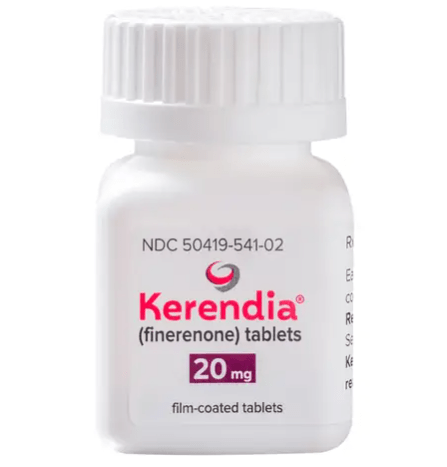
Kerendia
Buy Kerendia Online
Secure Encrypted Payments
Kerendia is a once-daily tablet containing finerenone for adults with chronic kidney disease associated with type 2 diabetes. You can buy Kerendia online, view the current Kerendia price, and choose the available strength that matches your clinician’s directions. Strengths commonly used in practice include Kerendia 10 mg and Kerendia 20 mg tablets.
Kerendia is not insulin, not a diuretic, and not a blood sugar medicine. It is used to lower kidney and cardiovascular risk in eligible adults, while other parts of care may still include glucose control, blood pressure treatment, kidney-protective medicines, and lifestyle steps.
Kerendia Price, Strengths, and Ordering
Kerendia tablet price can vary by strength, quantity, and current pharmacy supply. During ordering, choose the dose strength shown for Kerendia tablets and match it to the directions from your clinician. If your treatment plan changes after lab work, use the updated directions for future fills rather than guessing between strengths.
Many people search for Kerendia cost, Kerendia cash price, or Kerendia without insurance because this medication is often used long term. Current pricing is shown before checkout so you can plan refills and compare the out-of-pocket cost of the available tablet strength. We support US delivery from Canada through licensed pharmacies, with order details reviewed before the medication is supplied.
Quick tip: Keep your most recent potassium and kidney function lab dates handy when planning refills, because monitoring often affects whether therapy continues or changes.
What Kerendia Treats
Kerendia is used in adults with chronic kidney disease linked to type 2 diabetes. In this setting, it helps reduce the risk of sustained decline in estimated glomerular filtration rate, kidney failure, cardiovascular death, nonfatal heart attack, and hospitalization for heart failure. For broader condition background, see our Chronic Kidney Disease information.
Chronic kidney disease in type 2 diabetes often involves albumin in the urine, reduced kidney filtering ability, or both. Kerendia may be considered when a clinician wants to add mineralocorticoid receptor blockade to a kidney and heart risk-reduction plan. It does not replace diabetes medicines, blood pressure care, or routine lab monitoring.
Type 2 diabetes care can include several medication classes with different goals. If you are building a broader plan, our Type 2 Diabetes content explains related disease-management concepts that may come up during visits.
Active Ingredient and How It Works
The active ingredient in Kerendia is finerenone. Finerenone belongs to a class called nonsteroidal mineralocorticoid receptor antagonists, often shortened to nsMRAs. Mineralocorticoid receptors are involved in pathways that can contribute to inflammation and scarring in the kidneys and heart.
By blocking these receptors, Kerendia may help limit processes associated with worsening kidney and cardiovascular outcomes in the studied population. This is different from simply lowering blood sugar. People taking Kerendia still need diabetes monitoring and other treatments exactly as directed by their care team.
Finerenone tablets are the active-ingredient name behind the Kerendia brand. A generic finerenone product is not approved in the United States or Canada at this time based on the current product context, so brand Kerendia is typically the product supplied when selected.
How to Take Kerendia Tablets
Kerendia is taken once daily, with or without food. Taking it at the same time each day can make adherence easier and may help you connect dosing with a stable routine. Swallow the tablet whole with water unless your clinician gives different instructions.
The starting strength and any later adjustment depend on kidney function and potassium results. Kerendia 10mg tablets and Kerendia 20 mg tablets are used differently depending on the individual treatment plan, so do not change between strengths on your own. If a dose is missed, take it as soon as you remember on the same day; if the day has passed or the next dose is due, skip the missed dose and return to the usual schedule.
Do not take two doses at once to make up for a missed tablet. A daily reminder, medication app, or pairing the dose with a regular activity can reduce gaps. If vomiting, severe illness, dehydration, or medication changes occur, ask your clinician whether extra lab monitoring is needed.
Storage, Travel, and Handling
Store Kerendia tablets at room temperature in a dry place, away from moisture and excess heat. Keep the labeled container closed and out of reach of children and pets. Bathrooms, windowsills, and cars can expose tablets to heat or humidity, so a bedroom cabinet or dry storage area is usually more practical.
For travel, keep the medication in your carry-on bag with the label intact. A copy of your medication list can help if you need medical care while away. Pill organizers may be useful for routines, but they should stay dry and clearly separated from other tablets that look similar.
Kerendia ships from Canada to US addresses with prompt, express shipping. If you use several diabetes or kidney-related supplies, the Diabetes Care category may help you browse adjacent items in one place.
Benefits and Treatment Expectations
Kerendia’s benefits are usually measured through long-term kidney and cardiovascular outcomes, not through a symptom you can immediately feel. Many people with chronic kidney disease do not feel different when their labs improve or worsen. That makes scheduled blood tests and follow-up visits central to safe use.
Your clinician may monitor estimated glomerular filtration rate, urine albumin, potassium, blood pressure, and other markers depending on your health history. Early follow-up is common because potassium can rise after starting therapy or after dose changes. Later monitoring helps confirm the medication still fits your plan.
Kerendia is not expected to work like an SGLT2 inhibitor, insulin, GLP-1 medicine, or blood pressure tablet. It targets a different pathway. If you are reviewing lifestyle measures alongside medication therapy, our Type 2 Diabetes articles include broader education that can support informed conversations with your clinician.
Side Effects, Warnings, and Monitoring
The most important safety issue with Kerendia is high potassium, also called hyperkalemia. Potassium is an electrolyte that helps nerves, muscles, and the heart work properly, but too much can be dangerous. Some people have no symptoms when potassium rises, which is why lab tests matter.
Common or important effects may include increased potassium, changes in kidney lab results, and dizziness. Contact a clinician promptly if you notice muscle weakness, unusual fatigue, chest discomfort, palpitations, fainting, or a slow or irregular heartbeat. Seek urgent care for severe symptoms or signs of a serious electrolyte problem.
Kerendia is generally avoided or reassessed in people with very high baseline potassium or certain levels of reduced kidney function. Monitoring is also important after dehydration, acute illness, or changes to medicines that affect potassium or kidney function. Never stop or restart kidney, blood pressure, or diabetes medicines without professional guidance.
Interactions and Cautions
Strong CYP3A4 inhibitors can raise finerenone levels and increase safety risks. Examples include ketoconazole, itraconazole, and clarithromycin. Strong CYP3A4 inducers may lower finerenone exposure and could reduce effectiveness. Share all prescription medicines, non-prescription products, vitamins, and herbal supplements with your clinician before and during use.
Potassium supplements, salt substitutes containing potassium, potassium-sparing diuretics, and other mineralocorticoid receptor blockers can increase the chance of high potassium. Some blood pressure medicines can also affect potassium, so the full medication list matters more than any single product. If you are unsure whether a salt substitute contains potassium chloride, read the label and ask before using it regularly.
Diet can also influence potassium intake, especially for people with kidney disease. Food choices should be individualized because diabetes, kidney function, heart health, and lab results can point in different directions. For general kidney-health education, see Chronic Kidney Disease and discuss personal targets with your care team.
How Kerendia Compares With Farxiga, Jardiance, and Other Options
Kerendia is not the same as Farxiga or Jardiance. Farxiga and Jardiance are SGLT2 inhibitors, a different class of medicine often used in type 2 diabetes, heart failure, and kidney-risk management for appropriate patients. Kerendia is an nsMRA and works through mineralocorticoid receptor blockade.
These medicines are not interchangeable. A clinician may use one class, another class, or a combination strategy depending on kidney function, albumin levels, blood sugar needs, heart history, potassium risk, and tolerability. The right plan may also include an ACE inhibitor or angiotensin receptor blocker when appropriate.
Diabetes-related kidney disease usually requires layered care rather than one medication doing everything. If your clinician mentions class choices, our Diabetes Care section can help you understand the broader treatment landscape without assuming any one product is suitable for you.
Is Kerendia Bad for Kidneys?
Kerendia is used to reduce the risk of worsening kidney outcomes in eligible adults with chronic kidney disease associated with type 2 diabetes. That does not mean it is risk-free. Kidney function and potassium need monitoring because lab changes can happen, especially after starting therapy or changing dose strength.
A temporary change in lab results does not automatically mean the medication is harming the kidneys, but it must be interpreted by a clinician who knows your baseline values. Report dehydration, severe diarrhea, vomiting, or major changes in fluid intake, since these can affect kidney-related labs and medication decisions.
Why it matters: The same medication can be kidney-protective in the right person and unsafe in someone with the wrong potassium or kidney-function profile.
Availability, Country of Origin, and Refills
Kerendia availability can vary by strength and package size, but the product is offered for ordering when shown in the store. Choose the strength currently displayed and align it with your medication directions. If your clinician changes your dose after lab work, update refill planning before the next supply is needed.
Some customers specifically look for Kerendia from Canada or Kerendia Canadian pricing because cross-border cash-pay choices can affect out-of-pocket planning. Country-of-origin information may be shown for products sourced through Canada; related browsing is available through our Canada product attribute.
For long-term therapy, plan ahead rather than waiting until the last few tablets. Lab timing, clinic follow-up, strength changes, and supply quantity can all affect refill timing. Keeping a current medication list also helps reduce duplicate therapies and avoid interaction problems.
Questions to Ask Before Starting or Refilling
Kerendia decisions should be based on your kidney function, potassium, urine albumin history, cardiovascular risk, and other medicines. Bringing focused questions to appointments can make each refill safer and more useful.
- What potassium level is safe for me before continuing treatment?
- How often should kidney function and potassium be tested?
- Should I avoid potassium supplements or potassium-based salt substitutes?
- Do any of my antibiotics, antifungals, blood pressure medicines, or supplements interact?
- Should my Kerendia strength change if my labs improve or worsen?
- How does this medicine fit with SGLT2 inhibitors or other kidney-protective therapies?
- What symptoms should prompt same-day medical advice?
These questions are especially important if you have had high potassium before, advanced kidney disease, heart rhythm concerns, recent hospitalization, or frequent changes in blood pressure and diabetes medicines.
Authoritative Sources
| Resource | Link |
|---|---|
| Official prescribing information | FDA label for Kerendia |
| Manufacturer information | Bayer Kerendia information |
This content is for informational purposes only and is not a substitute for professional medical advice.
eGFR Calculator
Estimate kidney filtration using the 2021 CKD-EPI creatinine equation.
eGFR
-
mL/min/1.73 m2
G category
-
requires clinical context
These calculations are for education only and do not replace clinical advice, diagnosis, or treatment. Always confirm medical decisions with a qualified healthcare professional.
Urine Albumin-Creatinine Ratio Calculator
Calculate urine albumin-creatinine ratio from spot urine albumin and creatinine values.
uACR
-
mg/g
uACR
-
mg/mmol
Category
-
A1/A2/A3 albuminuria range
These calculations are for education only and do not replace clinical advice, diagnosis, or treatment. Always confirm medical decisions with a qualified healthcare professional.
Creatinine Clearance Calculator
Estimate creatinine clearance using the Cockcroft-Gault equation.
CrCl
-
mL/min estimate
These calculations are for education only and do not replace clinical advice, diagnosis, or treatment. Always confirm medical decisions with a qualified healthcare professional.
Blood Pressure Average Calculator
Average home blood pressure readings and show a simple screening range.
Average BP
-
entered readings only
Range
-
screening category
These calculations are for education only and do not replace clinical advice, diagnosis, or treatment. Always confirm medical decisions with a qualified healthcare professional.
Express Shipping - from $29.99
Shipping with this method takes 3-5 days
Prices:
- Dry-Packed Products $29.99
- Cold-Packed Products $39.99
Shipping Countries:
- United States (all contiguous states**)
- Worldwide (excludes some countries***)
Standard Shipping - $19.99
Shipping with this method takes 5-10 days
Prices:
- Dry-Packed Products $19.99
- Not available for Cold-Packed products
Shipping Countries:
- United States (all contiguous states**)
- Worldwide (excludes some countries***)
What does Kerendia do?
Kerendia contains finerenone and is used in adults with chronic kidney disease associated with type 2 diabetes. It helps reduce the risk of worsening kidney outcomes and certain cardiovascular events in eligible patients.
Is Kerendia the same as Farxiga or Jardiance?
No. Kerendia is a nonsteroidal mineralocorticoid receptor antagonist, while Farxiga and Jardiance are SGLT2 inhibitors. They work through different pathways and are not interchangeable.
What are the main side effects of Kerendia?
The key safety concern is high potassium. Other effects can include dizziness or kidney lab changes. Regular potassium and kidney-function monitoring helps clinicians decide whether treatment remains appropriate.
Does Kerendia come as 10 mg and 20 mg tablets?
Yes. Kerendia tablets are commonly supplied as 10 mg and 20 mg strengths. Choose the strength shown during ordering that matches your clinician’s current directions.
Is there a Kerendia generic?
Kerendia’s active ingredient is finerenone. Based on the current product context, a generic finerenone product is not approved in the United States or Canada at this time, so brand Kerendia is typically supplied.
Rewards Program
Earn points on birthdays, product orders, reviews, friend referrals, and more! Enjoy your medication at unparalleled discounts while reaping rewards for every step you take with us.
You can read more about rewards here.
POINT VALUE
How to earn points
- 1Create an account and start earning.
- 2Earn points every time you shop or perform certain actions.
- 3Redeem points for exclusive discounts.
You Might Also Like
Select options
This product has multiple variants. The options may be chosen on the product page
Select options
This product has multiple variants. The options may be chosen on the product page
Select options
This product has multiple variants. The options may be chosen on the product page
Select options
This product has multiple variants. The options may be chosen on the product page