

Please note: a valid prescription is required for all prescription medication.
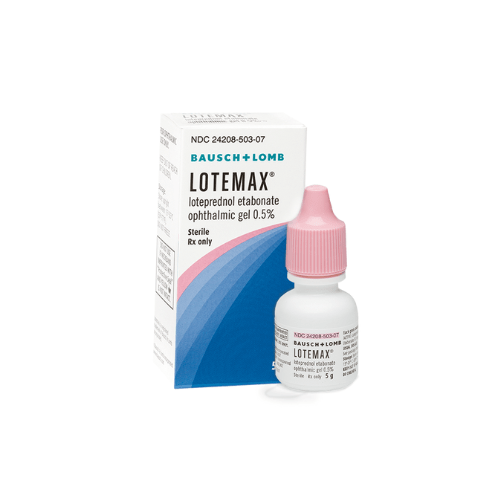
Lotemax Ophthalmic Gel
Buy Lotemax Ophthalmic Gel Online
Secure Encrypted Payments
Lotemax Ophthalmic Gel is a loteprednol etabonate eye corticosteroid used to reduce inflammation and pain after ocular surgery and in other steroid-responsive eye conditions. Customers can buy Lotemax Ophthalmic Gel online, view the current price, and choose the listed strength that matches clinician directions. This gel is supplied through licensed pharmacy channels with US delivery from Canada.
Price, Strength, and Ordering Details
Lotemax gel pricing can matter when treatment is short-term, paid out of pocket, or not fully covered by insurance. The current cash price, quantity, and available strength are shown during ordering so you can match the medicine to the directions given by your eye-care clinician. Do not substitute a different loteprednol product, concentration, or vehicle unless your clinician agrees.
Lotemax 0.5 ophthalmic gel is a commonly referenced presentation for this medicine, while related loteprednol products may use different strengths or forms. Lotemax SM eye drops and Lotemax SM gel, for example, are associated with a 0.38% formulation and are not automatically interchangeable with Lotemax 0.5 gel. The active ingredient may be similar, but concentration, formulation, and dosing instructions can differ.
Quick tip: Keep the exact product name, strength, and directions together when you place an order or talk with your clinic.
What Lotemax Eye Gel Is Used For
Lotemax Ophthalmic Gel is used for inflammation and pain after eye surgery. It may also be considered for other steroid-responsive inflammation when an eye-care clinician determines that a topical corticosteroid is appropriate. Steroid-responsive means the inflammation is expected to improve with a corticosteroid rather than an antibiotic, antiviral, or another treatment type.
The active ingredient, loteprednol etabonate, helps limit inflammatory activity in eye tissues. In practical terms, this can help reduce swelling, redness, soreness, and irritation when inflammation is the cause. It is intended for use in the eye only and should be used for the treatment course directed by a clinician.
Lotemax is a steroid, not an antibiotic. It does not treat bacterial infection by itself. If an infection is present or suspected, the treatment plan may need a different medicine or close specialist supervision. People reading about eye inflammation, eye pain, or allergic conjunctivitis should avoid self-diagnosing because several eye conditions can feel similar but need different care.
How the Gel Works in the Eye
Loteprednol etabonate is a topical ophthalmic corticosteroid. Corticosteroids reduce the body’s inflammatory response, including processes that contribute to redness, swelling, itching, and discomfort. Because the medicine is placed directly on the eye surface, it acts locally in the treated eye.
The gel vehicle is designed to stay on the ocular surface long enough to deliver the medicine. Some people prefer a gel because it can feel different from a standard suspension, but comfort and suitability are individual. If your clinician has used a specific name such as Lotemax eye gel drops, Lotemax gel, or loteprednol etabonate ophthalmic gel, confirm that the product strength and directions match.
Lotemax should not be used as a general redness reliever. Red eyes can be caused by allergy, dryness, infection, injury, elevated eye pressure, or inflammation after a procedure. A corticosteroid may mask or worsen certain infections, so the diagnosis matters before treatment starts.
How to Use Loteprednol Etabonate Ophthalmic Gel
Use Lotemax eye gel exactly as directed by your clinician and the medicine label. Wash your hands first. Tilt your head back, gently pull down the lower eyelid, and place the directed amount into the pocket without touching the bottle tip to the eye, eyelid, fingers, or any surface. Close the eye gently after use rather than squeezing it tightly.
If you use more than one eye medicine, spacing matters. Many clinicians recommend separating eye products by several minutes to reduce washout, with thicker ointments usually applied last. Follow the sequence provided by your clinic, especially after surgery when antibiotics, lubricants, or pressure-lowering drops may also be part of the plan.
Do not wear contact lenses during active inflammation or post-surgical recovery unless your clinician specifically says it is safe. Contacts can irritate the eye, trap contamination, or interfere with healing. If vision becomes temporarily blurred after applying the gel, wait until vision clears before driving or doing tasks that require sharp eyesight.
Missed Dose, Treatment Length, and Follow-Up
If you miss a dose, use it when you remember unless it is close to the next scheduled dose. In that case, skip the missed dose and return to the usual timing. Do not double the amount to catch up. Extra steroid exposure can increase the chance of side effects without improving recovery.
Eye steroids are often used for a limited course. Some treatment plans involve tapering, while others stop at a defined endpoint. The right schedule depends on the procedure, diagnosis, inflammation level, and eye pressure history. Do not extend a course simply because the eye still feels irritated; persistent symptoms need reassessment.
Follow-up visits are important because some steroid-related problems do not cause obvious symptoms at first. Eye pressure checks may be recommended during treatment, especially if you have glaucoma, a history of steroid response, or prolonged use. Your clinician may also check healing and look for signs of infection or ongoing inflammation.
Side Effects, Warnings, and Monitoring
Common side effects of loteprednol ophthalmic gel can include temporary blurred vision, mild burning, stinging, eye discomfort, dryness, tearing, redness, or light sensitivity. These effects are often short-lived, but persistent irritation should be reported. New or worsening pain is not something to ignore after eye surgery or during inflammatory eye disease.
More serious corticosteroid risks include increased intraocular pressure, glaucoma worsening, cataract changes, delayed wound healing, and increased susceptibility to infection. Steroids may worsen viral, fungal, or mycobacterial eye infections. People with a history of herpes simplex keratitis need careful clinical evaluation before using ocular steroids.
Contact your clinician promptly for severe eye pain, marked redness, swelling, discharge, sudden vision changes, halos around lights, or symptoms that worsen instead of improving. These signs may indicate infection, pressure elevation, injury, or another condition requiring urgent care. A steroid can make some eye problems harder to detect, so early communication is safer.
Tell your clinician about all eye products you use, including artificial tears, glaucoma drops, antibiotic drops, allergy drops, and ointments. Systemic medicine interactions are less common with topical eye use, but combining multiple eye products can affect absorption, comfort, and timing. Use only the affected eye or eyes as directed.
Who May Need Extra Caution
Lotemax Ophthalmic Gel may not be appropriate for someone with an untreated eye infection, certain viral eye diseases, fungal eye disease, mycobacterial eye infection, or known hypersensitivity to its ingredients. Extra caution is also important for people with glaucoma, elevated eye pressure, recent eye surgery, corneal thinning, or a history of slow wound healing.
Children, older adults, and people using eye steroids for longer periods may need closer monitoring. Pregnancy and breastfeeding questions should be discussed with a healthcare professional who can weigh the need for treatment against individual risks. If a child accidentally swallows or misuses an eye medicine, seek professional help right away.
Why it matters: Steroid eye medicines can be very helpful, but the wrong diagnosis or prolonged use can raise avoidable risk.
Storage, Handling, and Travel
Store Lotemax gel at room temperature as directed on the label. Keep the cap closed tightly and protect the bottle tip from contamination. Do not freeze the medicine. Keep it away from children and pets, and do not share it with another person even if their symptoms look similar.
Bring the bottle in your carry-on bag when traveling so it is less exposed to temperature extremes. Keep it in the original packaging if possible, along with your clinic instructions. When using eye medicine away from home, clean your hands and choose a clean place before applying the gel.
Do not use the gel past the expiration date or if the bottle appears damaged, contaminated, or changed in appearance. If you are unsure whether a bottle is still safe after travel or storage problems, ask a pharmacist or clinician before using it again. The ophthalmology category can also help you find related eye-care medicines that may be part of a clinic-directed plan.
Lotemax Gel Compared With Related Eye Steroids
Lotemax Ophthalmic Gel belongs to a group of topical corticosteroid eye medicines. Related products may differ by strength, vehicle, approved use, comfort, and dosing schedule. Gel, suspension, ointment, and submicron gel products should not be treated as identical simply because they contain loteprednol etabonate.
Some patients are directed to a suspension rather than gel, such as Lotemax Ophthalmic Drops, when that form fits the treatment plan. Others may use a lower-strength loteprednol product such as Alrex for certain allergic eye inflammation scenarios. These choices depend on diagnosis, severity, prior response, eye pressure risk, and clinician preference.
Lotemax SM 0.38 ophthalmic gel is a distinct loteprednol product that appears in searches because it is in the same medicine family. Lotemax Ophthalmic Gel 0.5 and Lotemax SM 0.38 gel should not be swapped without clinical direction. When browsing Canadian-sourced eye medicines, the Canada origin filter can help organize products by sourcing information without changing the clinical decision.
Cost-Saving Considerations Without Changing Treatment
If you pay cash or have limited insurance coverage, review the current Lotemax Ophthalmic Gel price before ordering. Out-of-pocket cost can vary by quantity, strength, and sourcing route. Ask your clinic whether the exact gel is required, whether a different loteprednol formulation is clinically acceptable, and whether the duration of therapy is expected to be short or extended.
Do not reduce the number of applications, use an old bottle, or borrow someone else’s eye medicine to save money. Those choices can delay healing or increase infection risk. A safer cost discussion focuses on the correct product, appropriate quantity, refill timing, and whether a related formulation is suitable for your diagnosis.
For patients managing recurring eye conditions, browsing the ophthalmology articles may help prepare questions for your clinician. Educational reading is not a substitute for an eye exam, but it can make treatment discussions more focused.
Questions to Ask Your Eye-Care Clinician
- Is Lotemax gel the right form for my diagnosis or procedure?
- Which eye or eyes should be treated?
- How long should I use it, and will the course need tapering?
- Should my eye pressure be checked during treatment?
- Can I use artificial tears, antibiotics, or glaucoma drops with it?
- How long should I wait between different eye medicines?
- When can I restart contact lenses, if I normally wear them?
- What symptoms mean I should call urgently?
Authoritative Sources
- Official prescribing information for LOTEMAX ophthalmic gel
- Mayo Clinic information on loteprednol ophthalmic use
- Peer-reviewed review of loteprednol etabonate ophthalmic gel 0.38%
This content is for informational purposes only and is not a substitute for professional medical advice.
Express Shipping - from $29.99
Shipping with this method takes 3-5 days
Prices:
- Dry-Packed Products $29.99
- Cold-Packed Products $39.99
Shipping Countries:
- United States (all contiguous states**)
- Worldwide (excludes some countries***)
Standard Shipping - $19.99
Shipping with this method takes 5-10 days
Prices:
- Dry-Packed Products $19.99
- Not available for Cold-Packed products
Shipping Countries:
- United States (all contiguous states**)
- Worldwide (excludes some countries***)
What is Lotemax Ophthalmic Gel used for?
Lotemax Ophthalmic Gel is used to treat inflammation and pain after eye surgery. Clinicians may also consider loteprednol eye steroids for other steroid-responsive eye inflammation when the diagnosis supports that choice.
Is Lotemax an antibiotic or a steroid?
Lotemax is a corticosteroid eye medicine, not an antibiotic. It helps reduce inflammation, but it does not treat bacterial infection by itself and may worsen some untreated infections.
What should I avoid while using Lotemax gel?
Avoid touching the bottle tip to your eye or any surface, sharing the medicine, wearing contact lenses unless your clinician approves, and extending treatment beyond the directed course. Report worsening pain, discharge, swelling, or vision changes promptly.
How is Lotemax 0.5 gel different from Lotemax SM 0.38 gel?
Both contain loteprednol etabonate, but they are different formulations and strengths. They should not be swapped unless your eye-care clinician confirms the change and gives matching directions.
Can Lotemax gel raise eye pressure?
Yes. Ophthalmic corticosteroids can increase intraocular pressure in some people, especially with longer use or a history of glaucoma or steroid response. Your clinician may recommend pressure checks during treatment.
Rewards Program
Earn points on birthdays, product orders, reviews, friend referrals, and more! Enjoy your medication at unparalleled discounts while reaping rewards for every step you take with us.
You can read more about rewards here.
POINT VALUE
How to earn points
- 1Create an account and start earning.
- 2Earn points every time you shop or perform certain actions.
- 3Redeem points for exclusive discounts.
You Might Also Like
Select options
This product has multiple variants. The options may be chosen on the product page
Select options
This product has multiple variants. The options may be chosen on the product page
Select options
This product has multiple variants. The options may be chosen on the product page
Select options
This product has multiple variants. The options may be chosen on the product page