
Please note: a valid prescription is required for all prescription medication.
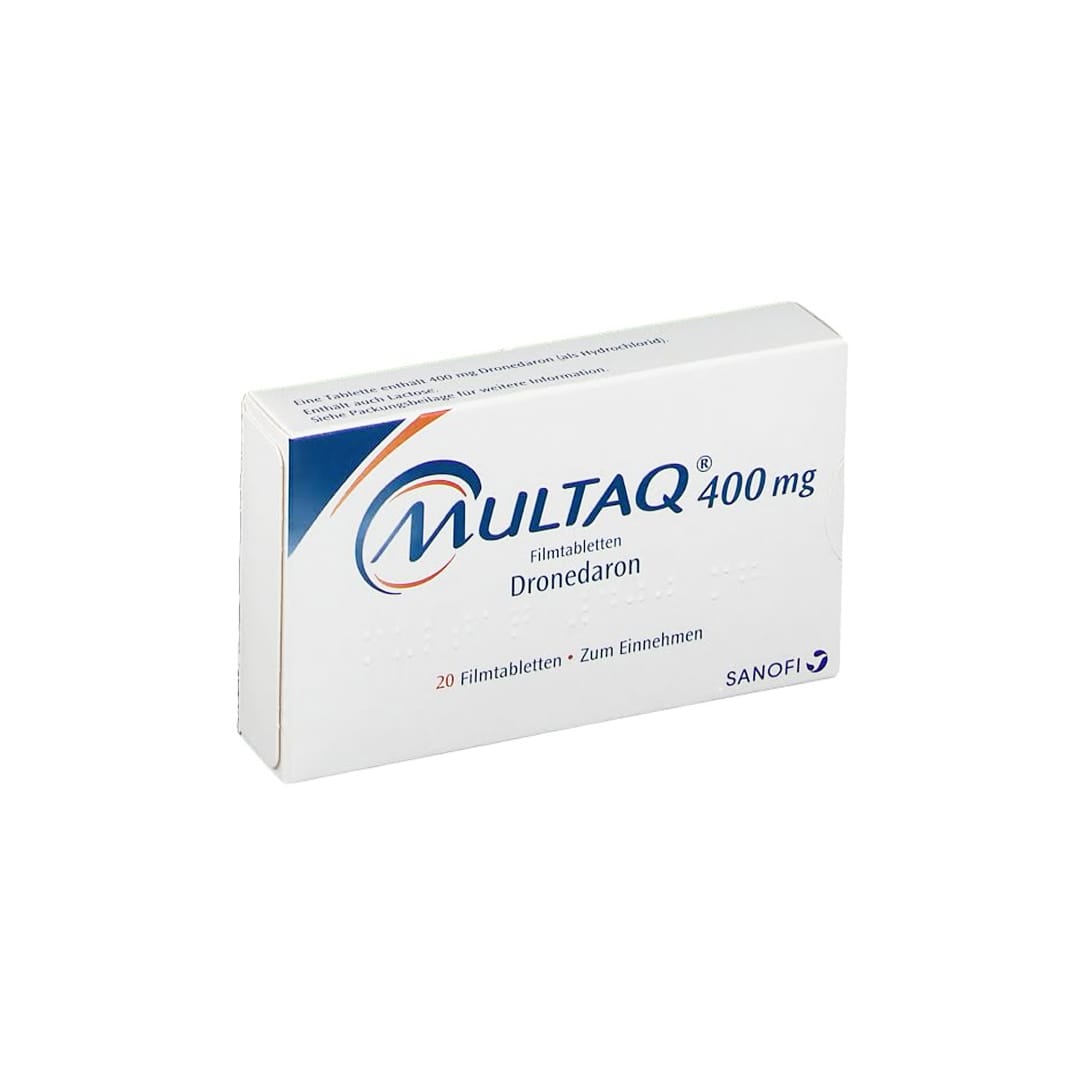
Multaq
Buy Multaq 400 mg Online
Secure Encrypted Payments
Multaq is a brand-name antiarrhythmic medicine containing dronedarone, used in certain adults with atrial fibrillation to help reduce AF-related hospitalization risk. Multaq 400 mg tablets can be ordered online through licensed pharmacy channels, with the tablet strength matched to the directions from your clinician. Customers can view current Multaq price information during ordering and consider quantity, supply length, and cash-pay needs before checkout.
Multaq Price, Tablet Strength, and Ordering Basics
Multaq cost can vary by manufacturer supply, package quantity, and the number of tablets needed for the treatment schedule. The most common marketed presentation is Multaq 400 mg tablets, and ordering should follow the exact strength and directions on your medication record. If your clinician changes your rhythm-control plan, update the order only after the new directions are clear.
People often compare Multaq 400 mg price, monthly cash cost, and out-of-pocket cost because antiarrhythmic therapy may be used over time. A longer supply may reduce the per-tablet expense in some cases, but it should make sense for your monitoring schedule and follow-up plan. Keep ECG appointments and lab checks in mind when estimating the full cost of therapy, not just the medicine itself.
BorderFreeHealth supports US delivery from Canada for eligible medication orders through licensed pharmacies. Order details may be reviewed so the pharmacy can match the medicine, strength, quantity, and customer information before supply. Use the product strength shown during ordering and keep the label with the medicine for reference at home or while traveling.
What Multaq Does for Atrial Fibrillation
Multaq contains dronedarone, an antiarrhythmic medicine that acts on several cardiac ion channels. In plain language, it helps steady the electrical signals that coordinate heart rhythm. It is used to reduce the risk of hospitalization for atrial fibrillation in adults who are in sinus rhythm and have a history of paroxysmal or persistent AF.
Atrial fibrillation is an irregular rhythm that starts in the upper chambers of the heart. Paroxysmal AF comes and goes, while persistent AF lasts longer and often needs medical action to restore normal rhythm. Multaq is not for permanent AF, a situation where normal rhythm will not or cannot be restored. Continuing it in permanent AF can raise the risk of serious outcomes.
Rhythm-control medicines are only one part of AF care. Your clinician may also consider stroke prevention, blood pressure control, sleep apnea treatment, alcohol intake, electrolyte balance, and other heart conditions. For condition background, the atrial fibrillation section explains how AF is commonly discussed in care plans. Some people with closely related rhythm problems may also review atrial flutter information with their care team.
How Dronedarone Works
Dronedarone is related to amiodarone but is not the same medicine. Both are rhythm-control drugs, yet they differ in chemical structure, tissue effects, interaction profiles, monitoring needs, and suitability for individual heart histories. Multaq is non-iodinated, which makes it distinct from amiodarone, but that difference does not mean it is safer or better for everyone.
The medicine affects sodium, potassium, and calcium currents, and it also has anti-adrenergic activity. These effects can slow electrical conduction and help support maintenance of sinus rhythm in the right patient group. Because it can affect heart rate and ECG intervals, periodic rhythm evaluation is part of safe use.
Multaq is typically taken with meals according to labeled directions. Food helps with absorption, so pairing doses with breakfast and evening meals can support a consistent routine. Do not crush, split, or change how you take the tablets unless a healthcare professional has told you to do so.
Who May Be Considered for This Medicine
Multaq may be considered for adults who currently have normal sinus rhythm and a history of paroxysmal or persistent atrial fibrillation. The goal is to lower the chance of AF-related hospitalization when used as labeled. It is not used to convert AF to normal rhythm on its own, and it is not appropriate for everyone with irregular heartbeat symptoms.
People with permanent AF should not use Multaq. It is also contraindicated in certain patients with heart failure, including those with NYHA Class IV heart failure or Class II to III heart failure with recent decompensation requiring hospitalization or referral to a specialized heart failure clinic. Severe liver impairment, certain heart block or sick sinus conditions without a pacemaker, very slow heart rate, and significant QT prolongation are also important concerns.
Pregnancy requires special caution because fetal harm is a serious risk. Breastfeeding and plans for pregnancy should be discussed before treatment decisions are made. Your clinician may also review potassium and magnesium levels, kidney function, liver tests, ECG results, and all current medicines before deciding whether dronedarone fits your situation.
Dosage Routine, Missed Doses, and Monitoring
The usual labeled adult schedule for Multaq is 400 mg twice daily with meals. Many people use morning and evening meal times as anchors so doses stay roughly 12 hours apart. Follow the directions written for your own therapy, because dose timing may be coordinated with other heart medicines.
If you miss a dose, take the next dose at the usual scheduled time. Do not take two doses at once to make up for the missed tablet. A phone reminder, weekly medication organizer, or written checklist can help reduce gaps, especially when multiple heart medicines are taken together.
Monitoring is a key part of treatment. Your clinician may order ECGs to confirm rhythm status and check for QT prolongation, along with liver function tests and other labs. Contact a healthcare professional promptly if palpitations worsen, fainting occurs, shortness of breath increases, swelling appears, or you notice symptoms that feel different from your usual AF pattern.
Side Effects, Serious Warnings, and When to Get Help
Common Multaq side effects include diarrhea, nausea, vomiting, abdominal discomfort, weakness, fatigue, and skin reactions such as rash. Some effects are mild and settle, while others may signal a need for medical assessment. Report side effects that persist, interfere with eating or hydration, or coincide with dizziness or worsening heart symptoms.
Serious risks include new or worsening heart failure, liver injury, lung injury, slow heart rate, QT prolongation, and dangerous rhythm changes. Warning signs can include yellowing skin or eyes, dark urine, severe fatigue, unexplained shortness of breath, coughing that worsens, fainting, chest discomfort, rapid weight gain from fluid, or swelling in the legs. Severe allergic reaction symptoms, such as facial swelling or trouble breathing, require urgent care.
Multaq can increase the risk of stroke, hospitalization, and death in people with permanent AF. That is why rhythm status matters during ongoing therapy. If your AF becomes continuous, or if a clinician tells you your AF is now permanent, ask whether dronedarone should be stopped and what plan should replace it.
Why it matters: Antiarrhythmic medicines can help the right patients, but they also require careful rhythm and safety follow-up.
Interactions and Medicines to Discuss
Multaq has important drug interaction considerations. Strong CYP3A inhibitors can raise dronedarone levels and may be unsafe; examples include some azole antifungals, certain macrolide antibiotics, and HIV protease inhibitors. Grapefruit and grapefruit juice can also raise medicine exposure and should be avoided.
Medicines that prolong the QT interval can increase rhythm risk when combined with dronedarone. Digoxin levels can rise, so careful monitoring or dose adjustment may be needed. Beta-blockers and non-dihydropyridine calcium channel blockers, such as diltiazem or verapamil, may increase the chance of slow heart rate or conduction problems.
Many people with AF also take anticoagulants to reduce stroke risk. Multaq may interact with some anticoagulants, including drugs in the same general treatment area as apixaban. Do not start, stop, or combine heart rhythm medicines, blood thinners, antibiotics, antifungals, seizure medicines, herbal products, or supplements without a medication review.
Storage, Travel, and Shipping Considerations
Store Multaq tablets at room temperature, away from excess heat, direct sunlight, and moisture. Keep the container closed and out of reach of children and pets. Avoid bathroom storage if humidity is high, and do not use tablets that appear damaged or compromised.
When traveling, keep tablets in the original labeled container so the medicine can be identified. Pack enough for delays and keep it in carry-on luggage rather than checked baggage. A medication list that includes dronedarone, dose timing, anticoagulants, and other heart medicines can be useful during urgent care visits.
Orders may be sent with prompt, express shipping when appropriate for the medication and route. Allow time for order review, pharmacy processing, and cross-border logistics, especially if your current supply is running low. Refill reminders can help prevent missed doses and reduce last-minute ordering stress.
Multaq Compared With Amiodarone and Other Options
Multaq and amiodarone are both antiarrhythmic medicines, but they are not interchangeable without clinical direction. Amiodarone has a different risk profile and often requires monitoring for thyroid, lung, liver, eye, and skin effects. Multaq was designed differently and lacks iodine, yet it has its own important warnings, including specific heart failure and permanent AF restrictions.
Other rhythm-control or rate-control choices may include sotalol, dofetilide, flecainide, propafenone, beta-blockers, calcium channel blockers, cardioversion, catheter ablation, or a revised stroke-prevention strategy. The right option depends on heart function, kidney and liver status, ECG findings, symptoms, AF pattern, and other medicines. Cardiovascular browsing can help you understand related treatment categories, but medication changes should stay tied to clinical evaluation.
For broader heart treatment context, review the cardiovascular category or the cardiovascular articles. These sections can help you prepare better questions about rhythm control, anticoagulation, monitoring, and lifestyle factors before your next appointment.
Practical Cost-Saving and Adherence Tips
Multaq price per month depends on the number of tablets used, the supply length selected, and current pharmacy pricing. If you pay cash, review the total before checkout and make sure the quantity lines up with your dosing schedule. Do not stretch tablets, skip doses, or reduce frequency to lower cost unless a healthcare professional gives a new plan.
Ask whether a 60-day or 90-day supply is appropriate for your situation. A longer fill may be convenient after the medicine is well tolerated and monitoring is stable. Early in treatment or after a recent rhythm change, smaller quantities may make more sense while your care team evaluates safety and benefit.
- Pair doses with meals to support a repeatable routine.
- Use refill reminders before the bottle is nearly empty.
- Keep an updated medication list for interaction checks.
- Avoid grapefruit products while using dronedarone.
- Track palpitations, dizziness, shortness of breath, and fatigue.
Quick tip: Bring your medication list to every heart rhythm visit, including supplements and occasional antibiotics.
Questions to Ask Before and During Treatment
Good questions can make Multaq therapy safer and easier to follow. Ask whether your AF is paroxysmal, persistent, or permanent, because that distinction affects whether dronedarone is appropriate. Confirm the monitoring schedule for ECGs, liver tests, electrolytes, and any other labs tied to your heart history.
Ask how Multaq fits with anticoagulation, especially if you take apixaban, warfarin, rivaroxaban, dabigatran, or another blood thinner. Clarify which symptoms should trigger urgent care and which should lead to a routine call. If another clinician prescribes an antibiotic, antifungal, or new heart medicine, ask for an interaction review before taking the first dose.
It is also reasonable to discuss alternatives if side effects occur or AF episodes continue. Treatment goals may include fewer symptoms, fewer hospital visits, better exercise tolerance, or a clearer plan for ablation or cardioversion. Keep expectations realistic: rhythm-control medicine may help maintain normal rhythm, but it does not remove the need for follow-up.
Authoritative Sources
For full safety information, dosing details, contraindications, and interaction guidance, consult official and clinician-reviewed sources. These references support the medical points above and should not replace individualized care.
- Official Multaq prescribing information
- Mayo Clinic dronedarone drug information
- DailyMed Multaq label record
This content is for informational purposes only and is not a substitute for professional medical advice.
QTc Calculator
Calculate corrected QT interval from measured QT and heart rate.
QTc
-
milliseconds
RR interval
-
seconds
These calculations are for education only and do not replace clinical advice, diagnosis, or treatment. Always confirm medical decisions with a qualified healthcare professional.
Express Shipping - from $29.99
Shipping with this method takes 3-5 days
Prices:
- Dry-Packed Products $29.99
- Cold-Packed Products $39.99
Shipping Countries:
- United States (all contiguous states**)
- Worldwide (excludes some countries***)
Standard Shipping - $19.99
Shipping with this method takes 5-10 days
Prices:
- Dry-Packed Products $19.99
- Not available for Cold-Packed products
Shipping Countries:
- United States (all contiguous states**)
- Worldwide (excludes some countries***)
What does Multaq do?
Multaq contains dronedarone, an antiarrhythmic medicine used to reduce the risk of hospitalization for atrial fibrillation in adults who are in normal sinus rhythm and have a history of paroxysmal or persistent AF. It helps stabilize heart rhythm but is not appropriate for permanent AF.
Is Multaq the same as amiodarone?
No. Multaq and amiodarone are both rhythm-control medicines, but they are different drugs with different structures, monitoring needs, interactions, and safety considerations. Multaq is non-iodinated, while amiodarone contains iodine. Your clinician decides which, if either, fits your heart history.
Can Multaq be taken with Eliquis?
Some patients with atrial fibrillation may use a blood thinner such as Eliquis along with rhythm-control therapy, but Multaq can interact with certain anticoagulants and other heart medicines. A healthcare professional should review the combination, dose, kidney function, bleeding risk, and monitoring plan.
What drugs should not be taken with Multaq?
Multaq should not be combined with strong CYP3A inhibitors, certain QT-prolonging medicines, or other drugs that create unsafe rhythm or exposure risks. Digoxin, beta-blockers, calcium channel blockers, statins, anticoagulants, antibiotics, antifungals, and supplements should be reviewed before use.
What are common Multaq side effects?
Common side effects include diarrhea, nausea, vomiting, abdominal discomfort, fatigue, weakness, and rash. Serious symptoms such as fainting, severe shortness of breath, yellowing skin or eyes, dark urine, swelling, or worsening heart failure symptoms need prompt medical attention.
Rewards Program
Earn points on birthdays, product orders, reviews, friend referrals, and more! Enjoy your medication at unparalleled discounts while reaping rewards for every step you take with us.
You can read more about rewards here.
POINT VALUE
How to earn points
- 1Create an account and start earning.
- 2Earn points every time you shop or perform certain actions.
- 3Redeem points for exclusive discounts.
You Might Also Like
Select options
This product has multiple variants. The options may be chosen on the product page
Select options
This product has multiple variants. The options may be chosen on the product page
Select options
This product has multiple variants. The options may be chosen on the product page
Select options
This product has multiple variants. The options may be chosen on the product page