
Please note: a valid prescription is required for all prescription medication.
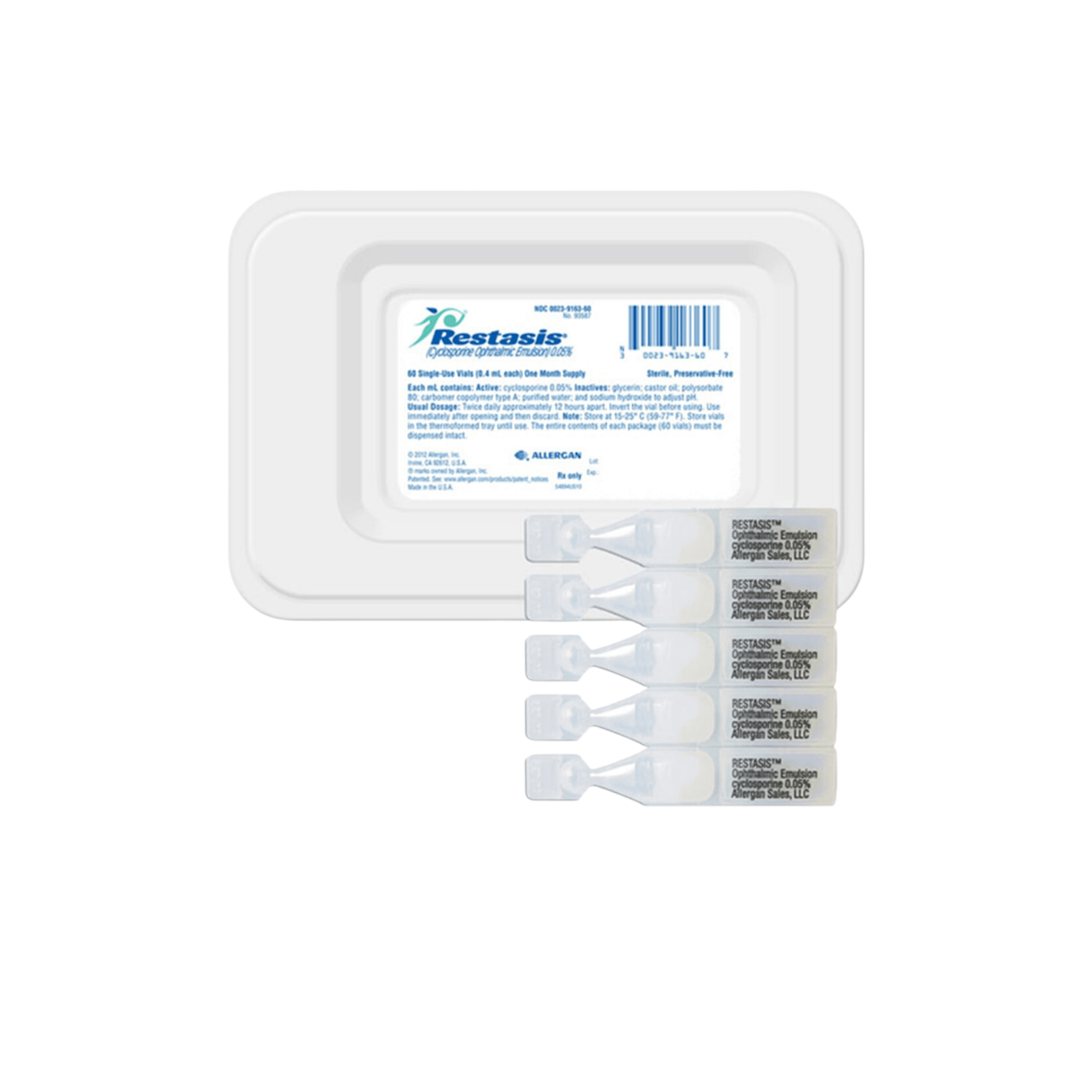
Restasis
Buy Restasis Online
Secure Encrypted Payments
Restasis is a cyclosporine ophthalmic emulsion used for chronic dry eye when tear production is reduced because of ocular surface inflammation. Restasis eye drops can be ordered online, with current pricing shown during checkout and available strength or container choices matched to the directions from your eye-care clinician. BorderFreeHealth offers U.S. delivery from Canada for customers using cash-pay medication access.
Restasis Price, Strength, and Container Choices
Restasis price can vary by quantity, container type, and pharmacy supply channel. During ordering, use the displayed product information to select the Restasis 0.05 eye drops strength and the container format that matches your clinician’s directions. Do not substitute a different cyclosporine eye product, concentration, or schedule unless the treating clinician has approved the change.
Restasis is commonly known as cyclosporine ophthalmic emulsion 0.05%. It may be supplied as single-use vials or as a multidose bottle, depending on the medication format being filled. Single-use vials can be convenient for people who prefer separate sterile containers, while multidose bottles may reduce the number of individual units handled each day. Your day-to-day routine, hand strength, travel needs, and comfort with drop technique can all affect which format feels easier to use.
For people comparing Restasis cost without insurance, the most practical step is to look at the current cash price for the exact strength, quantity, and container shown during ordering. Coupon and insurance-program language often changes, and it may not apply to cross-border cash-pay purchases. If you are also comparing eye-care medicines by category, the ophthalmology medication category can help you see related eye treatments without changing your clinician’s plan on your own.
| Product attribute | Practical buying point |
|---|---|
| Active ingredient | Cyclosporine in an ophthalmic emulsion |
| Common strength | 0.05% ophthalmic emulsion |
| Common formats | Single-use vials or multidose bottle, depending on supply |
| Main use context | Chronic dry eye associated with ocular inflammation and reduced tear production |
How Restasis Helps Dry Eye
Restasis helps increase tear production in people whose tear production is thought to be suppressed by inflammation on the eye’s surface. The active ingredient, cyclosporine, is an immunomodulator. In plain terms, it helps calm an overactive immune response in the tissues involved in tear production. That makes it different from lubricating artificial tears, which mainly add moisture for short-term comfort.
Chronic dry eye can cause burning, stinging, a gritty feeling, watering, light sensitivity, and vision that fluctuates when reading or using screens. Some people notice symptoms more in wind, air conditioning, dry indoor air, or long periods of focused near work. For broader background on symptoms and care approaches, the dry eye condition information explains how dryness can overlap with inflammation, tear-film instability, and surface irritation.
Restasis does not work like a redness-relief drop, and it is not meant to give the same immediate coating effect as a lubricant. Many people use supportive measures at the same time, such as avoiding direct airflow, using screen breaks, managing eyelid hygiene when advised, or using preservative-free artificial tears at separated times. The exact plan should come from an eye-care professional who can examine the ocular surface and rule out other causes of redness or discomfort.
How to Use Restasis Eye Drops Safely
The labeled schedule for Restasis is often one drop in each affected eye twice daily, about 12 hours apart, unless your clinician has given different instructions. Good technique matters because eye-drop bottles and vial tips can become contaminated if they touch the eye, lashes, fingers, or countertop surfaces. Wash your hands first, tilt your head back or lie down, pull the lower lid down gently, place the drop into the pocket, and close the eye without squeezing hard.
If you use other ophthalmic products, spacing the drops by several minutes helps reduce washout. Artificial tears, allergy drops, glaucoma medicines, or steroid drops may each have timing instructions. Keep a written schedule if more than one eye medicine is involved, because it can be hard to remember which drop was used first.
Contact lenses are commonly removed before using cyclosporine ophthalmic emulsion. Lenses can trap ingredients against the eye surface and may worsen irritation if reinserted too soon. Follow the waiting period on your medication label or the instructions from your eye-care clinician. Do not use Restasis while wearing contacts unless you have been specifically told to do so.
Quick tip: Set two daily reminders about 12 hours apart so missed doses are easier to spot.
When Restasis May or May Not Suit You
Restasis may suit people with chronic dry eye where decreased tear production is linked to ocular surface inflammation. It is often considered when symptoms persist despite environmental changes, lubricating drops, or other supportive care. Clinicians may also consider associated conditions such as autoimmune disease, eyelid inflammation, meibomian gland dysfunction, medication effects, hormonal changes, or aging.
This medicine is generally avoided in anyone with a known allergy to cyclosporine or any ingredient in the emulsion. An active eye infection, unexplained severe redness, eye trauma, or sudden vision change needs clinical assessment rather than self-directed continuation of an anti-inflammatory drop. Dry eye symptoms can resemble allergy, infection, eyelid disease, or corneal problems, so a careful exam helps prevent delayed treatment of a different condition.
Eye health can also be affected by broader medical conditions. People with diabetes, autoimmune symptoms, or recurrent eye inflammation should keep routine eye appointments and report changes promptly. The ophthalmology articles collection includes additional reading on eye conditions, medication use, and practical vision-care topics.
Storage, Handling, and Travel
Restasis should be stored according to the carton and container label. In general, cyclosporine ophthalmic emulsions are kept at controlled room temperature and protected from freezing, excessive heat, and direct sunlight. Do not leave the medicine in a parked car, near a heater, or in checked luggage that may be exposed to extreme temperatures.
Single-use vials should usually stay in their protective pouch until needed. Once opened, handle the vial carefully and follow the discard directions for leftover emulsion. Multidose bottles require extra attention to keeping the tip clean and the cap closed tightly. If the container is cracked, leaking, cloudy in an unusual way, or contaminated, set it aside and ask a pharmacist or clinician what to do next.
For travel, keep the medication in a carry-on bag with the labeled packaging. This helps protect the emulsion and makes the medicine easier to identify if questions arise. BorderFreeHealth offers prompt, express shipping for eligible orders, but storage after arrival remains your responsibility.
Why it matters: Proper handling helps protect the emulsion and lowers avoidable irritation risk.
Side Effects, Warnings, and Interactions
The most common negative of Restasis is local eye discomfort when the drop goes in. Burning, stinging, redness, watery eyes, discharge, eye pain, itching, a foreign-body sensation, and temporary blurred vision have been reported. These effects are often most noticeable when the eye surface is already inflamed. If brief blur occurs after dosing, wait until vision clears before driving, cycling, or using machinery.
More serious symptoms need timely medical attention. Contact an eye-care professional urgently for significant eye pain, marked swelling, severe light sensitivity, vision changes that do not clear, pus-like discharge, crusting, or worsening one-sided redness. Seek urgent help for signs of an allergic reaction, such as swelling of the face or eyelids, trouble breathing, or widespread rash.
Systemic drug interactions are less common because cyclosporine eye drops have low whole-body absorption for most users. Practical interactions usually involve other eye products. Tell your clinician about prescription drops, over-the-counter redness relievers, allergy drops, lubricants, steroid drops, and contact lens products. Separating doses can reduce dilution and make it easier to identify which medicine is causing irritation.
People with a history of herpes infection in the eye, recurrent eye infections, eye surgery, or corneal disease should be especially careful about reporting new symptoms. Restasis is an anti-inflammatory treatment for a specific dry-eye context; it is not an antibiotic and does not treat infectious conjunctivitis. If symptoms change suddenly, do not assume every flare is ordinary dryness.
Restasis Generic and Alternative Dry Eye Drops
Restasis is the brand name for cyclosporine ophthalmic emulsion 0.05%. Generic Restasis discussions usually refer to cyclosporine ophthalmic emulsion products that may be available in some markets. Brand names, generic naming, and exact container presentations can differ by country and pharmacy supply channel. The important buying point is to match the active ingredient, strength, and instructions specified by the clinician.
Dry eye treatment is often layered. Lubricating artificial tears may help short-term dryness, while cyclosporine products target inflammation-related tear suppression over time. Lifitegrast and other cyclosporine formulations are also used for certain dry-eye patients. Some clinicians use a short course of corticosteroid drops for flares, but those require monitoring because steroid eye drops can raise eye pressure or contribute to other complications in susceptible people.
If you are comparing Restasis from Canada with other eye medicines, stay focused on the diagnosis and the intended treatment goal. A lower cash price is helpful only if the medicine, strength, and format fit the plan created for your eyes. The Canada country-of-origin selection may be useful when reviewing Canadian-sourced products, but clinical suitability still depends on your eye-care assessment.
What to Expect After Starting Treatment
Restasis works gradually because it addresses inflammatory signaling rather than simply coating the eye. Some people may still need lubricating drops while waiting for tear production and surface comfort to improve. Follow-up visits may include questions about burning, dryness, watering, screen tolerance, contact lens comfort, and whether vision fluctuates less during the day.
Do not stop or restart eye medicines repeatedly without guidance, especially if you are using several drops. Inconsistent use can make it harder to judge whether Restasis is helping. If the medicine causes persistent discomfort, your clinician may evaluate drop timing, eyelid disease, allergies, contact lens wear, or whether another dry-eye therapy is more appropriate.
Daily habits can influence results. Screen breaks, humidification, avoiding direct fan airflow, treating eyelid inflammation when present, and using the right lubricating drop can all support comfort. These measures do not replace Restasis when inflammation control is needed, but they can reduce triggers that make chronic dry eye feel worse.
Authoritative Sources
Reliable medication decisions should be based on official labeling and established eye-health organizations. These sources describe the labeled indication, common adverse reactions, administration points, and clinical background for dry eye. If your container label or clinician’s directions differ from a general summary, follow the individualized instructions you were given.
- DailyMed Restasis prescribing information
- American Academy of Ophthalmology dry eye information
- MedlinePlus cyclosporine ophthalmic information
This content is for informational purposes only and is not a substitute for professional medical advice.
Express Shipping - from $29.99
Shipping with this method takes 3-5 days
Prices:
- Dry-Packed Products $29.99
- Cold-Packed Products $39.99
Shipping Countries:
- United States (all contiguous states**)
- Worldwide (excludes some countries***)
Standard Shipping - $19.99
Shipping with this method takes 5-10 days
Prices:
- Dry-Packed Products $19.99
- Not available for Cold-Packed products
Shipping Countries:
- United States (all contiguous states**)
- Worldwide (excludes some countries***)
What does Restasis do for my eyes?
Restasis helps increase tear production in certain people with chronic dry eye when tear production is reduced because of ocular surface inflammation. It is not just a lubricant; it works on inflammatory signaling over time.
What are the negatives of Restasis?
The main negatives are local eye effects such as burning, stinging, redness, watering, discharge, itching, eye pain, foreign-body sensation, or temporary blurred vision. Severe pain, swelling, light sensitivity, discharge, or lasting vision changes need medical attention.
How much does a 30-day supply of Restasis cost?
The cost depends on the quantity, container format, and supply channel. Check the current cash price for the exact Restasis strength and container shown during ordering, especially if you are paying without insurance.
What should I avoid while using Restasis?
Avoid touching the vial or bottle tip to your eye, lashes, fingers, or surfaces. Remove contact lenses before use unless your clinician has told you otherwise, and wait until any temporary blur clears before driving.
Is Restasis the same as artificial tears?
No. Artificial tears mainly lubricate the eye surface for short-term comfort. Restasis contains cyclosporine, which is used to address inflammation-related tear suppression in chronic dry eye.
How long does Restasis take to work?
Restasis may take time because it targets inflammation rather than providing only immediate lubrication. Your clinician may assess comfort, tear production, surface findings, and ongoing symptoms at follow-up visits.
Rewards Program
Earn points on birthdays, product orders, reviews, friend referrals, and more! Enjoy your medication at unparalleled discounts while reaping rewards for every step you take with us.
You can read more about rewards here.
POINT VALUE
How to earn points
- 1Create an account and start earning.
- 2Earn points every time you shop or perform certain actions.
- 3Redeem points for exclusive discounts.
You Might Also Like
Select options
This product has multiple variants. The options may be chosen on the product page
Select options
This product has multiple variants. The options may be chosen on the product page
Select options
This product has multiple variants. The options may be chosen on the product page
Select options
This product has multiple variants. The options may be chosen on the product page