
Please note: a valid prescription is required for all prescription medication.
Rogaine Foam
Buy Rogaine Foam Online
Secure Encrypted Payments
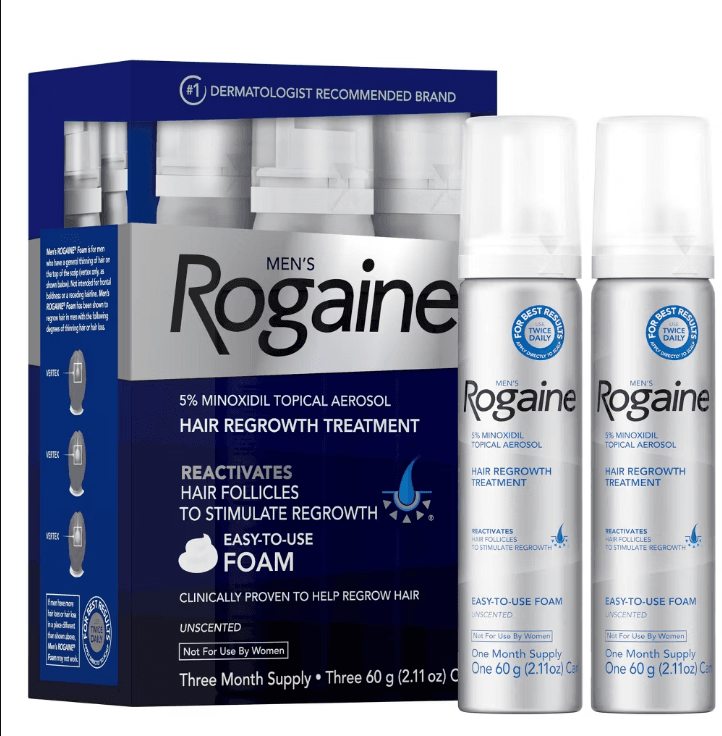
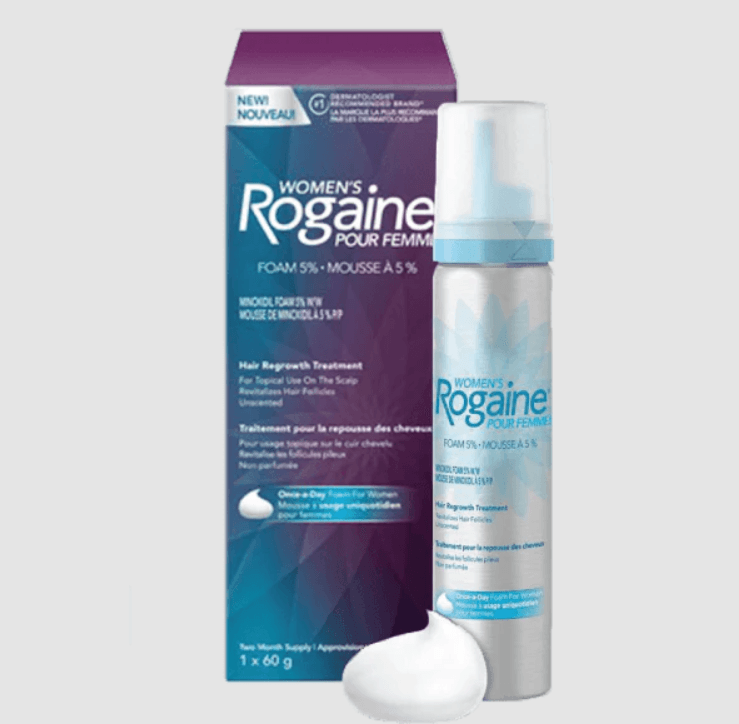
Rogaine Foam is a topical minoxidil hair regrowth treatment used on the scalp for hereditary pattern hair thinning in adults. It can be bought online, with current price and available quantity shown during ordering, so you can choose the foam product that matches the label directions you plan to follow. Some cartons are marketed for women and others for men, so the wording on the package matters before daily use begins.
The active ingredient in Rogaine Foam is minoxidil, a medicine applied directly to thinning scalp areas rather than swallowed. Foam rogaine may appeal to people who want less dripping than a liquid solution, especially when treating a crown area or widening part line. The product works gradually, and any benefit usually depends on steady long-term use.
Price, Quantity, and Product Selection
Rogaine Foam price depends on the specific carton, quantity, and current store cost at the time of ordering. Because hair regrowth treatment usually requires months of consistent use, the practical question is not only the single purchase price, but also how long the chosen supply is expected to last under the package directions. View the current cost before checkout and match the product label to the person using it.
Do not assume every minoxidil topical foam is used the same way. Packaging may identify a men’s or women’s product, and daily-use instructions can differ between those labels. If you are looking for rogaine for women, female rogaine, or women’s 5 minoxidil foam, the carton directions should be read closely rather than copied from a different product.
- Choose by label: Men’s and women’s cartons may have different schedules.
- Choose by format: Foam is often less runny than liquid minoxidil.
- Choose by supply: Larger packs may reduce how often you reorder.
- Choose by scalp fit: A healthy scalp is important before applying minoxidil.
BorderFreeHealth supplies products through licensed pharmacies and offers US delivery from Canada when the order can be completed through the appropriate pharmacy process. Use the product name, carton wording, and available quantity to keep the order aligned with the intended treatment routine.
How to Buy Rogaine Foam and What to Know First
Buying Rogaine Foam is most straightforward when the hair-loss pattern matches the labeled use. Topical minoxidil foam is generally considered for gradual hereditary thinning, such as crown thinning in men or a widening part in women. It is not a first choice for sudden shedding, patchy bald spots, painful scalp symptoms, infection, scarring hair loss, or hair loss that began soon after childbirth, illness, major weight change, or a new medicine.
Before starting, read the ingredient list and warnings on the carton. Avoid use on broken, inflamed, infected, irritated, or sunburned scalp skin. Pregnancy, breastfeeding, heart-related symptoms, unexplained swelling, faintness, or a history of fluid retention should prompt a conversation with a clinician before treating hair loss as a routine cosmetic concern.
People sorting through hereditary thinning causes and treatment categories may find the Hair Loss condition section useful for broader context. The best purchase choice depends on whether the pattern looks like androgenetic alopecia, whether the scalp can tolerate a leave-on product, and whether you are prepared for a slow, consistent routine.
- Pattern thinning only: Gradual crown thinning or widening part lines are closer fits.
- Adult use: Routine use in children should not be assumed.
- Healthy scalp needed: Irritation or infection can increase absorption and side effects.
- Long-term commitment: Stopping later may allow hair loss to resume.
Who Rogaine Foam Is For
Rogaine Foam is commonly used for androgenetic alopecia, also called hereditary pattern hair loss. In men, this often appears as gradual thinning at the crown. In women, it may appear as diffuse thinning over the top of the scalp or a part that becomes wider over time. The product is not intended to diagnose the cause of hair loss, so pattern, timing, scalp appearance, and medical history all matter.
Women and Rogaine questions often focus on whether a product marketed for women is different from a men’s carton. The active ingredient may be minoxidil, but directions, frequency, warnings, and package language should still be followed exactly for the carton being used. Do not use extra foam or borrow directions from another label to try to speed results.
Hair loss can also come from thyroid disease, iron deficiency, autoimmune conditions, medication changes, severe dandruff, psoriasis, eczema, traction from tight hairstyles, or inflammatory scalp disorders. Those situations may need a different approach before a regrowth foam makes sense. For practical treatment background, the article on hair loss treatment options can help frame questions to ask a healthcare professional.
Why it matters: Minoxidil is most useful when the hair-loss pattern fits its intended scalp use.
How Minoxidil Foam Is Used
Follow the exact directions printed on the Rogaine Foam carton. In general, minoxidil topical foam is applied to a dry scalp in the thinning area and left in place. It should not be rinsed off right away. Washing, swimming, heavy sweating, hats, pillows, or styling products too soon after application may reduce scalp contact time or spread the product where it is not wanted.
Use the labeled amount only. More foam will not make hair grow faster, and overuse may increase scalp irritation or unwanted effects. After applying, wash your hands well so the medicine does not transfer to the face or other skin. Unwanted facial hair can occur when foam runs, is touched with fingers, or transfers from pillowcases or towels.
- Start with dry hair and scalp: Placement is easier and less messy.
- Apply to scalp skin: Hair strands do not need the medicine.
- Let it dry: Give the treated area time before coverings or styling.
- Stay consistent: Results, if they occur, are usually measured over months.
Quick tip: Apply in a routine location away from flame, then let the foam dry fully.
What to Expect Over Time
Hair regrowth treatment is slow. Some people notice early shedding as older hairs cycle out before any visible improvement appears. That shedding can be alarming, but it does not always mean the product is failing. The more important signs to watch are scalp tolerance, steady use, and whether the original hair-loss pattern still seems consistent with hereditary thinning.
Improvement is not guaranteed. Minoxidil may help maintain or regrow some hair in responsive follicles, but it cannot restore hair where follicles are permanently scarred or absent. If there is no meaningful response after sustained labeled use, or if thinning spreads quickly, medical review can help look for other causes.
Stopping treatment may allow the hair-loss process to continue. For that reason, Rogaine Foam is best approached as an ongoing routine rather than a short course. People with male crown thinning may also want to read more about male pattern baldness and how gradual hereditary loss differs from sudden shedding.
Strengths, Forms, and Label Differences
Rogaine Foam is a topical foam rather than a liquid solution. Foam products in this category may be labeled as minoxidil 5 percent foam, including products marketed for women or men, but the exact carton should guide use. The phrase rogaine 5 minoxidil foam for women may describe a women’s carton in the marketplace, while men’s foam may carry different application wording.
The foam format can be easier for some people because it is less likely to drip through the hair than a solution. Others prefer a liquid because it may spread through longer hair more easily. The best format is the one that reaches the scalp, dries acceptably, and can be used consistently without significant irritation.
| Feature | What it means | What to check |
|---|---|---|
| Foam presentation | Leave-on product applied to thinning scalp areas | Whether it reaches the scalp through your hair |
| Minoxidil percentage | Strength is shown on the carton when applicable | That directions match the exact carton |
| Men’s or women’s labeling | Marketing and directions may differ | Frequency, warnings, and daily routine |
| Quantity | Supply length depends on pack size and use | How long the purchase should last |
If you want to compare the active ingredient across formats, minoxidil foam, Rogaine Solution, and minoxidil products can help you see nearby choices. Always follow the specific label rather than assuming products are interchangeable in daily use.
Storage, Handling, and Travel
Rogaine Foam is typically supplied in an aerosol-style can, so storage requires common-sense care. Keep it at room temperature and away from direct heat, open flame, smoking materials, and hot car interiors. Do not puncture, crush, or burn the container, even after it seems empty.
Keep the cap secure and store the can out of reach of children and pets. Minoxidil is meant for adult scalp use, and accidental exposure can be unsafe. If the can has been exposed to extreme cold or heat during travel, allow it to return to normal room temperature before use so the foam dispenses properly.
For travel, keep the product in its original carton when practical. The carton preserves directions, warnings, ingredients, and product identity. BorderFreeHealth may use prompt, express shipping as part of order logistics, but safe storage after arrival remains important for aerosol-style scalp products.
Side Effects, Warnings, and Interactions
Common side effects of Rogaine Foam include scalp itching, burning, dryness, flaking, mild redness, or irritation where the product touches the skin. Some users notice temporary shedding early in treatment. Unwanted facial hair can happen if foam spreads beyond the scalp or transfers from hands, bedding, or towels.
Stop use and seek urgent medical help for chest pain, fast or irregular heartbeat, fainting, severe dizziness, sudden swelling of the hands or feet, rapid weight gain, or a major rash. Ongoing scalp pain, crusting, infection, severe dandruff, psoriasis flare, eczema, or open skin also needs attention because absorption and irritation may increase when the scalp barrier is damaged.
Interactions are less common with scalp application than with swallowed medicines, but caution is still reasonable. Other strong scalp products can worsen dryness or irritation, including some medicated shampoos, retinoids, chemical relaxers, dyes, or harsh styling treatments. Spacing these products may help reduce irritation, but persistent symptoms should not be ignored.
People with heart disease, blood-pressure concerns, fluid retention, pregnancy, or breastfeeding should ask a clinician whether topical minoxidil is appropriate. Do not apply Rogaine Foam to other body areas, and do not increase the amount to chase faster growth. The American Academy of Dermatology discusses common hair-loss treatments, and MedlinePlus provides patient safety information for topical minoxidil.
How It Compares With Other Hair-Loss Options
Rogaine Foam is one option among topical minoxidil products and clinician-guided therapies. Foam may suit people who dislike dripping or who treat a defined crown or part-line area. Liquid solutions may suit people who want a format that spreads differently through longer hair, though some users find solutions more irritating because of inactive ingredients.
Generic minoxidil foam may focus on the same active ingredient, but inactive ingredients, directions, packaging, and feel on the scalp can differ. Brand familiarity does not replace label reading. If the carton says women’s minoxidil 5 foam, follow that carton; if it is marketed for men, follow the men’s directions.
| Choice | May suit | Main tradeoff |
|---|---|---|
| Rogaine Foam | Adults wanting a branded foam format | Requires consistent long-term use |
| Topical minoxidil solution | People who prefer liquid scalp coverage | May drip or irritate some scalps |
| Generic minoxidil foam | People focused on the active ingredient | Texture and directions may differ |
| Clinician-guided therapy | Unclear diagnosis or limited response | Requires individualized medical assessment |
Some men with hereditary hair loss discuss oral therapies with a clinician. For example, finasteride is a different type of hair-loss medicine with different risks and suitability questions. It should not be treated as a direct substitute for topical minoxidil without professional guidance.
When to Ask for Medical Input
Ask for medical input if hair loss starts suddenly, occurs in patches, follows a major illness, appears with scalp pain, or comes with redness, scaling, pus, or scarring. A routine foam may delay the right diagnosis if the underlying issue is alopecia areata, infection, traction injury, telogen effluvium, or an inflammatory scalp condition.
Women should be especially careful when thinning is accompanied by irregular periods, acne, increased facial hair, recent childbirth, nutritional concerns, or signs of hormonal change. A widening part can be hereditary, but female hair loss can also reflect iron deficiency, thyroid disease, medication effects, or other treatable causes.
The broader Dermatology collection includes skin and scalp-related products, while Dermatology articles can support general reading. Internal articles and category browsing should not replace a clinician’s assessment when symptoms suggest more than gradual pattern thinning.
Authoritative Sources
For patient drug information on topical minoxidil, see MedlinePlus topical minoxidil information.
For route-specific precautions and adverse effects, see Mayo Clinic minoxidil topical overview.
For dermatologist guidance on hair-loss treatment, see American Academy of Dermatology hair-loss treatment guidance.
This content is for informational purposes only and is not a substitute for professional medical advice.
Express Shipping - from $29.99
Shipping with this method takes 3-5 days
Prices:
- Dry-Packed Products $29.99
- Cold-Packed Products $39.99
Shipping Countries:
- United States (all contiguous states**)
- Worldwide (excludes some countries***)
Standard Shipping - $19.99
Shipping with this method takes 5-10 days
Prices:
- Dry-Packed Products $19.99
- Not available for Cold-Packed products
Shipping Countries:
- United States (all contiguous states**)
- Worldwide (excludes some countries***)
What is Rogaine Foam used for?
Rogaine Foam is used on the scalp for hereditary pattern hair thinning in adults. It is generally a closer fit for gradual crown thinning or a widening part than for sudden shedding, patchy bald spots, scalp infection, pain, or scarring hair loss.
Can women use Rogaine Foam?
Some Rogaine Foam cartons are marketed for women, including minoxidil foam products with women-specific directions. Women should follow the exact carton label and ask a clinician about sudden thinning, pregnancy, breastfeeding, hormonal symptoms, or scalp disease.
How long does Rogaine Foam take to work?
Hair regrowth treatment is gradual, and any visible change is usually measured over months. Some people notice early shedding before improvement. Consistent labeled use matters, and stopping later may allow hair loss to continue.
Is Rogaine Foam better than liquid minoxidil?
Foam is not universally better, but some people prefer it because it is less runny. Liquid minoxidil may spread differently through longer hair. The best choice depends on scalp coverage, irritation, label directions, and consistency.
What side effects can Rogaine Foam cause?
Common side effects include scalp itching, burning, dryness, flaking, redness, irritation, and possible early shedding. Seek urgent care for chest pain, fainting, severe dizziness, fast or irregular heartbeat, sudden swelling, rapid weight gain, or a major rash.
Can I use more Rogaine Foam for faster results?
No. Using more than the label directs is not expected to grow hair faster and may increase irritation or unwanted effects. Apply only as directed on the exact carton and keep the product on the scalp, not the face or other skin.
How should Rogaine Foam be stored?
Store Rogaine Foam at room temperature away from heat, flame, smoking materials, and hot cars. Do not puncture or burn the can, even when empty, and keep it out of reach of children and pets.
Rewards Program
Earn points on birthdays, product orders, reviews, friend referrals, and more! Enjoy your medication at unparalleled discounts while reaping rewards for every step you take with us.
You can read more about rewards here.
POINT VALUE
How to earn points
- 1Create an account and start earning.
- 2Earn points every time you shop or perform certain actions.
- 3Redeem points for exclusive discounts.
You Might Also Like
Select options
This product has multiple variants. The options may be chosen on the product page
Select options
This product has multiple variants. The options may be chosen on the product page
Select options
This product has multiple variants. The options may be chosen on the product page
Select options
This product has multiple variants. The options may be chosen on the product page