
Please note: a valid prescription is required for all prescription medication.
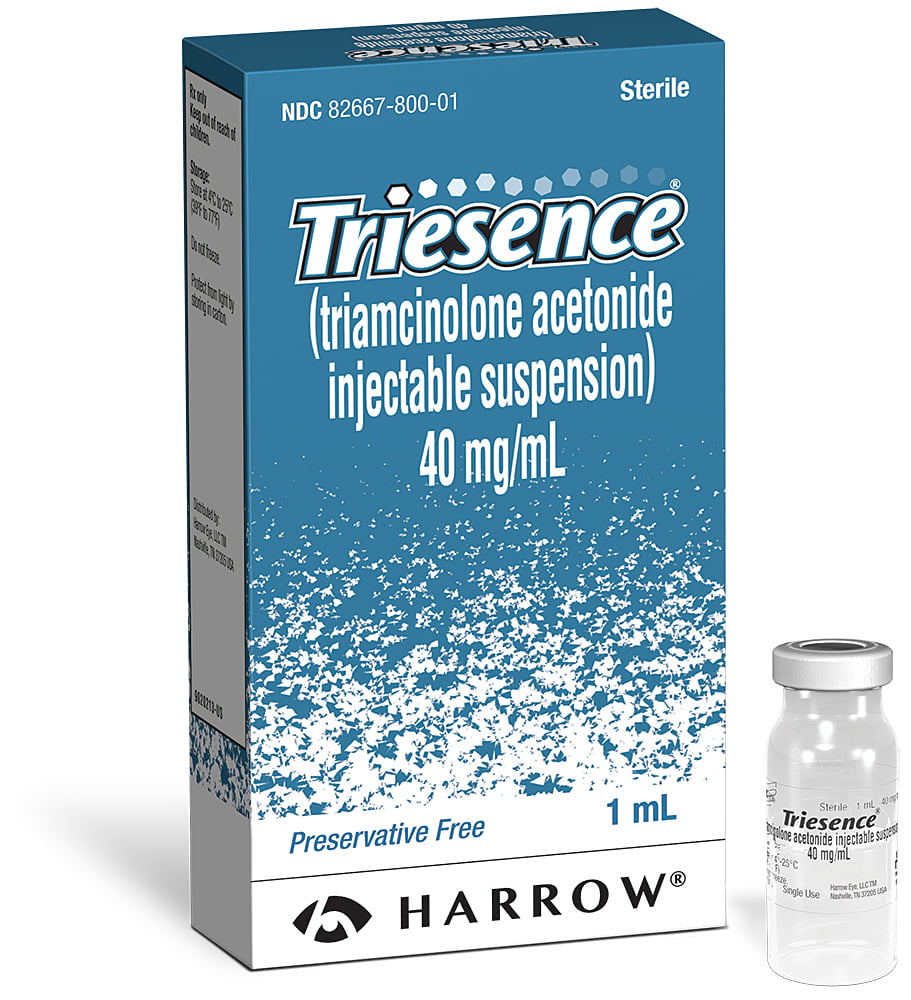
Triesence
Buy Triesence Online
Secure Encrypted Payments
Triesence is a preservative-free triamcinolone acetonide injectable suspension used by eye specialists for certain inflammatory eye conditions and during eye surgery. You can order Triesence online, view current pricing, and choose the strength shown during ordering that matches your clinic directions. This medicine is administered by an ophthalmologist in a clinical setting, not self-injected at home.
Triesence injection is formulated for intraocular use, meaning use inside the eye. It contains a corticosteroid that helps reduce inflammatory activity in the posterior segment of the eye and can also help surgeons see vitreous structures during vitrectomy. Because treatment decisions depend on diagnosis, eye pressure history, infection risk, and other health factors, your eye care team should guide whether this product fits your care plan.
Triesence Price, Strength, and Ordering Basics
Triesence price can vary by supply, vial quantity, and pharmacy sourcing. During ordering, use the current product strength, quantity, and cash price shown for Triesence, then match those details to the directions from your ophthalmology clinic. The commonly published presentation is Triesence 40 mg/mL in a 1 mL single-dose vial for ophthalmic use.
Patients paying out of pocket often want a clear Triesence cost before coordinating a procedure date. We support US delivery from Canada for pharmacy-supplied medicines, and prompt, express shipping may help align product arrival with scheduled clinic care. If your clinic plans repeat treatment, ask whether ordering more than one vial under the same care plan is appropriate; do not stock extra medicine unless your clinician has directed it.
Quick tip: Confirm the clinic’s preferred timing before placing an order, because this product is used during a supervised eye procedure.
What Triesence Is Used For
Triesence is used by ophthalmologists for noninfectious inflammatory conditions involving the eye, including posterior segment inflammation when a local corticosteroid may help. It is also used during vitrectomy to help visualize the vitreous, the gel-like substance inside the eye. Better visualization can support the surgeon’s ability to identify and remove vitreous strands during the procedure.
Inflammatory eye conditions can be complex. Some people have uveitis, which means inflammation inside the eye; others may have swelling or inflammation related to retinal disease. If your care team is evaluating inflammatory eye disease, related education about uveitis and macular edema can help you prepare practical questions for visits.
Triesence is not a general eye drop, surface lubricant, or at-home injection. It is an ophthalmic suspension placed into the eye or used during surgery by trained professionals using sterile technique. Your clinician will consider the diagnosis, location of inflammation, previous response to steroid treatment, infection status, lens status, and eye pressure before recommending this corticosteroid.
Active Ingredient and How It Works
Triesence contains triamcinolone acetonide, a synthetic corticosteroid. Corticosteroids reduce inflammatory signaling, which can lessen swelling and quiet immune-driven inflammation. In the eye, that effect may be useful when inflammation affects deeper structures and local therapy is appropriate.
The preservative-free formulation matters because intraocular products are placed inside the eye, where preservatives used in some multi-dose products may not be suitable. Triesence ophthalmic suspension is packaged as a single-dose vial, supporting sterile procedural workflows. Any unused portion should be handled according to clinical procedure standards and product labeling.
Triesence is triamcinolone acetonide, but not every triamcinolone product is the same. Different triamcinolone injections may have different formulations, preservatives, labeling, or intended routes of use. Do not substitute another steroid injection for Triesence unless the treating ophthalmologist has specifically directed that product choice.
Triesence, Kenalog, and Other Triamcinolone Products
People often ask whether Triesence is the same as Kenalog. Both names are associated with triamcinolone acetonide, but they are not automatically interchangeable for ophthalmic use. Triesence is a preservative-free ophthalmic formulation intended for intraocular use, while other triamcinolone products may be labeled for different routes or clinical settings.
This distinction is important when a medicine will be used inside the eye. Formulation, sterility, preservative status, and labeled use all matter. If your clinic wrote specifically for Triesence 40 mg/mL or a Triesence 1 mL vial, order the medicine that matches those instructions rather than choosing a different corticosteroid product based only on the active ingredient name.
For broader browsing in eye-care medicines, the ophthalmology category can help you see related prescription and clinic-directed therapies. Use those links for orientation only; treatment substitutions should come from your ophthalmologist.
How the Injection Is Given
Triesence intraocular injection is administered by an ophthalmologist under aseptic technique. Before treatment, the eye is usually prepared with antiseptic, and local anesthesia may be used according to clinic protocol. The clinician determines the amount used, the treatment eye, and the timing based on the condition being treated and safety monitoring needs.
After an intravitreal steroid injection, your care team may monitor intraocular pressure, look for infection, and assess the retina. Follow-up is part of safe corticosteroid use in the eye because pressure elevation can occur after steroid exposure. Keep scheduled visits even if the eye feels comfortable.
When Triesence is used during vitrectomy, the surgeon uses the suspension to highlight vitreous structures. The surgical plan, removal steps, and postoperative instructions depend on the reason for surgery. Ask your clinic what symptoms are expected after the procedure and which symptoms require urgent attention.
Storage, Handling, and Travel
Store Triesence vials in the original carton until use and protect them from light. Follow the temperature conditions on the official label and do not freeze the vial. Keep all injectable medicines away from children and pets, even when the product is intended to be brought to a clinic.
If your clinic asks you to bring the vial to an appointment, transport it in a protective container and avoid leaving it in a hot car, checked luggage, or direct sun. Carry appointment details and medicine documentation when traveling. If the vial appears damaged, frozen, contaminated, or otherwise unsuitable, contact the pharmacy or clinic before the procedure.
Cross-border sourcing can raise practical timing questions. If you are coordinating treatment around travel or surgery, allow enough time for ordering, receipt, and clinic review of the vial. For patients who prefer Canadian-supplied products, origin browsing such as Canada-sourced medicines may be useful for understanding product sourcing categories.
Side Effects, Warnings, and Monitoring
Common or expected effects after an eye injection may include temporary discomfort, mild irritation, blurred vision, floaters, or localized redness. Some symptoms can overlap with early signs of complications, so your clinic’s post-procedure instructions are important. Do not drive or resume visually demanding tasks until your clinician says it is appropriate and your vision is clear enough.
Important risks can include increased intraocular pressure, cataract progression, infection inside the eye, vitreous hemorrhage, retinal detachment, or worsening of an undiagnosed infection. Steroids may mask infection symptoms or allow some infections to worsen. Triesence should not be used in active viral, fungal, or mycobacterial eye infections, and people with hypersensitivity to triamcinolone acetonide or product components should avoid it.
- Call urgently for severe eye pain or sudden vision loss.
- Report large new floaters, flashes, or worsening redness.
- Ask how eye pressure will be monitored after treatment.
- Tell the clinic about glaucoma or prior steroid pressure response.
- Discuss diabetes, because corticosteroids may affect glucose control.
Tell your clinician about anticoagulants, antiplatelet medicines, glaucoma drops, immune-suppressing medicines, recent eye procedures, and any history of herpes eye disease. Systemic exposure from intraocular use is generally limited, but your full medication list still helps the care team plan safely. Vaccination timing, systemic steroid use, and wound-healing concerns may also be relevant for some patients.
Who May Not Be a Good Candidate
Triesence may not be suitable for people with active ocular infection, known hypersensitivity to triamcinolone acetonide, or a history of serious steroid-related eye pressure elevation unless the clinician believes benefits outweigh risks. People with glaucoma, advanced cataract concerns, poorly controlled diabetes, or recent eye surgery may need closer monitoring or a different approach.
Eye inflammation has many causes, including infection, immune disease, trauma, and vascular problems. A steroid can help when inflammation is noninfectious and steroid-responsive, but it may be harmful if infection is present. That is why an eye examination and diagnosis are essential before this medicine is used.
Pregnancy, breastfeeding, systemic immune conditions, and current immunosuppressive treatment should also be discussed with the care team. The decision is individualized because the eye condition, treatment urgency, and alternative therapies all influence risk and benefit.
What to Expect Over Time
Improvement after Triesence depends on the underlying eye condition, the severity of inflammation, and whether other treatments are being used. Some people notice gradual symptom or vision changes as inflammation improves, while others need additional therapy. Your clinician will track visual acuity, eye pressure, retinal findings, and symptoms at follow-up visits.
Do not judge treatment success only by how the eye feels in the first day or two. Mild irritation can occur after an injection, while pressure changes or infection may require specific examination to detect. If Triesence is used during surgery, recovery expectations should follow the surgical plan rather than the injection alone.
Why it matters: Follow-up visits help detect pressure elevation and infection before they threaten vision.
Related Eye Treatment Choices
Triesence is one option within ophthalmology care, but it is not the right treatment for every retinal or inflammatory condition. When swelling is driven mainly by vascular endothelial growth factor, an anti-VEGF medicine may be considered instead of, or alongside, other treatments. When inflammation is limited to the eye surface, drops or other local therapies may be more appropriate.
People researching steroid use for posterior inflammation may also want broader condition information from the ophthalmology articles. These educational articles can help you understand terminology before appointments, but the treatment plan should remain specific to your diagnosis.
Ask your clinician whether the goal is to reduce inflammation, improve surgical visualization, reduce swelling, or support another procedure. That answer helps clarify why Triesence was selected and what would count as a meaningful response.
Questions to Ask Before Treatment
- What diagnosis is Triesence being used to treat or support?
- Will the vial be used for injection, surgical visualization, or both?
- How will intraocular pressure be monitored afterward?
- What symptoms should lead to an urgent call?
- Are there reasons an anti-VEGF medicine or topical therapy would be better?
- Should the clinic receive the vial directly, or should I bring it?
- How should I time ordering around my procedure date?
Clear answers can reduce confusion on procedure day. They also help prevent ordering the wrong medicine, bringing the vial at the wrong time, or missing follow-up after treatment. If any direction changes, confirm the updated strength, quantity, and clinic plan before reordering.
Authoritative Sources
For detailed clinical information, use the current official prescribing information supplied with the medicine and discuss it with your ophthalmology team. Regulatory and label information can change, so the package insert and clinician instructions should guide procedural use, contraindications, and monitoring.
This content is for informational purposes only and is not a substitute for professional medical advice.
Express Shipping - from $29.99
Shipping with this method takes 3-5 days
Prices:
- Dry-Packed Products $29.99
- Cold-Packed Products $39.99
Shipping Countries:
- United States (all contiguous states**)
- Worldwide (excludes some countries***)
Standard Shipping - $19.99
Shipping with this method takes 5-10 days
Prices:
- Dry-Packed Products $19.99
- Not available for Cold-Packed products
Shipping Countries:
- United States (all contiguous states**)
- Worldwide (excludes some countries***)
What is Triesence used for?
Triesence is used by ophthalmologists for certain noninfectious inflammatory eye conditions and to help visualize the vitreous during vitrectomy. Your clinician determines whether it is appropriate for your diagnosis and eye health history.
Is Triesence the same as triamcinolone?
Triesence contains triamcinolone acetonide, but not every triamcinolone product is the same. Triesence is a preservative-free ophthalmic suspension intended for intraocular use, so substitutions should be directed by the treating ophthalmologist.
Is Triesence the same as Kenalog?
No. Kenalog and Triesence are associated with triamcinolone acetonide, but they may differ in formulation, labeling, preservative status, and intended use. Do not substitute one for the other without specific clinical direction.
How much does Triesence cost?
Triesence cost depends on the current pharmacy price, vial quantity, and supply. During ordering, match the displayed strength and quantity to your clinic directions before coordinating the procedure date.
Can Triesence be self-injected?
No. Triesence is administered by an ophthalmologist or used during eye surgery under sterile clinical technique. It should not be injected at home or reused from a vial.
What side effects should be reported after Triesence?
Report severe eye pain, sudden vision loss, large new floaters, flashes, worsening redness, or unusual discharge promptly. Your clinician may also monitor eye pressure because corticosteroids can increase intraocular pressure.
Rewards Program
Earn points on birthdays, product orders, reviews, friend referrals, and more! Enjoy your medication at unparalleled discounts while reaping rewards for every step you take with us.
You can read more about rewards here.
POINT VALUE
How to earn points
- 1Create an account and start earning.
- 2Earn points every time you shop or perform certain actions.
- 3Redeem points for exclusive discounts.
You Might Also Like
Select options
This product has multiple variants. The options may be chosen on the product page
Select options
This product has multiple variants. The options may be chosen on the product page
Select options
This product has multiple variants. The options may be chosen on the product page
Select options
This product has multiple variants. The options may be chosen on the product page