
Please note: a valid prescription is required for all prescription medication.
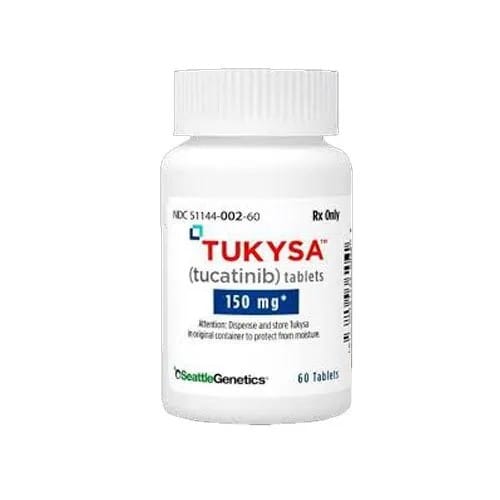
Tukysa
Buy Tukysa Tablets Online
Secure Encrypted Payments
Tukysa is a brand-name cancer medicine containing tucatinib, a HER2-directed targeted therapy taken as oral tablets. You can buy Tukysa online and choose the available tablet strength and quantity that match your oncology team’s directions. Tukysa tablets are commonly referenced in 150 mg and 50 mg strengths, which may be combined when a specific total daily amount is needed.
This medicine is used with other cancer treatments in specific HER2-positive cancers, so the tablet strength, refill quantity, and treatment schedule matter. Match the active ingredient name, tucatinib, with the brand name Tukysa when reviewing clinic paperwork, medication lists, and bottle labels.
Tukysa Price, Cost, and Tablet Strength Selection
The Tukysa price shown during ordering should be read together with the strength and tablet count. Oncology regimens often use exact strengths and repeat refill cycles, so a lower displayed amount may reflect fewer tablets rather than a lower treatment-period cost.
Tukysa is supplied as film-coated oral tablets. Commonly referenced strengths include Tukysa 150 mg tablets and Tukysa 50 mg tablets. These strengths may be used to reach the total amount directed by an oncology team, especially when the regimen requires dose adjustments or a specific combination of tablets.
When looking at Tukysa cost without insurance, compare like with like. Use the same strength, similar quantity, and the same expected refill rhythm. This helps prevent accidental selection of a bottle count that runs short before the next planned cycle.
| What to match | Why it matters |
|---|---|
| Brand and active ingredient | Tukysa is the brand name; tucatinib is the active ingredient. |
| Tablet strength | Different strengths can be used to reach a directed total amount. |
| Tablet quantity | Quantity affects refill timing and total cash-pay cost. |
| Combination regimen | Tukysa is commonly used with other cancer medicines in labeled settings. |
Quick tip: Keep your most recent oncology medication list nearby when matching strength and quantity.
How to Order Tukysa from Canada
To order Tukysa from Canada, choose the available strength and quantity that align with your written treatment instructions. Enter order information carefully, including the spelling of the medication name, active ingredient, and requested tablet strength.
BorderFreeHealth helps U.S. patients access cash-pay cross-border medication options through licensed pharmacy channels. If an order requires additional clinical or medication information, we may review the order details before pharmacy supply is completed.
For Tukysa US delivery from Canada, plan refills before the bottle is nearly empty. Oral oncology medicines can require coordination, and the timing of trastuzumab, capecitabine, scans, lab tests, or dose changes may affect when the next supply is needed. Shipping may include prompt, express shipping, but dose timing should be planned around your treatment schedule rather than expected delivery speed.
What Tukysa Treats
Tukysa tucatinib is a HER2-directed tyrosine kinase inhibitor. In plain language, it blocks signals from the HER2 receptor that can help certain cancer cells grow and survive. It is a targeted therapy, not traditional chemotherapy, and it is used as part of a combination plan.
For certain adults with unresectable or metastatic HER2-positive breast cancer, Tukysa is used with trastuzumab and capecitabine after prior anti-HER2 treatment. It is also indicated with trastuzumab for certain adults with RAS wild-type, HER2-positive unresectable or metastatic colorectal cancer after prior treatment, when the clinical setting fits the labeled use.
HER2 status is a treatment marker, not a simple good-or-bad label. Outcomes depend on cancer type, stage, prior therapy, organ function, response to treatment, and overall health. The HER2-positive breast cancer condition collection can help with related product navigation, but treatment choices should remain individualized by the oncology team.
How the Tablets Are Usually Taken
Tukysa tablets are taken by mouth and swallowed whole. The usual labeled adult dose is 300 mg taken twice daily, about 12 hours apart, in the approved combination regimen. Some treatment plans may use 150 mg tablets, 50 mg tablets, or a strength combination to reach the directed amount.
The tablets may be taken with or without food. Taking doses at consistent times can make the schedule easier to follow, especially when capecitabine or another oral medicine has separate timing instructions. Do not crush, chew, or split tablets unless the oncology team gives instructions consistent with the official label.
If vomiting occurs after a dose, the official labeling says not to take an extra dose. Resume with the next scheduled dose. If a dose is missed, skip it and take the next dose at the regular time rather than doubling up.
Side effects, lab changes, or interactions can lead the care team to pause treatment, reduce the dose, or adjust another medicine in the regimen. Those changes should come from the clinical plan, not from product price or bottle quantity.
Before You Complete an Order
Confirm that the name Tukysa, the active ingredient tucatinib, the tablet strength, and the quantity match the clinic medication list. If the paperwork uses the active ingredient name instead of the brand name, match tucatinib tablets carefully with the Tukysa strength shown.
Patients paying cash often focus first on Tukysa price without insurance, but quantity is just as important. A smaller bottle may cost less at checkout while lasting fewer days. Compare the expected refill interval against the actual number of tablets needed in the directed regimen.
Combination therapy can involve separate medicines with different storage, monitoring, and refill timing. The Cancer category can help with broader oncology browsing, but each medication should be tracked by its own label, schedule, and safety instructions.
Why it matters: Matching the strength and quantity early helps reduce avoidable delays around refill timing.
Storage, Handling, and Travel
Store Tukysa tablets at room temperature in the original container. Keep the bottle tightly closed and protect the tablets from moisture. Bathroom cabinets are not ideal because humidity can affect tablets over time.
Keep all oral cancer medicines away from children and pets. Do not move tablets into an unmarked container for routine storage, since strength and identity need to remain clear. If a pill organizer is used for reminders, keep the labeled bottle available for reference.
When traveling, carry Tukysa in hand luggage with the original pharmacy label. A current medication list can help if airport security or a healthcare professional needs to identify the medicine. Avoid leaving tablets in a hot car, checked luggage exposed to temperature swings, or loose bags with no label.
If travel crosses time zones, ask the care team how to keep doses roughly 12 hours apart. Written schedules and phone alarms can help maintain consistency, especially when other oral cancer medicines are taken on different days or cycles.
Side Effects, Warnings, and Monitoring
Tukysa can cause side effects that require early attention. Diarrhea is common and can become severe if it is not managed promptly. Nausea, vomiting, fatigue, abdominal discomfort, decreased appetite, rash, mouth sores, headache, and skin changes may also occur.
When Tukysa is used with capecitabine, hand-foot syndrome can occur. Symptoms may include redness, swelling, pain, peeling, tenderness, or blistering on the palms or soles. Reporting these symptoms early can help the care team consider supportive care or treatment changes.
Serious risks include severe diarrhea with dehydration, liver injury, and embryo-fetal toxicity. Liver function tests are recommended before and during treatment. Contact a clinician promptly for yellowing skin or eyes, dark urine, severe abdominal pain, persistent diarrhea, faintness, very low fluid intake, or signs of dehydration.
- Diarrhea: report persistent, worsening, or severe symptoms quickly.
- Liver changes: keep scheduled blood tests and symptom checks.
- Skin reactions: track rash, peeling, and hand-foot symptoms.
- Pregnancy risk: discuss contraception and pregnancy planning before treatment.
- Breastfeeding: follow label-based avoidance periods.
Routine monitoring may include blood tests, symptom review, and imaging based on the overall treatment plan. A short symptom diary can make visits more productive. Record stool changes, appetite, nausea, mouth sores, rash, foot pain, fatigue, and any skipped doses.
Interactions and Medicines to Review
Tucatinib levels can be affected by other medicines. Strong CYP2C8 inhibitors may increase tucatinib exposure, while strong CYP2C8 or CYP3A inducers may reduce exposure and possibly reduce effectiveness. Some medicines can also be affected by tucatinib through transporter-related interactions.
Share a complete medication list with the oncology team, including over-the-counter products, vitamins, supplements, and herbal products. St. John’s wort and some anti-seizure, antibiotic, antifungal, and heart medicines may be important to review.
Do not start, stop, or replace another medicine without the team managing the cancer treatment. This is especially important when Tukysa is taken with trastuzumab, capecitabine, or other medicines that have their own side effects and monitoring requirements.
How Tukysa Differs from Other Cancer Medicines
Tukysa is a HER2-targeted therapy. It should not be treated as a simple substitute for medicines used in different breast cancer subtypes. Tumor markers, prior treatments, organ function, and treatment goals all influence whether a medicine belongs in a regimen.
Hormone-directed therapies, such as aromatase inhibitors, are used in different clinical settings. For example, Anastrozole is a separate oncology medicine with different indications and monitoring needs. It is not interchangeable with tucatinib for HER2-positive metastatic disease.
Some people also research side effects from other breast cancer medicines while learning about their treatment plan. The Exemestane side effects guide may help when that medicine is part of a separate discussion. Broader reading is available in Cancer resources, including prevention-focused content such as cancer lifestyle tips and medication-focused articles such as the Leukeran medication guide.
Authoritative Sources
Official regulatory and product information can help confirm labeled uses, dosing language, safety warnings, and monitoring requirements. For detailed medical decisions, use these sources together with guidance from the oncology team.
Regulatory details are available through the European Medicines Agency Tukysa assessment.
Canadian product status can be checked through the Health Canada Drug Product Database record.
This content is for informational purposes only and is not a substitute for professional medical advice.
Express Shipping - from $29.99
Shipping with this method takes 3-5 days
Prices:
- Dry-Packed Products $29.99
- Cold-Packed Products $39.99
Shipping Countries:
- United States (all contiguous states**)
- Worldwide (excludes some countries***)
Standard Shipping - $19.99
Shipping with this method takes 5-10 days
Prices:
- Dry-Packed Products $19.99
- Not available for Cold-Packed products
Shipping Countries:
- United States (all contiguous states**)
- Worldwide (excludes some countries***)
What is Tukysa used for?
Tukysa contains tucatinib, a HER2-directed targeted therapy. It is used with other cancer medicines for certain adults with HER2-positive metastatic or unresectable breast cancer, and with trastuzumab for certain adults with RAS wild-type, HER2-positive unresectable or metastatic colorectal cancer after prior treatment.
What strengths do Tukysa tablets come in?
Commonly referenced Tukysa tablet strengths include 150 mg and 50 mg. The strength and quantity should match the directions from the oncology team, because different strengths may be combined to reach a directed total amount.
How is Tukysa usually taken?
Tukysa tablets are swallowed whole. The usual labeled adult dose is 300 mg twice daily, about 12 hours apart, as part of the approved combination regimen. If a dose is missed or vomiting occurs after a dose, the label advises not taking an extra dose and resuming at the next scheduled time.
What are common Tukysa side effects?
Common side effects can include diarrhea, nausea, vomiting, fatigue, abdominal discomfort, decreased appetite, rash, mouth sores, headache, and skin changes. Severe diarrhea, dehydration symptoms, liver-related symptoms, or hand-foot symptoms should be reported promptly.
Does Tukysa interact with other medicines?
Yes. Tucatinib can interact with medicines that affect CYP2C8 or CYP3A enzymes, and it may affect some transporter-sensitive medicines. Share all prescription drugs, over-the-counter products, vitamins, and herbal supplements with the oncology team before changes are made.
Rewards Program
Earn points on birthdays, product orders, reviews, friend referrals, and more! Enjoy your medication at unparalleled discounts while reaping rewards for every step you take with us.
You can read more about rewards here.
POINT VALUE
How to earn points
- 1Create an account and start earning.
- 2Earn points every time you shop or perform certain actions.
- 3Redeem points for exclusive discounts.
You Might Also Like
Select options
This product has multiple variants. The options may be chosen on the product page
Select options
This product has multiple variants. The options may be chosen on the product page
Select options
This product has multiple variants. The options may be chosen on the product page
Select options
This product has multiple variants. The options may be chosen on the product page