
Please note: a valid prescription is required for all prescription medication.
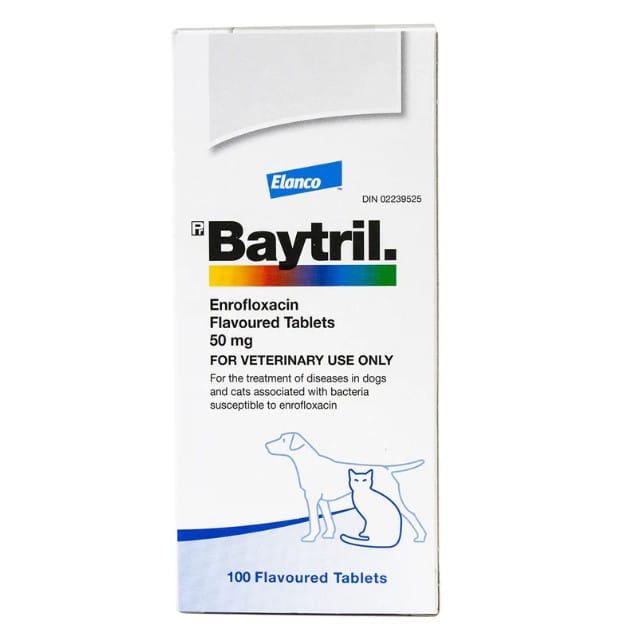
Baytril
Buy Baytril Online
Secure Encrypted Payments
Baytril is a veterinary enrofloxacin antibiotic used for susceptible bacterial infections in animals. You can buy Baytril online, view the current Baytril price, and choose the form, strength, and quantity that match your veterinarian’s directions. Because similar names can refer to different animal products, the medicine you choose should align with the species, active ingredient, and treatment plan written for your animal.
Enrofloxacin belongs to the fluoroquinolone class of antibacterial medicines. It works against bacteria, not viruses, parasites, or fungal conditions, so the diagnosis and the animal’s health history matter. Keep your pet’s current weight, species, diagnosis, and clinic contact details available while choosing the correct Baytril medicine.
Quick tip: Match the animal, form, strength, and quantity before checkout rather than relying on the product name alone.
Baytril Price and Strength Selection
The Baytril price should be read with the exact form and package size being ordered. Tablet count, bottle volume, vial size, and concentration all affect the total amount of medicine supplied. A lower package price may not represent the same treatment amount as another form or strength.
Baytril cost can also vary when the active ingredient appears as Baytril enrofloxacin, enrofloxacin tablets, or another enrofloxacin-labeled veterinary product. Brand and generic names can appear differently by market, manufacturer, and animal species. Your veterinarian’s directions should drive the choice; the cart should reflect those directions closely.
| Detail to Match | Why It Matters |
|---|---|
| Form | Tablets, liquids, and injectable products may have different handling and use instructions. |
| Strength or concentration | Numbers such as 10 or 100 may refer to different product types or concentrations. |
| Quantity | Tablet count, bottle volume, or vial size changes the total supply. |
| Species | Dog, cat, cattle, swine, and other animal labeling should not be mixed. |
| Active ingredient | Enrofloxacin may appear by brand name or generic name. |
If you are paying without insurance, focus on the medicine that fits the veterinarian’s plan and the current cash-pay amount shown during ordering. BorderFreeHealth may help review order details for accuracy, and products are supplied through licensed pharmacies. For some orders, US delivery from Canada may appear in the checkout details.
How to Order Baytril Online
Start with the exact animal and medication instructions provided by your veterinarian. Select the Baytril form, strength, and quantity that match those instructions, then review the order for species and active ingredient accuracy. Do not substitute a tablet, liquid, or injectable medicine for another form unless the veterinarian approves the change.
- Match the animal: Confirm whether the directions are for a dog, cat, or large animal.
- Match the form: Choose the tablet, liquid, or injectable product only when it fits the plan.
- Match the strength: Compare the strength or concentration against the written directions.
- Match the quantity: Choose a package size that fits the intended treatment course.
- Keep clinic details nearby: Order review may require clarification of animal or medication information.
Do not switch from Baytril tablets to Baytril liquid, from a pet medicine to a large-animal medicine, or from a brand to another enrofloxacin product without professional direction. If shipping notes are shown during checkout, review them for handling and delivery information. Product availability, processing, and timing should be based on the order details provided at checkout.
What Baytril Treats in Animals
Baytril antibiotic products are used in veterinary medicine for susceptible bacterial infections when enrofloxacin is appropriate. The word susceptible means the bacteria are expected to respond to the medicine. A culture and sensitivity test may help the veterinarian decide whether this antibiotic is a reasonable choice.
Baytril for dogs and Baytril for cats should be matched to pet-specific veterinary directions. Certain tablet labeling includes treatment of susceptible bacterial pathogens in dogs and cats, while injectable products can have different species and route instructions. If you are treating a skin, respiratory, urinary, or wound-related infection, the infection site and organism still matter more than the broad infection category.
Some customers browse animal infection categories while checking whether Baytril fits a treatment plan. Related browsing areas include skin and soft tissue infection, respiratory tract infection, and urinary tract infection. These categories can help with orientation, but they do not replace an animal-specific diagnosis.
Baytril 100 is commonly associated with a large-animal antimicrobial injectable solution, not a routine substitute for a dog or cat tablet plan. Food-animal rules may also be stricter because antimicrobial use can affect public health and residue control. Never treat poultry, livestock, or pets by adapting a product intended for another species unless the veterinarian gives explicit instructions.
Forms, Names, and Species Differences
Baytril names can be confusing because the same active ingredient may appear across tablets, oral liquids, and injectable solutions. Baytril tablet products should be evaluated by tablet strength and count. Liquid products should be evaluated by concentration, measuring instructions, and total volume. Injectable products require attention to concentration, route, vial size, and labeled animal species.
Baytril antibacterial tablets and enrofloxacin tablets may contain the same active drug, but the label and directions still matter. A pet owner should not estimate dose from the package alone. The directions should state how much medicine to give, how often to give it, and how long treatment should continue.
- Tablets: Check strength, count, and any scored-tablet directions.
- Liquids: Confirm concentration, measuring device, and storage instructions.
- Injectables: Verify species, route, concentration, and handling instructions.
- Large-animal products: Do not use for pets unless the veterinarian directs it.
- Generic wording: Enrofloxacin may appear instead of the Baytril brand name.
Customers looking for adjacent veterinary products may also browse pet medications. If the veterinarian discusses an injectable enrofloxacin product, Baytril Injection may be relevant to compare by species, route, and concentration. Always keep the animal’s plan as the deciding factor.
Dosing and Administration Basics
Baytril dosage is individualized by a veterinarian. Species, current weight, infection site, age, kidney or liver concerns, hydration, and other medicines may influence the plan. Do not start, stop, split, crush, or change the dosing schedule unless the veterinarian gives clear directions for that animal.
Some enrofloxacin products are given by mouth, while others are administered by injection in a clinic or under specific veterinary instruction. Tablets can be practical for some dogs and cats, while a measured liquid may be easier for others. If the animal vomits, refuses a dose, or spits out medicine, contact the veterinary clinic for the next step instead of doubling the dose.
Completing the directed course is important because stopping too early can allow bacteria to persist or return. Giving extra doses is unsafe and may increase adverse effects. If a dose is missed, the safest action depends on timing and the treatment plan, so ask the veterinarian before making up a missed dose.
For more animal-specific context, the store’s Baytril for dogs and cats guide explains common use questions in a broader educational format. That information can support a conversation with the clinic, but it should not override the instructions written for your pet.
Storage, Handling, and Travel
Store the Baytril product according to the label on the container. Many tablets are kept in their original container and protected from excess heat, moisture, and light. Liquids and injectables may have additional handling directions, beyond-use dates, or refrigeration rules, so do not assume one form stores like another.
When the package arrives, compare the animal name, form, strength, and quantity with the order and clinic instructions before giving the medicine. Do not use a product that appears damaged, leaking, discolored, or inconsistent with the intended medicine. Keep the label with the medicine, especially if your animal is boarding, traveling, or receiving care from another person during treatment.
Secure storage is important in homes with children or multiple animals. Enrofloxacin should not be shared between pets, even when symptoms look similar. A cat, dog, or large animal may need a different medicine, dose, or duration for the same general infection type.
Side Effects, Warnings, and Monitoring
Like other fluoroquinolone antibiotics, enrofloxacin can cause side effects. Commonly reported problems may include vomiting, diarrhea, decreased appetite, drooling, or tiredness. Some animals may seem uncomfortable after dosing or may show changes in behavior. Contact the veterinarian if symptoms are persistent, severe, or different from what you were told to expect.
Serious reactions need faster veterinary attention. Seek help promptly for seizures, severe lethargy, trouble walking, facial swelling, hives, breathing problems, collapse, or signs of an allergic reaction. In cats, high exposure to enrofloxacin has been associated with retinal injury and blindness, so feline directions must be followed exactly.
Baytril may not be appropriate for every animal. Young, growing dogs may be at higher risk for cartilage effects with fluoroquinolones. Animals with seizure disorders, severe kidney or liver disease, dehydration, pregnancy, lactation, or a prior reaction to quinolone antibiotics need careful veterinary assessment before treatment.
Tell the veterinarian about all medicines, supplements, and special diets your animal receives. Minerals such as calcium, iron, aluminum, magnesium, or zinc can interfere with absorption of some oral fluoroquinolones. Sucralfate, antacids, certain supplements, and fortified foods may require timing instructions.
Other medicines can also matter, including nonsteroidal anti-inflammatory drugs, theophylline, cyclosporine, or drugs that affect the nervous system. Monitoring may include appetite, hydration, stool quality, energy, pain signs, coordination, and vision changes. If the infection does not improve within the expected timeframe, the veterinarian may reassess the diagnosis, culture results, or antibiotic choice.
Comparing Veterinary Antibiotic Choices
Baytril is one veterinary antibiotic option, but it is not interchangeable with every animal antibiotic. Different medicines cover different bacteria and reach tissues differently. Species safety, resistance patterns, dosing frequency, and the animal’s health history can all influence the choice.
Other veterinary antibiotics may be discussed for certain infections. Educational articles on doxycycline for dogs and cats, cephalexin for dogs and cats, and Clavamox for cats and dogs can help you understand why a veterinarian may choose one drug over another. These medicines should not be swapped based on symptoms alone.
If the treatment plan involves clindamycin rather than enrofloxacin, Antirobe and the Antirobe for dogs guide may be useful for comparison. The right choice depends on the bacteria, infection location, animal species, and the safety profile for that individual animal.
Authoritative Sources
Official tablet label from DailyMed: Baytril enrofloxacin tablet label.
Manufacturer canine injectable information: Baytril injectable solution details.
This content is for informational purposes only and is not a substitute for professional medical advice.
Express Shipping - from $29.99
Shipping with this method takes 3-5 days
Prices:
- Dry-Packed Products $29.99
- Cold-Packed Products $39.99
Shipping Countries:
- United States (all contiguous states**)
- Worldwide (excludes some countries***)
Standard Shipping - $19.99
Shipping with this method takes 5-10 days
Prices:
- Dry-Packed Products $19.99
- Not available for Cold-Packed products
Shipping Countries:
- United States (all contiguous states**)
- Worldwide (excludes some countries***)
What is Baytril used for in animals?
Baytril is a veterinary enrofloxacin antibiotic used for susceptible bacterial infections when a veterinarian determines it is appropriate. It treats bacteria, not viruses, parasites, or fungal conditions.
Is Baytril the same as enrofloxacin?
Baytril is a brand name for enrofloxacin. Some products may be labeled with the brand name, while others may use the active ingredient name. Form, strength, species labeling, and directions still need to match the animal’s plan.
Can Baytril for dogs be used for cats?
Do not use a dog-directed Baytril plan for a cat unless the veterinarian specifically gives that instruction. Cats can have different safety concerns, and high enrofloxacin exposure has been associated with retinal injury and blindness.
What side effects can Baytril cause?
Possible side effects include vomiting, diarrhea, decreased appetite, drooling, tiredness, or behavior changes. Seek veterinary help promptly for seizures, trouble walking, facial swelling, hives, breathing problems, or severe lethargy.
How should Baytril be stored?
Store Baytril according to the label on the container. Tablets, liquids, and injectables can have different storage and handling instructions, so keep the original label with the medicine and protect it from unsafe access by children or other animals.
Rewards Program
Earn points on birthdays, product orders, reviews, friend referrals, and more! Enjoy your medication at unparalleled discounts while reaping rewards for every step you take with us.
You can read more about rewards here.
POINT VALUE
How to earn points
- 1Create an account and start earning.
- 2Earn points every time you shop or perform certain actions.
- 3Redeem points for exclusive discounts.
You Might Also Like
Select options
This product has multiple variants. The options may be chosen on the product page
Select options
This product has multiple variants. The options may be chosen on the product page
Select options
This product has multiple variants. The options may be chosen on the product page
Select options
This product has multiple variants. The options may be chosen on the product page