
Please note: a valid prescription is required for all prescription medication.
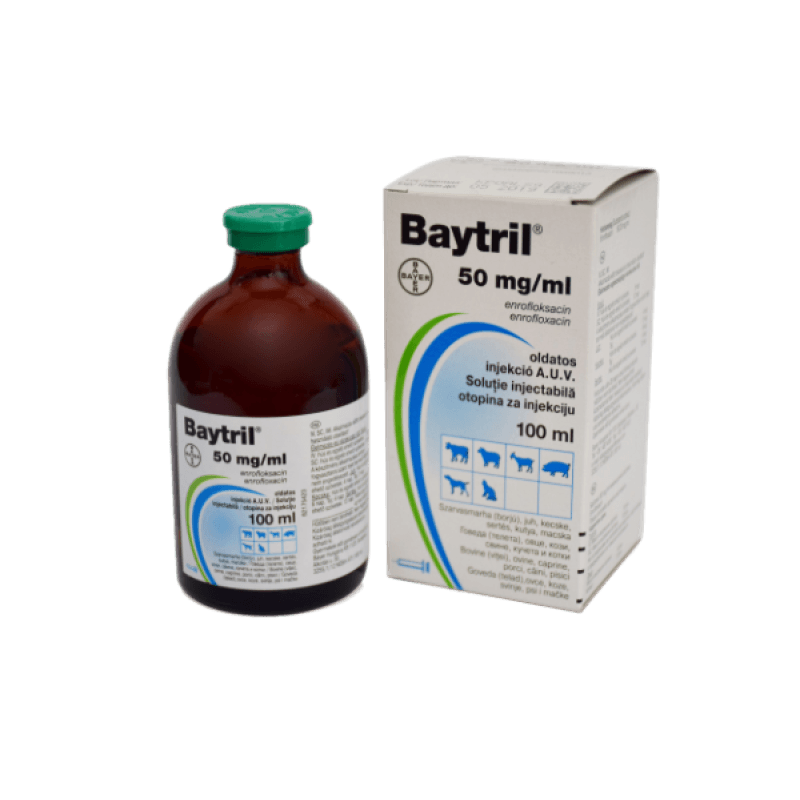
Baytril Injection
Buy Baytril Injection Online
Secure Encrypted Payments
Baytril Injection is an injectable veterinary antibiotic containing enrofloxacin, a fluoroquinolone used for susceptible bacterial infections under veterinary direction. You can buy Baytril Injection online, view the current price, and choose the vial strength shown during ordering to match your veterinarian’s written instructions. US delivery from Canada may be part of the service for this animal-health medicine.
Injectable enrofloxacin products can differ by concentration, vial size, route, and species labeling. That matters because a product used in cattle or swine may not be interchangeable with a lower-concentration injectable used in a small-animal plan. Match the active ingredient, concentration, vial contents, and route to the clinic’s directions before giving any dose.
Baytril Injection Price and Strength Selection
The Baytril Injection price should be read together with the exact vial strength and quantity shown during ordering. Injectable antibiotics are not always easy to compare by name alone, because the total amount of medicine in a vial depends on both concentration and volume. A larger or higher-concentration vial may represent a different clinical use, not simply a better value.
Baytril 100, Baytril 2.27 injectable, Baytril 5 injectable, and Baytril 10 injectable are terms people may see when researching enrofloxacin injections. Those phrases can point to different concentrations or veterinary contexts, so they should not be treated as substitutes for one another. If your veterinarian wrote instructions using mg per mL, confirm that the product strength shown during ordering matches that direction.
Quick tip: Compare mg per mL, vial size, animal species, and route before focusing on checkout total.
| Detail to match | Why it matters |
|---|---|
| Concentration | Helps distinguish high-concentration products such as enrofloxacin 100 mg mL from lower-concentration small-animal injectables. |
| Vial contents | Shows the total medicine in the container, which is different from the amount given at one time. |
| Species labeling | Helps prevent confusion between cattle, swine, dog, cat, or other veterinary uses. |
| Route | Subcutaneous, intramuscular, or other routes can have different safety and absorption considerations. |
| Quantity | Should reflect the clinic’s treatment plan and the product’s practical in-use handling guidance. |
If you are browsing broader animal-health items, the Pet Medications category can help you find related veterinary medicines while keeping product choice tied to clinic instructions.
How to Order This Injectable Antibiotic
Start with the veterinarian’s written plan, then choose the strength and vial quantity that match it. Pay close attention to concentration wording, because the same milliliter volume can contain very different amounts of enrofloxacin. Keep clinic contact details available in case any order information needs clarification before the medicine is supplied through licensed pharmacy channels.
For cash-pay ordering, compare the checkout total for the exact strength and vial amount needed. Do not assume every Baytril injectable concentration carries the same cost or suits the same animal. A larger vial only makes sense when the veterinarian’s plan, the animal’s size, and the product’s handling guidance support using that amount safely.
Before checkout, confirm the destination address, storage expectations, and whether syringes or needles are provided separately by your clinic or local supplier. Prompt, express shipping may be offered for orders when service conditions allow, but treatment timing for an active infection should always stay coordinated with your veterinarian.
What Baytril Injection Treats
Baytril enrofloxacin injectable is an antibacterial medicine used in veterinary care for infections caused by susceptible bacteria. Enrofloxacin belongs to the fluoroquinolone class. These medicines act on bacterial DNA enzymes, which can stop susceptible bacteria from multiplying and help the animal’s immune system clear the infection.
Veterinarians may consider enrofloxacin for certain skin, urinary, respiratory, soft tissue, or other bacterial infections when the organism, infection site, species, and patient history support its use. It is not a general cure for every infection. Viral illness, fungal disease, parasites, foreign bodies, abscesses needing drainage, and resistant bacteria may need different treatment.
Testing can help guide antibiotic selection. For recurring, severe, or hard-to-treat infections, the clinic may recommend culture and sensitivity testing. Culture identifies the bacteria, while sensitivity testing helps estimate which antibiotics are most likely to work. The Bacterial Infection category can help you browse other therapies that may come up in veterinary discussions.
Dogs, Cats, Cattle, Swine, and Other Species
Baytril injection for dogs and Baytril injectable for dogs are common topics because some pets cannot take oral medication or need an injection in a clinic-directed plan. Small animal Baytril injectable use should follow the exact product label and the veterinarian’s instructions. Do not convert an oral tablet amount into an injectable volume unless the clinic specifically provides that direction.
Baytril injection for cats and Baytril injectable for cats require extra care. Cats may be more sensitive to dosing errors with enrofloxacin, and high exposure has been associated with eye-related toxicity in some reports. If a cat’s plan changes from injection to tablets or liquid, ask the clinic for new instructions rather than carrying over the same measured amount.
Large-animal use can involve very different products and rules. Baytril for cattle, Baytril 100 cattle, Baytril injection for cattle, and Baytril injectable for pigs usually refer to livestock contexts, including high-concentration products such as Baytril 100 injectable. Food-producing animals may have strict residue, withdrawal, and administration requirements that must be managed by the veterinarian responsible for the herd.
Baytril injectable for chickens, Baytril injection for chickens, Baytril injection for horses, and Baytril injection for rabbits are also frequent research topics. Legal status, labeling, safety, and suitable dose calculations can vary widely by species and country. Never extrapolate from a dog, cat, cattle, or swine product to another animal without veterinary direction.
Concentration, Route, and Dose Safety
Baytril injectable concentration may be written as a percentage or as mg per mL. For example, Baytril 100 mg mL and enrofloxacin 100 mg mL refer to a high-concentration injectable product often discussed in cattle or swine settings. That concentration is not a universal substitute for every pet prescription or clinic protocol.
Lower-concentration injectable solutions may appear in small-animal care. Because the drug amount changes with concentration, two vials with the same active ingredient can require very different measured volumes. Your veterinarian determines the amount, route, frequency, and length of therapy based on the species, body weight, infection, and risk factors.
Why it matters: The same measured volume can deliver a much higher drug amount when concentration increases.
Avoid using online Baytril injection dosage charts to treat an animal. Baytril injection dosage for dogs, Baytril injectable dosage for dogs, Baytril dosage for cattle, and Baytril 100 dosage for cattle are individualized clinical decisions. If the animal misses a dose, vomits after another medication, or seems worse, contact the clinic instead of adjusting the injection schedule yourself.
Administration and Handling Basics
Administration depends on the product label, species, route, and veterinary instructions. Some injectable veterinary medicines are labeled for subcutaneous administration, intramuscular administration, or another route for specific animals. The route matters because tissue irritation, absorption, and safety can change when an injection is given in the wrong place.
Use sterile technique if the veterinarian instructs home administration. Wash hands, use a new sterile needle and syringe, avoid touching the needle, and clean the vial stopper as directed by the clinic. Ask for a demonstration if you feel unsure. Injections can be stressful for both the caregiver and the animal, and a short clinic lesson can prevent avoidable mistakes.
- Verify the medicine name and concentration before each use.
- Use the route and injection site taught by the veterinary team.
- Record the time, amount, and location of each injection.
- Watch for pain, swelling, warmth, discharge, or limping.
- Dispose of needles in an approved sharps container.
- Do not mix injectable drugs unless the veterinarian instructs it.
People sometimes ask whether Baytril injectable can be given orally. Do not give an injectable solution by mouth unless the veterinarian specifically instructs you to do so with the exact vial in hand. Injectable formulations can differ from oral veterinary products in concentration, taste, excipients, and safety expectations.
Storage, Travel, and Vial Care
Store the vial according to the label for the exact product in your order. Many veterinary injectable medicines are kept at controlled room temperature and protected from damaging conditions, but the product label should guide storage. Do not freeze a vial unless the label specifically allows freezing.
Keep the bottle upright, tightly closed, and away from children and animals. Avoid contaminating the rubber stopper. If the liquid becomes cloudy, discolored, or visibly contaminated, contact the veterinary team before using it again. A questionable vial should not be used simply to avoid delaying treatment.
Travel requires practical planning. Keep the vial in protective packaging, bring a copy of the clinic instructions, and avoid leaving medicine in a hot vehicle or freezing environment. Needles and syringes may be subject to local transport rules, especially during air travel. For an actively unwell animal, plan refills early enough to avoid treatment gaps.
Side Effects, Warnings, and Monitoring
Baytril Injection can cause side effects. Digestive changes such as vomiting, soft stool, reduced appetite, or temporary lethargy may occur. Injection-site discomfort, swelling, or tenderness can also happen, especially when repeat injections are part of the plan.
More serious signs need urgent veterinary attention. Allergic reactions may include facial swelling, hives, breathing difficulty, collapse, or sudden severe weakness. Neurologic signs such as tremors, seizures, disorientation, or marked agitation should be reported quickly, particularly in animals with a seizure history.
Fluoroquinolones can affect cartilage development in growing animals. For that reason, veterinarians often use caution in young, rapidly growing dogs unless the clinical need justifies the risk. Cats need special attention because excessive enrofloxacin exposure has been associated with retinal injury and vision problems in some reports. Report dilated pupils, bumping into objects, sudden vision changes, or unusual eye appearance promptly.
- Digestive signs: vomiting, diarrhea, reduced appetite, or drooling.
- Injection reactions: pain, swelling, warmth, or local irritation.
- Behavior changes: restlessness, tremors, seizures, or unusual lethargy.
- Allergy signs: swelling, hives, breathing trouble, or collapse.
- Cat eye concerns: sudden vision change or abnormal pupil appearance.
Tell the veterinarian about pregnancy, nursing, growth stage, kidney or liver concerns, seizure disorders, prior antibiotic reactions, and all other medicines or supplements. Fluoroquinolones may interact with certain anti-inflammatory medicines, theophylline, and drugs that can lower the seizure threshold. If an oral enrofloxacin product is used later, minerals such as calcium, iron, magnesium, or zinc can affect absorption.
Monitor appetite, water intake, stool quality, activity level, breathing, and the injection site. Contact the clinic if infection signs worsen, do not improve as expected, or return after treatment. Do not stop early because the animal looks better unless the veterinarian changes the plan, because incomplete treatment can contribute to relapse or resistance.
Related Veterinary Antibiotic and Injection Choices
Enrofloxacin is only one antibacterial option. If culture results, infection location, age, species, or prior reactions point elsewhere, the veterinarian may choose a different class. The oral Baytril product may be discussed when an animal can take medication by mouth and the clinician wants to continue enrofloxacin in a different form.
Antirobe contains clindamycin and may be considered for certain susceptible infections, especially when that drug class fits the organism and tissue site. For injectable antimicrobial discussions, Cefoxitin for Injection represents a different antibiotic class and should not be substituted for Baytril without veterinary direction.
Some injectable veterinary medicines are not antibiotics but may appear in the same care plan. Cerenia Injection is used for nausea and vomiting control in appropriate veterinary situations, while Metacam Solution for Injection is an anti-inflammatory pain-control option for certain animals. These products have different purposes, precautions, and monitoring needs.
For small-animal reading before speaking with the clinic, Baytril for Dogs and Cats covers practical enrofloxacin considerations. Additional antibiotic topics include Doxycycline for Dogs and Cats and Clavamox for Cats and Dogs, which can help you prepare better questions without replacing veterinary diagnosis.
Authoritative Sources
Regulatory and product-safety details for veterinary enrofloxacin products are available in the FDA CVM freedom of information summary.
Canadian product listing information can be checked through the Health Canada Drug Product Database record.
This content is for informational purposes only and is not a substitute for professional medical advice.
Express Shipping - from $29.99
Shipping with this method takes 3-5 days
Prices:
- Dry-Packed Products $29.99
- Cold-Packed Products $39.99
Shipping Countries:
- United States (all contiguous states**)
- Worldwide (excludes some countries***)
Standard Shipping - $19.99
Shipping with this method takes 5-10 days
Prices:
- Dry-Packed Products $19.99
- Not available for Cold-Packed products
Shipping Countries:
- United States (all contiguous states**)
- Worldwide (excludes some countries***)
What is Baytril Injection used for?
Baytril Injection contains enrofloxacin, a veterinary fluoroquinolone antibiotic used for bacterial infections caused by susceptible organisms. Veterinarians may consider it for certain skin, urinary, respiratory, soft tissue, or other infections when the animal, bacteria, and infection site support its use.
Is Baytril 100 the same as every Baytril injectable product?
No. Baytril 100 generally refers to a high-concentration enrofloxacin injectable product often discussed in cattle or swine contexts. Other Baytril injectable concentrations may be used in different veterinary situations. Match the mg per mL, vial size, species labeling, and route to the veterinarian’s directions.
Can Baytril Injection be used for dogs or cats?
Veterinarians may use enrofloxacin injections in dogs or cats when clinically appropriate, but the concentration and dose must be specific to the animal. Cats require special caution because excessive enrofloxacin exposure has been associated with eye-related toxicity in some reports.
What side effects can Baytril Injection cause?
Possible side effects include vomiting, diarrhea, reduced appetite, lethargy, and injection-site pain or swelling. Serious signs such as facial swelling, breathing trouble, collapse, seizures, tremors, or vision changes need prompt veterinary attention.
Can injectable Baytril be given by mouth?
Do not give an injectable Baytril solution by mouth unless your veterinarian specifically instructs you to do so with the exact vial. Injectable and oral products can differ in concentration, formulation ingredients, taste, and safety expectations.
How should Baytril Injection be stored?
Follow the storage directions on the vial label. Keep the bottle upright, closed, and away from children and animals. Do not use the solution if it becomes cloudy, discolored, or contaminated unless the veterinary team confirms it is safe to use.
What should I confirm before buying Baytril Injection online?
Confirm the active ingredient, concentration, vial size, route, animal species, and quantity against the veterinarian’s written plan. For livestock, ask the veterinarian about any withdrawal or residue requirements before treatment.
Rewards Program
Earn points on birthdays, product orders, reviews, friend referrals, and more! Enjoy your medication at unparalleled discounts while reaping rewards for every step you take with us.
You can read more about rewards here.
POINT VALUE
How to earn points
- 1Create an account and start earning.
- 2Earn points every time you shop or perform certain actions.
- 3Redeem points for exclusive discounts.
You Might Also Like
Select options
This product has multiple variants. The options may be chosen on the product page
Select options
This product has multiple variants. The options may be chosen on the product page
Select options
This product has multiple variants. The options may be chosen on the product page
Select options
This product has multiple variants. The options may be chosen on the product page