
Please note: a valid prescription is required for all prescription medication.
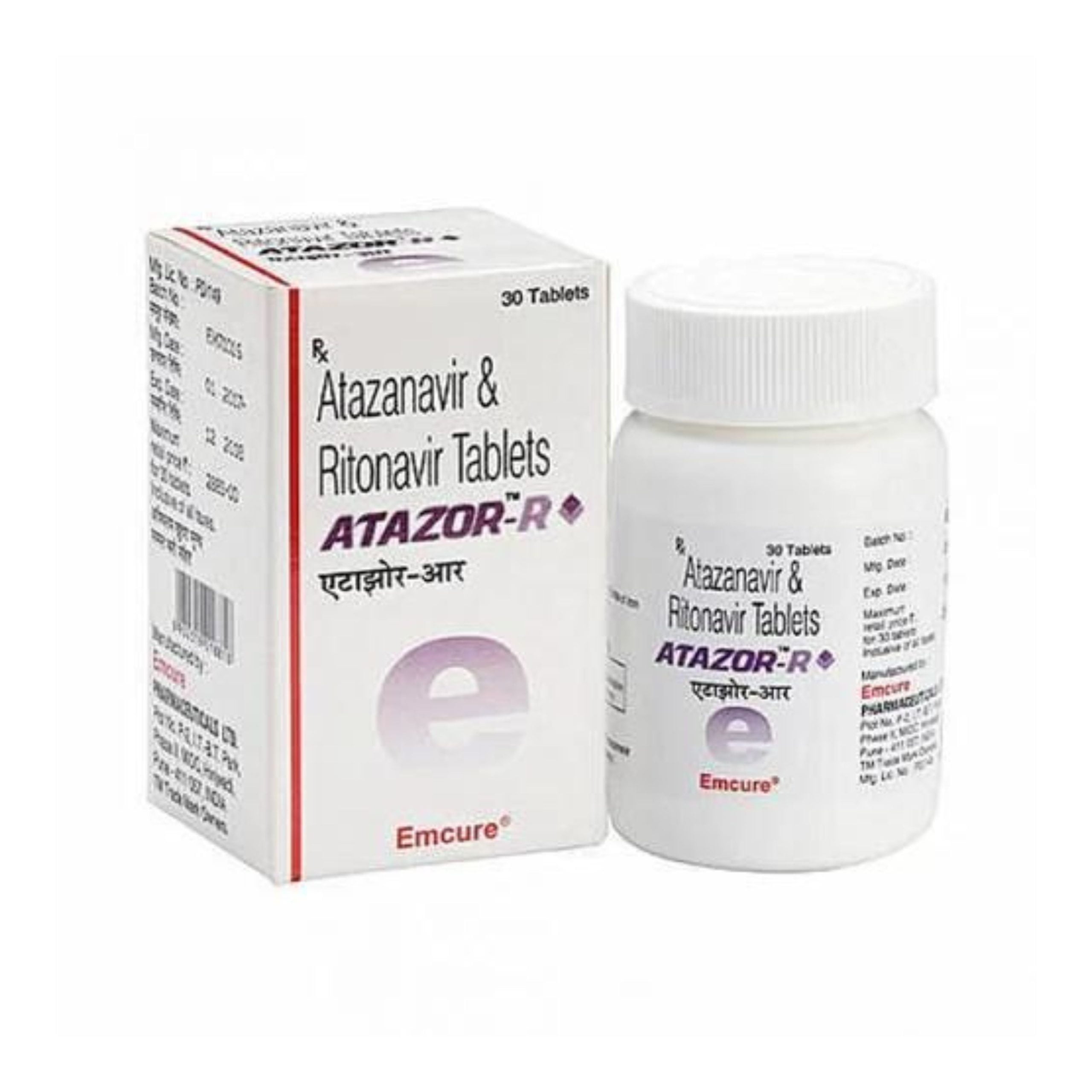
Atazor-R
Buy Atazor-R Online
Secure Encrypted Payments
Atazor-R is an antiretroviral combination medicine containing atazanavir and ritonavir for HIV treatment. It can be ordered online through licensed pharmacy channels, with the strength shown during ordering matched to the directions from your treating clinician. Atazor-R tablets are used with other HIV medicines to help lower viral load and support ongoing viral suppression.
This fixed-dose combination pairs atazanavir, a protease inhibitor, with ritonavir, a booster that helps maintain atazanavir levels in the body. Atazor-R is not used by itself; HIV therapy usually requires a complete regimen chosen around resistance history, other medicines, liver health, and tolerability. If you are reviewing the Atazor-R price without insurance, consider the total monthly regimen cost rather than this tablet alone.
Atazor-R Price, Strength, and Ordering Details
Atazor-R price information can be reviewed during ordering so you can plan refills and compare your out-of-pocket cost. The commonly referenced presentation is Atazor-R 300/100 mg, containing atazanavir 300 mg with ritonavir 100 mg in one tablet. Choose the available strength and quantity that match your clinician’s directions, and avoid switching between separate atazanavir and ritonavir products unless your care team has specifically planned that change.
Many customers look for Atazor-R tablets because a single fixed-dose tablet can simplify the boosted protease inhibitor part of a regimen. Simpler tablet planning may help some people keep a consistent routine, but it does not replace the other antiretroviral medicines that may be needed. If your regimen includes a backbone medicine, timing instructions and interaction rules may apply to the full combination.
BorderFreeHealth offers US delivery from Canada for eligible orders and provides clear order documentation for cash-pay planning. Stock, manufacturer, and pack presentation may vary, so the product strength and quantity displayed at checkout should be checked against your current treatment directions. For broader browsing within the same treatment area, see the antivirals category.
Quick tip: Keep your HIV regimen list in one place, including doses, timing, supplements, and acid-reducing medicines.
What Atazor-R Is Used For
Atazor-R is used as part of combination antiretroviral therapy for HIV-1 infection. HIV-1 is the most common type of human immunodeficiency virus. Treatment aims to reduce viral replication, protect immune function, and lower the risk of disease progression when taken consistently as directed.
Atazanavir blocks HIV protease, an enzyme the virus needs to produce mature infectious particles. Ritonavir slows the breakdown of atazanavir through liver enzyme inhibition, which increases atazanavir exposure. This boosting effect is clinically useful, but it also explains why Atazor-R has important drug interaction considerations.
This medicine does not cure HIV. It also does not prevent transmission by itself. Viral suppression, safer-sex practices, regular monitoring, and public health guidance all matter. People living with HIV should remain in routine care so viral load, CD4 count, kidney function, liver tests, and medication tolerability can be followed over time. For condition-focused context, visit the HIV information hub.
How to Take the Tablets
Atazor-R tablets are typically taken once daily with food. Food improves atazanavir absorption and helps the medicine reach steadier levels. Taking the tablet at the same time each day can make the routine easier and may reduce missed doses.
Swallow the tablet whole with water unless a clinician gives different instructions. Do not crush, split, or double doses to make up for missed medicine without guidance. If a dose is missed, general antiretroviral practice is to take it when remembered unless the next dose is close; then resume the regular schedule. Your own medication label or care team instructions should guide the exact plan.
Timing matters when antacids, H2 blockers, or proton pump inhibitors are involved. Atazanavir needs stomach acidity for absorption, so acid-reducing products can lower drug exposure. Some combinations should be avoided, while others require careful spacing. Because ritonavir also affects liver enzymes, even non-HIV medicines may need review.
Active Ingredients and How the Combination Works
Atazor-R combines two antiretroviral ingredients with different roles. Atazanavir is the main protease inhibitor. Ritonavir is included at a lower boosting dose to increase atazanavir levels rather than to serve as the only active HIV medicine in the regimen.
Protease inhibitors act late in the HIV life cycle. They interfere with viral maturation, so newly formed virus particles are less able to infect other cells. This mechanism differs from nucleoside reverse transcriptase inhibitors, non-nucleoside reverse transcriptase inhibitors, integrase inhibitors, entry inhibitors, and capsid inhibitors. A complete regimen may use medicines from more than one class.
Because HIV can develop resistance when drug levels are too low or doses are missed often, adherence is central to treatment success. Tell your care team if nausea, cost, travel, work schedules, stigma, or pill burden make it hard to take doses consistently. Practical adjustments may be possible without losing control of the regimen.
Who May Need Extra Caution
Atazor-R may not be suitable for everyone. Extra caution is important for people with liver disease, a history of hepatitis B or hepatitis C, prior severe skin reactions, kidney stones, gallbladder disease, diabetes, hemophilia, or heart rhythm concerns. Atazanavir can affect electrical conduction in the heart, including PR interval prolongation, so some heart medicines require careful review.
People with moderate to severe hepatic impairment generally need alternative approaches because atazanavir and ritonavir are processed through the liver. A mild bilirubin increase is common with atazanavir and can cause yellowing of the skin or eyes, but bilirubin changes are not always the same as liver injury. Dark urine, pale stools, severe fatigue, right-sided abdominal pain, or worsening jaundice should be reported promptly.
Pregnancy, plans to conceive, and breastfeeding require individualized HIV care. Medication choices may change because drug levels, safety considerations, and infant exposure need specialist input. Do not stop HIV medicines suddenly during pregnancy planning unless a clinician directs you, because interruption can raise viral load and affect health decisions.
Side Effects, Warnings, and Monitoring
Common side effects of atazanavir and ritonavir combinations can include nausea, vomiting, diarrhea, abdominal discomfort, headache, tiredness, and rash. Some people notice yellowing of the eyes or skin from increased indirect bilirubin. This effect can be cosmetically upsetting, even when liver enzymes are not severely abnormal.
Serious reactions are less common but need urgent attention. Seek medical help for severe rash, blistering, mouth sores, facial swelling, shortness of breath, chest symptoms, fainting, persistent abdominal pain, dark urine, pale stools, or symptoms of kidney stones such as severe flank pain or blood in the urine. Ritonavir-containing therapy can also contribute to changes in blood fats or blood sugar in some people.
Monitoring commonly includes viral load, CD4 count, liver function tests, bilirubin, kidney function, blood glucose, and lipid levels. Your care team may also review resistance history before choosing or continuing a protease inhibitor regimen. If lab values change, the response may involve monitoring, timing changes, interaction management, or a different regimen rather than stopping treatment on your own.
- Common effects: nausea, diarrhea, headache, fatigue, rash, and bilirubin-related yellowing.
- Serious concerns: severe skin reaction, liver problems, heart conduction changes, kidney stones, and gallbladder problems.
- Routine monitoring: viral load, CD4 count, liver tests, bilirubin, kidney function, glucose, and lipids.
- Call promptly: severe rash, chest symptoms, dark urine, pale stools, severe abdominal pain, or fainting.
Drug Interactions to Review Before Use
Atazor-R has many clinically important interactions because both active ingredients are affected by liver enzymes, and ritonavir strongly inhibits several enzyme pathways. Medicines that strongly induce these enzymes can lower atazanavir levels and may reduce HIV control. Rifampin and St. John’s wort are examples commonly avoided with boosted protease inhibitor therapy.
Acid-reducing medicines are another major issue. Proton pump inhibitors may be unsuitable for some patients taking atazanavir, and H2 blockers or antacids may require dose separation. Do not assume a non-prescription stomach medicine is harmless with Atazor-R. Ask before starting, stopping, or changing products for reflux, ulcers, or indigestion.
Some cholesterol medicines, heart rhythm medicines, sedatives, ergot medicines, anticonvulsants, hepatitis C medicines, pulmonary hypertension medicines, and inhaled or nasal steroids can interact. Simvastatin and lovastatin are generally avoided with ritonavir-boosted regimens because of the risk of muscle toxicity. A complete medication and supplement list is one of the most useful safety tools you can bring to every visit.
Does Atazanavir Cause Weight Gain?
Weight changes can happen during HIV treatment for several reasons. Some people gain weight after starting effective antiretroviral therapy because illness-related weight loss improves and viral control returns. Atazanavir is not usually singled out as the main modern HIV medicine associated with larger weight increases, but individual experiences vary.
If weight gain occurs, look at the whole picture: diet, activity, sleep, other medicines, metabolic labs, treatment history, and whether viral suppression improved. Do not stop Atazor-R because of weight concerns without discussing safer alternatives. A clinician can help decide whether the change reflects recovery, lifestyle factors, another medicine, or a metabolic issue needing follow-up.
How Long Atazanavir Stays in the Body
Atazanavir remains in the body long enough to support once-daily dosing when used as directed, especially when boosted with ritonavir. The practical takeaway is simple: missed doses can still matter even if some medicine remains in your system. Drug levels decline over time, and low levels may allow HIV replication.
Individual clearance can be affected by liver function, interacting medicines, adherence, and whether the tablet is taken with food. If you miss multiple doses, vomit after dosing, or cannot take food with the tablet, ask for guidance. Consistent daily use is more important than trying to estimate how much medicine remains after a missed dose.
Storage, Travel, and Refill Planning
Store Atazor-R tablets at room temperature in the original container. Keep the cap tightly closed and protect the tablets from moisture. Avoid storing HIV medicines in bathrooms, cars, or other places with heat and humidity. Keep all medicines out of reach of children and pets.
For travel, carry the medicine in original packaging with your medication label or treatment documentation. Pack enough tablets for the trip plus extra for delays. If crossing borders or flying, keep HIV medicines in carry-on luggage rather than checked bags. Time-zone changes can make once-daily dosing confusing, so set reminders before travel begins.
Refill planning is especially important for antiretroviral therapy. Running out can create treatment gaps and may increase resistance risk. If you pay out of pocket, align refill dates for your complete HIV regimen when possible. Some Atazor-R stock may list India as country of origin; product-origin information can be reviewed through the India product-origin section when relevant.
Atazor-R Compared With Separate Atazanavir and Ritonavir
Atazor-R combines atazanavir and ritonavir in one tablet. Separate products can sometimes be used to build a similar boosted protease inhibitor component, but the tablet count, strengths, manufacturers, and instructions may differ. Changes should be planned by a clinician because the full regimen must remain active and safe.
A fixed-dose combination may reduce the number of bottles and simplify daily organization. Separate components may allow more flexibility if a specific adjustment is needed. The better choice depends on your treatment history, resistance results, interacting medicines, and whether your other HIV medicines pair appropriately with the boosted protease inhibitor.
When comparing Atazor-R cost Canada options with separate atazanavir ritonavir tablets, check the total cost for the entire month of therapy. A lower price for one component may not reduce the total regimen expense if another medicine must be added or changed. Safety and adherence should stay central to the decision.
Questions to Discuss With Your Care Team
Bring practical questions before starting or refilling Atazor-R, especially if your medication list has changed. A short conversation can prevent interaction problems and clarify how the tablet fits with the rest of your regimen. Written instructions are useful when multiple timing rules apply.
- Is a boosted protease inhibitor appropriate for my resistance history?
- Which other HIV medicines should be taken with Atazor-R?
- Should I avoid proton pump inhibitors, antacids, or H2 blockers?
- Which lab tests will be monitored after starting or continuing therapy?
- What should I do if bilirubin rises or my eyes look yellow?
- Are any cholesterol, heart, seizure, steroid, or herbal products unsafe with this regimen?
- How should I handle travel, vomiting after a dose, or repeated missed doses?
Authoritative Sources
Health Canada product record for atazanavir
This content is for informational purposes only and is not a substitute for professional medical advice.
Cholesterol Ratio Calculator
Calculate common lipid ratios and non-HDL cholesterol from a standard cholesterol panel.
Total / HDL
-
cholesterol ratio
LDL / HDL
-
lipid ratio
Non-HDL
-
total minus HDL
These calculations are for education only and do not replace clinical advice, diagnosis, or treatment. Always confirm medical decisions with a qualified healthcare professional.
LDL Cholesterol Calculator
Estimate LDL cholesterol from total cholesterol, HDL, and triglycerides using the Friedewald equation.
Estimated LDL
-
Friedewald estimate
Non-HDL
-
total minus HDL
These calculations are for education only and do not replace clinical advice, diagnosis, or treatment. Always confirm medical decisions with a qualified healthcare professional.
Blood Glucose Unit Converter
Convert glucose readings between mg/dL and mmol/L without changing the clinical value.
mg/dL
-
US reporting unit
mmol/L
-
International reporting unit
These calculations are for education only and do not replace clinical advice, diagnosis, or treatment. Always confirm medical decisions with a qualified healthcare professional.
HbA1c & eAG Calculator
Convert between HbA1c percentage and estimated average glucose using the ADAG relationship.
HbA1c
-
percentage
eAG mg/dL
-
estimated average glucose
eAG mmol/L
-
estimated average glucose
These calculations are for education only and do not replace clinical advice, diagnosis, or treatment. Always confirm medical decisions with a qualified healthcare professional.
HOMA-IR Calculator
Estimate insulin resistance from fasting glucose and fasting insulin values collected from the same blood draw.
HOMA-IR
-
screening estimate, not a diagnosis
Formula used
-
depends on glucose unit
These calculations are for education only and do not replace clinical advice, diagnosis, or treatment. Always confirm medical decisions with a qualified healthcare professional.
Express Shipping - from $29.99
Shipping with this method takes 3-5 days
Prices:
- Dry-Packed Products $29.99
- Cold-Packed Products $39.99
Shipping Countries:
- United States (all contiguous states**)
- Worldwide (excludes some countries***)
Standard Shipping - $19.99
Shipping with this method takes 5-10 days
Prices:
- Dry-Packed Products $19.99
- Not available for Cold-Packed products
Shipping Countries:
- United States (all contiguous states**)
- Worldwide (excludes some countries***)
What is Atazor-R used for?
Atazor-R is used as part of combination antiretroviral therapy for HIV-1 infection. It contains atazanavir and ritonavir and should be taken only as part of a complete HIV regimen directed by a clinician.
What is the usual Atazor-R strength?
The commonly referenced Atazor-R tablet contains atazanavir 300 mg and ritonavir 100 mg. During ordering, choose the strength and quantity that match your current treatment directions.
Should Atazor-R be taken with food?
Yes. Atazanavir-containing therapy is generally taken with food because food improves absorption. Follow the timing instructions on your medication label, especially if you use antacids or acid-reducing medicines.
What side effects can Atazor-R cause?
Common side effects may include nausea, diarrhea, stomach discomfort, headache, fatigue, rash, and yellowing of the eyes or skin from bilirubin changes. Severe rash, chest symptoms, dark urine, pale stools, or severe abdominal pain need prompt medical attention.
Does atazanavir cause weight gain?
Weight changes can occur during HIV treatment, sometimes because health improves after viral suppression. Atazanavir is not usually the main medicine associated with larger modern HIV-treatment weight changes, but individual results vary.
Can Atazor-R interact with other medicines?
Yes. Ritonavir-boosted atazanavir has important interactions with acid-reducing medicines, certain statins, rifampin, St. John’s wort, some heart medicines, sedatives, anticonvulsants, and other drugs. Review all medicines and supplements with your care team.
How should Atazor-R tablets be stored?
Store Atazor-R tablets at room temperature in the original container, with the cap tightly closed. Protect them from moisture, heat, children, and pets.
Rewards Program
Earn points on birthdays, product orders, reviews, friend referrals, and more! Enjoy your medication at unparalleled discounts while reaping rewards for every step you take with us.
You can read more about rewards here.
POINT VALUE
How to earn points
- 1Create an account and start earning.
- 2Earn points every time you shop or perform certain actions.
- 3Redeem points for exclusive discounts.
You Might Also Like
Select options
This product has multiple variants. The options may be chosen on the product page
Select options
This product has multiple variants. The options may be chosen on the product page
Select options
This product has multiple variants. The options may be chosen on the product page
Select options
This product has multiple variants. The options may be chosen on the product page