
Please note: a valid prescription is required for all prescription medication.
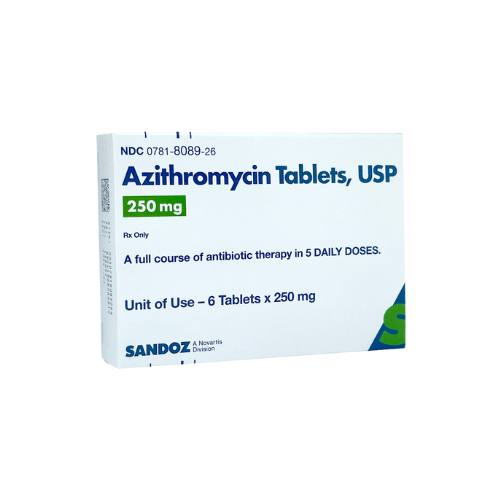
Azithromycin
Buy Azithromycin Online
Secure Encrypted Payments
Azithromycin is a macrolide antibiotic used for selected bacterial infections when this class fits the diagnosis. You can buy Azithromycin online, view the current Azithromycin price, and choose the dose or strength shown during ordering so it matches the directions from your clinician. BorderFreeHealth offers US delivery from Canada for customers using regulated pharmacy channels.
Azithromycin Price, Strengths, and Ordering Choices
Azithromycin cost can vary by strength, quantity, and form. The current cash-pay amount is shown during ordering, which helps you compare the out-of-pocket cost before completing your request. If your directions specify a tablet strength or a full short course, choose the matching strength and quantity rather than estimating from a common pack name.
Commonly referenced forms include Azithromycin tablets and azithromycin oral suspension. Existing product information also notes Azithromycin 250 mg tablets, higher-strength tablets for certain regimens, and liquid suspension when swallowing tablets is difficult. Availability can change by form and quantity, so match the displayed dose, strength, and amount to your clinician’s instructions.
Many people search for an Azithromycin Z Pack or Zithromax Z-Pak because some regimens organize tablets by treatment day. Those terms describe a familiar pack style, not a diagnosis by itself. Your exact schedule should come from the directions given for your infection, because azithromycin regimens differ across respiratory, skin, ear, and sexually transmitted infections.
Quick tip: Keep the written directions nearby while selecting strength and quantity, especially if the instructions mention both tablet strength and total number of tablets.
What Azithromycin Treats
Azithromycin treats infections caused by susceptible bacteria. It is used for certain respiratory tract infections, ear infections, skin infections, and some sexually transmitted infections, including uncomplicated chlamydia when appropriate. It is not useful for viral illnesses such as colds or influenza, and taking an antibiotic when it is not needed can contribute to resistance.
This medicine belongs to the macrolide antibiotic class. It slows bacterial growth by blocking bacterial protein synthesis, which bacteria need to multiply. Azithromycin also concentrates well in body tissues and has a long half-life, so many treatment courses are shorter than courses used with some other antibiotics.
Diagnosis matters. A cough, sore throat, sinus symptoms, genital symptoms, or skin change can have several causes, and not every bacterial infection responds to this class. For broader condition information, see our Bacterial Infection category or browse the Infectious Disease collection for related treatment areas.
Brand Name, Generic Name, and Z-Pack Terminology
Zithromax is a brand name for azithromycin. Azithromycin is the generic name and active ingredient. People may also use terms such as Z pack medication, Zithromax generic name, Azithromycin pills, or Azithromycin 250mg tablets 6 pak when they mean a short azithromycin tablet course.
Brand and generic naming can differ by market, package, and manufacturer. The important buying detail is the active ingredient, strength, form, and quantity shown during ordering. If your directions specify Azithromycin 250 mg or Azithromycin 500 mg, select the strength that matches those directions rather than relying only on a nickname such as Z-Pak.
A pack nickname also should not be used to choose therapy for a new illness. Azithromycin may be appropriate for one infection and inappropriate for another, even when symptoms feel similar. The safest approach is to use the medicine only for the diagnosed condition and complete the course exactly as directed.
How to Take Azithromycin Safely
Follow the directions that come with your medicine. Azithromycin is often taken once daily for a short course, and some infections use a single-dose regimen. Tablets are usually swallowed whole with water. Food is not always required, but taking the medicine with a light meal may reduce stomach upset for some people.
- Take each scheduled dose at the same time of day when using a multi-day course.
- Separate aluminum or magnesium antacids from azithromycin by several hours.
- Do not share antibiotics with another person, even if symptoms seem alike.
- Do not save leftover tablets for a future illness.
- Finish the full course unless a healthcare professional tells you otherwise.
Short courses are possible because azithromycin stays in tissues longer than many antibiotics. That does not mean it is stronger for every infection. It means the medicine’s pharmacokinetics, or how the body absorbs and clears it, can support shorter schedules for certain labeled uses.
Missed Dose, Vomiting, and Timing Questions
If you miss a dose in a multi-day course, take it when you remember unless it is close to the next scheduled dose. If the next dose is near, skip the missed dose and return to your usual time. Do not take two doses together to make up for a missed dose.
If vomiting occurs soon after a single-dose regimen, ask a healthcare professional what to do next. The answer can depend on timing, the infection being treated, and whether enough medicine was likely absorbed. Do not repeat a dose unless you are told to do so.
Symptoms often begin to improve after several doses when the bacteria are susceptible. Lack of improvement, worsening symptoms, new fever, severe diarrhea, chest discomfort, fainting, or signs of allergy should prompt medical attention. For sexually transmitted infections, partners may need evaluation, and follow-up testing may be recommended. Our Chlamydia condition information explains related testing and treatment considerations.
Storage, Travel, and Delivery Handling
Store tablets at room temperature in the original, child-resistant container. Keep them away from moisture, direct heat, and bathrooms. If you receive oral suspension, follow the label for storage and discard any unused liquid after the stated period.
When traveling, keep azithromycin in carry-on luggage with your written directions or medication record. Avoid leaving tablets or suspension in a hot vehicle. Keep all antibiotics away from children and pets, and do not transfer tablets into an unlabeled container.
Orders may be sent with prompt, express shipping when applicable. Shipping language does not replace safe storage at home, so inspect the package on arrival and follow the container label. If the directions, quantity, or strength do not match what you expected, pause and ask for clarification before taking the medicine.
Side Effects, Warnings, and Monitoring
Common azithromycin side effects include nausea, diarrhea, abdominal pain, vomiting, and headache. Some people also notice dizziness, fatigue, or changes in taste. Mild stomach symptoms may improve when the dose is taken with food, but severe or persistent symptoms need medical attention.
Rare but serious reactions can occur. Seek urgent care for swelling of the face or throat, trouble breathing, widespread rash, blistering skin, fainting, or symptoms of a severe allergic reaction. Contact a healthcare professional promptly for jaundice, dark urine, severe upper abdominal pain, or unusual tiredness, because these can be signs of liver problems.
Azithromycin can affect heart rhythm in some people, including QT prolongation. Risk may be higher if you have known rhythm problems, low potassium or magnesium, significant heart disease, or use medicines that also affect heart rhythm. Severe diarrhea, especially watery or bloody diarrhea after antibiotic use, may signal C. difficile-associated diarrhea and should be assessed rather than treated with leftover antibiotics.
People with a known allergy to azithromycin, erythromycin, clarithromycin, or other macrolide-type antibiotics may need a different medicine. A history of cholestatic jaundice or liver dysfunction linked to prior azithromycin use is also important. Myasthenia gravis can worsen with some antibiotics, so symptoms such as increased muscle weakness should be discussed urgently.
Drug Interactions and What to Avoid
Tell your healthcare team about all medicines, vitamins, and supplements you use. Important interaction questions often involve warfarin or other blood thinners, digoxin, certain antiarrhythmics, some antidepressants, colchicine, and selected statins. Interaction risk depends on the full medication list, kidney and liver function, and the infection being treated.
Aluminum and magnesium antacids can reduce azithromycin absorption when taken too close together. Separate them by several hours unless your healthcare professional gives different timing. Grapefruit is usually less important for azithromycin than for some other medicines, but your full medicine list still matters.
Avoid using azithromycin for symptoms that are likely viral, and avoid stopping early because symptoms improve. Stopping too soon may allow the infection to persist and can contribute to antibiotic resistance. Alcohol is not listed as a direct inactivation issue for azithromycin, but heavy drinking can worsen stomach upset and may complicate recovery or liver safety.
How Azithromycin Compares With Other Antibiotics
Azithromycin is not the best antibiotic for every infection. Choice depends on the suspected organism, local resistance patterns, allergy history, pregnancy or breastfeeding status, organ function, and recent antibiotic exposure. A medicine that worked for a past infection may not be appropriate for a new one.
Compared with some alternatives, azithromycin is known for once-daily dosing and short courses in many use cases. Doxycycline, amoxicillin, cephalexin, and other antibiotics may be preferred for different organisms or body sites. Macrolide resistance can affect success, especially in some respiratory infections, so therapy should fit current clinical guidance.
If you are comparing treatment areas rather than a specific drug, the Infectious Disease articles provide additional background. Use those materials for education, not for self-selecting an antibiotic or changing a course that has already been started.
When to Ask for Medical Guidance
Ask for guidance if symptoms worsen, do not improve as expected, or return after the course is complete. Also seek help for severe diarrhea, dehydration, rash, trouble breathing, chest pain, fainting, yellowing skin or eyes, or new muscle weakness. These symptoms may require a different evaluation rather than another antibiotic course.
Before starting azithromycin, discuss pregnancy, breastfeeding, liver disease, kidney disease, heart rhythm history, electrolyte problems, and myasthenia gravis. Mention any prior severe antibiotic reaction. If the medicine is being used for a sexually transmitted infection, ask whether partners need testing or treatment and when sexual contact can safely resume.
For cost planning, ask whether the full course can be filled at once and whether the strength written on your directions matches the product strength you intend to select. Azithromycin cash price and out-of-pocket cost are usually easiest to understand when the full quantity, form, and strength are known at the time of ordering.
Authoritative Sources
Official Zithromax prescribing information
Manufacturer product information for Zithromax
This content is for informational purposes only and is not a substitute for professional medical advice.
QTc Calculator
Calculate corrected QT interval from measured QT and heart rate.
QTc
-
milliseconds
RR interval
-
seconds
These calculations are for education only and do not replace clinical advice, diagnosis, or treatment. Always confirm medical decisions with a qualified healthcare professional.
eGFR Calculator
Estimate kidney filtration using the 2021 CKD-EPI creatinine equation.
eGFR
-
mL/min/1.73 m2
G category
-
requires clinical context
These calculations are for education only and do not replace clinical advice, diagnosis, or treatment. Always confirm medical decisions with a qualified healthcare professional.
Creatinine Clearance Calculator
Estimate creatinine clearance using the Cockcroft-Gault equation.
CrCl
-
mL/min estimate
These calculations are for education only and do not replace clinical advice, diagnosis, or treatment. Always confirm medical decisions with a qualified healthcare professional.
Body Surface Area Calculator
Calculate body surface area from height and weight using the Mosteller equation.
BSA
-
m2, Mosteller equation
These calculations are for education only and do not replace clinical advice, diagnosis, or treatment. Always confirm medical decisions with a qualified healthcare professional.
Ideal & Adjusted Body Weight Calculator
Estimate ideal body weight with the Devine equation and adjusted body weight when actual weight is above the estimate.
Ideal body weight
-
Devine equation
Adjusted body weight
-
IBW + 0.4 x excess weight
Difference from IBW
-
actual minus ideal
These calculations are for education only and do not replace clinical advice, diagnosis, or treatment. Always confirm medical decisions with a qualified healthcare professional.
Express Shipping - from $29.99
Shipping with this method takes 3-5 days
Prices:
- Dry-Packed Products $29.99
- Cold-Packed Products $39.99
Shipping Countries:
- United States (all contiguous states**)
- Worldwide (excludes some countries***)
Standard Shipping - $19.99
Shipping with this method takes 5-10 days
Prices:
- Dry-Packed Products $19.99
- Not available for Cold-Packed products
Shipping Countries:
- United States (all contiguous states**)
- Worldwide (excludes some countries***)
What is azithromycin mainly used for?
Azithromycin is mainly used for selected bacterial infections, including certain respiratory, ear, skin, and sexually transmitted infections such as uncomplicated chlamydia when appropriate. It does not treat viral infections like colds or flu.
Is azithromycin a very strong antibiotic?
Azithromycin is a broad-use macrolide antibiotic, but “strong” is not the best way to choose an antibiotic. The right choice depends on the bacteria, infection site, resistance patterns, allergies, and your health history.
Why is azithromycin sometimes given for only a few days?
Azithromycin remains in body tissues for a long time, which can support short treatment courses for some infections. The course length still depends on the diagnosis and directions given for your specific infection.
What should you avoid while taking azithromycin?
Avoid taking aluminum or magnesium antacids too close to azithromycin, sharing antibiotics, saving leftover tablets, or using it for likely viral illness. Also ask about interactions if you take blood thinners, heart rhythm medicines, digoxin, colchicine, selected statins, or multiple daily medicines.
What are common azithromycin side effects?
Common side effects include nausea, diarrhea, stomach pain, vomiting, and headache. Seek medical help for severe allergy symptoms, fainting, chest discomfort, yellowing skin or eyes, severe abdominal pain, or watery or bloody diarrhea.
Rewards Program
Earn points on birthdays, product orders, reviews, friend referrals, and more! Enjoy your medication at unparalleled discounts while reaping rewards for every step you take with us.
You can read more about rewards here.
POINT VALUE
How to earn points
- 1Create an account and start earning.
- 2Earn points every time you shop or perform certain actions.
- 3Redeem points for exclusive discounts.
You Might Also Like
Select options
This product has multiple variants. The options may be chosen on the product page
Select options
This product has multiple variants. The options may be chosen on the product page
Select options
This product has multiple variants. The options may be chosen on the product page
Select options
This product has multiple variants. The options may be chosen on the product page