
Please note: a valid prescription is required for all prescription medication.
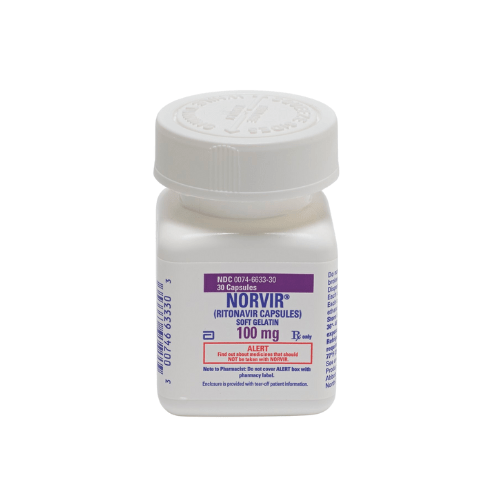
Norvir
Buy Norvir Online
Secure Encrypted Payments
Norvir is a brand medicine containing ritonavir, an antiretroviral used with other HIV medicines. Norvir can be bought online, with customers choosing the available dose or strength that matches their clinician’s directions and current treatment plan. It is often used as Norvir 100 mg tablets, and ritonavir may also be supplied as an oral solution when that form is appropriate.
Ritonavir has an important role in HIV care because it can act as a protease inhibitor and, in many regimens, as a booster for another antiretroviral. That boosting effect can make treatment more effective when planned correctly, but it also makes medication interaction screening especially important. Products are supplied through licensed pharmacies, and US delivery from Canada is part of the service context for many customers.
Norvir Price, Strength, and Ordering Details
Norvir price can vary by form, strength, quantity, and supply source. During ordering, the current cost is shown before checkout so you can match the available Norvir strength to the directions from your HIV care team. People paying cash or managing out-of-pocket costs often compare the tablet and oral solution presentation because the total regimen may include more than one antiretroviral.
Norvir 100 mg tablets are a common solid-dose presentation used in HIV regimens. Norvir oral solution 80 mg/mL may be used when a liquid is needed or when a clinician has chosen a liquid dose plan. The exact form should match the therapy instructions, since ritonavir’s role and schedule depend on the other medicines in the regimen.
Quick tip: Keep the medicine name, strength, and directions together when discussing refills or changes with your care team.
For broader HIV treatment categories, the antivirals category can help place Norvir alongside other medicines used for viral infections. Country-of-origin information may also matter to some customers reviewing supply preferences, and the Canada-origin medicines section offers related browsing context.
What Norvir Is Used For
Norvir is used in combination with other antiretroviral agents for the treatment of HIV-1 infection. HIV-1 is the virus that causes most HIV infections, and antiretroviral therapy aims to reduce viral replication so the immune system can be protected over time. Norvir is not a complete HIV regimen by itself and should not be used alone for HIV treatment.
Ritonavir belongs to the protease inhibitor class. Protease inhibitors block a viral enzyme that HIV needs to make mature copies of itself. In current practice, ritonavir is frequently used at lower boosting doses to raise blood levels of certain other protease inhibitors by slowing their breakdown in the liver.
That dual identity is important when evaluating Norvir. It may be prescribed for its own antiviral activity, but many people encounter it as a Norvir booster 100 mg component in a larger regimen. The right role depends on the other antiretrovirals, previous treatment history, resistance testing, organ function, and the full medication list.
For plain-language HIV background, the HIV condition section offers related education on the condition and treatment context. That background can support more informed conversations, but individualized choices should remain with a qualified clinician.
Generic Ritonavir and Brand Norvir
Ritonavir is the active ingredient in Norvir. When people ask about the generic for Norvir, they are usually asking about ritonavir products that contain the same active substance. Brand and generic naming, regulatory references, and available presentations can differ by market, so the label and pharmacy-supplied medicine should be followed for the specific product received.
Norvir brand 100 mg tablets and ritonavir 100 mg tablets may be discussed together because they share the same active ingredient. However, customers should not substitute one medicine for another without confirming that the strength, form, directions, and regimen role remain correct. This is especially important in HIV therapy, where missed doses, incorrect substitutions, or interaction changes can affect treatment reliability.
Some ritonavir products may also appear in combination HIV medicines. Those combination tablets are not interchangeable with standalone Norvir unless a clinician specifically redesigns the regimen. The most practical buying question is whether the dispensed ritonavir form and strength match the directions already chosen for the full antiretroviral plan.
Forms and Strengths
This medicine is commonly discussed as Norvir 100 mg tablets and Norvir oral solution 80 mg/mL. Tablets are swallowed whole according to the instructions provided with the regimen. The oral solution is measured in milliliters, and an oral dosing syringe or supplied measuring device helps reduce dosing errors.
The liquid form has practical handling differences. It may have a strong taste, and it must be measured carefully each time. A kitchen spoon is not accurate enough for liquid ritonavir dosing, especially when small dose differences matter. If swallowing tablets is difficult, the oral solution may be considered only if it fits the clinical plan.
| Form | Strength | Practical note |
|---|---|---|
| Tablet | 100 mg | Used in many adult regimens; follow the food and timing directions given. |
| Oral solution | 80 mg/mL | Measure with an oral syringe or supplied device, not a household spoon. |
Strength selection should be based on the directions for the entire HIV regimen, not on convenience alone. Ritonavir may change the levels of other medicines, so the form, dose, and timing need to align with the other antiretrovirals being taken.
How Ritonavir Works as a Booster
Ritonavir strongly affects CYP3A, a liver enzyme pathway that breaks down many medicines. By inhibiting that pathway, it can increase the amount of certain protease inhibitors in the bloodstream. In HIV care, this boosting can help maintain drug exposure between doses when it is intentionally built into the regimen.
The same mechanism also explains many Norvir safety concerns. A medicine that is safe at one exposure level may become risky if ritonavir raises its concentration. This can apply to prescription medicines, non-prescription products, supplements, and some herbal products.
Why it matters: Norvir can change the exposure of other medicines, so interaction screening is part of safe use.
Because ritonavir affects drug metabolism, changes outside HIV care can still matter. A short course of an antibiotic, a new cholesterol medicine, a sedative after a procedure, or a supplement added for sleep may require an interaction check. A current medication list is one of the simplest tools for reducing preventable problems.
Taking Norvir Safely Within an HIV Regimen
Norvir dosing depends on why ritonavir is being used and which partner antiretroviral is included. Some regimens use ritonavir mainly as a booster; others may use it as part of protease inhibitor therapy. The timing, food instructions, and missed-dose guidance should come from the specific regimen instructions.
Consistent timing helps keep antiretroviral levels predictable. If a dose is missed, do not double up unless the official directions for the regimen say to do so. If vomiting occurs soon after a dose, the next step may depend on the timing, form, and combination of medicines, so general rules may not be safe for every situation.
Routine follow-up is common in HIV care. Viral load testing can show how well the regimen is controlling the virus, while lab monitoring may help identify liver, lipid, or metabolic changes. If you want background on how HIV treatment response is followed, the article on HIV viral load meaning explains the concept in patient-friendly terms.
Storage, Travel, and Handling
Storage directions depend on the formulation received. Tablets are generally kept in the original container, protected from excess heat and moisture. Oral solution handling can differ from tablet handling, so the pharmacy label and package instructions should be followed closely for the specific bottle.
Travel planning helps avoid gaps in HIV therapy. Keep Norvir in its original labeled container, carry it in hand luggage, and bring a current medication list. Time-zone changes can make dose timing confusing, especially when multiple antiretrovirals are taken together, so plan timing adjustments before travel rather than improvising.
Prompt, express shipping may be offered at checkout. Shipping speed does not replace refill planning, because antiretroviral therapy works best when medication supply is steady. Starting refill steps before the bottle is nearly empty gives time to resolve questions about strength, directions, or interacting medicines.
Side Effects, Warnings, and Monitoring
Common ritonavir side effects can include nausea, diarrhea, abdominal discomfort, headache, taste changes, and tingling or numbness around the mouth. Some people also experience appetite changes or general stomach upset. These effects can be bothersome, and persistent symptoms should be discussed with a clinician because hydration, food timing, and regimen review may matter.
More serious problems need prompt medical attention. Warning signs include severe rash, swelling of the face or throat, trouble breathing, yellowing of the skin or eyes, dark urine, severe abdominal pain, fainting, or symptoms of an abnormal heartbeat. Ritonavir has been associated with liver problems and pancreatitis, and the risk may be higher in some people with existing liver disease or other risk factors.
Monitoring may include liver tests, cholesterol and triglyceride checks, blood sugar assessment, and HIV viral load testing. People with hepatitis B or C, heart rhythm concerns, diabetes risk, or a complicated medication list may need closer review. HIV therapy is long term for many people, so tolerability and lab changes should be addressed early rather than ignored.
- Common effects: nausea, diarrhea, stomach discomfort, taste changes, headache.
- Urgent symptoms: severe allergic reaction, jaundice, fainting, severe abdominal pain.
- Often monitored: liver enzymes, lipids, blood sugar, viral load, and regimen adherence.
Drug Interactions and Contraindications
Norvir has a high interaction burden because ritonavir strongly inhibits CYP3A and affects other enzymes and transporters. Some combinations can raise another medicine to dangerous levels, while others can reduce antiretroviral exposure and make the HIV regimen less reliable. Interaction decisions depend on the exact drug, dose, route, and clinical situation.
Medicines that may require special caution include certain heart rhythm drugs, sedatives, migraine and ergot medicines, cholesterol-lowering drugs, anticoagulants, antiseizure medicines, pulmonary hypertension therapies, and some antibiotics or antifungals. St. John’s wort is generally avoided with many antiretroviral regimens because it can lower levels of HIV medicines. Alcohol content and inactive ingredients in oral solution can also matter for some people.
Norvir should not be used by anyone with a known allergy to ritonavir or an ingredient in the specific formulation. Some drug combinations are contraindicated because the interaction risk is too high. A complete medication list should include prescriptions, over-the-counter medicines, vitamins, minerals, herbal products, and recent short-term treatments from urgent care or hospital visits.
How Norvir Compares With Related HIV Options
Norvir is different from many HIV medicines because it is often used to boost another protease inhibitor rather than serve as a standalone antiretroviral backbone. Some modern regimens use other boosters, such as cobicistat, or use drug classes that do not require ritonavir. The choice depends on resistance history, kidney and liver considerations, interaction risks, pill burden, and treatment goals.
Combination products can simplify some regimens, but they can also limit flexibility. A standalone ritonavir product may be chosen when the clinician wants a specific booster role with a separate protease inhibitor. Switching from ritonavir to another boosting approach can change interaction patterns, so medication reconciliation remains necessary.
People newly learning about HIV may also have questions about diagnosis and terminology. The article on HIV and AIDS differences explains why HIV infection and AIDS are related but not identical. For testing terminology, the HIV test types article covers how results are commonly described.
Cash-Pay and Without-Insurance Considerations
Norvir cash price and out-of-pocket cost depend on the form, strength, quantity, and current sourcing. Customers paying without insurance can view the current price during ordering and consider how Norvir fits into the total cost of the full HIV regimen. Because ritonavir is rarely the only medicine in treatment, budgeting should include the other antiretrovirals as well.
When comparing Norvir 100 mg tablet cost from Canada with other options, avoid judging by unit price alone. The correct regimen, interaction fit, refill continuity, and monitoring plan matter more than choosing the lowest apparent cost. If a liquid form is needed, the Norvir oral solution 80 mg/mL price may differ from tablet pricing because the formulation and quantity are different.
Keeping refill information organized can reduce stress. Save the medicine name, strength, form, directions, clinician contact information, and any recent medication changes in one place. That preparation helps resolve questions if an order needs clarification before the medicine is supplied.
Authoritative Sources
Official and regulator-backed references provide the most reliable details on indications, contraindications, interactions, and formulation-specific handling. They should be used alongside clinical guidance from a qualified HIV care professional.
Official U.S. labeling information for ritonavir is available through DailyMed Norvir prescribing information.
The European Medicines Agency also publishes product information for Norvir at EMA Norvir medicine information.
This content is for informational purposes only and is not a substitute for professional medical advice.
Express Shipping - from $29.99
Shipping with this method takes 3-5 days
Prices:
- Dry-Packed Products $29.99
- Cold-Packed Products $39.99
Shipping Countries:
- United States (all contiguous states**)
- Worldwide (excludes some countries***)
Standard Shipping - $19.99
Shipping with this method takes 5-10 days
Prices:
- Dry-Packed Products $19.99
- Not available for Cold-Packed products
Shipping Countries:
- United States (all contiguous states**)
- Worldwide (excludes some countries***)
What is Norvir used for?
Norvir contains ritonavir and is used with other antiretroviral medicines to treat HIV-1 infection. It is not used alone as a complete HIV regimen. In many treatment plans, ritonavir is used as a booster to increase levels of another protease inhibitor.
What is the generic for Norvir?
The active ingredient in Norvir is ritonavir. Generic ritonavir products may be discussed as alternatives, but the form, strength, and directions must match the treatment plan. Do not substitute HIV medicines without clinician guidance.
How much does Norvir cost?
Norvir cost depends on the form, strength, quantity, and current supply source. The current price is shown during ordering. Because Norvir is usually part of a combination HIV regimen, total out-of-pocket cost may include other antiretroviral medicines.
What side effects can Norvir cause?
Common ritonavir side effects include nausea, diarrhea, stomach discomfort, headache, taste changes, and tingling around the mouth. Serious symptoms such as severe rash, jaundice, fainting, breathing trouble, or severe abdominal pain need prompt medical attention.
Why are Norvir drug interactions important?
Ritonavir strongly affects liver enzyme pathways, especially CYP3A. This can raise or lower levels of many medicines, including some sedatives, heart rhythm drugs, cholesterol medicines, anticoagulants, seizure medicines, and herbal products such as St. John’s wort.
Rewards Program
Earn points on birthdays, product orders, reviews, friend referrals, and more! Enjoy your medication at unparalleled discounts while reaping rewards for every step you take with us.
You can read more about rewards here.
POINT VALUE
How to earn points
- 1Create an account and start earning.
- 2Earn points every time you shop or perform certain actions.
- 3Redeem points for exclusive discounts.
You Might Also Like
Select options
This product has multiple variants. The options may be chosen on the product page
Select options
This product has multiple variants. The options may be chosen on the product page
Select options
This product has multiple variants. The options may be chosen on the product page
Select options
This product has multiple variants. The options may be chosen on the product page