
Please note: a valid prescription is required for all prescription medication.
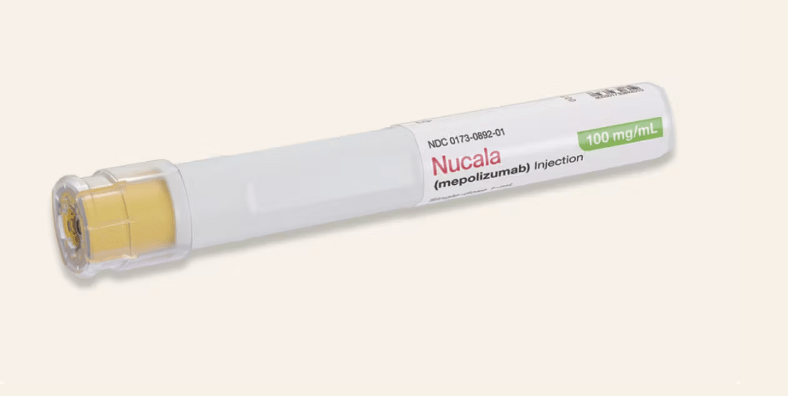
Nucala Pre-filled Auto Injection
Buy Nucala Pre-filled Auto Injection Online
Secure Encrypted Payments
Nucala Pre-filled Auto Injection is a mepolizumab biologic used as add-on maintenance treatment for eosinophil-driven respiratory and inflammatory conditions. It can be ordered online, with current price information shown during checkout and dose or device choices matched to the directions from your healthcare professional. The 100 mg/mL single-dose autoinjector is a common presentation for subcutaneous use when at-home administration is appropriate.
Mepolizumab targets interleukin-5, a signaling protein involved in the growth and survival of eosinophils. Eosinophils are white blood cells that can drive airway inflammation and tissue symptoms in certain conditions. This medicine is not a rescue treatment for sudden breathing problems, so people using it should keep their reliever inhaler and action plan available.
Nucala Price, Strength, and Ordering Details
When you buy Nucala Pre-filled Auto Injection, the practical ordering decisions are the current price, the device, the quantity, and the strength listed for the product. Choose the strength or device available during ordering only if it matches your clinician’s written directions. If your care plan calls for a different presentation, such as a prefilled syringe or clinic-administered vial, ask your healthcare team which form should be used.
Nucala Canadian pricing may help cash-pay customers plan monthly treatment costs more clearly. Price can vary by strength, device, quantity, sourcing, and currency factors, so the checkout price is the most useful figure for budgeting. If you are comparing Nucala cost per autoinjector with clinic or insurance estimates, include any administration visits, storage supplies, sharps containers, and timing of refills in the calculation.
BorderFreeHealth offers US delivery from Canada for customers using Canadian-supplied pharmacy channels. Order details are reviewed before the pharmacy supplies the medicine, and documentation may be requested when needed for safe processing. For broader respiratory medication browsing, the respiratory medicines category can help place this biologic alongside other airway treatments.
Quick tip: Keep your injection date, refill date, and clinic follow-up date on the same calendar so your supply planning stays predictable.
What This Biologic Treats
Nucala is used as add-on maintenance therapy for severe eosinophilic asthma in suitable patients. It may also be used for eosinophilic granulomatosis with polyangiitis, hypereosinophilic syndrome, and chronic rhinosinusitis with nasal polyps when the condition, age, and treatment plan fit labeled use. Your healthcare professional weighs symptoms, eosinophil counts, exacerbation history, current medicines, and previous response to therapy before continuing monthly treatment.
For severe asthma, this medicine is added to standard controller therapy rather than replacing it. Many patients remain on inhaled corticosteroids, long-acting bronchodilators, leukotriene modifiers, nasal sprays, or other supportive therapies as directed. More background on airway disease is available in the asthma condition section, which can help frame why controller therapy and rescue therapy serve different roles.
For EGPA and HES, the treatment goal is to help control eosinophil-driven inflammation as part of a broader specialist-managed plan. These conditions can involve organs beyond the lungs, so monitoring often includes symptoms, blood work, steroid exposure, and flare patterns. Condition-specific context is available for eosinophilic granulomatosis with polyangiitis and hypereosinophilic syndrome.
How Mepolizumab Works
Mepolizumab is a monoclonal antibody that binds interleukin-5. Interleukin-5 helps eosinophils mature, move into tissues, and persist during inflammation. By blocking this pathway, Nucala can reduce eosinophil levels and may help lower the risk of exacerbations in people whose disease is driven by eosinophils.
This mechanism is targeted, but it does not act like a bronchodilator. It will not quickly open airways during an asthma attack, and it should not be used for acute bronchospasm or status asthmaticus. If sudden wheezing, chest tightness, or severe shortness of breath occurs, follow your urgent action plan and seek medical help when needed.
Response is individualized. Some people notice fewer flares over several months, while others may need a reassessment of diagnosis, biomarkers, inhaler technique, environmental triggers, or alternative biologics. Keep a simple log of rescue inhaler use, night symptoms, sinus symptoms, steroid bursts, and missed work or school days to support follow-up decisions.
Autoinjector, Prefilled Syringe, and Vial Differences
The Nucala 100 mg/mL single-dose autoinjector is designed for subcutaneous injection and may be used at home after training when appropriate. A prefilled syringe is another subcutaneous presentation, while the vial for reconstitution is prepared and administered by a trained healthcare professional when that format is chosen. Device choice depends on indication, age, dose, dexterity, comfort with self-injection, and the care team’s instructions.
The autoinjector can be helpful for people who prefer a device with a concealed needle and a guided injection process. The prefilled syringe may suit users or caregivers who are trained to control the injection more directly. A clinic-administered vial may be selected when supervision, reconstitution, or dose planning makes that setting more appropriate.
Do not switch between devices or total doses without guidance from your healthcare team. For some indications, more than one injection may be needed to complete the intended monthly dose. If your directions mention multiple injections, spacing between injection sites and device timing should follow the instructions supplied with the medicine.
How the Injection Is Usually Given
Nucala is given under the skin, usually once every four weeks for many labeled uses. Common injection areas include the thigh or abdomen; a caregiver may use the upper arm if trained. Rotate injection sites and avoid skin that is tender, bruised, red, hard, scarred, or affected by a rash.
Before injecting, allow the device to reach room temperature according to the instructions. Inspect the viewing window or solution as directed, and do not use the medicine if it looks cloudy, discolored, or contains particles. Clean the injection site with an alcohol swab, let the skin dry, place the device correctly, and hold it in place for the full time stated in the instructions.
After injection, do not rub the site. Mild redness, swelling, or discomfort can occur, but severe pain, spreading rash, swelling of the face or throat, dizziness, or breathing trouble needs urgent attention. If you are unsure whether the full dose was delivered, contact your healthcare team rather than repeating the injection on your own.
Storage, Travel, and Sharps Disposal
Store Nucala in the refrigerator in the original carton to protect it from light. Do not freeze it, shake it, or expose it to heat. Many labeled devices may remain at room temperature for a limited period, but the exact time and temperature limits should be taken from the manufacturer’s instructions supplied with your package.
For travel, carry the medicine with documentation, a sharps container plan, and temperature-control supplies if needed. Keep the device away from direct contact with frozen gel packs, and avoid leaving it in a parked car or checked luggage where temperatures may fluctuate. Shipments may use prompt, express shipping when appropriate for logistics and handling.
Place used autoinjectors or syringes into an FDA-cleared sharps container immediately after use. If one is not available, use a heavy-duty plastic household container with a tight-fitting, puncture-resistant lid until proper disposal is arranged. Do not place loose needles, syringes, or autoinjectors in household trash or recycling, and follow local rules for final disposal.
Side Effects, Warnings, and Monitoring
Common side effects can include headache, injection site pain, redness, swelling, itching, back pain, fatigue, and upper respiratory symptoms. These effects are often manageable, but any symptom that is severe, persistent, or unusual should be discussed with a healthcare professional. Keep notes on timing, severity, and whether symptoms occur after every injection.
Serious hypersensitivity reactions, including anaphylaxis, have been reported. Reactions may happen soon after injection or hours to days later. Seek urgent care for wheezing, fainting, chest tightness, hives, swelling of the lips or throat, or a rapidly spreading rash. Tell your healthcare team about previous biologic reactions, medication allergies, and any new reactions after starting treatment.
Herpes zoster has been reported in people treated with Nucala. Ask your clinician whether your vaccination status should be reviewed before or during therapy. Parasitic infections are another important caution, because reducing eosinophil activity may affect the body’s response to helminth infections. Known parasitic infections should be managed before treatment when possible.
Do not stop oral or inhaled corticosteroids suddenly. If steroid reduction is part of your plan, it should be gradual and supervised, because abrupt changes can worsen asthma control or cause steroid withdrawal problems. Regular monitoring may include symptom tracking, exacerbation frequency, steroid use, eosinophil counts, lung function, sinus symptoms, and disease-specific markers.
Drug Interactions and Treatment Planning
Tell your healthcare team about all medicines, biologics, injections, inhalers, nasal sprays, supplements, and vaccines you use. Nucala is not typically managed like a medicine with many classic metabolism-based drug interactions, but treatment decisions can still be affected by immune status, infection history, vaccine timing, and overlapping biologic therapies.
Live vaccines may need timing discussion. If you are receiving other immune-modifying medicines, your clinician can decide whether combined use is appropriate. People with frequent infections, planned surgery, travel to areas with parasite exposure, or changing steroid doses should raise those details before the next injection is scheduled.
Good treatment planning also includes confirming inhaler technique and adherence. A biologic may reduce eosinophil-driven inflammation, but poor inhaler technique, ongoing smoke exposure, uncontrolled reflux, untreated sinus disease, or missed controller doses can still contribute to symptoms. The respiratory articles section offers additional context for lung-health routines and seasonal planning.
What to Expect Over Several Months
Nucala is a maintenance medicine, so benefit is usually judged over time rather than after one injection. Your healthcare team may assess severe flare frequency, rescue inhaler use, oral steroid bursts, emergency visits, sinus symptoms, nasal polyp symptoms, and quality-of-life changes. Bring a written symptom record to follow-up visits so the discussion is based on patterns rather than memory.
If a scheduled monthly dose is missed, use the instructions from your healthcare professional or the product directions for timing. Do not use extra medicine to compensate unless specifically directed. Setting phone reminders, storing supplies consistently, and reordering before your next injection date can reduce treatment gaps.
Some people ask whether Nucala causes weight changes. Weight gain is not usually the main reason this biologic is selected or monitored. However, changes in oral steroid exposure, activity level, breathing control, sleep, and other medicines can affect weight, so discuss meaningful changes during follow-up.
How It Compares With Other Biologics
Nucala is one of several biologic treatments used for severe asthma or eosinophilic disease. Other agents may target IL-5 receptors, IL-4 and IL-13 signaling, IgE, or TSLP. The best choice depends on age, eosinophil count, allergic markers, nasal polyps, exacerbation history, steroid dependence, other diagnoses, injection preferences, and past response.
Benralizumab, reslizumab, dupilumab, omalizumab, and tezepelumab each have distinct labeled uses and administration considerations. Some are given at home, some may require clinic administration, and dosing intervals can differ. Your healthcare team may also consider whether nasal polyps, eczema, allergies, or steroid-sparing goals make one pathway more suitable than another.
A switch from one biologic to another should be planned carefully. Timing, washout, overlap, monitoring, and flare prevention depend on the medicines involved and the reason for switching. For Canada-sourced product browsing, the Canada country-of-origin section can help identify medicines grouped by sourcing attribute.
Questions to Discuss Before Starting or Continuing
- Which diagnosis and eosinophil results support using this medicine?
- Which device and strength match my treatment plan?
- Can I inject at home, or should doses be given in clinic?
- Which symptoms should improve, and how soon should progress be assessed?
- Should vaccines, parasite risk, or infection history be addressed first?
- How should inhalers, nasal sprays, or corticosteroids be continued?
- What should I do if an injection is missed or the device misfires?
Bring your current medication list and recent flare history to appointments. If you have nasal polyps, sinus infections, steroid side effects, or frequent nighttime symptoms, mention them because they may influence monitoring and related treatment choices. For people managing eosinophilic airway disease, practical education can support safer conversations with clinicians.
Authoritative Sources
Manufacturer patient information FDA prescribing information Health Canada product record
This content is for informational purposes only and is not a substitute for professional medical advice.
Peak Flow Zone Calculator
Calculate asthma peak-flow zones from personal best and current peak flow.
Current % best-current / personal best
Zone-green >=80%, yellow 50-79%, red <50%
Zone cutoffs-80% and 50% of best
These calculations are for education only and do not replace clinical advice, diagnosis, or treatment. Always confirm medical decisions with a qualified healthcare professional.
Express Shipping - from $29.99
Shipping with this method takes 3-5 days
Prices:
- Dry-Packed Products $29.99
- Cold-Packed Products $39.99
Shipping Countries:
- United States (all contiguous states**)
- Worldwide (excludes some countries***)
Standard Shipping - $19.99
Shipping with this method takes 5-10 days
Prices:
- Dry-Packed Products $19.99
- Not available for Cold-Packed products
Shipping Countries:
- United States (all contiguous states**)
- Worldwide (excludes some countries***)
What is Nucala Pre-filled Auto Injection used for?
Nucala contains mepolizumab and is used as add-on maintenance treatment for certain eosinophil-driven conditions, including severe eosinophilic asthma, EGPA, HES, and chronic rhinosinusitis with nasal polyps when clinically appropriate. It is not a rescue medicine for sudden breathing symptoms.
How often is Nucala usually injected?
Many labeled uses involve a subcutaneous injection every four weeks, but the total dose and device can differ by condition, age, and treatment plan. Follow the directions from your healthcare professional and the instructions supplied with the device.
Can Nucala be self-injected at home?
Some adults and adolescents may use the autoinjector or prefilled syringe at home after proper training. A caregiver may help when appropriate. Do not self-inject until a healthcare professional has shown you the correct technique and confirmed that the device is suitable for you.
What are common side effects of Nucala?
Common side effects can include headache, injection site pain or redness, swelling, itching, back pain, fatigue, and upper respiratory symptoms. Serious allergic reactions can occur, so urgent care is needed for swelling, hives, severe dizziness, wheezing, or breathing trouble.
How should Nucala autoinjectors be stored?
Store Nucala in the refrigerator in its original carton, protected from light. Do not freeze or shake it. If room-temperature storage is needed for a short period, follow the exact time and temperature limits in the instructions supplied with your package.
Is Nucala the same as a rescue inhaler?
No. Nucala is a maintenance biologic that targets eosinophil-related inflammation over time. It does not provide quick relief during an asthma attack, so rescue medication and an action plan should remain available for sudden symptoms.
How does the autoinjector differ from the prefilled syringe?
Both can deliver mepolizumab under the skin, but the device experience differs. The autoinjector has a guided injection mechanism, while the prefilled syringe gives the trained user or caregiver more direct control. Your healthcare team should confirm which device fits your plan.
Rewards Program
Earn points on birthdays, product orders, reviews, friend referrals, and more! Enjoy your medication at unparalleled discounts while reaping rewards for every step you take with us.
You can read more about rewards here.
POINT VALUE
How to earn points
- 1Create an account and start earning.
- 2Earn points every time you shop or perform certain actions.
- 3Redeem points for exclusive discounts.
You Might Also Like
Select options
This product has multiple variants. The options may be chosen on the product page
Select options
This product has multiple variants. The options may be chosen on the product page
Select options
This product has multiple variants. The options may be chosen on the product page
Select options
This product has multiple variants. The options may be chosen on the product page