
Please note: a valid prescription is required for all prescription medication.
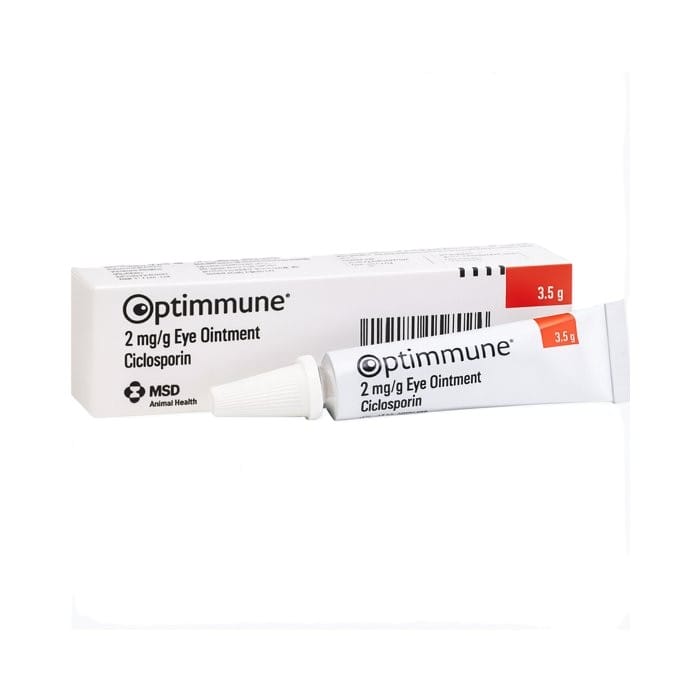
Optimmune
Buy Optimmune Ophthalmic Ointment Online
Secure Encrypted Payments
Optimmune is a cyclosporine ophthalmic ointment for dogs with chronic dry eye care needs when a veterinarian has recommended this treatment. You can buy Optimmune online, view the current price, and choose the quantity that matches your dog’s eye-care plan. Match the ointment form, 0.2% strength, and tube size to the clinic’s directions before placing an order.
This sterile eye ointment is commonly associated with canine keratoconjunctivitis sicca, often called KCS or dry eye. The 3.5 g tube is a common presentation, and labels may describe it as Optimmune ophthalmic ointment 3.5 g or 3.5 gm. For US delivery from Canada, keep the label wording, quantity, and veterinary instructions together so the order supports the same routine your dog already follows.
Optimmune Price, Strength, and Tube Size
The Optimmune price shown during ordering depends on the quantity and the exact tube presentation. The most important attributes are the ophthalmic ointment form, cyclosporine 0.2% concentration, and the total tube size. If your veterinarian wrote down Optimmune 0.2 ophthalmic ointment, the order should reflect that form and strength rather than a different cyclosporine product.
Dry eye therapy can be long term, so Optimmune cost is often part of refill planning. A useful comparison looks beyond the unit price and includes the grams per tube, how quickly your dog typically uses a tube, and whether the quantity fits follow-up timing. Do not use cost alone to switch among eye ointments, drops, gels, or compounded products without veterinary direction.
Some labels and invoices express the same medicine in slightly different ways. Optimmune 0.2 means the ointment contains cyclosporine at a 0.2% concentration. Searches for Optimmune 2 mg eye ointment for dogs may reflect alternate wording, but the practical check remains the same: confirm the active ingredient, ophthalmic ointment base, strength, and tube size.
Quick tip: Keep a photo of the clinic instructions with your refill notes so the strength and tube size are easy to match.
How to Order Optimmune Online
To order Optimmune ointment, choose the cyclosporine ophthalmic ointment presentation your veterinarian identified, then select the quantity that fits the current treatment plan. Eye products can look similar in name, but ointments, lubricating gels, sterile drops, and solutions are not interchangeable unless the clinic changes the plan. If your dog uses more than one eye medicine, keep each product’s name and timing separate.
BorderFreeHealth may review order information to help ensure the medicine, quantity, and label information align with the request. Keep your veterinarian’s contact details available in case clarification is needed. This can help avoid delays when a pet has several eye products or when the clinic uses the active ingredient name cyclosporine instead of the brand name.
For broader browsing, the Pet Medications category includes other veterinary therapies. Use category browsing to organize your pet’s medicines, but base any eye-care change on your veterinarian’s diagnosis and written directions. Prompt, express shipping may be available when shown during checkout.
What This Eye Ointment Treats
Optimmune for dogs contains cyclosporine, an ophthalmic immunomodulator. It is used in dogs for chronic keratoconjunctivitis sicca, also called KCS or dry eye, and chronic superficial keratitis. KCS means the eye does not produce enough healthy tear film to keep the cornea and conjunctiva comfortable and protected.
Cyclosporine works locally by reducing immune-driven inflammation that can affect tear gland function. That makes Optimmune different from a simple wetting lubricant. Lubricants can help moisture and comfort, but they do not treat the immune process behind many cases of canine dry eye on their own.
Dogs with dry eye may have redness, thick mucus-like discharge, frequent blinking, dull corneas, or sensitivity around the eyelids. Those signs can overlap with infection, allergy, corneal ulceration, trauma, or eyelid disease. A veterinary exam helps determine whether dog Optimmune is appropriate and whether other eye medicines should be used at the same time.
The Dry Eye collection can help you understand the broader category of dry-eye therapies. Human and canine eye treatments are not automatically interchangeable, so match each product to the animal, diagnosis, and instructions your veterinarian provided.
Form, Strength, and Label Details
Optimmune eye ointment is supplied as a sterile ophthalmic ointment. The commonly referenced product is Optimmune 0.2% cyclosporine in a small 3.5 g tube. The ointment base is designed for the eye surface and softens with body heat, helping it spread across the conjunctival area after application.
When reading the label, focus on the attributes that affect safe matching: the active ingredient, the ophthalmic route, the concentration, and the animal use. A tube’s total grams do not equal a single application. The number of uses per tube depends on the amount placed at each treatment time and the schedule set for your dog.
| Label item | Why it matters |
|---|---|
| Active ingredient | Cyclosporine is the immune-modulating medicine in Optimmune. |
| Form | Ophthalmic ointment is made for placement around the eye surface. |
| Strength | 0.2% identifies the concentration commonly used for this product. |
| Tube size | 3.5 g or 3.5 gm describes the total amount in the tube. |
| Animal use | Use should follow veterinary directions for the named dog. |
Optimmune ophthalmic ointment generic questions are common because many dogs need ongoing care. Generic, compounded, and alternative cyclosporine products may differ by market, vehicle, concentration, and label status. If your veterinarian allows a substitution, confirm the base and strength because comfort, spreading, and tolerability can vary.
How the Ointment Is Commonly Applied
Follow the directions supplied by your veterinarian and the product label. Typical use involves placing a small strip of ointment into the lower lid sac of the affected eye. Many dogs receive eye medicines on a recurring schedule, but the exact timing should come from the care plan written for your dog.
Wash your hands before handling the tube. Gently pull down the lower eyelid to create a small pocket, place the ointment without touching the tube tip to the eye, eyelid, fur, or fingers, then allow your dog to blink. If ointment spreads onto surrounding hair, wipe the area with a clean tissue.
If your dog uses more than one eye product, spacing can matter. Watery drops are often used before thicker gels or ointments because ointment can coat the eye surface. Ask the clinic how long to wait between products and whether one medicine should always come last.
Why it matters: A clean tube tip helps reduce the chance of moving debris or germs into an irritated eye.
Do not share one tube between pets. Even dogs living together may have different diagnoses, infections, or sensitivities. A tube assigned to one dog should stay with that dog unless your veterinarian gives different instructions.
Storage, Handling, and Travel
Store Optimmune at room temperature, away from direct heat and bright light. Keep the cap tightly closed after each use. Do not freeze the ointment, place it in another container, or use it if the texture, color, or odor changes without asking your veterinary clinic.
Protect the tube during travel. A small pouch can prevent the tube from being crushed or contaminated in a bag with keys, treats, grooming tools, or leashes. Keep the labeled tube with written instructions so family members, sitters, or boarding staff can identify the medicine correctly.
If your dog travels or stays with a caregiver, write the routine in plain language. Include which eye is treated, the time of day, the spacing from other eye products, and what to do if the dog resists handling. Clear instructions reduce mix-ups when several pet medicines are being used.
Plan refills before the tube is nearly empty. Eye ointment tubes are small and can be misplaced, and dry eye symptoms may return when treatment is interrupted. Refill timing should account for the quantity on hand, the follow-up schedule, and the clinic’s reassessment plan.
Side Effects, Warnings, and Monitoring
Optimmune eye ointment for dogs can cause temporary stinging, mild redness, watery tearing, eyelid irritation, or increased discharge, especially when treatment begins. These reactions may be short lived. Ongoing discomfort, worsening redness, or behavior changes around the eye should be reported to the veterinarian.
Contact the clinic promptly if your dog squints, paws at the eye, develops swelling around the eyelids, has corneal cloudiness, or seems painful. A painful eye may signal a corneal ulcer, injury, infection, or another condition that needs urgent evaluation. Do not cover the eye or add leftover medicines unless the veterinarian directs that step.
Dogs with untreated eye infections or corneal ulcers may need additional care before or alongside immune-modulating therapy. Safety decisions for breeding, pregnant, or nursing dogs require veterinary judgment. Tell the clinic if your dog has reacted to ointment bases, preservatives, antibiotics, steroids, or other eye products before.
Topical cyclosporine may be used with lubricants, antibiotics, or other ophthalmic medicines when a veterinarian designs the regimen. Share every eye drop, ointment, wash, supplement, and oral medicine your dog receives. This is especially important when topical steroids, antifungals, ulcer treatments, or multiple eye products are involved.
Monitoring often includes tear production testing and corneal checks. These visits help the veterinarian judge whether tear film is improving, whether the eye surface is protected, and whether redness or discharge has another cause. Keep notes about blinking, discharge, comfort, and missed applications so the clinic can interpret progress.
- Track redness, discharge, blinking, and squinting.
- Record the time each eye product is used.
- Report pawing, swelling, or cloudiness quickly.
- Keep follow-up tear tests and eye exams.
- Ask before stopping, restarting, or changing frequency.
How It Differs From Eye Drops and Lubricants
People sometimes call Optimmune eye drops for dogs, but Optimmune is an ophthalmic ointment. That distinction matters because ointments are thicker than drops and stay on the eye surface differently. If your veterinarian prescribed the ointment, do not substitute a drop simply because it appears easier to apply.
Lubricating drops, artificial tear gels, and moisture ointments may help surface comfort in dry eye. Optimmune cyclosporine has a different role because it targets immune-related inflammation affecting tear production. Some dogs use both an immune-modulating medicine and lubricants, with timing arranged to reduce overlap.
Human dry-eye therapies may also contain cyclosporine, but they are not a direct replacement for canine Optimmune. For background on a human cyclosporine eye product, Restasis dry eye care explains a separate treatment category. Use that information for context only, not as a substitute for veterinary instructions.
Related Eye Care Choices
Optimmune ointment for dogs belongs in a broader group of ophthalmic therapies. Some dogs need artificial tears for comfort, others need antibiotics or anti-inflammatory medicines for separate eye problems, and some may require compounded cyclosporine or tacrolimus when a veterinarian identifies a specific need. The right choice depends on diagnosis, corneal health, tear testing, and tolerance of the base.
Other ophthalmic products treat different conditions and should not be swapped for canine dry eye therapy without a veterinary plan. Verkazia is another cyclosporine eye product category with different labeling considerations. Comparing categories can help you ask better questions, but the prescribed animal product and strength should guide the order.
If your dog’s signs change, ask whether the problem is still immune-mediated KCS, chronic superficial keratitis, infection, ulceration, allergy, or a mixed condition. That answer helps determine whether Optimmune remains part of the plan and whether lubricants, antibiotics, or other treatments are needed.
Questions to Ask Your Veterinarian
Before a refill, ask how your dog’s progress will be measured. Many clinics use tear production tests, corneal staining, eyelid checks, and symptom tracking. Knowing the monitoring plan helps you decide when to reorder and when an exam should happen before continuing the same routine.
Ask what to do if an application is missed, the tube tip touches the eye, or irritation worsens. Practical instructions are easier to follow when they are written before a problem occurs. Keep the clinic’s preferred after-hours contact method with your pet records.
- Which eye or eyes should receive the ointment?
- How should it be spaced from other eye products?
- Which signs require same-day veterinary attention?
- When should tear testing be repeated?
- Is any substitution acceptable for this dog?
Authoritative Sources
Official label information is available from DailyMed Optimmune ophthalmic ointment labeling.
Use official labeling and veterinary directions together when reviewing form, strength, storage, and safety information. If label wording differs from your clinic’s instructions, contact the clinic before changing your dog’s routine.
This content is for informational purposes only and is not a substitute for professional medical advice.
Express Shipping - from $29.99
Shipping with this method takes 3-5 days
Prices:
- Dry-Packed Products $29.99
- Cold-Packed Products $39.99
Shipping Countries:
- United States (all contiguous states**)
- Worldwide (excludes some countries***)
Standard Shipping - $19.99
Shipping with this method takes 5-10 days
Prices:
- Dry-Packed Products $19.99
- Not available for Cold-Packed products
Shipping Countries:
- United States (all contiguous states**)
- Worldwide (excludes some countries***)
What is Optimmune used for in dogs?
Optimmune is used in dogs for chronic keratoconjunctivitis sicca, often called KCS or dry eye, and chronic superficial keratitis when a veterinarian recommends cyclosporine ophthalmic treatment. These conditions require veterinary diagnosis because redness, discharge, and squinting can also occur with ulcers, infection, allergy, or injury.
Is Optimmune an eye drop or an ointment?
Optimmune is an ophthalmic ointment, not an eye drop. The ointment form is thicker than a watery drop and is applied around the lower lid sac as directed by a veterinarian. Do not substitute drops, gels, or other cyclosporine products unless the clinic changes the plan.
What strength is Optimmune ophthalmic ointment?
The commonly referenced Optimmune product is cyclosporine 0.2% ophthalmic ointment, often supplied in a 3.5 g tube. Match the active ingredient, strength, form, and tube size to your dog’s veterinary directions when ordering refills.
What side effects can Optimmune cause?
Possible effects include temporary stinging, mild redness, watery tearing, eyelid irritation, or increased discharge. Contact the veterinarian promptly for worsening redness, swelling, cloudiness, squinting, pawing at the eye, or signs of pain because these may signal another eye problem.
Can Optimmune be used with other dog eye medicines?
It may be used with lubricants or other ophthalmic medicines when a veterinarian designs the regimen. Tell the clinic about every eye drop, ointment, wash, supplement, and oral medicine your dog receives, and ask how far apart to space each eye product.
How should Optimmune be stored?
Store the tube at room temperature, away from direct heat and bright light. Keep the cap closed, do not freeze the ointment, and avoid touching the tube tip to the eye, fur, fingers, or other surfaces.
Rewards Program
Earn points on birthdays, product orders, reviews, friend referrals, and more! Enjoy your medication at unparalleled discounts while reaping rewards for every step you take with us.
You can read more about rewards here.
POINT VALUE
How to earn points
- 1Create an account and start earning.
- 2Earn points every time you shop or perform certain actions.
- 3Redeem points for exclusive discounts.
You Might Also Like
Select options
This product has multiple variants. The options may be chosen on the product page
Select options
This product has multiple variants. The options may be chosen on the product page
Select options
This product has multiple variants. The options may be chosen on the product page
Select options
This product has multiple variants. The options may be chosen on the product page