
Please note: a valid prescription is required for all prescription medication.
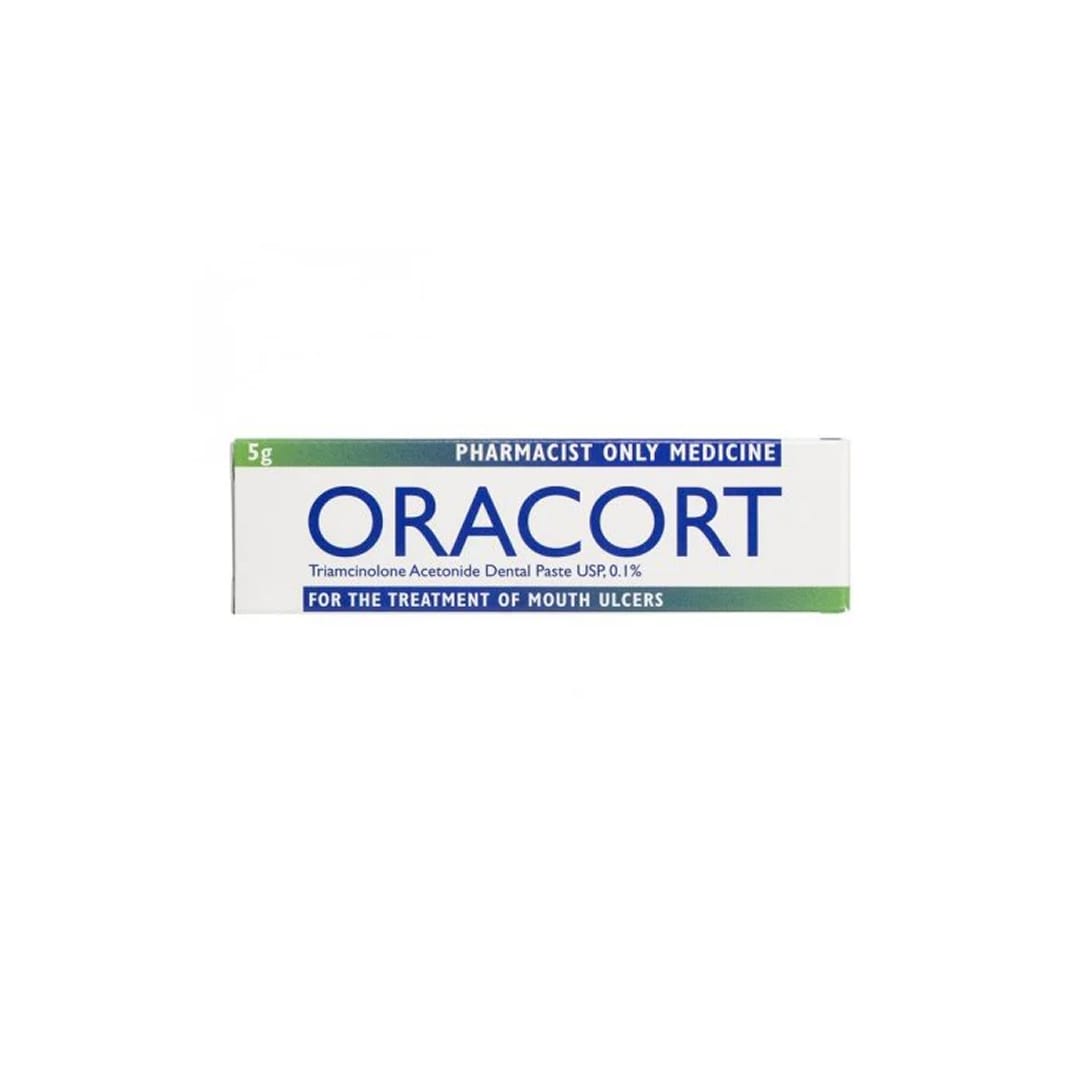
Oracort Dental Paste 0,1%
Buy Oracort Dental Paste 0.1% Online
Secure Encrypted Payments
Oracort Dental Paste 0.1% is an oral adhesive paste containing triamcinolone acetonide, a corticosteroid used on inflamed areas inside the mouth. It can be bought online, with current price information shown during ordering and the available strength selected to match your clinician’s directions. Border Free Health offers US delivery from Canada for customers seeking a straightforward way to obtain this oral paste.
This medicine is commonly used for temporary relief of discomfort from small inflammatory mouth sores, including aphthous ulcers and irritation-related oral lesions. The paste is designed to stay on the sore surface, helping keep the active ingredient in contact with the affected tissue while forming a protective film.
Oracort Dental Paste 0.1% Price and Ordering
Oracort Dental Paste 0.1% price can vary by tube quantity, sourcing, and current pharmacy supply. During ordering, use the price shown for the available Oracort strength and match the selection to the directions you received from your healthcare professional. If you are paying out of pocket, the displayed cash price helps you plan before completing your request.
People often look for Oracort dental paste Canadian pricing because triamcinolone acetonide dental paste may be costly or difficult to obtain through local channels. We keep the purchase steps focused on the medication, quantity, and order information needed for processing through licensed pharmacies. If the same active ingredient is offered under another name, your clinician can advise whether it is appropriate for your condition.
Quick tip: Keep the product name, strength, and application instructions together so your order matches your treatment plan.
What Oracort Dental Paste Is Used For
Oracort Dental Paste is used on localized inflammatory lesions inside the mouth. These may include canker sores, also called aphthous ulcers, and small oral sores caused by irritation or minor trauma. It is not a pain-numbing gel; it is a topical corticosteroid that reduces inflammation at the sore.
Triamcinolone acetonide dental paste 0.1% is generally used as an adjunctive treatment, meaning it helps relieve symptoms while the underlying sore heals or while other causes are being addressed. If mouth sores are frequent, large, unusually painful, or slow to heal, a clinician may look for triggers such as dental appliances, nutritional deficiencies, autoimmune disease, medication reactions, or infection. Our condition information on mouth ulcers and oral inflammation can help you prepare practical questions for that conversation.
Some clinicians use topical oral corticosteroids for inflammatory mucosal conditions such as oral lichen planus under careful supervision. That condition may need diagnosis, monitoring, and longer-term planning beyond short-term sore relief. See our information on oral lichen planus if your clinician has mentioned that diagnosis.
How the Oral Paste Works
The active ingredient, triamcinolone acetonide, belongs to a class of medicines called corticosteroids. Corticosteroids reduce inflammatory signaling in treated tissue, which may lessen redness, swelling, tenderness, and irritation around the lesion. Because the paste is applied directly to the sore, it concentrates the medicine where it is needed.
The adhesive base matters. After placement, the paste forms a thin film over the lesion instead of dissolving immediately like a rinse. That film may protect the sore from rubbing against teeth, dental appliances, food, and drinks. The protective effect can be especially helpful at bedtime, when the paste may remain in place longer because there is less eating, drinking, and talking.
Relief depends on the size, location, and cause of the sore, as well as how consistently the paste stays in contact with the lesion. A sore on a moving area, such as the tongue or inner lip, may be harder to cover than a lesion on a more stable surface. If the paste will not adhere despite careful placement, ask your clinician or pharmacist whether your technique or treatment plan should change.
How to Apply Oracort Dental Paste
Follow the directions provided by your clinician and the product label. A typical method is to dry the sore gently with clean tissue, then press a small dab of paste onto the lesion until it forms a thin film. Do not rub it in like a cream; rubbing can make the paste crumbly and may prevent it from sticking properly.
Application is often done after meals and at bedtime, but your own directions may differ. Wash your hands before and after use, or apply with a clean cotton swab. Avoid eating or drinking for a short period after placement so the film has time to adhere. If you wear removable dental appliances, clean them as directed and consider applying the paste after removal when your clinician says that is appropriate.
- Use only enough paste to cover the sore with a thin film.
- Apply to the affected area rather than spreading across normal tissue.
- Avoid spicy, acidic, sharp, or abrasive foods during flares.
- Maintain gentle brushing and oral hygiene unless told otherwise.
- Ask for reassessment if sores recur often or do not improve.
Why it matters: Correct placement helps the paste stay on the lesion and reduces unnecessary exposure of healthy mouth tissue.
Who May or May Not Be Suited to This Paste
This oral paste may be considered when a small, localized mouth sore appears inflammatory rather than infected. It can be useful when a barrier effect and local anti-inflammatory action are both desired. It may not be appropriate for widespread mouth disease, unexplained ulcers, or lesions that need diagnostic testing.
Do not use triamcinolone dental paste on suspected viral, fungal, or bacterial mouth infections unless a healthcare professional specifically tells you to do so. Corticosteroids can worsen some infections or make them harder to recognize. Cold sores are usually caused by herpes simplex virus and typically need a different approach; triamcinolone acetonide dental paste is not an antiviral treatment for cold sores.
People with untreated oral thrush, significant immune suppression, or a known allergy to corticosteroids or paste ingredients should seek medical guidance before use. Contact a clinician promptly for ulcers that bleed easily, continue enlarging, last longer than expected, appear with fever, or occur along with weight loss, swollen glands, or other systemic symptoms.
Side Effects, Warnings, and Monitoring
Most side effects from short-term, localized use are mild and occur where the paste touches the mouth. Possible effects include burning, stinging, dryness, irritation, altered taste, sore throat, or hoarseness. These effects should be discussed if they are persistent, worsening, or interfering with eating and drinking.
Longer or more extensive use can raise the risk of oral candidiasis, commonly called thrush. Signs may include white patches, increased soreness, a cottony mouth feeling, or cracks at the corners of the mouth. Repeated steroid exposure may also irritate or thin oral tissue. Rare systemic corticosteroid effects are more likely when large amounts are used, treatment is prolonged, or other steroid medicines are being taken at the same time.
Tell your healthcare professional about other corticosteroids, immune-suppressing medicines, oral rinses, dental products, and recent infections. If you have diabetes, recurrent mouth infections, or poor wound healing, monitoring oral health is especially important. Seek urgent help for signs of serious allergy, including swelling of the lips, tongue, throat, widespread rash, wheezing, or trouble breathing.
| Safety question | Practical action |
|---|---|
| Is the sore possibly infected? | Ask for evaluation before using a steroid paste. |
| Are white patches appearing? | Contact a clinician to check for thrush. |
| Are sores frequent or severe? | Discuss triggers, diagnosis, and alternative treatment plans. |
| Are other steroids being used? | Mention all steroid medicines to avoid unnecessary exposure. |
Storage, Travel, and Handling
Store the tube at room temperature with the cap tightly closed. Keep it away from excess heat, moisture, and direct light. Do not store it where children or pets can reach it, and avoid sharing the tube because oral products can transfer germs between people.
For travel, keep the tube in its labeled packaging when possible and place it in a resealable bag. A small mirror and clean cotton swabs can make application easier away from home. If your order requires shipping, prompt, express shipping may be used as part of the handling process. Country-of-origin information can be explored through the Canada sourcing filter.
Check the tube before each use. Do not use paste that has changed in appearance, has an unusual smell, or is past its usable date according to the packaging. If you are unsure whether a tube is still suitable, ask a pharmacist before applying it to oral tissue.
Oracort, Triamcinolone, and Generic Alternatives
Oracort is a brand name associated with triamcinolone acetonide oral dental paste 0.1%. Other regulated products may use the active ingredient name, triamcinolone acetonide dental paste, rather than the Oracort brand name. The most important matching points are the active ingredient, strength, form, and your clinician’s application directions.
Brand and generic naming can differ by country. A medicine supplied through Canadian pharmacy channels may not use the same label name or substitution language that customers see in the United States. That difference does not change the practical question: whether the medicine selected is the same active ingredient and strength your clinician intended.
If a different topical steroid, barrier paste, or oral rinse is recommended, ask how it differs in purpose. Some products primarily protect the sore, while corticosteroid pastes reduce inflammation. Others treat infections or systemic inflammatory disease and are not interchangeable with Oracort Dental Paste 0.1%.
What to Expect During Treatment
Many people first notice that the film shields the sore from friction. The anti-inflammatory effect may then reduce tenderness and swelling as treatment continues. Mouth ulcers can still take time to heal, and the paste does not remove every possible trigger.
Call your clinician if the lesion is not improving as expected, if pain is worsening, or if sores keep returning. Recurrent oral ulcers may require investigation beyond a topical paste. Your clinician may review toothpaste ingredients, dental appliance fit, diet, stress patterns, immune conditions, gastrointestinal symptoms, and medication history.
Supportive oral care can make treatment more comfortable. Gentle brushing, avoiding alcohol-based rinses, staying hydrated, and reducing irritating foods may help protect sore tissue. Browse broader oral health products and articles in the oral health learning area for general care ideas that may complement clinician-directed treatment.
Related Treatment Choices to Discuss
Oracort Dental Paste 0.1% is not the right answer for every mouth sore. If sores are caused by a virus, fungus, bacterial infection, medication reaction, or systemic disease, treatment may need to address that cause instead of only calming local inflammation. This is why diagnosis matters when lesions are unusual, persistent, or widespread.
For mild irritation, a non-steroidal protective product may be enough. For confirmed inflammatory oral disease, a clinician may choose a different topical corticosteroid, a rinse, or another targeted therapy. For gum and periodontal concerns, treatment decisions may involve dental evaluation rather than mouth-ulcer treatment alone.
Bring a short symptom history to your appointment: when the sore started, how often it happens, what seems to trigger it, whether you have fever or skin symptoms, and which products you have already tried. That information helps your clinician decide whether Oracort Dental Paste 0.1% fits your situation or whether another option is safer.
Questions to Ask Before Use
- Is my sore inflammatory, traumatic, infectious, or caused by another condition?
- How much paste should I apply to each lesion?
- How long should I use the paste before reassessment?
- Should I avoid specific rinses, foods, or dental products?
- What signs mean I should stop and call for medical help?
- Could my dental appliance, toothpaste, or medication be contributing?
- Do I need testing if ulcers are frequent or slow to heal?
Authoritative Sources
DailyMed label: Triamcinolone Acetonide Dental Paste USP, 0.1%
Manufacturer information: Oracort Dental Paste
Consumer medicine information: Oracort Dental Paste
This content is for informational purposes only and is not a substitute for professional medical advice.
Express Shipping - from $29.99
Shipping with this method takes 3-5 days
Prices:
- Dry-Packed Products $29.99
- Cold-Packed Products $39.99
Shipping Countries:
- United States (all contiguous states**)
- Worldwide (excludes some countries***)
Standard Shipping - $19.99
Shipping with this method takes 5-10 days
Prices:
- Dry-Packed Products $19.99
- Not available for Cold-Packed products
Shipping Countries:
- United States (all contiguous states**)
- Worldwide (excludes some countries***)
What is Oracort Dental Paste 0.1%?
Oracort Dental Paste 0.1% is an oral adhesive paste containing triamcinolone acetonide, a topical corticosteroid. It is used on localized inflammatory mouth lesions to help reduce swelling, tenderness, and irritation while forming a protective film over the sore.
Can triamcinolone acetonide dental paste be used for cold sores?
Cold sores are usually caused by herpes simplex virus. Triamcinolone acetonide dental paste is a corticosteroid, not an antiviral medicine, and should not be used on suspected viral mouth lesions unless a healthcare professional specifically instructs you to do so.
How do you apply Oracort Dental Paste?
Dry the lesion gently, then press a small dab of paste onto the sore until it forms a thin film. Do not rub it in. Follow your clinician’s directions for timing and frequency, and avoid eating or drinking briefly after placement so it can adhere.
What side effects can Oracort Dental Paste cause?
Possible side effects include mild burning, stinging, dryness, irritation, altered taste, sore throat, or hoarseness. Longer or extensive use may increase the risk of oral thrush or tissue irritation. Contact a clinician for white patches, worsening soreness, or allergy symptoms.
What affects Oracort 0.1% dental paste price?
Price may vary by quantity, pharmacy sourcing, and current supply. When ordering, choose the available Oracort Dental Paste 0.1% quantity that matches your treatment directions and use the displayed cash price to plan your purchase.
Rewards Program
Earn points on birthdays, product orders, reviews, friend referrals, and more! Enjoy your medication at unparalleled discounts while reaping rewards for every step you take with us.
You can read more about rewards here.
POINT VALUE
How to earn points
- 1Create an account and start earning.
- 2Earn points every time you shop or perform certain actions.
- 3Redeem points for exclusive discounts.
You Might Also Like
Select options
This product has multiple variants. The options may be chosen on the product page
Select options
This product has multiple variants. The options may be chosen on the product page
Select options
This product has multiple variants. The options may be chosen on the product page
Select options
This product has multiple variants. The options may be chosen on the product page