

Please note: a valid prescription is required for all prescription medication.
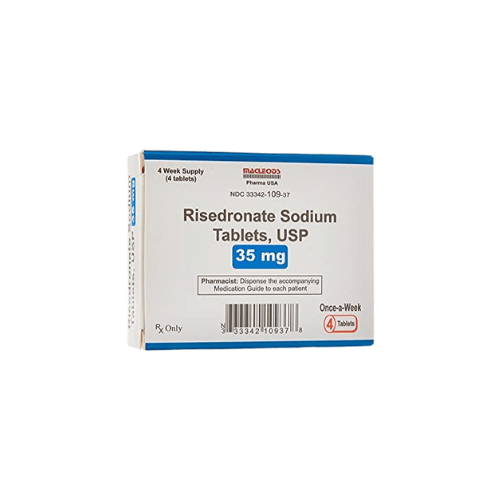
Risedronate
Buy Risedronate Online
Secure Encrypted Payments
Risedronate is an oral bisphosphonate medicine used in bone-health treatment plans, including osteoporosis care and certain cases of Paget’s disease of bone. You can buy Risedronate online, view the current risedronate price, and choose the tablet strength available for the product so it matches your clinician’s directions. Labels may show the active ingredient as risedronate sodium, and some medical references also call it risedronic acid.
This medicine has very specific timing instructions because food, drinks, and mineral supplements can reduce absorption. The right choice is the strength, quantity, and schedule that matches the directions already provided for you, not simply the lowest tablet count or the lowest displayed risedronate cost.
Risedronate Price, Strengths, and Tablet Selection
Risedronate cost depends on the strength, quantity, brand or generic status, and current sourcing shown during ordering. Generic risedronate may be listed separately from Actonel risedronate, but both decisions still come back to the same practical question: does the active ingredient, tablet strength, and schedule match your treatment plan?
Common osteoporosis-style tablet strengths include risedronate sodium 35 mg and risedronate sodium 150 mg. These strengths are commonly tied to different dosing schedules, so the risedronate 35 mg price should not be compared tablet-for-tablet with the risedronate 150 mg price. A 35 mg weekly-style regimen and a 150 mg monthly-style regimen can cover different treatment periods even when the package contains fewer or more tablets.
| Strength wording | Common use context | What to match |
|---|---|---|
| Risedronate sodium 35 mg | Often used with weekly-style osteoporosis directions | Day of week, morning instructions, and quantity |
| Risedronate sodium 150 mg | Often used with monthly-style osteoporosis directions | Monthly dosing date, timing, and package directions |
Cash-pay customers often look at risedronate sodium cost across generic and brand choices. If you are evaluating risedronate without insurance, compare the form, strength, quantity, and total treatment period together. A lower per-tablet number may not be the better match if the strength or schedule differs from your label.
Quick tip: Match the tablet strength and schedule to your medication label before checkout.
How to Order Risedronate Online
To order risedronate online, choose the strength shown during ordering, enter the quantity that matches your directions, and keep your medication information available in case order details need clarification. BorderFreeHealth may review order information before pharmacy supply is completed, which helps reduce strength or schedule mismatches.
Do not substitute risedronate sodium tablet 150 mg for risedronate tablets 35 mg unless your clinician has changed the regimen. The same caution applies when switching between generic risedronate and a branded product. The active ingredient may be equivalent for many standard formulations, but the administration schedule and package instructions still matter.
Risedronate US delivery from Canada may be part of the service context for customers using cross-border access. When supported, orders may include prompt, express shipping, but the strength, address, and any required order information should be complete before timing expectations are made.
What Risedronate Treats
Risedronate is used to help manage bone conditions where bone breakdown is too active. It is commonly used in osteoporosis, a condition in which bones become thin, fragile, and more likely to break. It may also be used for Paget’s disease of bone, a disorder involving abnormal bone remodeling.
The medicine belongs to a class called bisphosphonates. Bisphosphonates attach to bone mineral and slow osteoclast activity. Osteoclasts are cells that break down bone. By reducing this breakdown, risedronate can help support bone density as part of a broader plan that may also include calcium, vitamin D, exercise, fall-risk reduction, and periodic monitoring.
For related treatment categories, the Osteoporosis collection can help with bone-health navigation, and the Paget’s Disease category may be useful when reviewing therapy areas. These category links support browsing only; the medicine and schedule should come from your clinician’s plan.
Generic Risedronate, Actonel, and Name Differences
Risedronate sodium is the active ingredient name used on many generic labels. Actonel is a brand name associated with risedronate. Some education materials use the term risedronic acid, which refers to the same core medicine in a different naming style.
Generic risedronate sodium may have a different tablet appearance, manufacturer, or package presentation than a brand-name fill. That difference does not mean you should change how you take it. Always follow the directions attached to the exact tablet form and strength you receive.
Country-specific naming and product presentation can vary. A product supplied through licensed pharmacy channels should still be evaluated by its active ingredient, strength, form, and instructions. If your previous package mentioned a delayed-release tablet or another special formulation, compare that wording carefully because timing instructions may differ from standard tablets.
How Risedronate Tablets Are Usually Taken
Risedronate sodium tablet directions are more restrictive than many daily medicines. Many labels instruct taking the tablet first thing in the morning with a full glass of plain water. Food, coffee, juice, mineral water, calcium, and other products can interfere with absorption if taken too close to the dose.
Many risedronate products also require remaining upright after dosing. Sitting or standing helps reduce the chance that the tablet irritates the esophagus, the tube between the mouth and stomach. Tablets are usually swallowed whole and should not be chewed, crushed, or sucked unless the specific label says otherwise.
Why it matters: Correct timing helps the medicine absorb and lowers the risk of throat irritation.
If your regimen is weekly or monthly, use a calendar reminder that reflects the exact label wording. Missed-dose instructions can differ by strength and schedule. Do not take extra tablets to catch up unless a healthcare professional tells you to do so.
Storage, Handling, and Travel
Store risedronate tablets at room temperature in a dry place, away from excess heat and moisture. A bathroom cabinet can be damp, so a bedroom drawer or dry kitchen cabinet away from sinks may be more suitable. Keep the tablets in the original container when practical so the strength, lot number, and expiration date remain easy to identify.
Do not use tablets that are wet, cracked, discolored, or stored in an unknown container. If the tablet looks different from your last fill, read the label before taking it. Generic manufacturers can change, but the active ingredient, strength, and directions should be clear.
For travel, keep risedronate in a carry-on bag when possible. This helps protect the medicine from temperature swings and keeps it accessible if checked luggage is delayed. A labeled container or medication list may also help when passing through security or explaining your medicines away from home.
Side Effects, Warnings, and Monitoring
Common risedronate side effects can include heartburn, nausea, stomach pain, constipation, diarrhea, headache, and muscle or joint aches. Some people notice upper stomach, chest, or throat discomfort, especially if the tablet is not taken with enough water or if they lie down too soon after dosing.
Seek medical help promptly for chest pain, trouble swallowing, painful swallowing, or new or worsening heartburn. These symptoms may suggest irritation, inflammation, or ulceration in the esophagus. Stop-and-restart decisions should be made with a healthcare professional because ongoing symptoms may require evaluation.
Rare but serious bisphosphonate risks include osteonecrosis of the jaw and atypical femur fractures. Osteonecrosis of the jaw means poor jawbone healing, sometimes after dental work. Atypical femur fractures are unusual breaks in the thigh bone that may be preceded by thigh or groin pain. Report jaw pain, loose teeth, delayed dental healing, or new thigh pain.
Clinicians may periodically reassess how long you should continue risedronate. The right duration depends on fracture risk, bone density history, age, other medicines, and side effects. Some people remain on therapy for years, while others may be considered for a treatment pause after reassessment. Do not stop solely because symptoms are absent; osteoporosis often has no warning signs until a fracture occurs.
Interactions and Who Should Use Extra Caution
Minerals are among the most important risedronate interactions. Calcium, iron, magnesium, aluminum-containing antacids, and many multivitamins can reduce absorption if taken too close to the tablet. Dairy products and some fortified drinks can cause similar issues. Morning routines should be planned around the label’s separation instructions.
Risedronate is often avoided or used with extra caution in people who cannot remain upright after dosing, have certain esophagus problems, have uncorrected low blood calcium, or have significant kidney impairment. Ongoing upper digestive symptoms may also require a careful discussion before starting or continuing tablets.
Nonsteroidal anti-inflammatory drugs, including ibuprofen and naproxen, can irritate the stomach in some people. When these are used with risedronate, the combined stomach irritation risk may matter. Share all medicines, vitamins, antacids, and supplements with a healthcare professional so timing and tolerability can be reviewed.
Dental Care, Teeth, and Jaw Questions
Risedronate does not usually harm teeth directly, but bisphosphonates have been associated with rare jawbone healing problems. The risk is higher in certain situations, such as invasive dental procedures, cancer-related bone treatment, poor oral health, corticosteroid use, or long exposure to bisphosphonates.
Routine brushing, flossing, and regular dental care remain important during treatment. Tell your dentist that you take risedronate before extractions, implants, or other invasive dental work. A dental professional and clinician can decide whether any timing changes or additional precautions are needed.
If you develop jaw pain, swelling, loose teeth, exposed bone, or delayed healing after dental work, seek professional evaluation. These symptoms are uncommon, but they should not be ignored.
Risedronate Compared With Related Bone Medicines
Risedronate is not the same medicine as alendronate, although both are oral bisphosphonates used for bone-health goals. Alendronate is associated with the brand Fosamax, while risedronate is associated with Actonel. They share similar administration themes, including water-only dosing and upright posture, but strengths and schedules are not interchangeable.
Some people compare risedronate sodium 35 mg price with alendronate costs because both may be weekly-style oral bisphosphonate choices. That comparison should include the exact strength, dosing day, swallowing instructions, past tolerability, and clinician preference. Price alone should not drive a switch between bisphosphonates.
For adjacent product decisions, Alendronate provides a same-class oral comparison, and Actonel may be relevant for customers looking at branded risedronate. The Bisphosphonate Drugs article explains the broader medicine class, while What Is Alendronate Used For can help frame questions about a different oral option.
Women’s Health and Bone-Health Context
Osteoporosis is common after menopause because estrogen changes can accelerate bone loss. Risedronate may be part of a postmenopausal osteoporosis plan when a clinician decides that fracture-risk reduction therapy is appropriate. Bone density testing, fall-risk review, nutrition, and activity often support the medicine plan.
The Women’s Health category and Women’s Health articles can help with broader browsing around related health topics. These sections do not replace individualized treatment decisions, but they can make it easier to organize questions before appointments.
Bone medicines work best when the routine is realistic. If fasting directions, upright time, or monthly scheduling create problems, tell a healthcare professional. Other therapies may have different dosing routes, monitoring needs, or safety considerations.
Authoritative Sources
Official labeling and patient medicine references are the best sources for product-specific directions, contraindications, interactions, and missed-dose instructions. The exact manufacturer and formulation matter, especially when standard and delayed-release tablets have different instructions.
- DailyMed Risedronate Sodium Label provides regulator-submitted prescribing details.
- MedlinePlus Risedronate Information provides patient-friendly medicine counseling points.
This content is for informational purposes only and is not a substitute for professional medical advice.
eGFR Calculator
Estimate kidney filtration using the 2021 CKD-EPI creatinine equation.
eGFR
-
mL/min/1.73 m2
G category
-
requires clinical context
These calculations are for education only and do not replace clinical advice, diagnosis, or treatment. Always confirm medical decisions with a qualified healthcare professional.
Corrected Calcium Calculator
Estimate albumin-corrected calcium from measured calcium and albumin.
Corrected calcium
-
mg/dL
These calculations are for education only and do not replace clinical advice, diagnosis, or treatment. Always confirm medical decisions with a qualified healthcare professional.
Express Shipping - from $29.99
Shipping with this method takes 3-5 days
Prices:
- Dry-Packed Products $29.99
- Cold-Packed Products $39.99
Shipping Countries:
- United States (all contiguous states**)
- Worldwide (excludes some countries***)
Standard Shipping - $19.99
Shipping with this method takes 5-10 days
Prices:
- Dry-Packed Products $19.99
- Not available for Cold-Packed products
Shipping Countries:
- United States (all contiguous states**)
- Worldwide (excludes some countries***)
What is Risedronate used for?
Risedronate is used in bone-health treatment plans, most commonly for osteoporosis. It may also be used for Paget’s disease of bone when a clinician determines it is appropriate.
Is Fosamax the same as Risedronate?
No. Fosamax is associated with alendronate, while Actonel is associated with risedronate. Both are oral bisphosphonates, but their strengths, schedules, and instructions are not automatically interchangeable.
What are the disadvantages of Risedronate?
Disadvantages can include strict dosing instructions, stomach or throat irritation, and interactions with calcium, iron, magnesium, antacids, and some multivitamins. Rare risks include jawbone healing problems and unusual thigh bone fractures.
How long should you be on Risedronate?
Treatment length varies by fracture risk, bone density history, age, side effects, and other health factors. A healthcare professional may reassess therapy periodically and decide whether to continue, pause, or change treatment.
What does Risedronate do to teeth?
Risedronate does not usually damage teeth directly, but rare jawbone healing problems have been reported with bisphosphonates. Tell your dentist you take risedronate before extractions, implants, or other invasive dental work.
Can I take calcium with Risedronate?
Calcium can reduce risedronate absorption if taken too close to the tablet. Follow the label’s separation instructions and ask a pharmacist or clinician how to schedule calcium, vitamins, antacids, and other morning medicines.
Rewards Program
Earn points on birthdays, product orders, reviews, friend referrals, and more! Enjoy your medication at unparalleled discounts while reaping rewards for every step you take with us.
You can read more about rewards here.
POINT VALUE
How to earn points
- 1Create an account and start earning.
- 2Earn points every time you shop or perform certain actions.
- 3Redeem points for exclusive discounts.
You Might Also Like
Select options
This product has multiple variants. The options may be chosen on the product page
Select options
This product has multiple variants. The options may be chosen on the product page
Select options
This product has multiple variants. The options may be chosen on the product page
Select options
This product has multiple variants. The options may be chosen on the product page