
Please note: a valid prescription is required for all prescription medication.
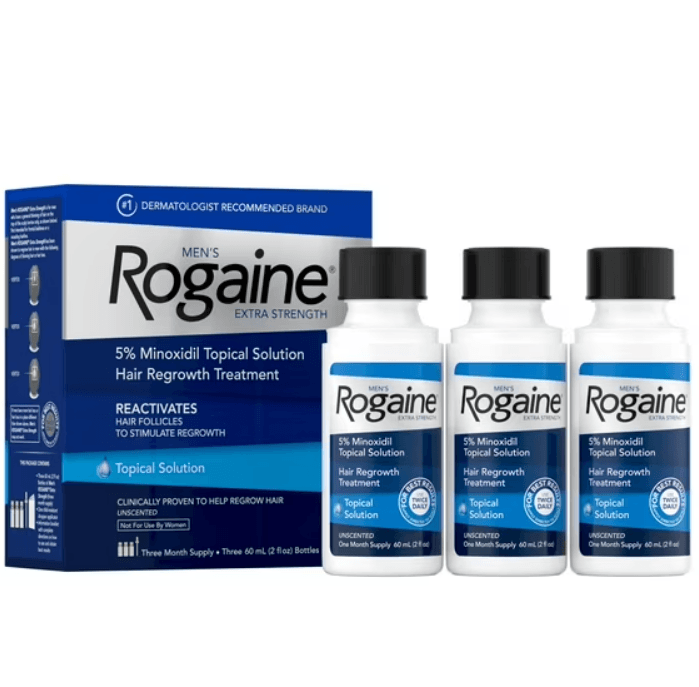
Rogaine Solution
Buy Rogaine Solution Online
Secure Encrypted Payments
Rogaine Solution is a topical minoxidil liquid used on the scalp for hereditary hair loss and gradual thinning. It can be bought online, with current pricing shown during ordering and available strength choices matched to the product label and clinician guidance when you have been advised to use minoxidil. The solution format is applied to thinning scalp areas, not swallowed, and works best when the hair-loss pattern matches its intended use.
Price, Strength Selection, and Ordering
When you order Rogaine Solution, review the current price, bottle quantity, and available strength before adding it to your cart. Many people compare rogaine liquid with foam or generic minoxidil because the long-term routine matters as much as the first purchase. Choose the strength shown for this product only if it matches the label directions and the person who will use it.
Rogaine topical products are usually used for months, so a realistic supply plan helps prevent missed weeks. Look at how long the bottle is expected to last when used as directed, whether the applicator suits your hair length, and whether the liquid vehicle is likely to fit your scalp tolerance. If you are weighing broader causes of thinning, the Hair Loss section can help separate pattern thinning from other hair and scalp concerns.
Some customers use US delivery from Canada as part of a cash-pay access plan for ongoing care. Products are supplied through licensed pharmacies, and order details may be reviewed before the pharmacy releases the medication. If shipping is part of your decision, logistics may include prompt, express shipping, depending on pharmacy process and destination rules.
- Review the product name, liquid form, and available strength.
- Match use to the labeled user group and directions.
- Plan for consistent use rather than a one-time trial.
- Keep the bottle size and refill timing in mind.
What Rogaine Solution Treats
Rogaine Solution is intended for hereditary hair loss, also called androgenetic alopecia or pattern hair loss. In men, this often appears as gradual thinning at the crown or top of the scalp. Some people notice more scalp show-through before they see a clear bald spot. The Male Pattern Baldness article explains that pattern in plain language.
This rogaine hair loss treatment is not meant for every type of shedding. Sudden hair fall after illness, fever, childbirth, medication changes, or major stress can have different causes. Patchy bald spots, painful scalp changes, scarring, pus, broken hairs, or eyebrow loss should be assessed before using a regrowth product. A topical liquid may be a poor match if the underlying problem is inflammation, infection, or an autoimmune condition rather than hereditary thinning.
Minoxidil works locally at the scalp. It is thought to help some hair follicles remain in or return to a growth phase, but results are gradual and depend on continued use. Completely shiny bald areas are less likely to respond because active follicles may no longer be present. If you are unsure whether your thinning is typical pattern loss, a clinician or dermatologist can help identify the cause before you commit to months of treatment.
Why it matters: Pattern thinning often needs a different plan than painful, patchy, or scar-forming hair loss.
How to Use the Topical Liquid
Follow the directions on the package that arrives with your Rogaine Solution. Many men’s extra-strength minoxidil solution labels describe applying a measured amount to dry scalp thinning areas, commonly twice daily. Do not use extra liquid to try to speed results. More frequent or heavier application can increase irritation without improving the chance of regrowth.
Part the hair so the liquid reaches the scalp, not just the hair shaft. Apply only to the thinning area described on the label, then wash your hands. Avoid the eyes, mouth, broken skin, or irritated scalp. Let the area dry fully before lying down, wearing a hat, or applying other hair products unless the label says they can be used together.
- Start with a dry scalp for better placement.
- Use the measured applicator rather than guessing.
- Target thinning scalp areas, not the full hair length.
- Wash hands after application to limit transfer.
- Return to the usual schedule if a dose is missed.
Early shedding can happen for some users as hair follicles shift through the growth cycle. That does not mean everyone will regrow hair, and it does not remove the need to watch for rash, scalp pain, or sudden heavy shedding. Visible changes usually take time, and any benefit generally requires continued use.
Liquid, Foam, and Other Minoxidil Choices
Rogaine Solution is the liquid form of topical minoxidil. People often compare rogaine topical solution with foam because both can be part of a daily scalp routine. The liquid can be easier to place directly through existing hair, especially around the crown, but it may feel wet or drip if too much is applied.
Foam may suit people who dislike a liquid finish or who have had irritation from alcohol-based solutions. However, some users find foam harder to aim through longer or dense hair. If you are considering a different format, Rogaine Foam and Minoxidil Foam are related choices to discuss in the context of your scalp tolerance and routine.
| Choice | Practical difference | What to consider |
|---|---|---|
| Rogaine Solution | Liquid placed on the scalp with an applicator | Direct targeting through hair, possible wet feel or dripping |
| Foam minoxidil | Mousse-like format applied to thinning scalp areas | Less dripping for some users, different scalp feel |
| Generic minoxidil | Same active ingredient when the labeled ingredient and strength match | Inactive ingredients, applicator, and comfort may differ |
Ingredient-level or compounded-care materials are not the same as a ready-to-use branded liquid. For example, Minoxidil Powder Micronized belongs in clinician-directed preparation contexts, not casual self-substitution. If inflammation is driving scalp symptoms, a different medicine class may be needed instead of a hair regrowth liquid.
Storage, Handling, and Travel
Store Rogaine Solution tightly closed at room temperature and away from excess heat. Many topical minoxidil liquids contain alcohol, so keep the bottle away from open flame, high heat, and smoking materials. Do not leave it in a hot car or near styling tools that generate heat.
Keep the container and applicator out of reach of children and pets. Do not share the bottle, because the labeled user, scalp condition, and safety considerations may not be the same for another person. If the seal is damaged, the bottle leaks, or the liquid looks changed, do not assume it is suitable to apply.
For travel, keep the liquid in its original labeled container when possible. That keeps directions, warnings, and product identity available if you need to verify them. Pack it upright and allow the scalp to dry before putting on hats, helmets, or head coverings.
Quick tip: Let the treated area dry fully before it touches pillows or clothing.
Side Effects, Warnings, and Monitoring
The most common problems with rogaine topical solution are local scalp effects. Itching, burning, dryness, flaking, redness, tenderness, or residue can occur, especially early in treatment or when the scalp is already irritated. Unwanted facial hair can develop if liquid repeatedly runs onto the forehead, temples, or cheeks.
Stop using the product and seek medical help if you develop chest pain, faintness, fast heartbeat, swelling of the hands or feet, shortness of breath, or persistent dizziness. These body-wide symptoms are uncommon with proper scalp use, but they should not be ignored because some minoxidil can be absorbed through the skin.
Do not apply the solution to sunburned, infected, inflamed, or broken scalp unless a healthcare professional has told you it is appropriate. Damaged skin can increase irritation and may increase absorption. If stinging happens every time, or scaling spreads beyond the treated area, the reaction may involve the liquid vehicle or an underlying scalp condition.
- Common local effects include itching, flaking, redness, and dryness.
- Cosmetic issues can include residue, wetness, or altered hair texture.
- Transfer can cause unwanted hair growth on nearby skin.
- Urgent symptoms include chest pain, fainting, swelling, or palpitations.
Tell a healthcare professional about heart disease, blood pressure medicines, other scalp treatments, recent hair procedures, pregnancy, breastfeeding, or use by someone under 18 before starting. Hair dye, chemical straightening, microneedling, and transplant procedures can change scalp sensitivity. If your scalp is tender after a procedure, wait for individualized guidance before applying a liquid product.
Scalp inflammation can require a different treatment plan. The Dermatology Articles collection covers broader skin and scalp topics, while Clobetasol Propionate Side Effects explains why a strong topical steroid has different risks and uses than minoxidil.
When Another Hair or Scalp Treatment May Fit Better
Rogaine Solution is most relevant when the problem is gradual hereditary thinning. It is less suitable when hair loss is sudden, painful, patchy, scarring, or linked to heavy scale and plaques. In those cases, the goal is not simply to stimulate follicles; the cause may need diagnosis and treatment first.
Some hair-loss treatments target immune pathways, inflammation, or scalp disease rather than pattern thinning. Products such as Litfulo and Clobetasol are not interchangeable with minoxidil solution. They belong to different treatment categories and should only be considered when the diagnosis and safety profile support their use.
If you need to browse related skin-treatment categories, the Dermatology section may help orient the discussion. For a broader patient-facing discussion of hair regrowth approaches, Hair Loss Treatment covers common treatment pathways and decision points.
Authoritative Sources
For official label information, review DailyMed information for men’s Rogaine extra strength solution.
For a plain-language medical overview of topical minoxidil, see Cleveland Clinic guidance on minoxidil topical solution or foam.
For manufacturer information on the liquid format, consult the official men’s Rogaine solution information.
This content is for informational purposes only and is not a substitute for professional medical advice.
Express Shipping - from $29.99
Shipping with this method takes 3-5 days
Prices:
- Dry-Packed Products $29.99
- Cold-Packed Products $39.99
Shipping Countries:
- United States (all contiguous states**)
- Worldwide (excludes some countries***)
Standard Shipping - $19.99
Shipping with this method takes 5-10 days
Prices:
- Dry-Packed Products $19.99
- Not available for Cold-Packed products
Shipping Countries:
- United States (all contiguous states**)
- Worldwide (excludes some countries***)
What is Rogaine Solution used for?
Rogaine Solution is a topical minoxidil liquid used on the scalp for hereditary hair loss and gradual pattern thinning. It is not the right first step for sudden shedding, painful scalp changes, patchy bald spots, scarring, or signs of infection.
How long does Rogaine Solution take to work?
Hair regrowth, when it occurs, is gradual and usually requires consistent use for months. Some people notice early shedding as follicles shift through the growth cycle. Continued use is generally needed to maintain any benefit.
Is Rogaine Solution the same as Rogaine Foam?
Both are topical minoxidil formats, but the feel and application differ. The solution is a liquid placed directly on the scalp, while foam has a mousse-like texture. Scalp sensitivity, hair length, and preference often determine which format is easier to use consistently.
What side effects can Rogaine topical solution cause?
Common side effects include scalp itching, dryness, flaking, redness, burning, tenderness, residue, or unwanted hair growth where the liquid repeatedly touches skin. Stop use and seek medical advice for chest pain, fainting, swelling, shortness of breath, dizziness, or fast heartbeat.
Can Rogaine Solution be used on an irritated scalp?
It should not be applied to broken, infected, sunburned, or significantly inflamed scalp unless a healthcare professional says it is appropriate. Damaged skin can increase irritation and may increase absorption.
Rewards Program
Earn points on birthdays, product orders, reviews, friend referrals, and more! Enjoy your medication at unparalleled discounts while reaping rewards for every step you take with us.
You can read more about rewards here.
POINT VALUE
How to earn points
- 1Create an account and start earning.
- 2Earn points every time you shop or perform certain actions.
- 3Redeem points for exclusive discounts.
You Might Also Like
Select options
This product has multiple variants. The options may be chosen on the product page
Select options
This product has multiple variants. The options may be chosen on the product page
Select options
This product has multiple variants. The options may be chosen on the product page
Select options
This product has multiple variants. The options may be chosen on the product page