
Shipping with this method takes 3-5 days
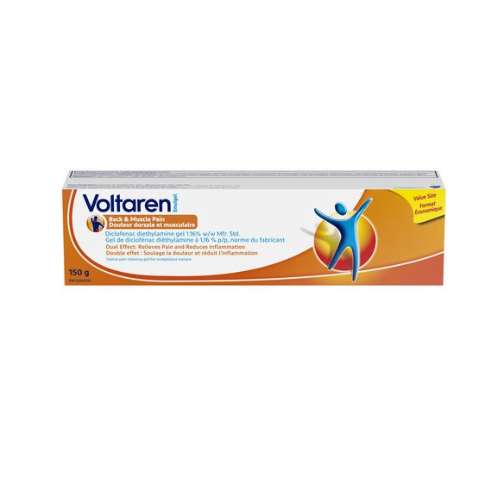
Voltaren Emulgel Back & Muscle
Buy Voltaren Emulgel Back & Muscle Online
Secure Encrypted Payments
Voltaren Emulgel Back & Muscle is a topical diclofenac gel for localized back and muscle pain. It can be ordered online, with the available tube size and labeled strength selected during checkout to match the directions on the package or from a healthcare professional. The gel is applied to intact skin over sore areas to help reduce pain and inflammation from minor strains, sprains, or overuse.
This treatment is designed for short-term, site-specific relief rather than whole-body pain control. Because it contains diclofenac, a nonsteroidal anti-inflammatory drug, safe use depends on applying the right amount, avoiding sensitive or damaged skin, and knowing when symptoms need medical assessment.
Price, Tube Size, and Ordering Details
Voltaren Emulgel Back & Muscle price can vary by tube size, supplier, and current Canadian retail availability. During ordering, review the displayed quantity, labeled concentration, and total cost before adding it to cart. If more than one size is available, compare the per-gram value rather than relying only on the shelf price.
Common Canadian retail tubes may include 100 g and 120 g sizes, and the product may be listed as diclofenac diethylamine 1.16% gel. Always follow the label on the tube you receive, because wording, package size, and directions can differ by country. If you are budgeting out of pocket, choosing the size that fits your expected short-term use can reduce waste while still keeping enough gel on hand for the recommended duration.
Orders are supplied through licensed pharmacies, and the checkout process uses secure handling for personal and payment information. US delivery from Canada is available for this product, with prompt, express shipping when the order is processed and stock is ready to ship.
What It Treats and When It Fits
Voltaren Back & Muscle pain relief gel is used for aches and pain associated with recent localized muscle or joint injuries. Typical use situations include back strain, muscle soreness, minor sprains, strains, and sports-related overuse. It is not meant for unexplained severe pain, pain after a major injury, or symptoms with weakness, numbness, fever, chest pain, or loss of bladder or bowel control.
For back discomfort, the gel may be useful when the pain is localized and connected to muscle strain or activity. Broader information about causes, self-care, and warning signs is available in our back pain condition section. If the problem involves generalized body soreness, joint stiffness, or recurring soft-tissue discomfort, our musculoskeletal pain section may help you frame questions for a clinician.
For sprains and strains, topical diclofenac works best as part of a sensible recovery plan. Rest, gradual return to movement, and avoiding repeat injury matter as much as pain control. Our sprains and strains section explains common injury patterns and when professional evaluation is important.
How Topical Diclofenac Works
Diclofenac belongs to the NSAID class. NSAIDs reduce the production of prostaglandins, which are chemical messengers involved in pain and inflammation. Applying diclofenac directly over the painful area allows local absorption through the skin, so the medicine can act near the irritated tissue.
Topical use may reduce whole-body exposure compared with oral NSAIDs, but it does not remove systemic risk completely. Applying too much, covering a large skin area, using it for longer than directed, or combining it with other NSAIDs can increase the chance of side effects. That is why label limits and duration guidance matter, even with a gel.
The emulsion gel base helps the medicine spread evenly and absorb through the skin. Let the area dry before covering it with loose clothing, and avoid washing the treated skin immediately after application unless the label says otherwise.
How to Apply the Gel Safely
Apply a thin layer to the painful area as directed on the product label. Massage it gently into intact skin until absorbed. Wash your hands after use unless the hands are the treated area. Keep the gel away from the eyes, mouth, genitals, open wounds, irritated skin, and infected areas.
Do not use the gel under tight bandages, plastic wraps, or other occlusive dressings unless a clinician specifically recommends it. Avoid heating pads, hot water bottles, and strong external heat over treated skin, because heat can change absorption and increase irritation. Do not apply other medicated creams, rubs, or topical NSAIDs to the same site unless you have been told to combine them.
Quick tip: Apply it after washing and drying the skin so the gel spreads cleanly and stays where intended.
If you miss an application, use it when you remember and then return to the usual spacing. Do not double the amount or apply more frequently to make up for a missed use. If pain persists beyond the recommended self-care period, worsens, or keeps returning, arrange an assessment rather than extending use indefinitely.
Who Should Avoid or Ask First
This gel may not be suitable for people who have had an allergic reaction to diclofenac, aspirin, ibuprofen, naproxen, or other NSAIDs. Avoid it if NSAIDs have triggered asthma attacks, hives, facial swelling, or serious skin reactions in the past. Do not apply it to broken, eczematous, infected, or heavily irritated skin.
People with a history of stomach ulcers, gastrointestinal bleeding, kidney disease, heart disease, high blood pressure, or fluid retention should ask a healthcare professional before using topical diclofenac, especially if they already use pain relievers or blood-thinning medicines. Although the gel is applied to the skin, enough diclofenac can be absorbed to matter for some higher-risk patients.
Use during late pregnancy is generally discouraged for NSAIDs because of fetal and maternal risks. If pregnant, trying to become pregnant, or breastfeeding, discuss the product with a clinician before use. For children and adolescents, follow the local product label and professional guidance rather than assuming adult directions apply.
Side Effects, Warnings, and Interactions
Most side effects are local skin reactions. These can include redness, itching, dryness, rash, mild burning, or irritation where the gel is applied. Stop using the product and seek medical advice if irritation becomes severe, spreads, blisters, or does not improve after stopping.
- Common local effects: redness, itching, dryness, rash, or mild burning.
- Possible allergy signs: hives, wheezing, facial swelling, throat tightness, or severe dizziness.
- Serious warning signs: black stools, vomiting blood, chest pain, shortness of breath, unusual swelling, or reduced urination.
- Skin precautions: avoid sunburned, infected, broken, or highly irritated skin.
Interactions can occur when topical diclofenac is combined with other medicines that affect bleeding, kidneys, or NSAID exposure. Use caution with oral NSAIDs, aspirin-containing products, anticoagulants, antiplatelet drugs, SSRIs or SNRIs, lithium, methotrexate, certain blood pressure medicines, and diuretics. A pharmacist or clinician can help decide whether your current medicines make topical NSAID use less appropriate.
Sun sensitivity may occur on treated skin. Limit strong sun exposure and avoid tanning beds on areas where the gel is used. If a rash appears after sun exposure, stop applying the gel and ask for medical guidance.
What to Expect During Use
Relief can build over several applications, depending on the injury, activity level, and how consistently the gel is used within label directions. Some people notice easier movement as local inflammation settles. Others may need additional assessment if pain is coming from a nerve, disc, fracture, infection, inflammatory condition, or another cause that does not respond well to topical NSAID treatment.
Do not use pain relief to push through a worsening injury. If swelling increases, bruising spreads, weight-bearing becomes difficult, or back pain travels down the leg with numbness or weakness, seek medical care. Persistent pain may need a diagnosis rather than a stronger topical product.
Why it matters: Short-term pain relief should support recovery, not hide symptoms that require evaluation.
Storage and Travel Handling
Store Voltaren Emulgel Back & Muscle at room temperature, away from excessive heat, direct sunlight, children, and pets. Keep the cap tightly closed after each use. Do not freeze the tube, and do not use the gel after the expiry date printed on the package.
When traveling, keep the tube in its original packaging so the active ingredient and label directions are easy to identify. Place it in a sealable bag to prevent leaks, and follow airline rules for gels and liquids if packing it in carry-on luggage. Avoid leaving it in a hot car, gym bag, or direct sun for long periods.
Related Pain Relief Choices
Topical diclofenac is one option within a broader pain and inflammation category. If your pain is localized and near the surface, a gel may be practical. If pain is widespread, inflammatory, or not clearly related to a minor strain, a clinician may consider other approaches. Our pain and inflammation category can help you view adjacent treatment formats.
Oral NSAIDs such as naproxen may be considered when a clinician wants systemic anti-inflammatory coverage. Systemic medicines can carry higher risks for stomach, kidney, heart, and blood pressure issues, so they are not interchangeable with topical gel for every person. If muscle tightness, nerve pain, or joint disease is part of the problem, diagnosis matters before changing therapy.
For general education on pain care, related articles in our pain and inflammation articles section can support more informed conversations. Country-of-origin information for Canadian-supplied products can also be reviewed through our Canada product origin section.
Questions to Ask a Healthcare Professional
- Is topical diclofenac appropriate for my back or muscle pain pattern?
- How long should I use the gel before reassessing symptoms?
- Can I use acetaminophen, an oral NSAID, or another pain reliever with it?
- Do my heart, kidney, stomach, asthma, or bleeding risks affect suitability?
- Should I avoid braces, heat, massage, or taping after applying the gel?
- What symptoms mean I should stop self-care and seek evaluation?
Bring the tube or package label to appointments if you are using more than one pain product. This helps your clinician identify the active ingredient and avoid duplicate NSAID exposure.
Authoritative Sources
| Resource | Link |
|---|---|
| Health Canada product record | Voltaren Emulgel Back & Muscle Pain record |
| Canadian product monograph | Voltaren Emulgel product monograph |
| Manufacturer information | Voltaren Emulgel Back & Muscle Pain |
This content is for informational purposes only and is not a substitute for professional medical advice.
Express Shipping - from $29.99
Prices:
- Dry-Packed Products $29.99
- Cold-Packed Products $39.99
Shipping Countries:
- United States (all contiguous states**)
- Worldwide (excludes some countries***)
Standard Shipping - $19.99
Shipping with this method takes 5-10 days
Prices:
- Dry-Packed Products $19.99
- Not available for Cold-Packed products
Shipping Countries:
- United States (all contiguous states**)
- Worldwide (excludes some countries***)
Can you use Voltaren Emulgel Back & Muscle on back muscles?
Yes, it is used for localized back and muscle pain when symptoms are consistent with minor strains, sprains, or overuse. Apply only to intact skin and follow the label directions for amount, frequency, and duration.
Is Voltaren Emulgel Back & Muscle good for muscle strains?
It may help relieve pain and inflammation from recent localized muscle strains. It should not replace evaluation for severe pain, major injury, spreading numbness, weakness, fever, or symptoms that keep worsening.
Where should diclofenac gel not be applied?
Do not apply it to the eyes, mouth, genitals, open wounds, infected skin, eczema, or severely irritated areas. Avoid tight coverings, heating pads, and other medicated topicals on the same spot unless a clinician advises it.
What side effects can Voltaren Emulgel Back & Muscle cause?
Common side effects include skin redness, itching, dryness, rash, or mild burning where applied. Seek medical help for wheezing, facial swelling, severe rash, signs of bleeding, chest pain, unusual swelling, or reduced urination.
Can Voltaren Emulgel Back & Muscle be used with oral pain relievers?
Ask a healthcare professional before combining it with oral NSAIDs such as ibuprofen, naproxen, or aspirin. Duplicate NSAID exposure can increase the risk of stomach bleeding, kidney problems, blood pressure changes, and other adverse effects.
Rewards Program
Earn points on birthdays, product orders, reviews, friend referrals, and more! Enjoy your medication at unparalleled discounts while reaping rewards for every step you take with us.
You can read more about rewards here.
POINT VALUE
How to earn points
- 1Create an account and start earning.
- 2Earn points every time you shop or perform certain actions.
- 3Redeem points for exclusive discounts.
You Might Also Like
Select options
This product has multiple variants. The options may be chosen on the product page
Select options
This product has multiple variants. The options may be chosen on the product page
Select options
This product has multiple variants. The options may be chosen on the product page
Select options
This product has multiple variants. The options may be chosen on the product page